English
 Le français
 Türkçe




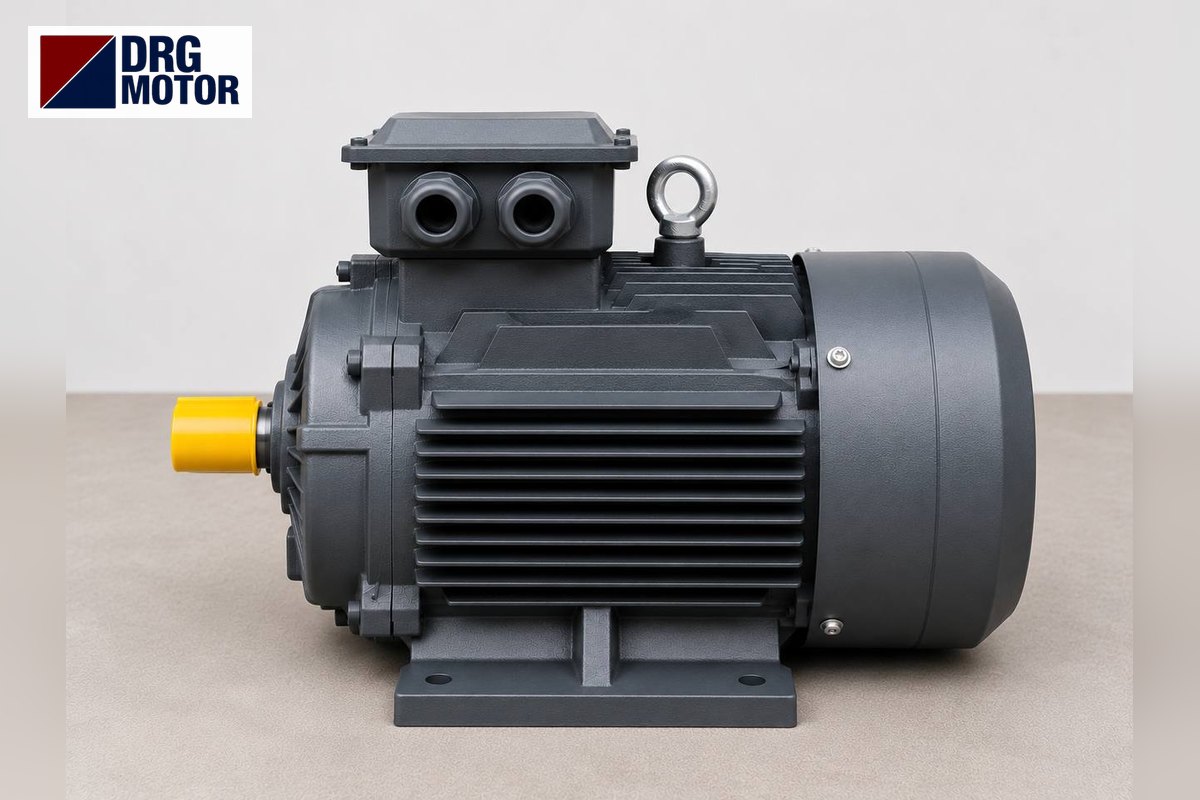

When replacing a WAT electric motor driven by an inverter (frequency converter), you need to consider not only the motor but how motor and inverter work together. Information that would be enough for a motor connected directly to the mains is incomplete for an inverter drive. This article explains what to note on the inverter side before replacement, what the WAT catalogue says about drive operation and what information an assessment with DRG MOTOR needs.
First separate the motor type: integrated drive or separate inverter?
If the WAT type code starts with Q3D, the motor is an integrated design carrying the inverter on the motor. This assessment covers the selection of the electric motor to be connected to the existing equipment. If a standard motor is considered in place of such a motor, the selection, location and wiring of a separate inverter must also be planned; this requires assessment by competent technical personnel.
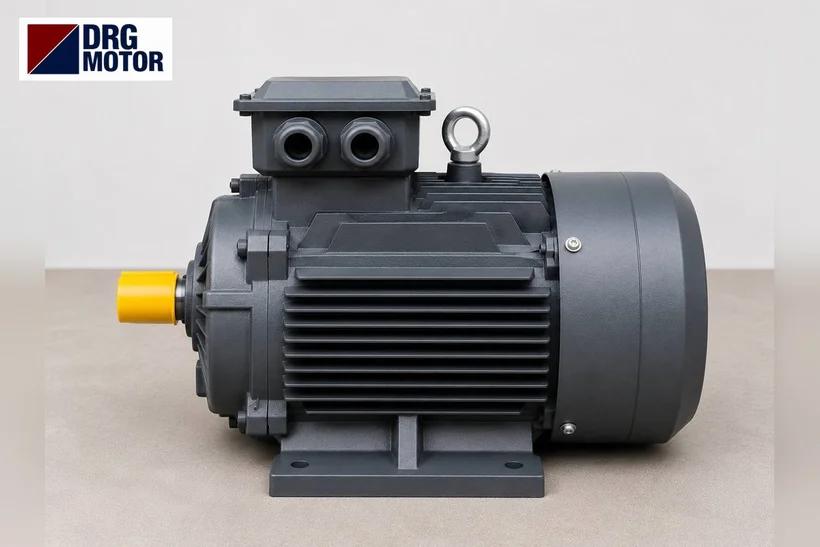
If the motor is a standard type such as Q3H, Q3E or Q2H driven by a separate inverter in the panel, a standard DRG motor can be assessed on technical data. If your motor has a brake, a separate fan or a drive integrated into the motor, state this too; these features change the assessment.
What does the manufacturer's catalogue highlight for drive operation?
The section of the WAT catalogue on operating asynchronous motors with drives highlights the following points:
- The torque-speed demand of the application, the motor's torque-speed curve and the inverter's rated and maximum current must be consistent.
- If the switching frequency exceeds 5 kHz, consulting the motor supplier is recommended because of voltage stress on the insulation.
- Scalar (V/f) control suits loads such as pumps and fans; vector control is preferred where high starting torque or long operation at low speed is needed.
- The inverter's motor identification (auto-tuning) step is critical; motors from different makers may behave differently with the same inverter.
The last point matters particularly for replacement: when the motor changes, the motor parameters in the inverter must be entered from the new motor's nameplate and auto-tuning repeated. For a standard motor on an inverter, speed range and insulation stress must be assessed separately for the application and the inverter settings.
What to note on the inverter side
The same kW and the same 1500 rpm class do not on their own show that a replacement is suitable in an inverter drive. If the motor runs at low frequency for long periods under high load, for example, a self-ventilated (IC411) motor loses cooling as speed drops. So record:
- Minimum and maximum frequency set on the inverter, and the frequency range where the motor runs most
- Control mode (scalar/vector), switching frequency and ramp times
- Inverter rated current and power (from the inverter nameplate)
- Cable length between motor and inverter, and any output filter
- Load type: falling torque with speed like pumps and fans, or constant torque like conveyors?
The 50 Hz line on the motor nameplate (rated current, speed, voltage) is the source for the inverter's motor parameters. In the DRG MOTOR online shop, models up to 3 kW are listed as 230/400 V and models of 4 kW and above as 400/690 V; any special voltage or different frequency requirement must be stated separately. Making the correct connection for the inverter output voltage is a job for competent technical personnel.
Send DRG MOTOR photos of the motor and inverter nameplates, the frequency range set and the load type, so a standard motor option can be assessed against this operating pattern.
DRG MOTOR options that can be assessed
DRG Motor is a manufacturer, supplier and seller of electric motors. Example models for standard WAT motors driven by a separate inverter are in the DRG shop; suitability for inverter use is assessed together with operating data:
- DRG-112M-2 – 4 kW, 2 poles, 112M, rated speed 2905 rpm, 400/690 V, 7.45 A at 400 V.
- DRG-132S-4 – 5.5 kW, 4 poles, 132S, rated speed 1460 rpm, 10.7 A at 400 V, rated torque 36 Nm.
- DRG-160M-4 – 11 kW, 4 poles, 160M, rated speed 1465 rpm, 20.4 A at 400 V, rated torque 71.7 Nm.
The motor current chart can help when comparing nameplate currents with the inverter rating. Other three-phase models are on the three-phase asynchronous electric motors page.
Frequently asked questions
Can I use my existing inverter with the new motor?
If the inverter's current rating covers the new motor's nameplate current, it can usually be assessed; parameters must be re-entered and auto-tuning repeated. Firm suitability cannot be stated without inverter and load data.
Can I replace my Q3D motor with a DRG motor and a separate inverter?
That is a design change: inverter selection, panel layout and wiring must be re-planned. This assessment covers the selection of the electric motor to be connected to the existing equipment; the inverter side must be planned separately.
The motor heats up at low speed; will a new motor solve this?
The cause may be reduced cooling at low speed. Changing the motor may not remove that cause on its own; operating frequency and load must be reviewed together.
My nameplate says IE3; does that matter?
The IE class on the nameplate is one of the items you should send to identify your motor; include it with the other nameplate values.
Information to send to DRG MOTOR
- Photo of the WAT motor nameplate and full type code (whether Q3D or a brake motor)
- Inverter nameplate: rated current and power
- Frequency range set and the frequency used most
- Control mode, switching frequency, motor cable length
- Load type and machine (pump, fan, conveyor, mixer, etc.)
- Mounting, shaft diameter × length, ambient conditions
Send this information to our WhatsApp line, add it to the quote list, call +90 (542) 666 11 11 or write to info@drgmotor.com. Your inverter operating pattern is reviewed together with the motor's technical data to assess an option. Contact page
See current prices of DRG MOTOR electric motors and order online in our storeSEE PRICES →
Technical Sources
- WAT Motor Sanayi ve Ticaret A.Ş. — Ürün Kataloğu (Product Catalogue, Turkish edition) — IM tr 24.0 — Operating asynchronous motors with drives (Asenkron Motorların Sürücü ile Çalıştırılması) — printed page 21 (PDF page 23).
- WAT Motor Sanayi ve Ticaret A.Ş. — Ürün Kataloğu (Product Catalogue, Turkish edition) — IM tr 24.0 — Motor type codes (Motor Tip Kodları) — printed page 16 (PDF page 18).
- WAT Motor Sanayi ve Ticaret A.Ş. — Ürün Kataloğu (Product Catalogue, Turkish edition) — IM tr 24.0 — Technical information, motor nameplate fields (Teknik Bilgiler) — printed page 23 (PDF page 25).