English
 Le français
 Türkçe




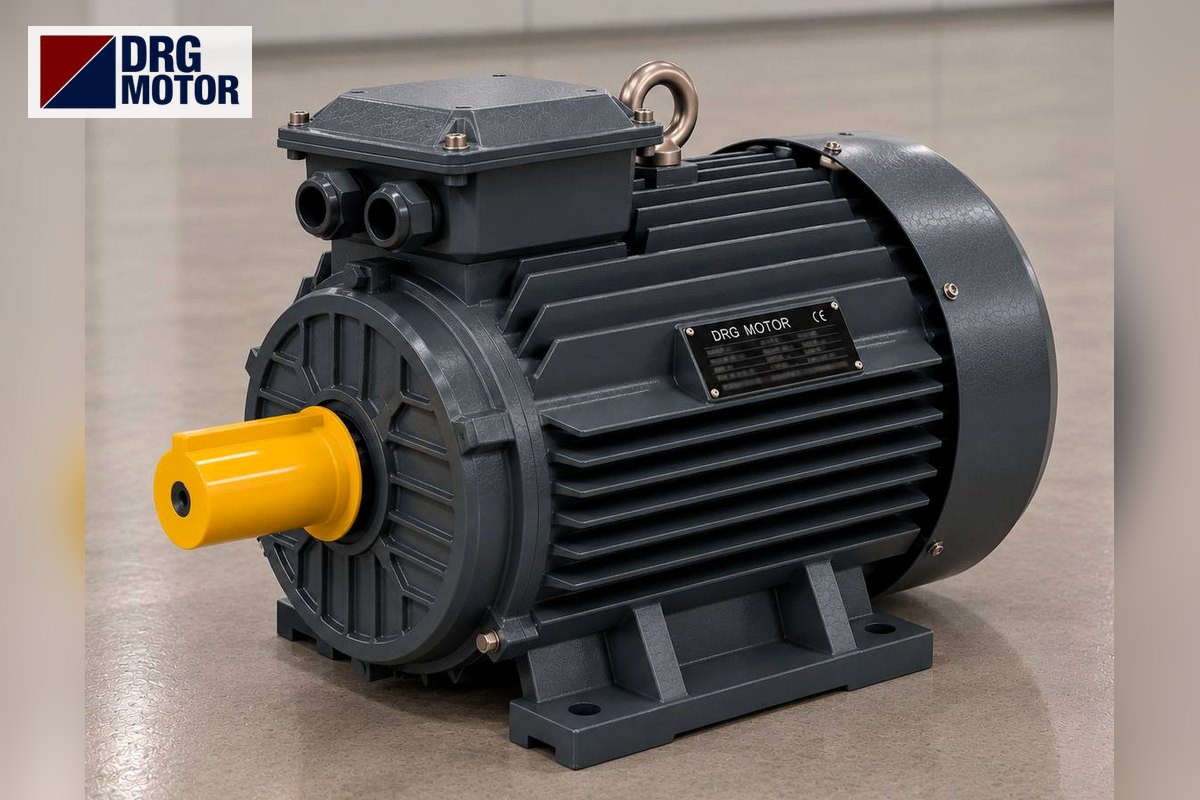

When a three-phase motor will not turn at all, the fault should be narrowed down from the outside in, in order before any part is replaced: first the supply and protection, then whether all three phases reach the motor, then the control gear, and only last the motor itself. This article explains, as information, the step-by-step diagnostic sequence to follow from the electrical panel to the motor terminals and what to look at in each step.
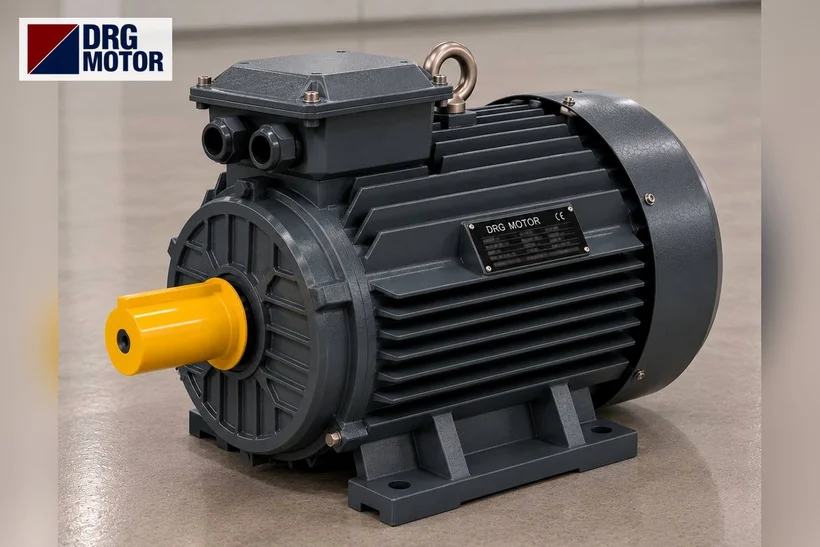
The sequence below eliminates the most common causes of a dead three-phase motor in a logical order. DRG Motor is a manufacturer, supplier and seller of electric motors, and if the motor has to be renewed after diagnosis you can review all three-phase asynchronous electric motors and the online motor shop.
Before you start: switch off the supply
Every measurement and check needs a safe start. Switch off the relevant breaker in the panel, confirm the de-energised state with a suitable instrument, and apply lock-out/tag-out where possible. Live measurement is done only in the steps where it is unavoidable, with proper personal protective equipment. All of this must be carried out only by qualified electrical personnel; this article is not a field instruction but a guide to the diagnostic logic.
Diagnostic order: narrowing from outside in
The fastest way to solve a dead motor is not random part swapping but following the signal from the source to the motor. The general flow is:
- Supply and fuse/breaker status
- Measuring that all three phases reach the panel and the motor
- Position of the thermal overload relay and protection devices
- Contactor and control circuit
- Motor terminals, winding resistance and insulation
- Shaft and mechanical freedom
If a problem is found in any step, it is fixed before moving on, so several variables do not get mixed together.
Step 1 — Supply and fuse/breaker check
The first place to look is not the motor but the supply. The main breaker and the fuses/MCBs of the motor circuit are checked by eye and by measurement for a tripped or open state. A blown fuse is often a symptom of an underlying overcurrent or short circuit; instead of simply replacing it, the cause is investigated. Whether locking contacts such as emergency stop or door interlocks are in circuit is also reviewed in this step.
Step 2 — Measure that all three phases arrive
A three-phase motor can only turn if all three phases are present and healthy. A single missing phase (phase loss) causes the motor not to start at all or to hum without starting. With a suitable instrument the phase-to-phase voltages are checked; all three readings should be close to each other and at the expected value. The measurement is repeated both at the panel input and, where possible, on the line feeding the motor, because a missing phase can also come from a connection between the panel and the motor. For expected voltage and current values the motor current chart is a useful guide.
Click to see current electric motor prices and order nowSEE PRICES →
Step 3 — Thermal relay and protection devices
If the supply is sound, the protection devices are next. If the thermal (overload) relay has tripped, the motor receives no power; the position and reset state of the relay are checked. Frequent tripping of the thermal relay is not a fault on its own but usually a sign of another problem such as overload, phase imbalance or jamming. Values such as the thermal current setting should be determined not from memory but from the rated current on the motor nameplate and the relay documentation.
Step 4 — Contactor and control circuit
If the protection devices are normal, the control side is examined. When the start command is given, whether the contactor pulls in (coil sound/movement) is observed. If the contactor does not pull in at all, the problem may be in the control circuit (button, auxiliary contact, coil supply); if it pulls in but the motor does not turn, there may be a bad contact on one of the power poles. In that case the presence of the phases at the contactor output is again confirmed by measurement.
Step 5 — Terminals, winding resistance and insulation
If supply and control are sound but the motor still does not turn, the motor itself is next. The link (star/delta) connections and cable ends in the terminal box are checked by eye; a loose or burnt connection can create a single-phase effect. With the power off and the conductors separated, the resistance of the three windings is compared: in a healthy motor the three windings give close values, while a markedly different or open winding points to an internal fault. The winding-to-frame insulation is assessed with a suitable insulation tester. Rather than memorising a fixed figure for the acceptance limit, it is correct to interpret the readings according to the instrument documentation and the motor manufacturer's data.
Step 6 — Shaft and mechanical jamming
If the electrical side is healthy, the problem may be mechanical. With the power off, the shaft is turned by hand (appropriately); if it does not turn freely, there may be bearing damage, a foreign object, jamming of the driven machine (pump, fan, gearbox) or an assembly whose brake has not released. A mechanically locked shaft stops even an electrically sound motor from starting and trips the thermal relay. In this step the motor and the driven machine are assessed separately.
Quick checklist and if replacement is needed
The six steps above narrow down, in order, where the problem lies in a dead three-phase motor. Comparing the current you measure with the motor's rated current is an important clue in diagnosis; the 400 V rated current and torque values of common DRG models in the 1500 rpm (4-pole) class are below:
| Model | Power | Rated current (400 V) | Torque |
|---|---|---|---|
| DRG-112M-4-AL | 4.0 kW | 7.95 A | 26.3 Nm |
| DRG-132S-4-AL | 5.5 kW | 10.7 A | 36.0 Nm |
| DRG-132M-4-AL | 7.5 kW | 14.3 A | 49.1 Nm |
| DRG-160M-4-AL | 11.0 kW | 20.4 A | 71.7 Nm |
If a motor with a burnt winding or uneconomic repair has to be renewed, base the choice on the power, speed, housing and connection on the existing motor's nameplate. To verify the required power and current you can use the electric motor calculator and select a suitable model from the online motor shop.
Send a photo of your current motor nameplate and we will find the suitable DRG model together.Send on WhatsApp
Once you have identified the right replacement motor, you can compare all power and speed options and current prices through the shop.
If your motor must be replaced, see the three-phase asynchronous models and current prices in the shopSEE PRICES
Frequently asked questions
Why does a three-phase motor not turn at all?
The most common causes are a supply/fuse problem, a missing phase, a tripped thermal relay, a contactor that will not pull in, an open or burnt winding and mechanical jamming. Correct diagnosis eliminates these possibilities in order, from the outside in.
The motor hums but does not turn — what does that mean?
Humming usually points to one of the phases being missing (phase loss); the motor cannot produce enough starting torque. Measuring that all three phases arrive is the priority in this step.
Can I dismantle a dead motor myself?
Electrical checks and connection work require authorisation and knowledge. No work should be done without switching off the supply and confirming the de-energised state, and measurement and connection tasks should be done by qualified electrical personnel.
What is winding resistance measurement for?
Comparing the resistance of the three windings helps to see whether one of them is open or short-circuited. The readings are interpreted according to the instrument's and the motor manufacturer's data.
Electric Motors Related to This Topic — Models and Current Prices
Suitability is not decided by power alone: compare the speed, voltage, mounting, shaft and fixing dimensions of your machine with the product data; if unsure, send us the nameplate of your current motor.
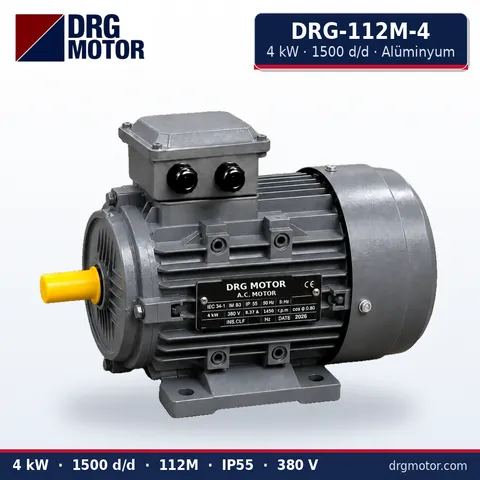
4 kW Three-Phase Motor 1500 rpm – DRG-112M-4 Aluminium
- 4 kW · 1500 rpm (4 poles)
- Aluminium frame · IEC 112M
- Shaft: 28 × 60 mm
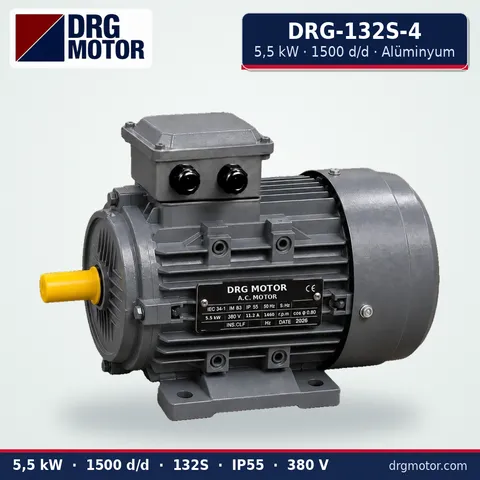
5.5 kW Three-Phase Motor 1500 rpm – DRG-132S-4 Aluminium
- 5.5 kW · 1500 rpm (4 poles)
- Aluminium frame · IEC 132S
- Shaft: 38 × 80 mm
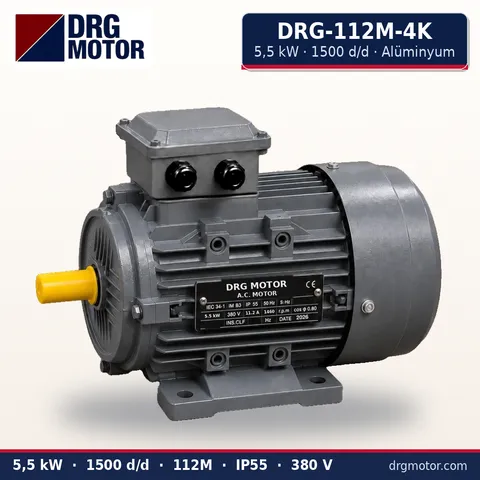
5.5 kW Compact Three-Phase Motor 1500 rpm – DRG-112M-4K Aluminium
- 5.5 kW · 1500 rpm (4 poles)
- Aluminium frame · IEC 112M
- Shaft: 28 × 60 mm
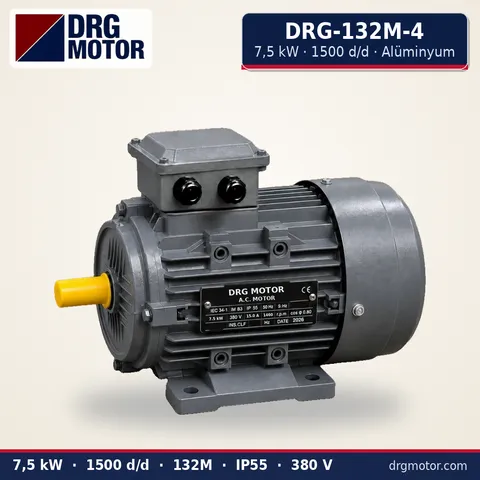
7.5 kW Three-Phase Motor 1500 rpm – DRG-132M-4 Aluminium
- 7.5 kW · 1500 rpm (4 poles)
- Aluminium frame · IEC 132M
- Shaft: 38 × 80 mm
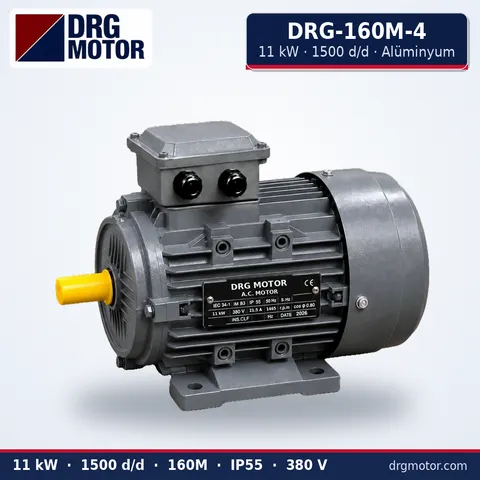
11 kW Three-Phase Motor 1500 rpm – DRG-160M-4 Aluminium
- 11 kW · 1500 rpm (4 poles)
- Aluminium frame · IEC 160M
- Shaft: 42 × 110 mm
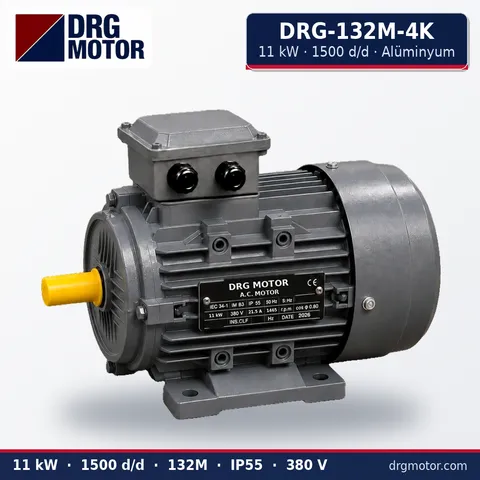
11 kW Compact Three-Phase Motor 1500 rpm – DRG-132M-4K Aluminium
- 11 kW · 1500 rpm (4 poles)
- Aluminium frame · IEC 132M
- Shaft: 38 × 80 mm