English
 Le français
 Türkçe




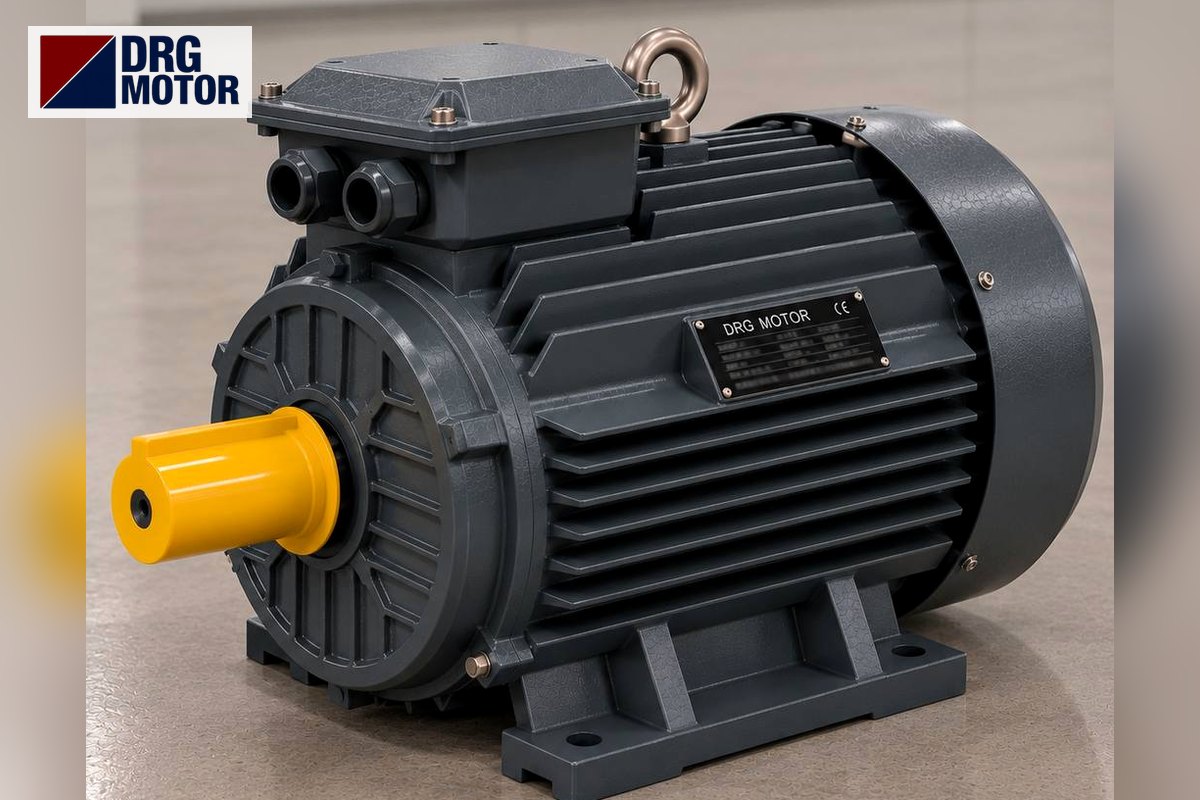

Choosing an industrial three-phase asynchronous electric motor really comes down to four lines: how much power, which speed, what kind of housing and which mounting. Get those four right for your machine's real need and you neither overpay for an oversized motor nor struggle with an undersized drive that runs hot.
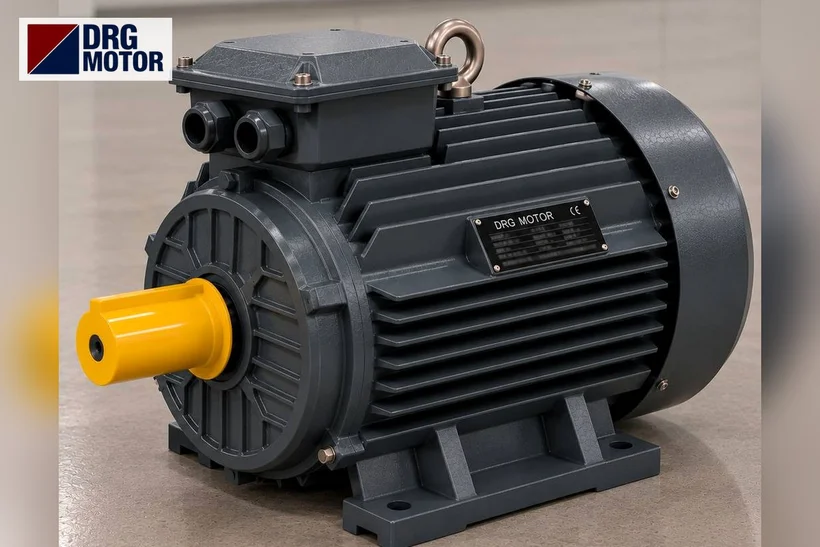
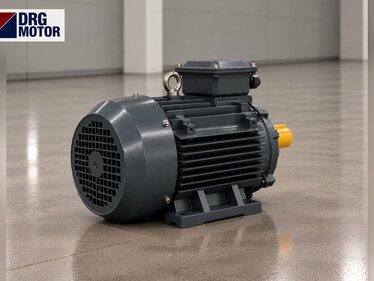
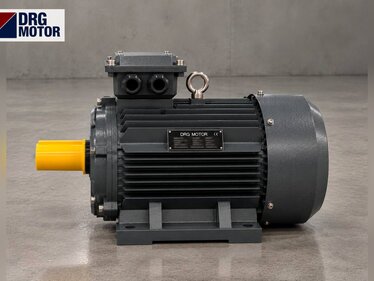
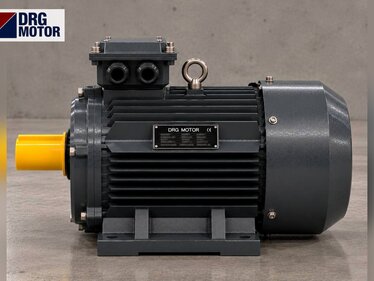
DRG Motor is a manufacturer, supplier and seller of three-phase asynchronous electric motors. It is based in İzmir and ships quickly across all of Türkiye, that province included. Once the criteria below are clear, you can filter the right model by power and speed in the online electric motor shop and view the whole range together in the three-phase asynchronous electric motors category.
Know the load first
Selection starts not from the motor but from the work to be turned. A centrifugal pump and a crusher may both ask for "10 HP", yet one turns smoothly while the other starts heavy and runs with shocks. The most common mistake we see on site is looking only at kW and skipping the character of the load.
Give hard-to-start loads (a conveyor starting full, a crusher, a compressor, a large fan) a separate look. Such work needs high starting torque and sometimes a starting arrangement. Smoothly rotating pumps, benches and small fans make the choice easier. Describe the load in one sentence: what it turns, how often it stops and starts, shock or steady. Everything else is built on that sentence.
Power: neither short nor excessive
Power is the mechanical value the motor delivers at the shaft, written in kW. For the horsepower equivalent the rough conversion does the job: 1 HP is about 0.746 kW, so a 4 kW electric motor is roughly 5.5 HP.
Stepping up a size "just in case" looks harmless but has a cost: more current, thicker cable, larger panel protection and often an unnecessary housing. The opposite is no better; a motor chosen right at the limit is always under strain. If your machine asks for a given kW, aim for the nearest standard value. Below are frequently requested aluminium DRG models in the 1500 rpm class with their 400 V rated currents; that current is also the starting point for cable and overload selection.
| Model | Power | Speed | Current (400 V) |
|---|---|---|---|
| DRG-112M-4 | 4 kW (5.5 HP) | 1500 rpm | 7.95 A |
| DRG-132S-4 | 5.5 kW (7.5 HP) | 1500 rpm | 10.7 A |
| DRG-132M-4 | 7.5 kW (10 HP) | 1500 rpm | 14.3 A |
| DRG-160M-4 | 11 kW (15 HP) | 1500 rpm | 20.4 A |
For a quick check the motor current chart and the electric motor calculator help. If you look for a non-standard rating (for example 10 kW), stepping up to the nearest standard 11 kW is usually the right call; an example of that class is DRG-160M-4 (11 kW).
Click to see current electric motor prices and order nowSEE PRICES →
Speed and pole count
The same power is built in different speeds, and for most jobs the right speed comes even before power. The pole count sets the speed: 2 poles ≈ 3000, 4 poles ≈ 1500, 6 poles ≈ 1000 rpm. Below is the same 4 kW power in three different speeds; note that the current changes with the speed too.
| Model | Poles | Speed | Current (400 V) |
|---|---|---|---|
| DRG-112M-2 | 2 poles | 3000 rpm | 7.45 A |
| DRG-112M-4 | 4 poles | 1500 rpm | 7.95 A |
| DRG-132M1-6 | 6 poles | 1000 rpm | 8.99 A |
In practice: 2 poles for a high-speed fan or compressor, 4 poles for general drives and pumps, 6 poles for a conveyor or mixer that must turn slowly but strongly. A lower speed delivers the same power with higher torque, which eases demanding loads. If you do not know the speed your machine needs, the rpm on the existing motor's nameplate is the most reliable starting point.
Housing: aluminium or cast iron?
Both housings are made to the same IEC dimensions; the difference is weight, heat dissipation and robustness. Aluminium is light and easy to carry and mount; it is preferred in mid powers and often-moved applications. Cast iron is heavy, damps vibration better and stands out for its sturdiness in hard, shock-prone environments.
| Housing | Power range | Where it suits |
|---|---|---|
| Aluminium | 0.25–11 kW | Light, portable, mid-power drives |
| Cast iron | 0.55–355 kW | Heavy, shock, vibration, high power |
For example a 4 kW 1500 rpm need is met in aluminium by DRG-112M-4, while the cast-iron equivalent of the same power and speed is DRG-112M-4. If space and weight matter, aluminium makes sense; for heavy-industry conditions, cast iron does. Where the frame length is tight, a compact type that fits the same power into a smaller frame (DRG-112M-4K, 5.5 kW) helps.
Mounting type (IM) and shaft size
Even with power and speed right, the wrong mounting type will not fit the motor to your machine; this is the most often skipped line. The common ones are foot-mounted B3, flange-mounted B5, small face-flange B14 and foot-plus-flange B35. First check whether your machine connects the motor by its feet or its flange.
Shaft diameter and length also matter for aligning a coupling, pulley or gear; the shaft grows thicker as the model grows (for example 28×60 mm on a 112 frame, 42×110 mm on a 160 frame). If you are replacing a motor, note the shaft diameter and key size; if you will reuse the old coupling, these must match exactly.
Voltage and protection: 400/690 V and IP55
In industrial electric motors voltage is written as two values. On DRG models of 4 kW and above it is 400/690 V (Δ/Y); on your 400 V supply it runs in delta (Δ). Small ratings show 230/400 V. Before changing the connection, cut the power, confirm it is de-energised and have the work done by authorised electrical personnel.
On protection, standard DRG three-phase electric motors are IP55: dust-protected and resistant to water jets from any direction. For insulation, class F is used; this is the thermal endurance class of the winding and must not be confused with efficiency. If you install in a dusty, damp or near-outdoor spot, state it at the order stage.
Selection order: a short checklist
Keep these five headings at hand when asking for a motor and you will find the right model in minutes:
- Load: what it turns, is the start heavy, how often does it stop and start?
- Power: the nearest standard value to the kW the machine needs.
- Speed: 2/4/6 poles, i.e. 3000/1500/1000 rpm, for the job's speed.
- Housing and frame: aluminium or cast iron, does the frame fit the space?
- Mounting and shaft: B3/B5/B14/B35 and shaft diameter and key.
If you have a working motor on hand, the soundest thing is to read its nameplate; all these lines are written there. Where you are unsure, share it with us and we will settle the suitable DRG model together. From our İzmir base we deliver fast by cargo to all of Türkiye, that city included; for heavy housings we plan the shipment together at the order stage.
Send a photo of your current motor nameplate and we will find the suitable DRG model together.Send on WhatsApp
To see the current figures for the industrial three-phase asynchronous electric motor that fits your need and to orderSEE PRICES
Frequently asked questions
When choosing a motor, should I look at power or speed first?
Both are set together, but the order starts with the load. The speed your machine needs sets the pole count, and the weight of the work sets the power. Since the same kW exists in three speeds, looking at power alone often misleads.
Is an aluminium housing less durable than cast iron?
No, they are chosen for different purposes. Aluminium is light and portable, so it suits mid powers; cast iron damps vibration better, so it stands out in heavy, shock-prone environments. The right choice depends on where the motor will work.
How do I tell the mounting type (B3, B5)?
Check whether your machine connects the motor by its feet or its flange. Foot mounting is B3, flange mounting is B5, both together is B35. If you are replacing a motor, note the old motor's mounting code and shaft size.
What if the power I need is not on the list?
If you look for a non-standard value (for example 10 kW), stepping up to the nearest standard power (11 kW) is the soundest option. If you are unsure which model fits, send us your machine and, if any, the current motor nameplate, and we will decide together.
Electric Motors Related to This Topic — Models and Current Prices
Suitability is not decided by power alone: compare the speed, voltage, mounting, shaft and fixing dimensions of your machine with the product data; if unsure, send us the nameplate of your current motor.
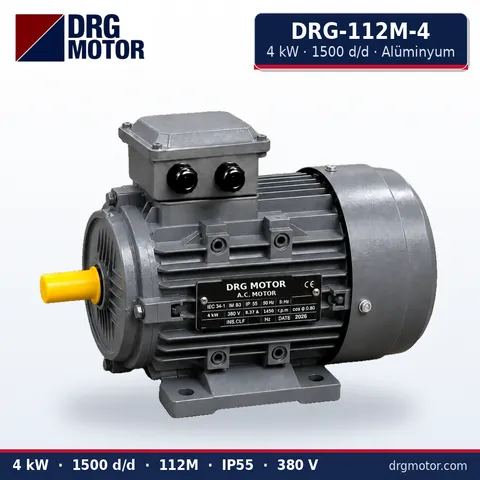
4 kW Three-Phase Motor 1500 rpm – DRG-112M-4 Aluminium
- 4 kW · 1500 rpm (4 poles)
- Aluminium frame · IEC 112M
- Shaft: 28 × 60 mm
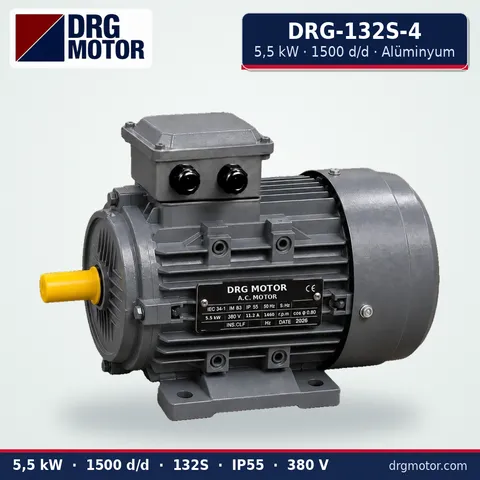
5.5 kW Three-Phase Motor 1500 rpm – DRG-132S-4 Aluminium
- 5.5 kW · 1500 rpm (4 poles)
- Aluminium frame · IEC 132S
- Shaft: 38 × 80 mm
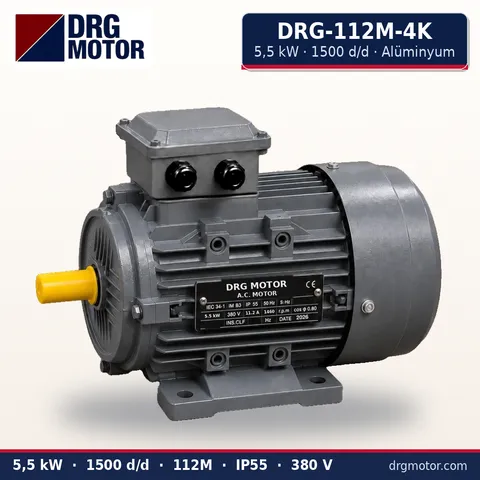
5.5 kW Compact Three-Phase Motor 1500 rpm – DRG-112M-4K Aluminium
- 5.5 kW · 1500 rpm (4 poles)
- Aluminium frame · IEC 112M
- Shaft: 28 × 60 mm
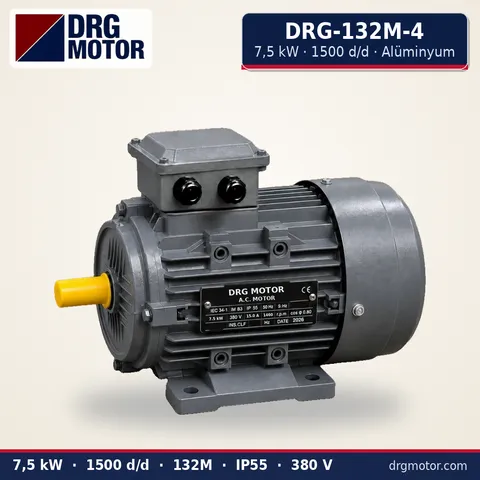
7.5 kW Three-Phase Motor 1500 rpm – DRG-132M-4 Aluminium
- 7.5 kW · 1500 rpm (4 poles)
- Aluminium frame · IEC 132M
- Shaft: 38 × 80 mm
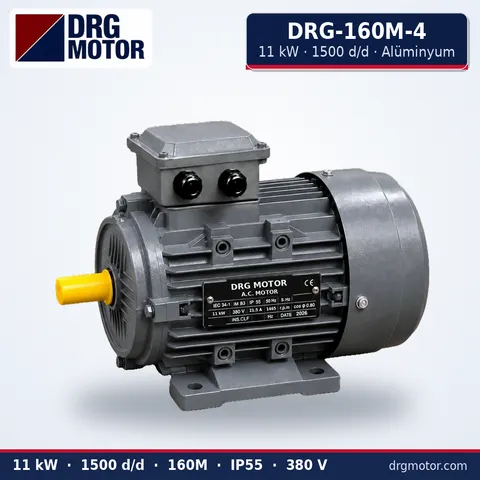
11 kW Three-Phase Motor 1500 rpm – DRG-160M-4 Aluminium
- 11 kW · 1500 rpm (4 poles)
- Aluminium frame · IEC 160M
- Shaft: 42 × 110 mm
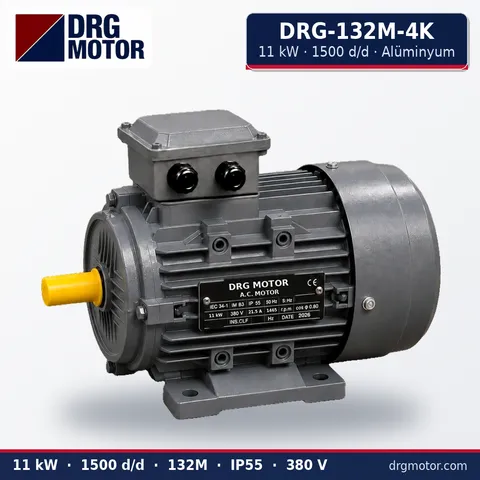
11 kW Compact Three-Phase Motor 1500 rpm – DRG-132M-4K Aluminium
- 11 kW · 1500 rpm (4 poles)
- Aluminium frame · IEC 132M
- Shaft: 38 × 80 mm