English
 Le français
 Türkçe

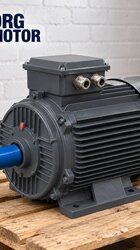
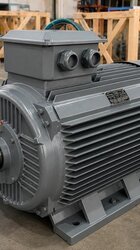
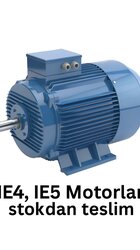
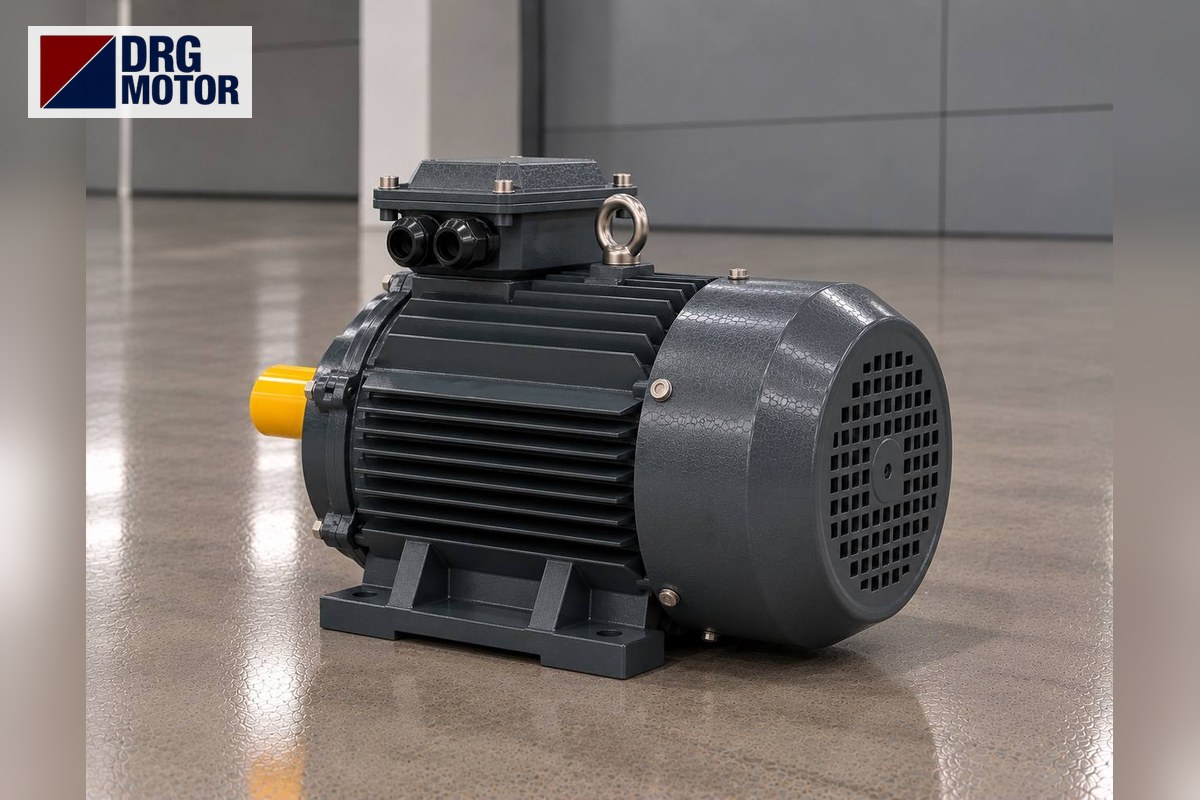

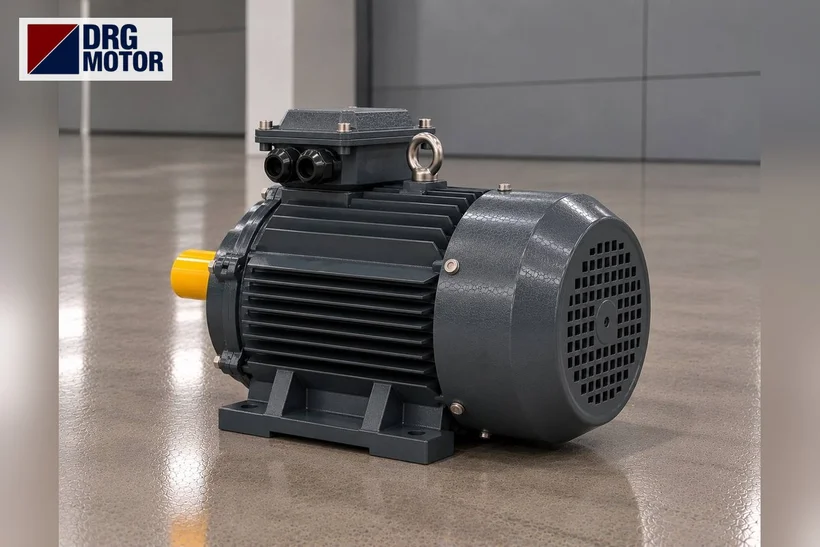
In a tube and profile production line, the roll drive motor turns the lower and upper rolls that pull the strip through the forming stands and shape it step by step. The deciding factor is the torque needed to pull the thickest and hardest material at the lowest line speed; the motor must also deliver this torque when slowed by an inverter. In practice, a 4-pole induction motor with a cast iron or aluminium housing drives the roll group through a gearbox. Power can be a few kW on small profile lines and tens of kW on heavy-wall tube mills; the exact value is on the line manufacturer's motor plate and in its catalogue.
For a replacement, you can filter by power and speed in the DRG online electric motor store using the nameplate values. Below we explain the load specific to roll forming lines, speed control and the dimensions to check when replacing.
The Motor's Work on a Roll Forming Line
In roll forming, flat strip passes through 10 to 30 stands in sequence. In each stand a pair of rolls bends the sheet a little further; on a tube mill the edges are welded after the last forming stands, then sizing rolls correct the diameter. On a single-motor line the rolls are driven from one motor through a distribution gearbox and cardan shafts. On long lines the forming and sizing sections have separate motors.
The motor load is constant-torque and depends on three things:
- Material thickness and yield strength: Thick, high-strength sheet needs more bending force at each stand.
- Strip width and number of stands: The more rolls in contact with the sheet, the greater the friction loss.
- Roll setting: One over-tightened stand brakes the whole line. A rise in current is often caused by the setting, not the motor.
When speed rises, torque stays the same and power increases. So motor power is checked at the highest line speed, and torque against the hardest material.
Roll Speed, Gearbox Ratio and Torque: Worked Example
The values below are assumptions; use your own line's roll diameter and speed.
Example: Line speed 20 m/min, effective diameter of the driven roll 120 mm. Roll speed is n = v / (π·D) = 20 / (π·0.12) ≈ 53 rpm. The DRG-132M-4 motor has a rated speed of 1460 rpm, so the total reduction is about 27.5.
This motor is 7.5 kW with a rated torque of 49.1 Nm. Assuming a factor of 0.9 for distribution gearbox, cardan and gearbox losses, about 9550·7.5/53·0.9 ≈ 1215 Nm in total is available on the roll side. This torque is shared between all driven stands. You can check your own ratio with the gearbox output speed and torque calculator.
Line Speed Control by Inverter and Cooling at Low Frequency
On roll forming lines speed is almost always set by an inverter: the line runs slowly while a new profile is being set up and speeds up once the setting is right. On a constant-torque load an induction motor gives the same torque as frequency falls, but its power drops in proportion. In the example above, at 30 Hz the motor runs at about 876 rpm, the line drops to 12 m/min and the usable power is about 7.5·30/50 = 4.5 kW.
The point often missed is cooling. DRG motors are IC411; the cooling air comes from the fan on their own shaft. If the motor runs at full torque at low frequency for long periods, fan airflow falls and the winding heats up. If the line will run under load below 25 Hz for long periods, separately driven fan cooling may be needed; the standard self-ventilated motor does not include it, so it must be assessed separately. The drive (inverter) is not among the products DRG sells; it comes from the line builder or your automation supplier.
On multi-motor lines a speed difference between sections stretches or compresses the strip. This synchronisation comes from inverter settings, not from the motor; when replacing, the new motor must have the same number of poles as the old one.
Click to see current electric motor prices and order nowSEE PRICES →
Connection and Frame Dimensions of the Central Drive Motor
On centrally driven lines the motor usually sits on a base with feet (B3) and connects to the gearbox through a coupling; on short lines it mounts by flange (B5) directly to the gearbox input. For gearbox types, the electric motors for parallel shaft gearboxes page helps you compare shaft arrangements.
The table below shows torque and shaft dimensions of 4-pole ratings common in roll drives (from DRG data sheets):
| Model | Power / speed | Rated torque | Shaft dia. × length |
|---|---|---|---|
| DRG-112M-4 | 4 kW / 1450 rpm | 26.3 Nm | 28 × 60 mm |
| DRG-132M-4 | 7.5 kW / 1460 rpm | 49.1 Nm | 38 × 80 mm |
| DRG-160M-4 | 11 kW / 1465 rpm | 71.7 Nm | 42 × 110 mm |
| DRG-160L-4 | 15 kW / 1465 rpm | 97.8 Nm | 42 × 110 mm |
For B5 flange frames, the DRG catalogue gives a flange outside diameter of 250 mm for 112M, 300 mm for 132M and 350 mm for 160M/L. On a foot-mounted motor, compare shaft height (H) and foot hole spacing with the old base. Motors of 4 kW and above are 400/690 V and are connected in delta on a 400 V supply.
Weld Zone, Coolant and Environment
On a tube mill the motor may be near the welding station and the cut-off saw. Forming fluid and weld cooling water splash, and cutting produces metal dust. DRG motors are IP55 with class F insulation; they are protected against splashing water and dust but are not designed for washdown lines or immersion.
Keeping the fan inlet clear of weld spatter and oily dust is even more important for a motor running at low frequency. Leave the terminal box cable entry facing down. If ambient is outside −15…+40 °C, state it in your enquiry.
Fault Symptoms and the Right Replacement Decision
Roll drive motor problems can usually be read from the line's behaviour:
- Line stalls on thick material but not on thin: The motor is near its torque limit or the inverter current limit is set low.
- Motor frame gets very hot at slow speed: Fan cooling is not enough at low frequency.
- Wavy profile or varying tube ovality: Speed matching between sections is off; a synchronisation issue, not a motor issue.
- Bearing noise: Cardan angle or coupling alignment is wrong; it will recur even after a motor change.
If power is to be raised one step at replacement, shaft and frame grow; on standard frames, going from 7.5 kW to 11 kW takes the shaft from 38 mm to 42 mm. Coupling and base must be renewed accordingly. For matching motors to helical gearboxes, see also electric motors for helical gearboxes. The uncoiler at the head of the line carries a different load; we cover it separately in our sheet metal uncoiler and recoiler motor article.
Information to Prepare Before Ordering
- Old motor nameplate: power, speed, voltage, connection (delta/star).
- Mounting: B3 foot, B5 flange or B35; shaft diameter and length.
- Drive layout: one central motor or a separate motor per section?
- Gearbox type and ratio, effective roll diameter.
- Thickest material processed and highest line speed.
- Lowest operating frequency on the inverter and time spent at that speed.
DRG Motors Suitable for Roll Drives
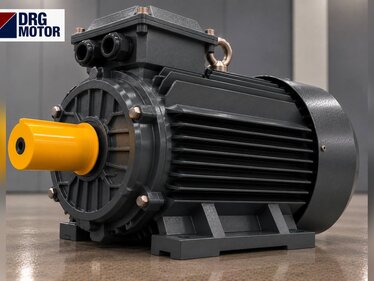
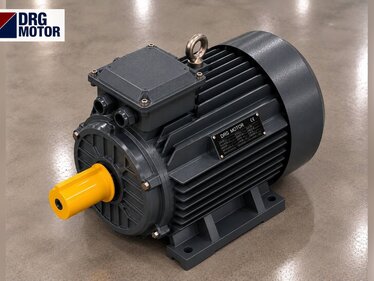
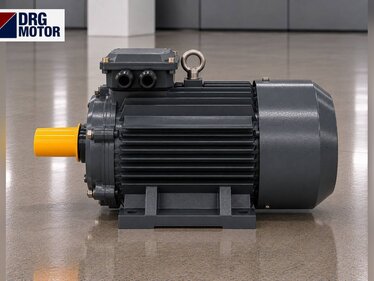
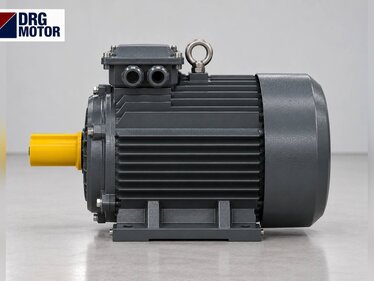
These four models cover the 4–15 kW range common on profile and tube lines at 4-pole speed; from 7.5 kW up, the cast iron housing is better suited to base and coupling loads.
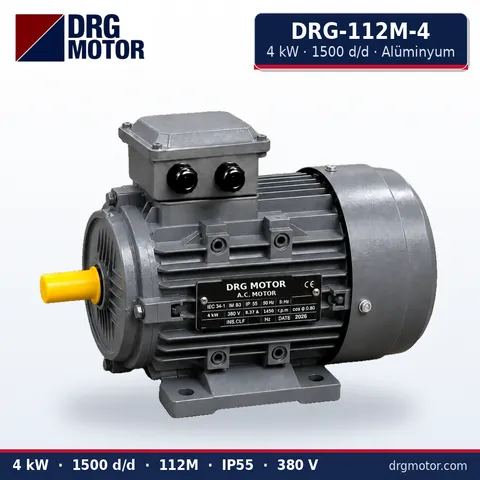
4 kW Three-Phase Motor 1500 rpm – DRG-112M-4 Aluminium
- 4 kW · 1500 rpm (4 poles)
- Aluminium frame · IEC 112M
- Mounting: B3 · B5 · B14 · B35
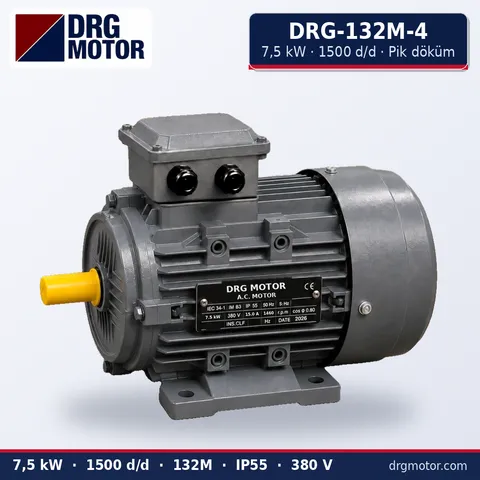
7.5 kW Three-Phase Motor 1500 rpm – DRG-132M-4 Cast Iron
- 7.5 kW · 1500 rpm (4 poles)
- Cast iron frame · IEC 132M
- Mounting: B3 · B5 · B14 · B35
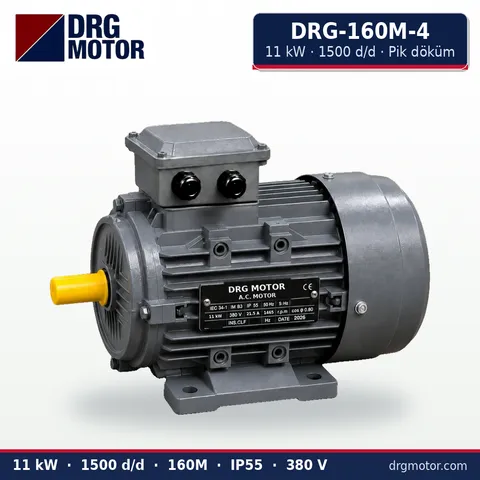
11 kW Three-Phase Motor 1500 rpm – DRG-160M-4 Cast Iron
- 11 kW · 1500 rpm (4 poles)
- Cast iron frame · IEC 160M
- Mounting: B3 · B5 · B14 · B35
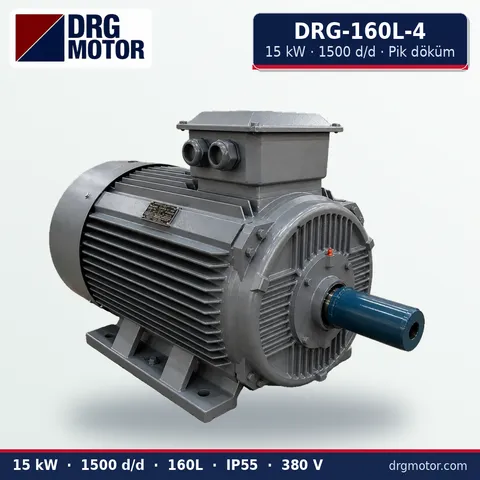
15 kW Three-Phase Motor 1500 rpm – DRG-160L-4 Cast Iron
- 15 kW · 1500 rpm (4 poles)
- Cast iron frame · IEC 160L
- Mounting: B3 · B5 · B14 · B35
Click to see current prices and order these motors nowSEE PRICES →
Roll Drive Motor FAQ
How many kW does a roll forming machine need?
There is no single value. Power depends on material thickness, yield strength, strip width, number of stands and line speed. For a replacement, take the old motor's nameplate value; for a new line design, the calculation belongs to the machine builder.
Should a roll drive motor be 4-pole or 6-pole?
If the existing gearbox stays, choose the same number of poles as the old motor; otherwise line speed changes. In new designs a 4-pole motor is common because the gearbox ratio stays reasonable and the inverter gives a wide speed range.
Why does the profile line motor heat up when running slowly on an inverter?
The frame fan turns with the motor shaft. At low frequency airflow drops, but with a constant-torque load current does not. For long slow running, separately driven fan cooling or a larger frame is considered.
Can each stand get its own motor instead of a central drive?
Mechanically yes, but every motor's speed must be kept in sync by inverter. On an existing line this conversion is a machine design job more than a motor replacement.
For a motor replacement, send a photo of the old nameplate, its power, speed, mounting (foot or flange), shaft size, line type and lowest operating speed via WhatsApp, or add the selected models to the quote list. You can also call +90 (542) 666 11 11 or write to info@drgmotor.com; address and hours are on the contact page. As a manufacturer, supplier and seller of electric motors, DRG Motor lists its 120-model range in the online store.