English
 Le français
 Türkçe




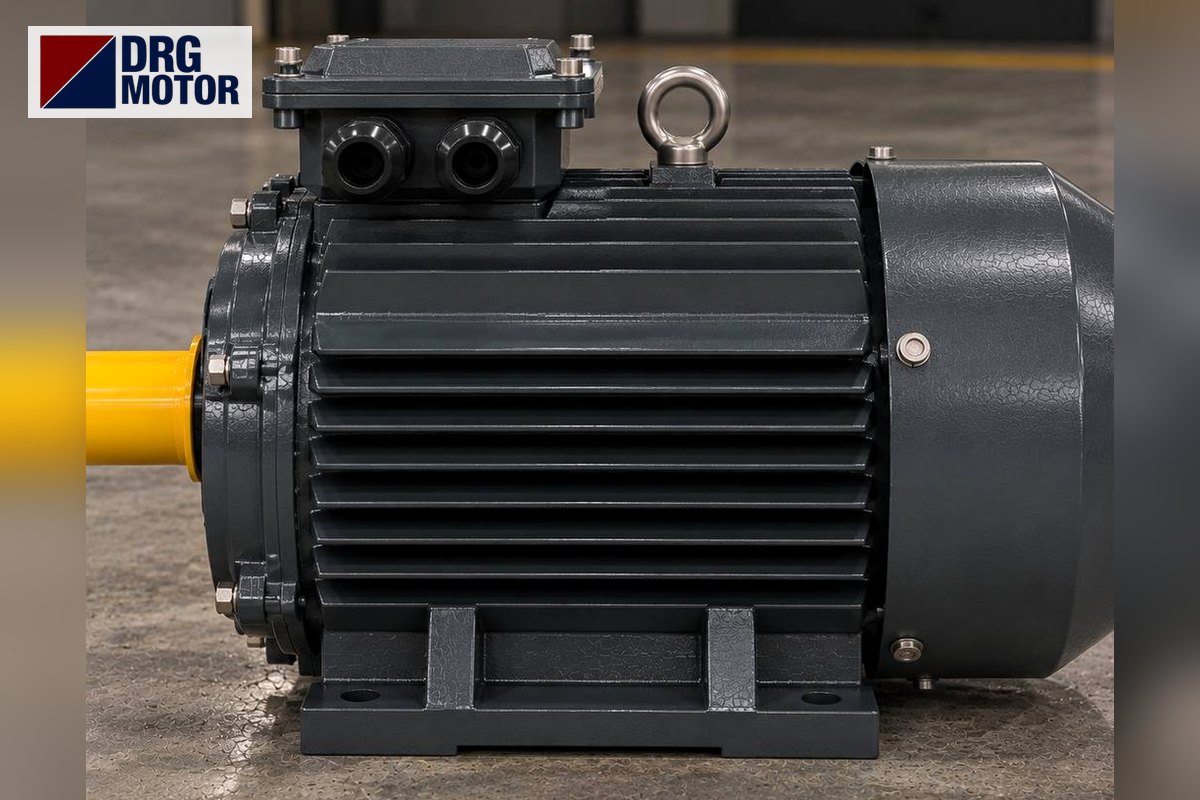

Before commissioning a new three-phase asynchronous motor you verify, in order, the nameplate data, the insulation resistance, the Y/Δ bridge connection and the direction of rotation; then you run it first off-load and afterwards under load. These steps prevent most first-energisation faults before they ever happen.
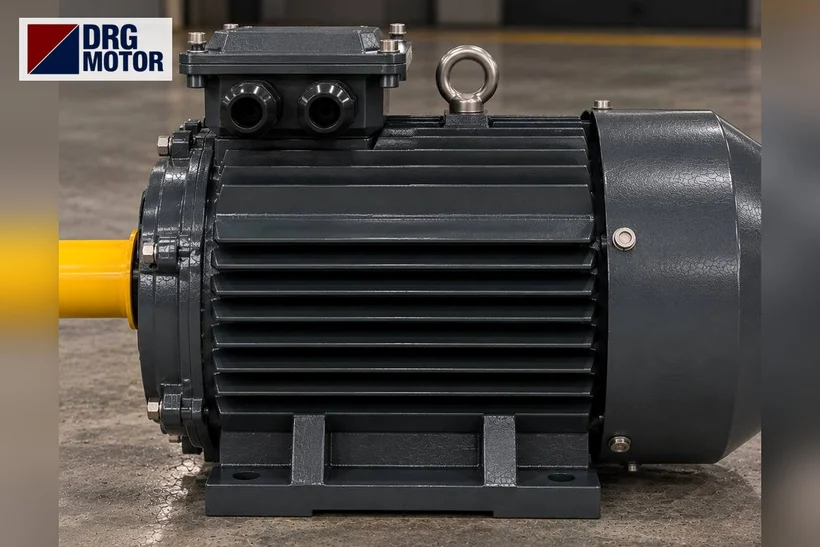
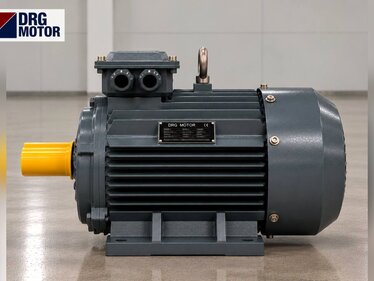
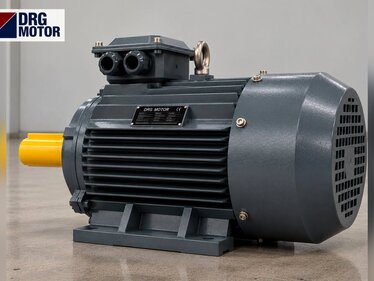
DRG Motor is a manufacturer, supplier and seller of electric motors. You can review the models you will commission by power and speed in the online motor shop, and the whole range in the three-phase asynchronous electric motors category. The checks below are an ordered guide to starting a new motor safely.
Safety first: isolate the supply and verify dead
Commissioning combines electrical and mechanical work, so every wiring and measurement step is done with the supply isolated. Open the panel, apply lock-out/tag-out and verify the terminals are dead with a suitable instrument. Connection, bridge changes and insulation measurement must be carried out only by authorised electrical personnel. This article is informative; for exact setpoints rely on the motor nameplate and the device documentation.
1. Nameplate check
The first step is reading the motor nameplate. The power (kW), speed (rpm), voltage/connection (e.g. 400/690 V Δ/Y), rated current and frequency must match what the project and the supply network expect. The voltage and connection line in particular determines the bridge layout you set in the next step. You can learn why the nameplate matters and what each line means in electric motor nameplate information.
2. Insulation resistance (megger) test
Even a brand-new motor from storage may have absorbed moisture. The insulation resistance between winding and frame is checked with an insulation tester (megger) before any energising. If the reading is low, the motor must be dried/assessed before power is applied. Instead of guessing a threshold, use the limit in the motor documentation; for the method and interpretation see motor insulation resistance (megger) test.
3. Is the Y/Δ bridge and terminal connection correct?
In three-phase motors the bridges in the terminal box connect the motor in star (Y) or delta (Δ) according to the supply voltage. A motor marked 400/690 V (Δ/Y) is bridged in delta on a 400 V three-phase network; a wrong bridge layout means either weak torque or winding stress. Set the bridges per the nameplate and check the terminal screw torque. To see the bridge layout step by step, the 3-phase motor wiring diagram and terminal links is a useful guide.
Click to see current electric motor prices and order nowSEE PRICES →
4. Direction of rotation check
The direction is verified before the motor is coupled to the load. Swapping any two of the three phases reverses the motor; in direction-sensitive applications such as pumps, fans and conveyors this can cause damage. A short energising lets you observe the direction, corrected if needed by swapping two phases. For the logic and safe practice of reversing, see changing motor rotation direction.
5. Off-load trial run
Once the bridge and direction are confirmed, the motor is run briefly decoupled from the load. During the off-load run you watch noise, vibration and bearing temperature; the off-load current should be clearly below the rated current. Higher-than-expected off-load current or unusual vibration points to a mounting/alignment issue. For the normal off-load current range, how many amps a motor draws off-load is helpful.
6. Monitoring under load and comparing rated current
If the off-load trial is clean, the motor is loaded and the drawn current compared with the rated current on the nameplate. If the measured current continuously exceeds the rated value, there is a problem with load, voltage or mechanical resistance. Below are the nameplate values of common 1500 rpm (4-pole) DRG models you can use as a reference during commissioning.
| Model | Power / Speed | Rated current (400 V) | Rated torque |
|---|---|---|---|
| DRG-112M-4 (aluminium) | 4 kW / 1500 rpm | 7.95 A | 26.3 Nm |
| DRG-132S-4 (aluminium) | 5.5 kW / 1500 rpm | 10.7 A | 36.0 Nm |
| DRG-132M-4 (aluminium) | 7.5 kW / 1500 rpm | 14.3 A | 49.1 Nm |
| DRG-160M-4 (aluminium) | 11 kW / 1500 rpm | 20.4 A | 71.7 Nm |
To check the measured values you can use the motor current chart, and to assess the cable side the motor cable size calculator. Set the thermal protection current from the nameplate rated current too, not by guesswork.
Commissioning checklist
- Supply isolated, lock-out/tag-out applied, dead state verified.
- Nameplate read; power, speed, voltage/connection and rated current match the project.
- Insulation resistance measured and above the documentation limit.
- Y/Δ bridges set per nameplate; terminal screws tight.
- Direction of rotation verified (two phases swapped if needed).
- Off-load trial done: noise, vibration, temperature and off-load current normal.
- Current under load within the rated value; thermal set to the nameplate.
Send a photo of your current motor nameplate and we will find the suitable DRG model together.Send on WhatsApp
Once you have chosen the right model you can compare all power and speed options through the shop.
Compare the power and speed options of the three-phase asynchronous motors you will commissionSEE PRICES
Frequently asked questions
Can I connect the load and start a new motor directly?
Not advisable. First verify the nameplate, insulation, bridge and direction, then do an off-load trial. Skipping these steps raises the risk of damage from wrong wiring or reverse rotation.
Is an insulation test required on a brand-new motor?
Yes. Moisture during storage and transport can affect the winding insulation; a megger check before energising is part of safe commissioning.
What do I do if the rotation is reversed?
Isolate the supply and swap any two of the three phases to correct the direction. This should be done by authorised personnel, and the direction re-observed afterwards.
If the current under load is above rated, where is the problem?
Excess load, low supply voltage, a wrong Y/Δ bridge or mechanical resistance. First compare with the nameplate values, then review the load and the connection.
Electric Motors Related to This Topic — Models and Current Prices
Suitability is not decided by power alone: compare the speed, voltage, mounting, shaft and fixing dimensions of your machine with the product data; if unsure, send us the nameplate of your current motor.
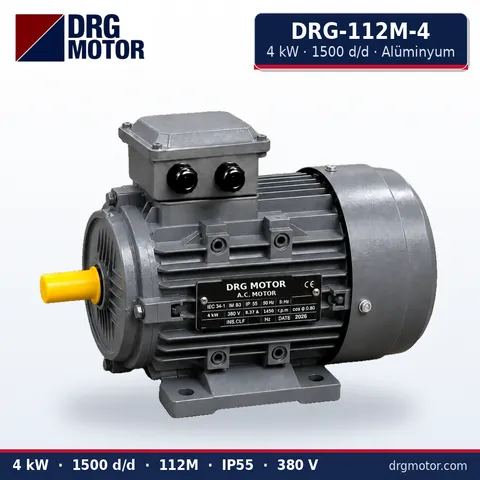
4 kW Three-Phase Motor 1500 rpm – DRG-112M-4 Aluminium
- 4 kW · 1500 rpm (4 poles)
- Aluminium frame · IEC 112M
- Shaft: 28 × 60 mm
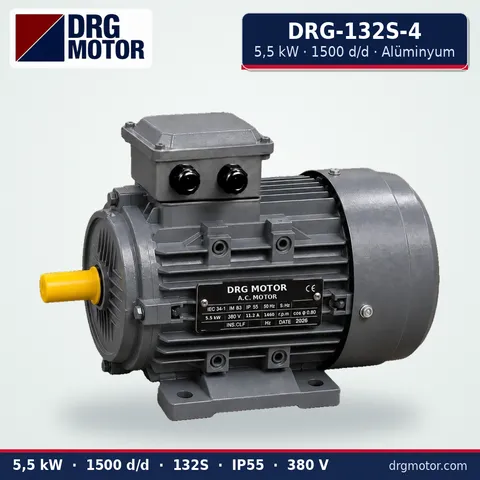
5.5 kW Three-Phase Motor 1500 rpm – DRG-132S-4 Aluminium
- 5.5 kW · 1500 rpm (4 poles)
- Aluminium frame · IEC 132S
- Shaft: 38 × 80 mm
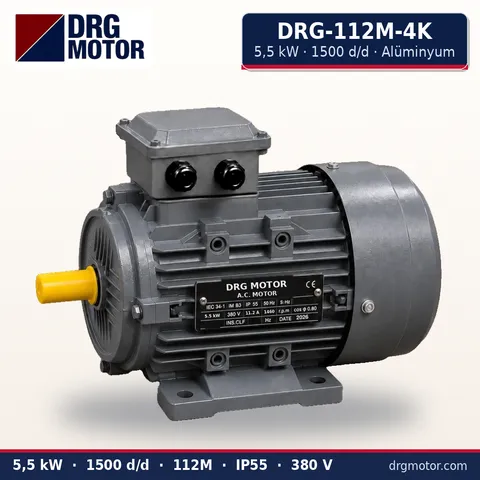
5.5 kW Compact Three-Phase Motor 1500 rpm – DRG-112M-4K Aluminium
- 5.5 kW · 1500 rpm (4 poles)
- Aluminium frame · IEC 112M
- Shaft: 28 × 60 mm
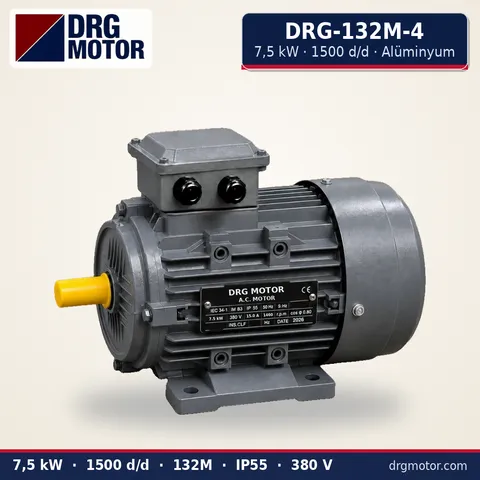
7.5 kW Three-Phase Motor 1500 rpm – DRG-132M-4 Aluminium
- 7.5 kW · 1500 rpm (4 poles)
- Aluminium frame · IEC 132M
- Shaft: 38 × 80 mm
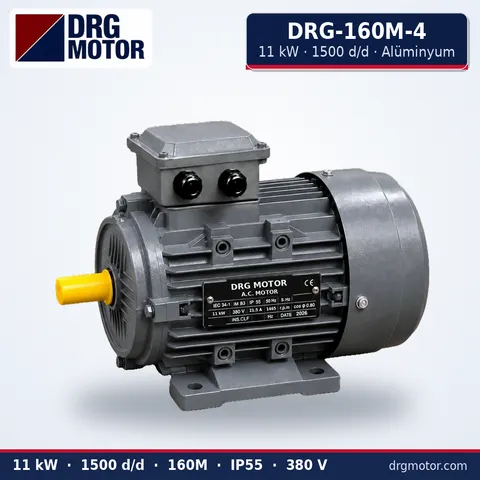
11 kW Three-Phase Motor 1500 rpm – DRG-160M-4 Aluminium
- 11 kW · 1500 rpm (4 poles)
- Aluminium frame · IEC 160M
- Shaft: 42 × 110 mm
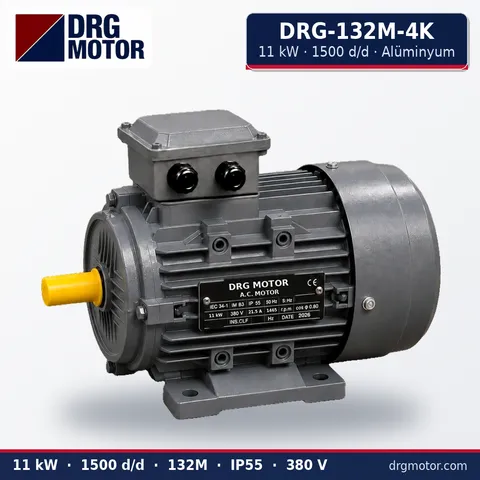
11 kW Compact Three-Phase Motor 1500 rpm – DRG-132M-4K Aluminium
- 11 kW · 1500 rpm (4 poles)
- Aluminium frame · IEC 132M
- Shaft: 38 × 80 mm