English
 Le français
 Türkçe




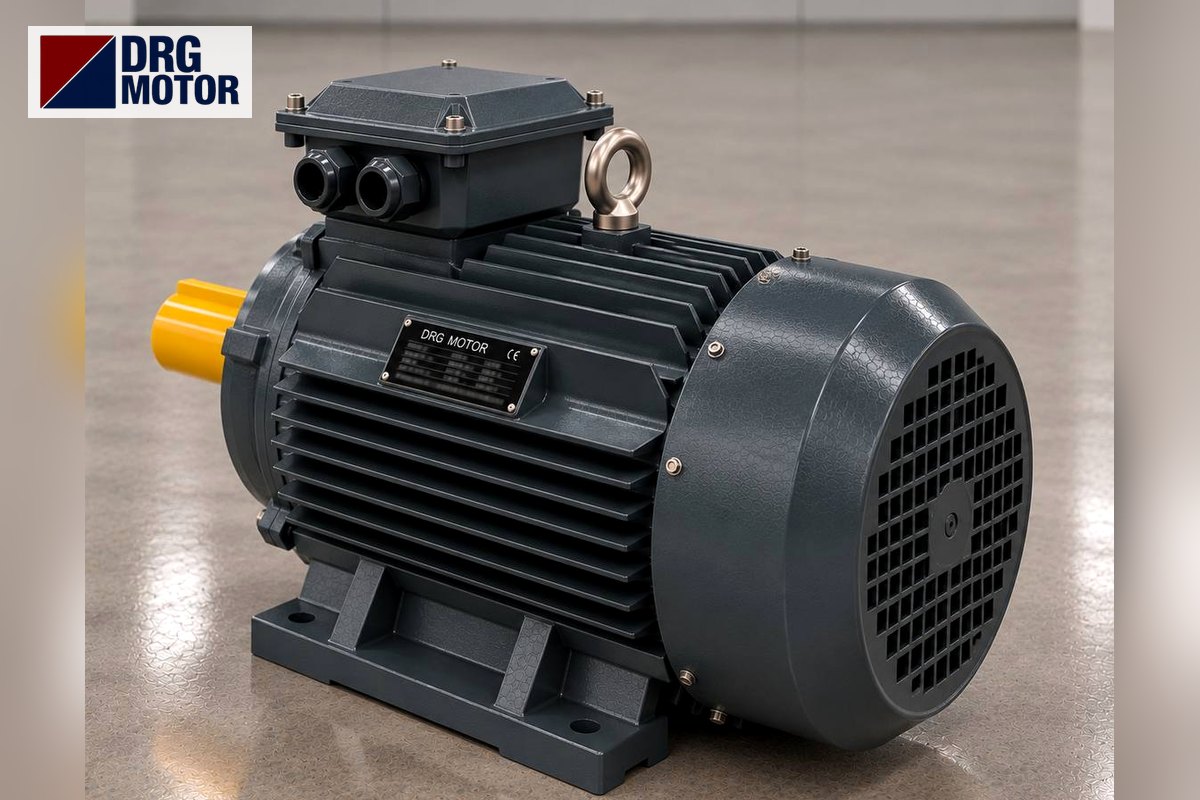

A motor phase protection relay is a small protective device that continuously monitors the three-phase supply and stops the motor by opening the control circuit when it detects a problem. It checks for phase loss, wrong phase sequence and imbalance between phases, and when danger appears it cuts the contactor's coil circuit to prevent damage to the motor. In short, it acts like a "guard" in front of the motor and steps in when a fault arrives from the supply side.
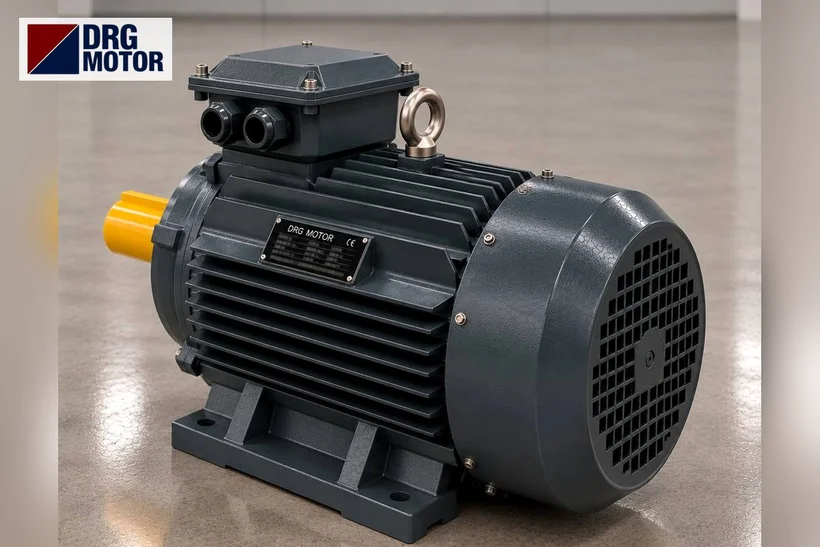
DRG Motor is a manufacturer, supplier and seller of electric motors. This article is a protection/information guide, not a field wiring instruction. You can review the three-phase models you plan to protect with a relay in the online motor shop and in the three-phase asynchronous electric motors category.
What is a phase protection relay?
A phase protection relay is a DIN-rail monitoring and control element placed inside the panel. It measures the three phase voltages relative to one another and changes the state of an output contact when things move outside a defined window. That contact is wired into the coil circuit of the contactor that switches the motor; when the relay says "there is a problem", the contactor drops out and power to the motor is removed. The relay does not carry the main current itself; its job is to monitor the supply and make a decision. That is why a small device can protect even a large motor, regardless of its power.
Two names from the same family are common: the phase sequence relay and the phase protection relay. Most modern devices do both, checking phase sequence, phase presence and balance in a single body.
What does the relay monitor? Three core tasks
The table below summarises the main conditions a phase protection relay watches and why they matter for the motor. Thresholds and delays vary by device; for exact behaviour consult the device documentation.
| Monitored condition | What it means | Relay response |
|---|---|---|
| Phase loss | One of three phases missing | Opens contact, drops contactor |
| Phase sequence | Phase order reversed | Does not allow running |
| Phase imbalance | Large difference between phases | Cuts when threshold exceeded |
| Under / over voltage | Voltage leaves the window | Cuts with delay (model-dependent) |
Phase sequence monitoring is especially valuable on loads where direction matters, such as pumps, compressors and conveyors: reverse rotation can damage the product or the mechanism. Phase loss and imbalance protection aim to stop the motor from single-phasing, drawing excess current and overheating.
Click to see current electric motor prices and order nowSEE PRICES →
Neutral and neutral-free phase protection relays
Relays on the market fall into two main types by how they measure. Which one suits you depends on whether a neutral conductor reaches the panel and on the type of monitoring you want.
Neutral-free (phase-to-phase) type
It uses only the three phases and measures voltage between phases (phase-to-phase). It needs no neutral conductor, so it is preferred in many motor panels where neutral is not run. It reliably monitors phase loss, phase sequence and phase-to-phase imbalance.
Neutral (phase-to-neutral) type
Besides the three phases it also uses the neutral conductor, measuring each phase against neutral (phase-to-neutral). This lets it see a drop in a single phase's own voltage in more detail and gives extra information about situations such as a broken neutral. It is used in installations where neutral reaches the panel.
The way to avoid a wrong choice is clear: if your panel has a neutral, either type can be considered; if there is no neutral, a neutral-free type is required. This distinction is set by the real wiring of your installation, not by a catalogue.
What is it for, and where does it sit in the panel?
The relay's job is to catch a supply-side problem before the motor is harmed. When a phase is lost or the phases become unbalanced, the motor may keep running without "noticing"; the relay sees that moment and cuts the control. Conceptually the relay sits on the control line between the supply and the contactor that switches the motor: it monitors the phases and controls the contactor coil through its output contact. The relay therefore does not carry the main power path; it only makes the "can run / cannot run" decision.
This placement should not be confused with a thermal overload relay. A thermal relay watches the current the motor draws and overload, while a phase protection relay watches the supply voltage and phase structure. The two complement each other: one secures the motor's load side, the other the grid side. Building the wiring diagram and routing the contact terminals to the right points requires expertise; for that reason this article only explains what the device does and gives no wiring steps.
What to look at when selecting a relay
When choosing the relay itself, three things stand out: which checks it performs (sequence only, or phase loss + imbalance + a voltage window too), the structure of your supply (with or without neutral), and whether the control contact suits the coil of the contactor you will use. It matters that the relay matches your motor's control logic, not its rated current, because the relay does not carry the main current. Still, knowing the right motor tells you what size of contactor and protection arrangement to build.
The table below gives the approximate 400 V rated currents of 1500 rpm (4-pole) DRG models. These values let you see which current band the contactor and thermal protection, supervised by the phase protection relay, should be chosen for.
| Model | Power | Rated current (400 V) | Speed class |
|---|---|---|---|
| DRG-112M-4 (aluminium) | 4 kW | 7.95 A | 4-pole / 1500 rpm |
| DRG-132S-4 (aluminium) | 5.5 kW | 10.7 A | 4-pole / 1500 rpm |
| DRG-132M-4 (aluminium) | 7.5 kW | 14.3 A | 4-pole / 1500 rpm |
| DRG-160M-4 (aluminium) | 11 kW | 20.4 A | 4-pole / 1500 rpm |
To clarify your motor's rated current, the motor current chart and, for general calculation, the electric motor calculator are helpful. If you are replacing the motor and the new current differs, review the contactor and thermal setting accordingly; the phase protection relay is chosen by monitoring type and neutral structure.
Safety: before wiring and setting
Mounting the phase protection relay in the panel, routing the control contacts to the contactor coil, and making measurements or settings are electrical work. Before starting, switch off the power, verify the absence of voltage with a suitable device, and have the wiring and setting carried out only by qualified electrical personnel. Set values such as the imbalance threshold or voltage window from the device documentation and the motor nameplate, not by guesswork. This article is general information, not a step-by-step wiring instruction.
Send a photo of your current motor nameplate and we will find the suitable DRG model together.Send on WhatsApp
Once you have clarified the power and speed of the motor whose protection you will build, you can compare the most suitable three-phase model through the shop.
See the three-phase asynchronous motor models in the power and speed you need, and current options, in the shopSEE PRICES
Frequently asked questions
Is a phase protection relay needed on every motor?
Rather than treating it as a legal must, it is sensible to view it as a strong protection method on installations where supply quality varies or where there is a risk of phase loss or reverse rotation. It is especially valuable in pump, compressor and conveyor applications where rotation direction is critical.
Does a phase protection relay replace the thermal relay?
No. They watch different things: the thermal relay the overcurrent and load the motor draws, the phase protection relay the supply voltage, phase presence and sequence. They are used together, not instead of each other.
Should I choose a neutral or neutral-free type?
That depends on whether a neutral conductor reaches your panel. With no neutral you need a phase-to-phase (neutral-free) type; with neutral available a phase-to-neutral type can also be used. The decision follows the real wiring of your installation.
Is the relay selected by the motor's power?
Because the phase protection relay does not carry the main current, it is matched not by its power but by the checks it performs and the structure of the supply. The motor's power instead sets the size of the contactor and thermal protection that the relay cuts.
Electric Motors Related to This Topic — Models and Current Prices
Suitability is not decided by power alone: compare the speed, voltage, mounting, shaft and fixing dimensions of your machine with the product data; if unsure, send us the nameplate of your current motor.
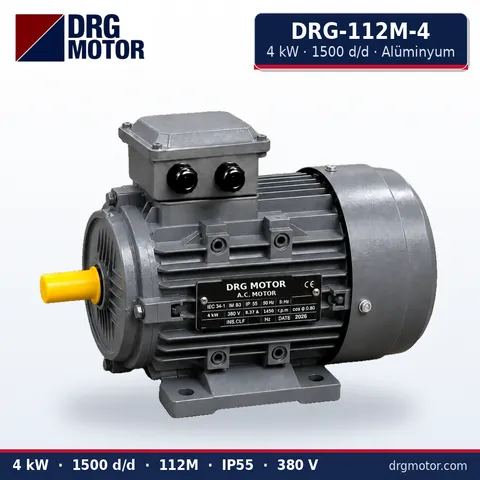
4 kW Three-Phase Motor 1500 rpm – DRG-112M-4 Aluminium
- 4 kW · 1500 rpm (4 poles)
- Aluminium frame · IEC 112M
- Shaft: 28 × 60 mm
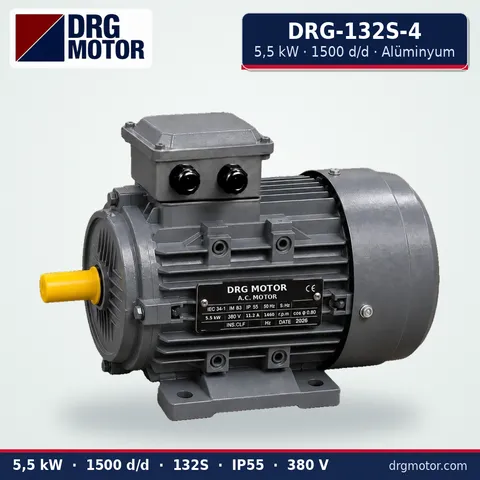
5.5 kW Three-Phase Motor 1500 rpm – DRG-132S-4 Aluminium
- 5.5 kW · 1500 rpm (4 poles)
- Aluminium frame · IEC 132S
- Shaft: 38 × 80 mm
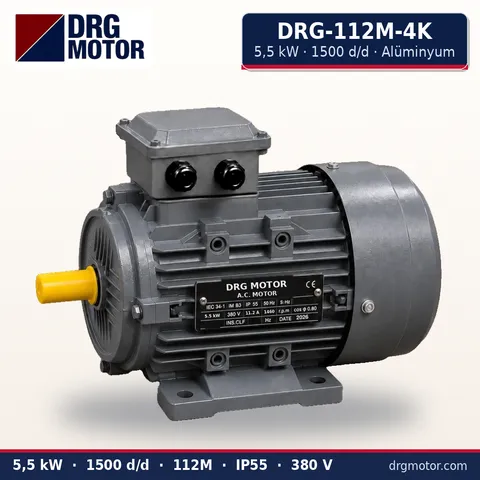
5.5 kW Compact Three-Phase Motor 1500 rpm – DRG-112M-4K Aluminium
- 5.5 kW · 1500 rpm (4 poles)
- Aluminium frame · IEC 112M
- Shaft: 28 × 60 mm
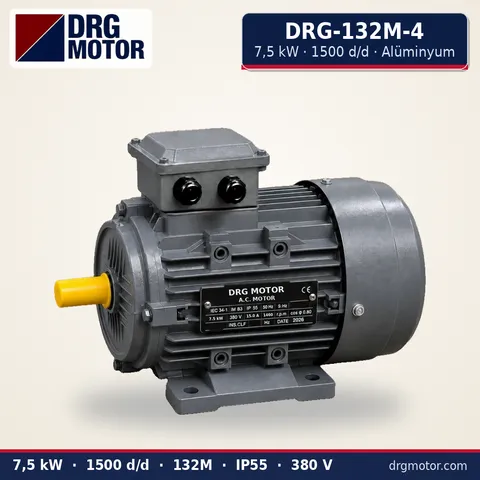
7.5 kW Three-Phase Motor 1500 rpm – DRG-132M-4 Aluminium
- 7.5 kW · 1500 rpm (4 poles)
- Aluminium frame · IEC 132M
- Shaft: 38 × 80 mm
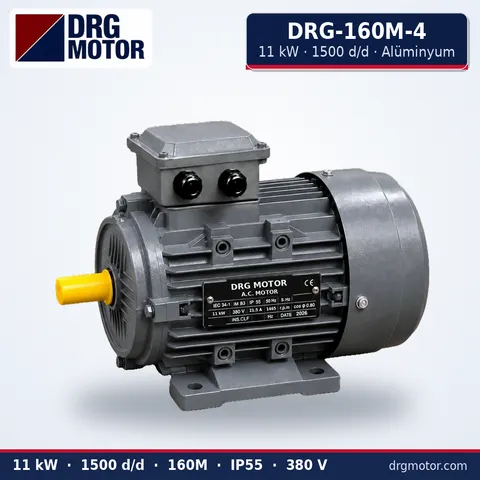
11 kW Three-Phase Motor 1500 rpm – DRG-160M-4 Aluminium
- 11 kW · 1500 rpm (4 poles)
- Aluminium frame · IEC 160M
- Shaft: 42 × 110 mm
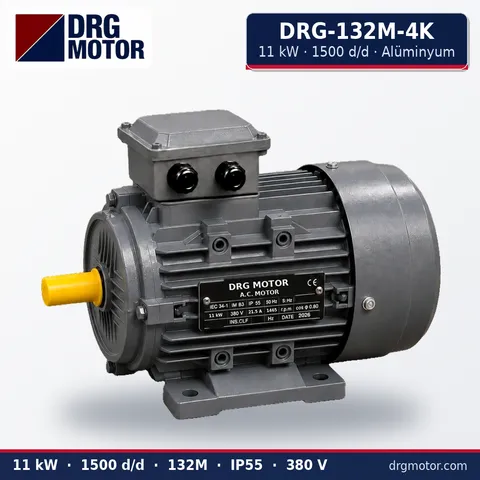
11 kW Compact Three-Phase Motor 1500 rpm – DRG-132M-4K Aluminium
- 11 kW · 1500 rpm (4 poles)
- Aluminium frame · IEC 132M
- Shaft: 38 × 80 mm