English
 Le français
 Türkçe






In most cases, yes: a steady, solid hum from the electric motor together with the airflow sound of the fan is normal. What deserves attention is any metallic rubbing, ticking, high-pitched whine or rhythmic knocking that rides on top of that baseline. This article explains, in plain language, how to tell a normal sound from an abnormal one, and which noise usually points to the bearings, which to the load, and which to an electrical cause.
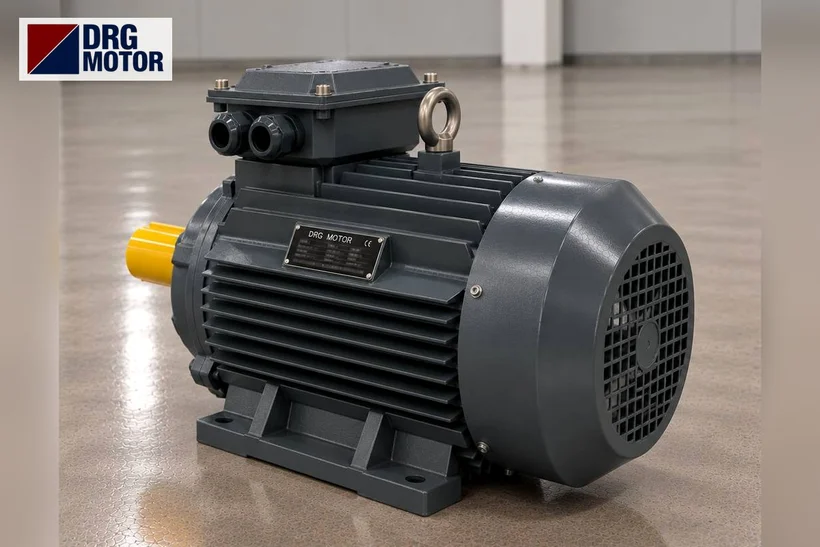
DRG Motor is a manufacturer, supplier and seller of electric motors. If, after judging the sound, you decide to renew your electric motor, you can find the model that best fits your need by power and speed in the online electric motor shop, and see every option together in the three-phase asynchronous electric motors category.
What does a normal electric motor sound like?
A healthy three-phase electric motor is not silent; it gives off a defined, regular and even sound. That sound has two main parts. The first is a light hum born from the magnetic field of the windings; a steady, continuous murmur that does not bother you. The second is the airflow from the cooling fan at the rear; the higher the speed (for example a 2-pole, 3000 rpm electric motor), the more noticeable this air sound becomes.
The key to a normal sound is stability: the tone does not change, it does not rise and fall, and no foreign noise mixes in. The best move is to listen to this sound when you first run the electric motor and commit it to memory, because it is the reference you will compare against if something changes later.
Abnormal sounds: what does the symptom tell you?
Every new sound on top of the normal baseline is a clue. The table below groups common abnormal sound types with their likely area and a first step. The table is not a diagnosis but a compass showing where to look.
| Sound heard | Area it is usually linked to | First step |
|---|---|---|
| Metallic rubbing / hissing | Bearing (dried grease, wear) | Have the bearing area checked |
| Rhythmic ticking / rattle | Loose part, fan cover, coupling | Review the mechanical fixings |
| High-pitched whine / rising hum | Electrical (supply, load, phase) | Have supply and load inspected |
| Heavy, pulsing growl | Overload / misalignment / vibration | Check the load and coupling alignment |
Click to see current electric motor prices and order nowSEE PRICES →
Sounds from the bearings
The electric motor shaft turns on two bearings, and that is usually the first place to make noise over time. As a bearing ages or its grease dries out, a fine metallic hiss, a continuous "ssss" or a regular grinding joins the even hum. This sound often changes with speed: it quickens as the electric motor speeds up and slows as it slows down.
Bearing sound usually develops gradually, which is why catching it early matters. If the rubbing has become clear, or a hand-felt rise in vibration accompanies it, it is best to have the electric motor assessed without straining it. If you are curious how the housing material affects vibration and sound behaviour, our article on the difference between aluminium and cast iron housings is a good read.
Load and mechanical sounds
Not every sound comes from inside the electric motor; some are born from the machine it drives or from the transmission parts. A loosening bolt, a slightly bent fan cover, a worn coupling or belt-pulley misalignment all produce ticks and knocking that seem to belong to the electric motor. In such cases the source is often not the motor housing but the mechanical link around it.
If you hear a heavy, pulsing growl, the electric motor may be straining: the load is higher than expected, something is jammed, or the shaft alignment is off. In that case heating and a rise in current often go with the sound. To review the right power class our electric motor calculator helps, and our article on how a three-phase electric motor works makes the source of the sound easier to understand.
Electrical sounds
Some sounds are not mechanical but come from the supply and the magnetics. A clearly rising hum, a shift into a high-pitched whine, or the electric motor singing "as if straining" in a different tone can point to an imbalance in the supply voltage, a phase problem or a load-related issue. These sounds are diagnosed not by ear but by measurement.
An important safety note belongs here: voltage, current and connection measurements should be carried out only by qualified electrical personnel. Before measuring, switch off the power and confirm it is dead. Judge exact threshold values (thermal setting, insulation resistance limit and the like) against the electric motor nameplate and the device documentation; do not set anything by a value picked up by hearsay.
When should you worry?
Saying "there is a sound" is not enough on its own; what matters is the sound changing. The following call for an expert: the tone changed suddenly, a new and foreign noise was added, vibration, heating or a burnt smell accompanies the sound, or the thermal protection trips ever more often. Each sign matters on its own, and seen together they call for an assessment without delay.
By contrast, the balanced hum and fan sound that have been the same since day one are usually not a problem. Listening to the electric motor regularly is the simplest way to catch early warnings.
An example class in DRG electric motors
If you decide to renew a worn electric motor, the 4-pole (about 1500 rpm) DRG models below give an idea, with their power and rated current at 400 V. The model codes link straight to the product page.
| Model | Power | Speed class | Current (400 V) |
|---|---|---|---|
| DRG-112M-4 | 4 kW | 1500 rpm | 7.95 A |
| DRG-132S-4 | 5.5 kW | 1500 rpm | 10.7 A |
| DRG-132M-4 | 7.5 kW | 1500 rpm | 14.3 A |
| DRG-160M-4 | 11 kW | 1500 rpm | 20.4 A |
For those who want a more compact housing, options such as the 5.5 kW DRG-112M-4K can also be reviewed in the online electric motor shop.
If you have decided to renew an electric motor whose sound has changed, click to see current prices and place your orderSEE PRICES
Frequently asked questions
My new electric motor hums, is that normal?
A steady, continuous and even hum together with a fan sound is normal; the airflow is especially noticeable on high-speed models. As long as no metallic rubbing, ticking or high-pitched whine mixes into the sound, there is usually nothing to worry about.
Can I tell from the sound whether it is the bearing or an electrical issue?
The ear gives a clue: metallic rubbing and a hiss that changes with speed usually suggest the bearing, while a sudden rise in hum and a high-pitched whine point to the electrical side. A firm diagnosis, however, is made by measurement and should be carried out by qualified electrical personnel.
Should I stop the electric motor immediately because of a sound?
If strong vibration, rapid heating, a burnt smell or sparks accompany the sound, stop and assess it for safety. For a mild, steady change in tone, it is enough to have the electric motor checked as soon as possible without straining it.
Send a photo of your current motor nameplate and we will find the suitable DRG model together.Send on WhatsApp
Electric Motors Related to This Topic — Models and Current Prices
Suitability is not decided by power alone: compare the speed, voltage, mounting, shaft and fixing dimensions of your machine with the product data; if unsure, send us the nameplate of your current motor.

4 kW Three-Phase Motor 1500 rpm – DRG-112M-4 Aluminium
- 4 kW · 1500 rpm (4 poles)
- Aluminium frame · IEC 112M
- Shaft: 28 × 60 mm
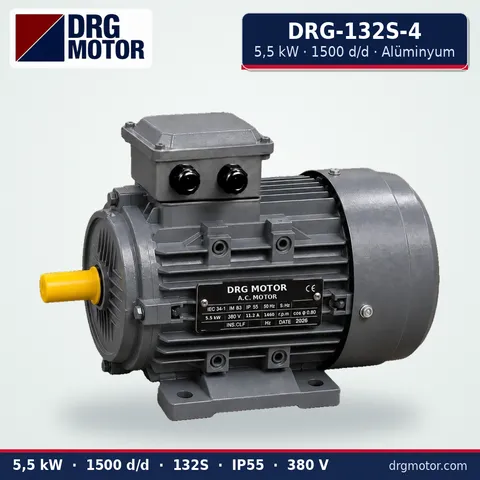
5.5 kW Three-Phase Motor 1500 rpm – DRG-132S-4 Aluminium
- 5.5 kW · 1500 rpm (4 poles)
- Aluminium frame · IEC 132S
- Shaft: 38 × 80 mm
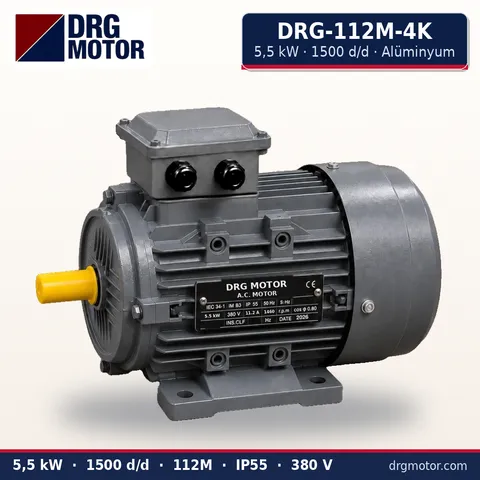
5.5 kW Compact Three-Phase Motor 1500 rpm – DRG-112M-4K Aluminium
- 5.5 kW · 1500 rpm (4 poles)
- Aluminium frame · IEC 112M
- Shaft: 28 × 60 mm
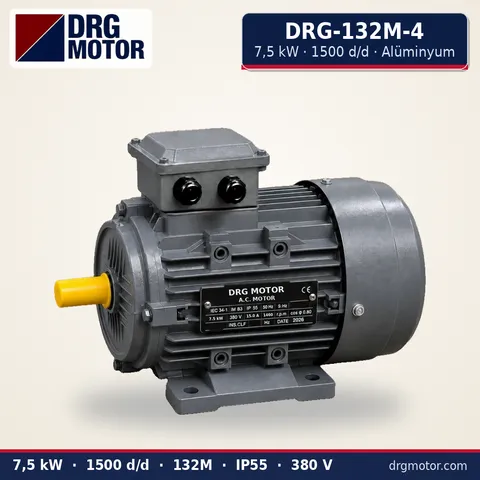
7.5 kW Three-Phase Motor 1500 rpm – DRG-132M-4 Aluminium
- 7.5 kW · 1500 rpm (4 poles)
- Aluminium frame · IEC 132M
- Shaft: 38 × 80 mm
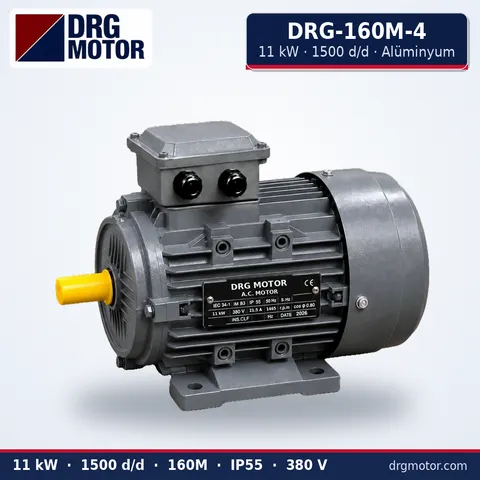
11 kW Three-Phase Motor 1500 rpm – DRG-160M-4 Aluminium
- 11 kW · 1500 rpm (4 poles)
- Aluminium frame · IEC 160M
- Shaft: 42 × 110 mm
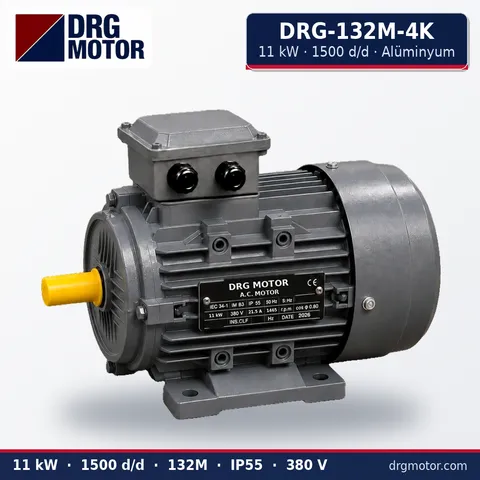
11 kW Compact Three-Phase Motor 1500 rpm – DRG-132M-4K Aluminium
- 11 kW · 1500 rpm (4 poles)
- Aluminium frame · IEC 132M
- Shaft: 38 × 80 mm