 English
 Le français
 Türkçe

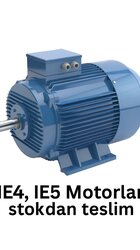
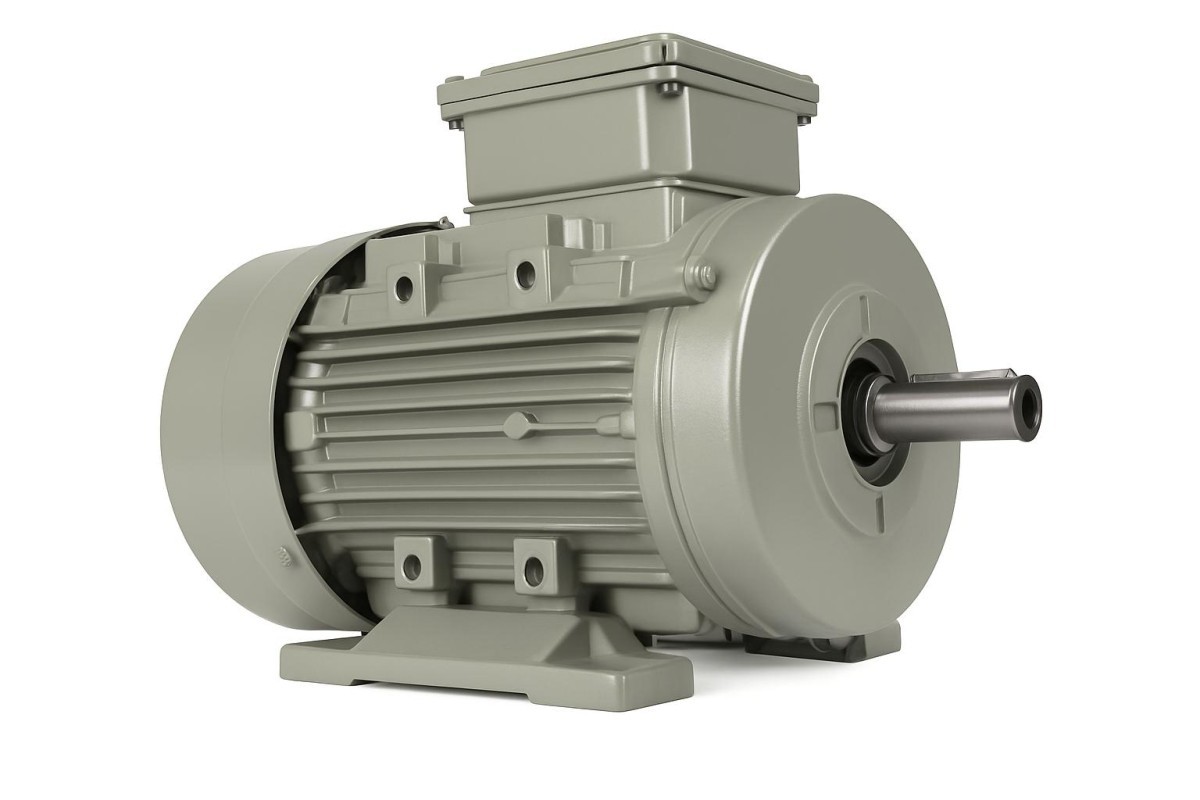

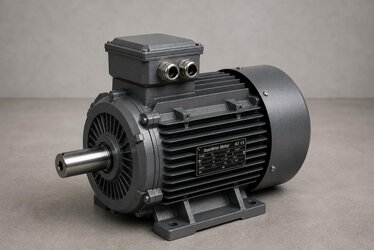
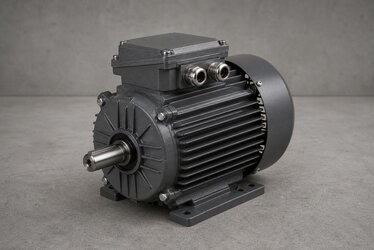
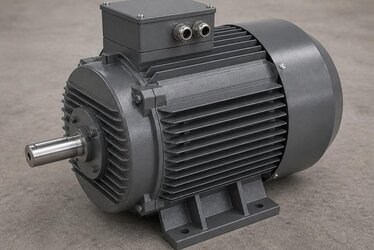
A three-phase electric motor runs on the rotating magnetic field created by alternating current from three separate phases, and is the most widely used motor type in industry. Unlike single-phase motors, it needs no auxiliary winding or capacitor to start, which makes it more efficient, more balanced and longer-lasting.
How Does a Three-Phase Motor Work?
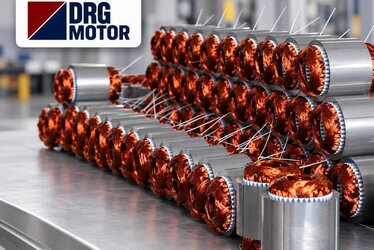
When three-phase current is applied to three winding groups placed 120 degrees apart in the stator, a magnetic field rotating at constant speed is produced. This field induces current in the rotor and drags it along. The rotor always turns slightly slower than the field; this difference, called slip, is the basis of asynchronous operation.
Speed and Pole Count
On a 50 Hz supply the synchronous speed depends on the pole count: 2 poles give 3000 rpm, 4 poles 1500 rpm and 6 poles 1000 rpm. Pumps and fans typically use 1500 rpm, while high-speed applications use 3000 rpm motors.
Applications and Advantages
Conveyors, pumps, fans, compressors, crushers and production lines are all driven by three-phase motors. High power density, low maintenance, high efficiency (IE3/IE4/IE5) and vibration-free operation make them the industry standard.
Choosing the Right Three-Phase Motor
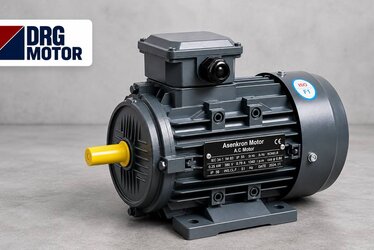
Selection weighs power (kW), speed (pole count), mounting type (B3/B5/B14), protection class (IP55) and efficiency class together. DRG Motor offers IE3–IE5 three-phase asynchronous motors from 0.55 to 355 kW to match these criteria.