English
 Le français
 Türkçe




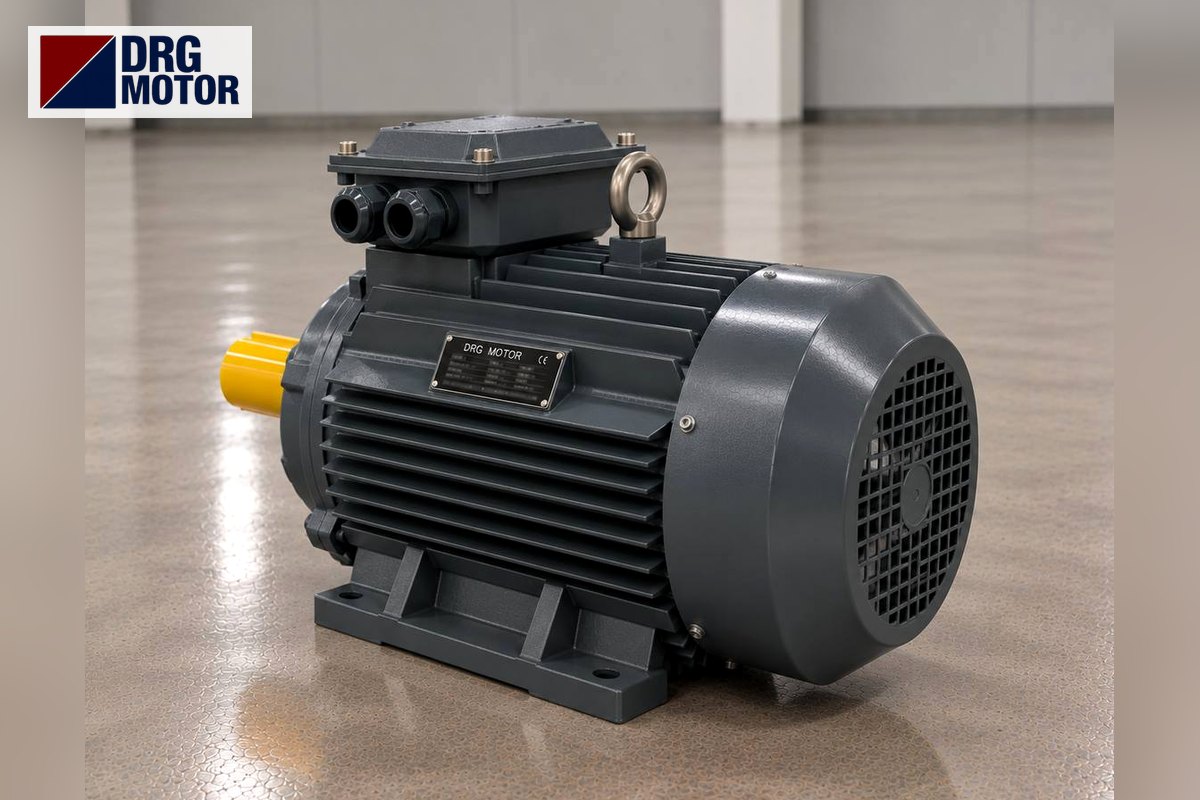

When an electric motor vibrates, it reveals an imbalance in the rotating parts or a defect in the system the motor is attached to. The most common causes are unbalance, coupling (shaft) misalignment, bearing wear, a loose foot or mounting, a bent shaft, and rotor bar problems. Correct diagnosis means observing when and how the vibration appears and matching it to a likely cause.
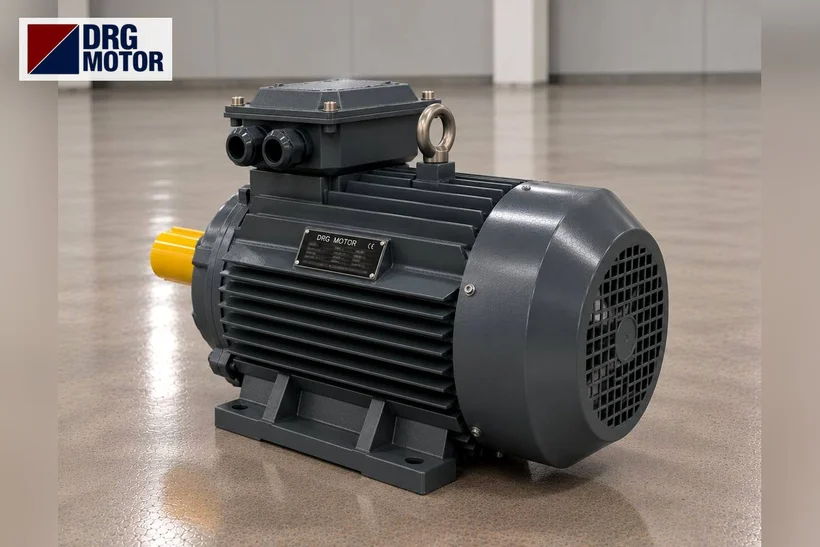
DRG Motor is a manufacturer, supplier and seller of electric motors. This article is a fault/information guide, not a field work instruction. You can review three-phase models in the right power and speed in the online motor shop and in the three-phase asynchronous electric motors category.
What does vibration tell you?
A healthy three-phase asynchronous motor runs with a light, steady hum; a strong shake you can feel by hand or a wandering sway in the frame is not normal. Vibration is often the result not of a single fault but of the motor and the machine it drives acting together. So the first step in diagnosis is to separate "is the motor vibrating, or is the system shaking it?"
As vibration grows, bearing life shortens, bolts loosen, and couplings and seals wear out; over time noise, heating and energy loss follow. Spotting vibration early and finding its source therefore protects both the motor and the driven machine.
Symptom → likely cause table
The table below matches the observed behaviour with a likely cause. This is a preliminary assessment; a definite result requires measurement and inspection.
| Symptom | Most visible when | Likely cause | First place to check |
|---|---|---|---|
| Steady shake in step with speed | At any load | Unbalance (rotor, pulley, fan) | Balance of rotating parts, deposits |
| Strain and heating at the coupling | With the load connected | Coupling/shaft misalignment | Shaft alignment, coupling condition |
| Clicking, growling, metallic noise | Grows as it warms | Bearing wear/damage | Bearing noise, lubrication |
| Sway that travels into the floor | At start and running | Loose foot/mounting, weak base | Mounting bolts, base flatness |
| Shaft run-out, axial play | Even off-load | Bent shaft, poor rotor seating | Shaft run-out, impact marks |
| Periodic rising-falling vibration | Under load | Rotor bar problem (electrical) | Behaviour under load, current swing |
Click to see current electric motor prices and order nowSEE PRICES →
Main causes of vibration
Unbalance: When the weight distribution of the rotor, pulley or fan blade is disturbed, a centrifugal force appears during rotation and produces a shake in step with speed. Dust and mud building up on blades, a lost balance weight or a wrongly fitted pulley are common reasons.
Coupling/shaft misalignment: If the motor shaft and the driven machine shaft are not on the same axis, the coupling is strained on every turn. Parallel, angular and axial offset amplify vibration; this is an alignment task in its own right, covered in detail in our coupling alignment article.
Bearing wear: Bearings left without grease, contaminated, or at the end of their life create clicking and high-frequency vibration. Bearing noise and replacement is a separate topic with its own symptoms.
Loose foot/mounting: A foot that does not sit flat (soft foot), a loosened bolt or a weak base both amplifies vibration and carries it into the structure. It is often the easiest cause to fix yet the most overlooked.
Bent shaft: A transport impact, a drop or excessive radial load can bend the shaft; the motor then shows run-out even off-load. Measuring the run-out at the shaft end gives a clue.
Rotor bar problem: In a squirrel-cage rotor a broken or cracked bar is electrical in origin and produces a periodic vibration and current swing that varies with load. Unlike the others, it becomes clearer as load increases.
Mechanical or electrical?
For a quick split, watch how the vibration behaves the moment power is cut: if it disappears instantly and turns into a mere coast-down noise, the source is probably electrical (e.g. a rotor bar). If vibration and noise persist while the motor spins freely after power-off, the cause is mechanical (unbalance, bearing, misalignment). This simple observation steers the search the right way. A firm diagnosis may require measurement and disassembly; the work must be done by authorised electrical and maintenance staff, after power is cut and de-energisation is verified.
DRG 4-pole models at example powers
If you are planning a new motor at the same power and speed instead of one whose vibration cannot be cured or whose winding or rotor is damaged, the 1500 rpm (4-pole) aluminium-housing DRG models below are common examples. The model codes link straight to the product page; the voltage on all of them is 400/690 V (Δ/Y).
| Model | Power | Speed | Shaft dia. |
|---|---|---|---|
| DRG-112M-4 | 4 kW | 1450 rpm | 28 mm |
| DRG-132S-4 | 5.5 kW | 1460 rpm | 38 mm |
| DRG-132M-4 | 7.5 kW | 1460 rpm | 38 mm |
| DRG-160M-4 | 11 kW | 1465 rpm | 42 mm |
If you do not know your current motor's power and speed, you can compare values such as motor current and cable size with the motor current chart and electric motor calculator tools.
What to check to reduce vibration
For information, when narrowing down the source the following points are usually reviewed: deposits and balance on rotating parts, tightness of the foot bolts and flatness of the base, coupling condition and shaft alignment, bearing noise and lubrication, run-out at the shaft end, and whether the vibration changes under load. These checks give an idea; before any intervention the power must be cut and the work done by authorised staff. For exact adjustment/measurement limit values, follow the motor nameplate and the driven machine's documentation.
When does a new motor make sense?
Vibration from bearings or alignment is usually solved by maintenance. But if the motor has a bent rotor, a damaged winding or has been rewound several times and the vibration has become chronic, a new motor at the right power and speed is often the safer, uninterrupted solution. If you are unsure which model fits, share your current motor's nameplate and we can decide together.
Send a photo of your current motor nameplate and we will find the suitable DRG model together.Send on WhatsApp
Click to see current prices of the three-phase motor that fits your needsSEE PRICES
Frequently asked questions
Is a little vibration normal?
A healthy motor runs lightly and steadily; vibration you can clearly feel by hand, that grows over time or is joined by noise or heating is not considered normal and its source should be investigated.
Does the vibration come from the motor itself?
Not always. System-related causes such as loose mounting, a poorly aligned coupling or an unbalanced pulley can shake the motor. How the vibration behaves when power is cut hints at the mechanical/electrical split.
Can vibration damage the motor?
Yes. Continuous vibration shortens bearing life, loosens bolts and wears seals and couplings; if ignored it can progress to shaft and winding damage.
Should I keep running a vibrating motor?
If there is clear vibration, a burning smell or overheating, stop the motor and find the source. Cut the power before any check and have the work done by authorised staff.
Electric Motors Related to This Topic — Models and Current Prices
Suitability is not decided by power alone: compare the speed, voltage, mounting, shaft and fixing dimensions of your machine with the product data; if unsure, send us the nameplate of your current motor.

4 kW Three-Phase Motor 1500 rpm – DRG-112M-4 Aluminium
- 4 kW · 1500 rpm (4 poles)
- Aluminium frame · IEC 112M
- Shaft: 28 × 60 mm
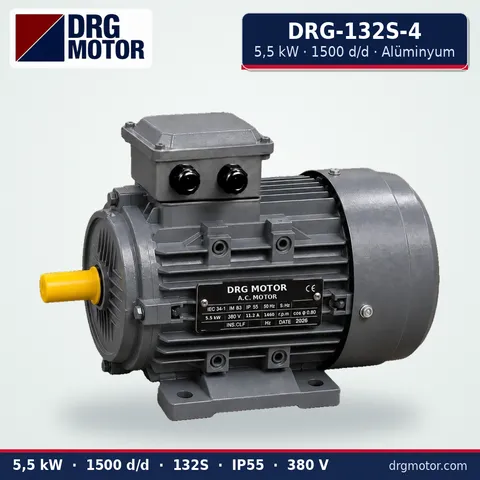
5.5 kW Three-Phase Motor 1500 rpm – DRG-132S-4 Aluminium
- 5.5 kW · 1500 rpm (4 poles)
- Aluminium frame · IEC 132S
- Shaft: 38 × 80 mm
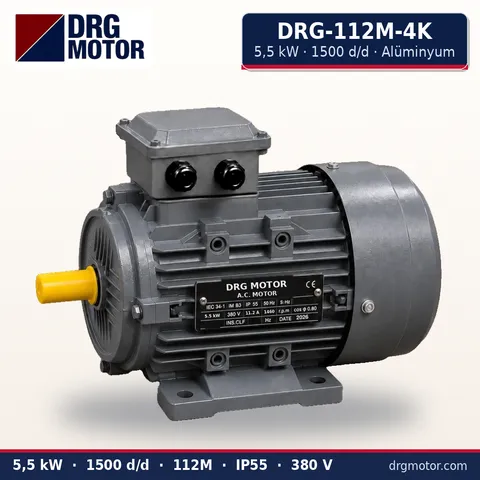
5.5 kW Compact Three-Phase Motor 1500 rpm – DRG-112M-4K Aluminium
- 5.5 kW · 1500 rpm (4 poles)
- Aluminium frame · IEC 112M
- Shaft: 28 × 60 mm
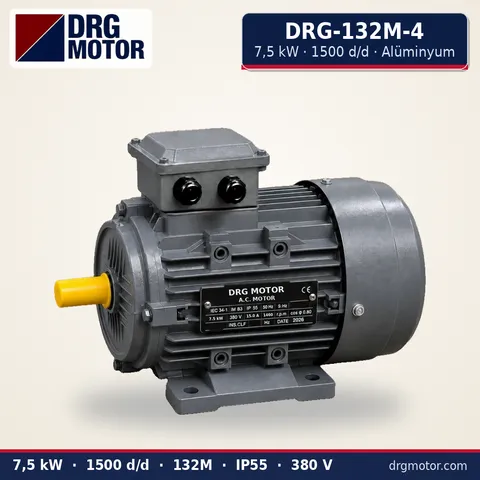
7.5 kW Three-Phase Motor 1500 rpm – DRG-132M-4 Aluminium
- 7.5 kW · 1500 rpm (4 poles)
- Aluminium frame · IEC 132M
- Shaft: 38 × 80 mm
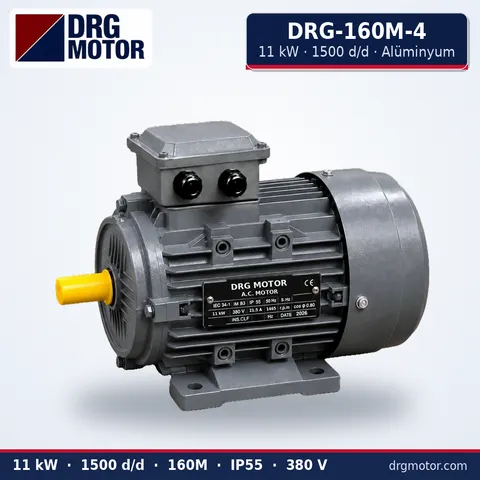
11 kW Three-Phase Motor 1500 rpm – DRG-160M-4 Aluminium
- 11 kW · 1500 rpm (4 poles)
- Aluminium frame · IEC 160M
- Shaft: 42 × 110 mm
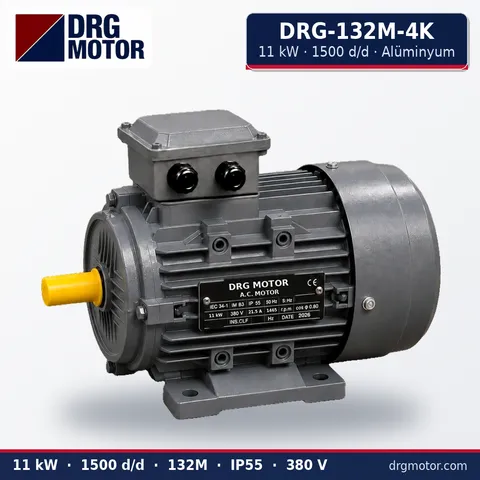
11 kW Compact Three-Phase Motor 1500 rpm – DRG-132M-4K Aluminium
- 11 kW · 1500 rpm (4 poles)
- Aluminium frame · IEC 132M
- Shaft: 38 × 80 mm