English
 Le français
 Türkçe




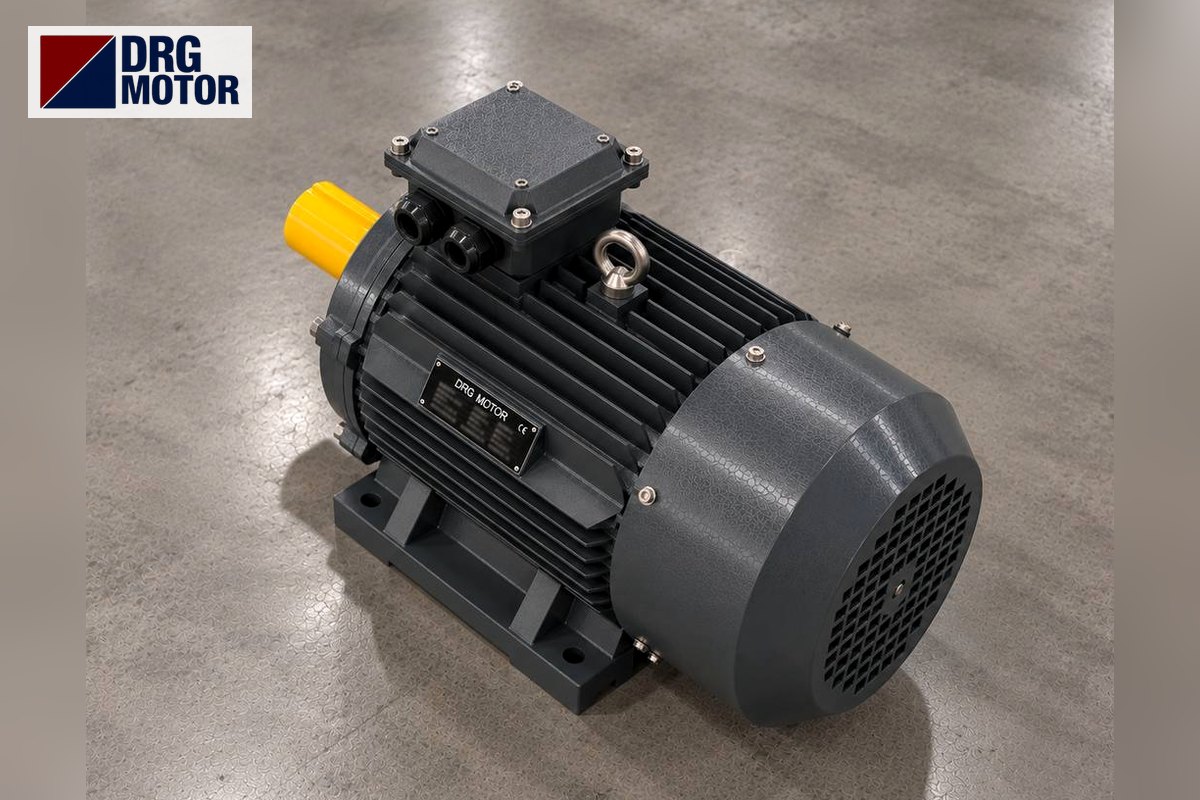

If the speed drops noticeably when the load comes on, the motor groans and strains, or it stalls altogether, don't look for a single cause: the most common reasons are mechanical overload, a drop in supply voltage, the loss of one phase, damage in the rotor cage, and very often an incorrect or undersized power choice made at the outset. Below we explain how to tell these causes apart and why the lasting fix is usually to pick a motor with the right power for the job.
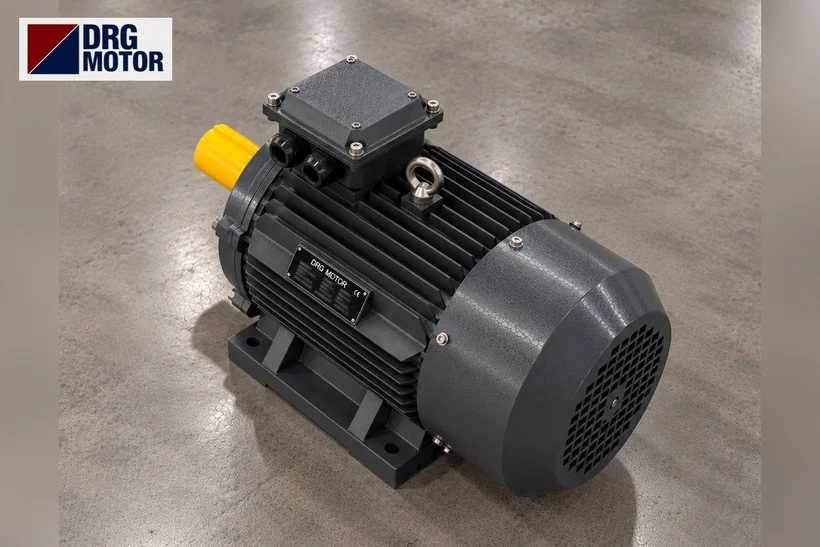
DRG Motor is a manufacturer, supplier and seller of electric motors. You can compare the three-phase models that suit your need by power and speed in the online motor shop, and see the whole range in the three-phase asynchronous electric motors category.
First, know what is normal: a small speed drop is not a fault
In three-phase asynchronous motors a certain speed drop under load is a natural result of how they work; it is called slip. For example, a motor in the 1500 rpm class has a nameplate speed of about 1450 rpm, because it turns a few points below synchronous speed in order to drag the load. So a small difference, such as 1455 rpm off load and 1450 rpm at full load, is normal. The problem is when the speed falls much further under load, the motor heats up, the fuse trips, or it strains on starting. The causes below explain that abnormal slowing.
Cause 1 — Mechanical overload
The most common reason is that the load torque exceeds the motor's rated torque. A seized bearing, an over-tight belt, a thicker mixed product, a blocked pump or friction that has grown over time all raise the torque demanded from the motor. As the motor tries to meet it, it draws more current, slows down and heats up. Here, first check the mechanical side: does the shaft turn easily by hand, is the belt-pulley tension correct, is anything binding in the transmission? If the mechanical load truly exceeds what is needed, the fix is not to overwork the motor but to move to a model with suitable torque.
Cause 2 — Low supply voltage
In an asynchronous motor torque is proportional to the square of the applied voltage. When the voltage drops a little, torque falls much more; the motor cannot carry the load and slows. A long, thin supply cable, a weak network or other large loads on the same line pulling the voltage down at start-up all create this effect. You can check whether the cable cross-section is adequate with the motor cable size calculator, and whether the drawn current matches the expected value with the motor current chart. The voltage should be balanced across all three phases and at its nominal level.
Cause 3 — Loss of a phase (single-phasing)
If one of the three phases is lost, the motor loses serious power: it cannot start under load, or if already running it slows markedly, hums, overheats and draws high current from the remaining phases. The cause is usually a blown fuse, a loose terminal, a broken conductor or a faulty contactor tip. A lost phase is dangerous for the windings; letting the motor keep running like this can burn the winding in a short time. At any such sign, stop the motor immediately.
Click to see current electric motor prices and order nowSEE PRICES →
Cause 4 — Damage in the rotor cage
A cracked or broken bar in the rotor cage is a more insidious fault. The motor may look normal off load, but when the load comes on its torque falls, its speed fluctuates and the current it draws rises and falls at regular intervals. A faint hum and vibration often come with it. If you suspect this, the motor should be examined in an authorised rewinding/maintenance workshop; a firm diagnosis is hard under field conditions.
Cause 5 — Wrong or undersized power choice
Sometimes the motor has no fault at all; it was simply chosen too small for the application. An undersized motor will always strain at full load, heat up and lose speed. Here the lasting fix is to move to a power that comfortably meets the load torque. The table below lists the rated torque and the current at 400 V of the aluminium DRG models in the 1500 rpm (4-pole) class; the model names link straight to the product page.
| Model | Power / Speed | Torque | Rated current (400 V) |
|---|---|---|---|
| DRG-112M-4 (aluminium) | 4 kW / 1500 rpm | 26.3 Nm | 7.95 A |
| DRG-132S-4 (aluminium) | 5.5 kW / 1500 rpm | 36.0 Nm | 10.7 A |
| DRG-112M-4K (K) (aluminium) | 5.5 kW / 1500 rpm | 36.0 Nm | 10.7 A |
| DRG-132M-4 (aluminium) | 7.5 kW / 1500 rpm | 49.1 Nm | 14.3 A |
| DRG-160M-4 (aluminium) | 11 kW / 1500 rpm | 71.7 Nm | 20.4 A |
| DRG-132M-4K (K) (aluminium) | 11 kW / 1500 rpm | 71.7 Nm | 20.4 A |
Torque can also be tracked with T = 9550 · P / n: as power (kW) rises, torque at the same speed rises too. The torque your load needs must stay below the rated torque of the motor you choose; otherwise the motor runs permanently in high slip. To get a rough idea of the required power and torque, use the electric motor calculator. Compact (K) models offer the same power in a shorter frame, fitting tight mounting spaces.
Safe checking: what to look at, in order
Narrow the diagnosis in this order: first mechanical (does the shaft turn by hand, has the load grown), then supply (presence of all three phases and the voltage level), then the motor itself (heating, noise, vibration, current balance). When an electrical check or connection is needed, switch off the supply, confirm it is de-energised, and leave the work to qualified electrical personnel only. Set protection values such as the thermal relay current from the rated current on the motor nameplate, not from memory; for insulation/winding measurement thresholds, follow the instrument's documentation. If the fault recurs or the winding is heating, do not keep running the motor.
Send a photo of your current motor nameplate and we will find the suitable DRG model together.Send on WhatsApp
If your motor slows under load and you have decided the answer is a model with the right power, you can compare all power and speed options through the shop.
See the three-phase asynchronous motor models sized for your load, with current prices, in the shopSEE PRICES
Frequently asked questions
What should I check first if the motor slows under load?
Start with the mechanics: does the shaft turn freely by hand, is the belt over-tight, has the load grown? If the mechanics are fine, move to the supply; have it checked that all three phases arrive and the voltage is not dropping. Let qualified personnel do the electrical check.
Why does the motor slow when it loses a phase?
When one of the three phases is lost, the rotating field weakens; the motor cannot start under load or slows, hums and draws high current from the remaining phases, heating up. In this case the motor must be stopped at once, or the winding may be damaged.
Will moving up one power step solve the slowing?
If the problem really comes from undersizing or chronic overload, moving to a power that comfortably meets the load torque is the lasting fix. But if there is a fault such as a lost phase, low voltage or rotor damage, that must be cured first; a bigger motor will not hide the fault.
Is a small speed drop under load normal?
Yes. An asynchronous motor turns a few points below synchronous speed in order to drag the load; in the 1500 rpm class, seeing about 1450 rpm at full load is normal. What is abnormal is the speed falling much further under load and the motor heating up.
Electric Motors Related to This Topic — Models and Current Prices
Suitability is not decided by power alone: compare the speed, voltage, mounting, shaft and fixing dimensions of your machine with the product data; if unsure, send us the nameplate of your current motor.
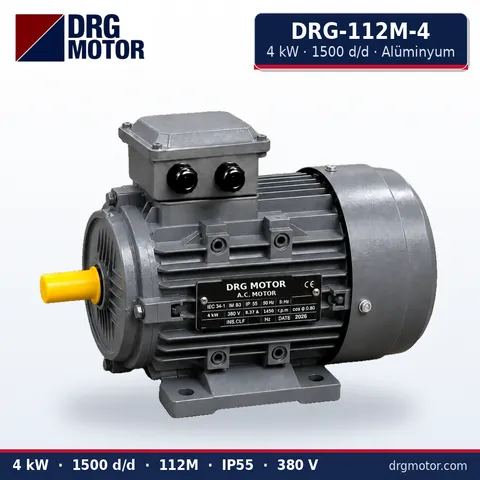
4 kW Three-Phase Motor 1500 rpm – DRG-112M-4 Aluminium
- 4 kW · 1500 rpm (4 poles)
- Aluminium frame · IEC 112M
- Shaft: 28 × 60 mm
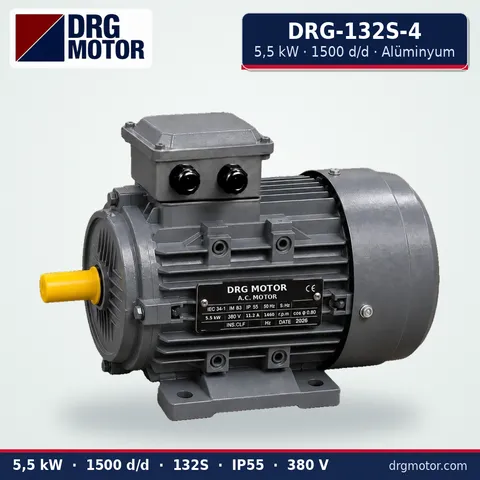
5.5 kW Three-Phase Motor 1500 rpm – DRG-132S-4 Aluminium
- 5.5 kW · 1500 rpm (4 poles)
- Aluminium frame · IEC 132S
- Shaft: 38 × 80 mm
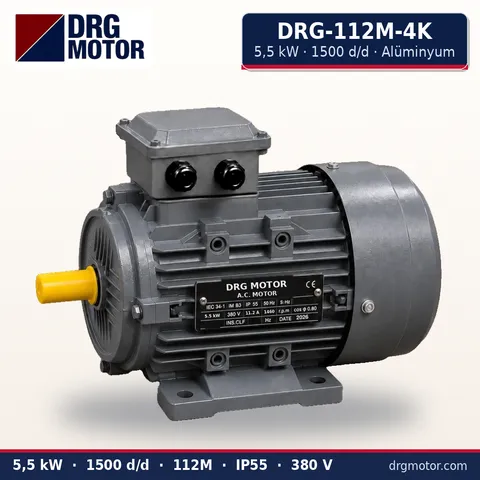
5.5 kW Compact Three-Phase Motor 1500 rpm – DRG-112M-4K Aluminium
- 5.5 kW · 1500 rpm (4 poles)
- Aluminium frame · IEC 112M
- Shaft: 28 × 60 mm
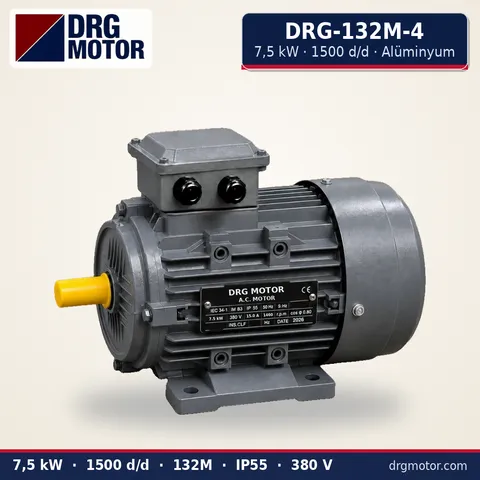
7.5 kW Three-Phase Motor 1500 rpm – DRG-132M-4 Aluminium
- 7.5 kW · 1500 rpm (4 poles)
- Aluminium frame · IEC 132M
- Shaft: 38 × 80 mm
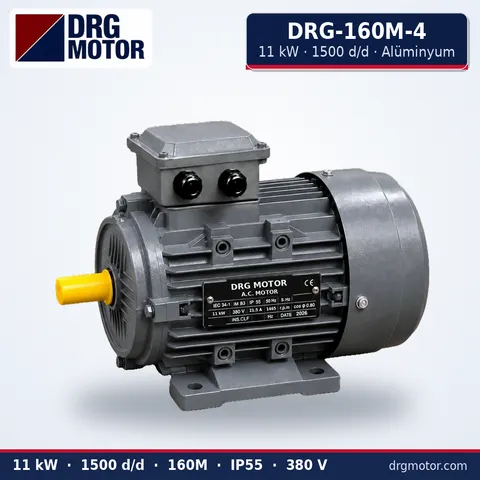
11 kW Three-Phase Motor 1500 rpm – DRG-160M-4 Aluminium
- 11 kW · 1500 rpm (4 poles)
- Aluminium frame · IEC 160M
- Shaft: 42 × 110 mm
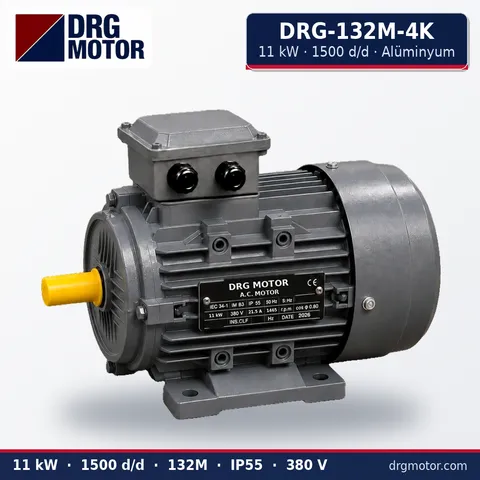
11 kW Compact Three-Phase Motor 1500 rpm – DRG-132M-4K Aluminium
- 11 kW · 1500 rpm (4 poles)
- Aluminium frame · IEC 132M
- Shaft: 38 × 80 mm