English
 Le français
 Türkçe




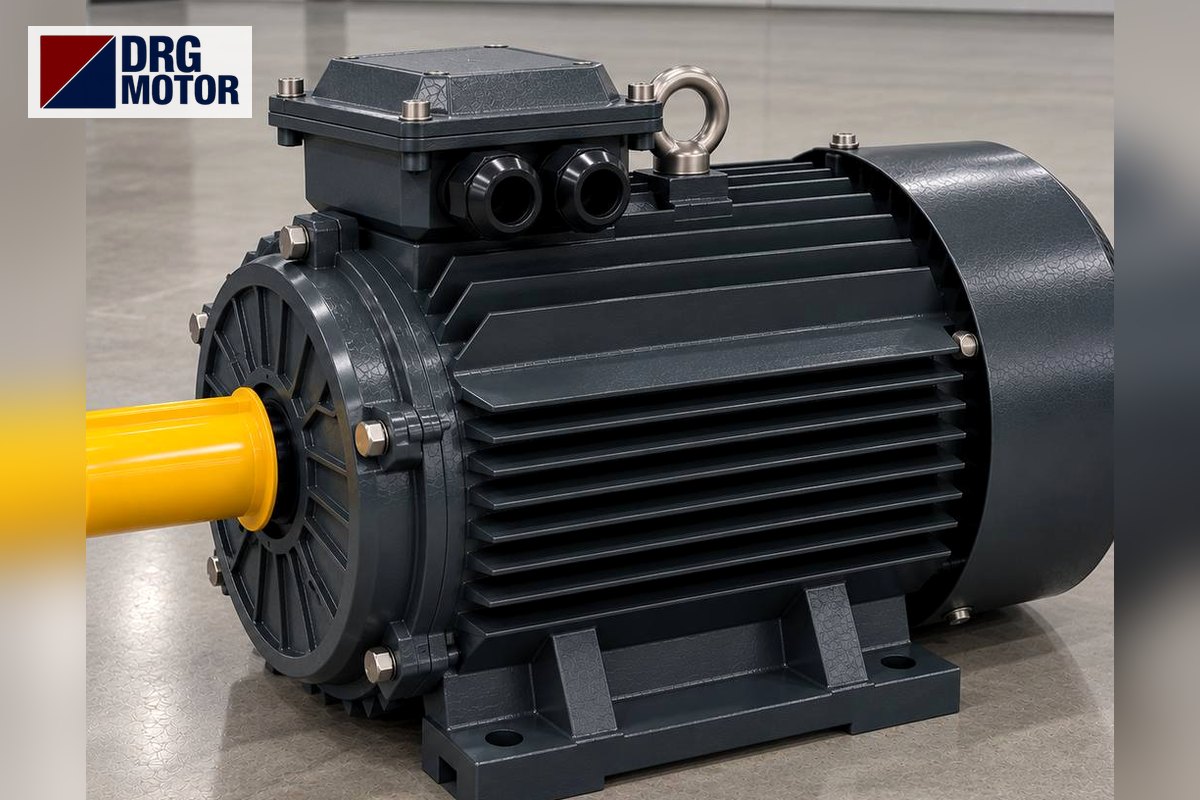

Choosing the right electric motor power for an application is not about picking a kW figure off the top of your head; it means translating the torque and speed your load needs into a rated power, then taking the standard step just above that value. In short: calculate the power required, then pick the nearest higher standard kW rating.
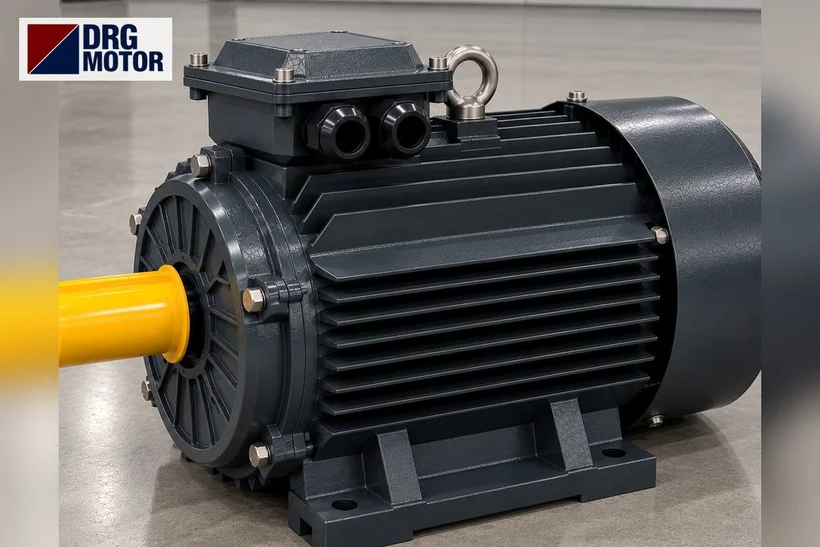
DRG Motor is a manufacturer, supplier and seller of electric motors. Once you have settled on the power that best fits your need, you can compare every three-phase model by power and speed in the online motor shop and in the three-phase asynchronous electric motors category.
How power, torque and speed are linked
A motor's mechanical power is the product of the torque it delivers and the speed at which it turns. The practical relation is:
P (kW) = T (Nm) × n (rpm) / 9550
This captures the heart of sizing: to get the same power at a lower speed you need more torque, and at a higher speed you need less. So you first have to know how many Nm your load wants and at what speed. For example, a load needing about 26 Nm at 1450 rpm requires 26 × 1450 / 9550 ≈ 3.95 kW, which points straight to the standard 4 kW step — the 4 kW 1500 rpm model.
If you have speed, current or horsepower (HP) instead of torque, use the electric motor calculator and the motor current chart to convert them to kW.
The cube law for pumps and fans
With centrifugal loads such as pumps and fans, power does not rise linearly with speed — it rises much faster. The approximate rule: flow is proportional to speed, pressure to the square of speed, and absorbed power to the cube of speed. Raising the operating speed by 10% increases the required power by roughly 33%.
The impact on sizing is large: size a pump or fan for its highest flow/pressure point, not for the average operating point. If you change speed with a belt and pulleys, always account for the ratio difference; the motor current chart and shop data help you check the resulting current.
Service margin: how much to leave
The power you calculate is what the load draws under ideal conditions. In reality, high breakaway torque at start-up, friction that grows over time, voltage dips and ambient temperature all call for a little extra. That is why a service margin is added on top of the calculated value.
- Steady, constant loads (conveyors, mixers): about 10–15% margin is usually enough.
- Variable or shock loads (crushers, compressors, hard starts): 20–30% or more is safer.
- High altitude or hot surroundings: cooling is harder, so add margin; judge the exact derating from the motor nameplate and the installation conditions.
The value with the margin added rarely lands exactly on a standard step — which leads to the next point.
Click to see current electric motor prices and order nowSEE PRICES →
Choose the next standard step, not a close value
Rated motor powers are not arbitrary; they follow internationally agreed steps: 0.55 – 0.75 – 1.1 – 1.5 – 2.2 – 3 – 4 – 5.5 – 7.5 – 11 kW. When your calculation falls between two steps, always choose the higher one. Round figures you search for, such as "1 kW", "2 kW" or "10 kW", are often not standard, and the real product is the step above.
| Value sought | Nearest standard | Note |
|---|---|---|
| 1 kW | 1.1 kW | No 1.0 kW step |
| 2 kW | 2.2 kW | Step up |
| 3.6 kW (calc) | 4 kW | Round up |
| 6 kW | 7.5 kW | 5.5 kW too low |
| 10 kW | 11 kW | 10 kW not standard |
Power steps and DRG 4-pole models
The table below shows, in the most common 1500 rpm (4-pole) class, how torque and rated current change as the power step rises. Once you have fixed the right power, the model code takes you to the product page.
| Model | Power | Rated torque | Rated current (400 V) |
|---|---|---|---|
| DRG-100L1-4-AL | 2.2 kW | 14.5 Nm | 4.52 A |
| DRG-112M-4-AL | 4 kW | 26.3 Nm | 7.95 A |
| DRG-132M-4-AL | 7.5 kW | 49.1 Nm | 14.30 A |
| DRG-160M-4-AL | 11 kW | 71.7 Nm | 20.40 A |
As you can see, moving up one power step raises both torque and the current drawn. That is why choosing more power than needed also means larger supply cable and protection devices.
Drawbacks of choosing too little power
Undersizing is the most common mistake. The motor draws current above the nameplate rating, winding temperature rises and the thermal protection trips often. Unable to deliver the torque needed at start-up, the load struggles and takes longer to reach speed. A strained motor has a shorter life, with bearings and windings wearing out early.
Drawbacks of choosing too much power
The "just to be safe, let's go big" approach is not free either. A motor far too large for its load runs at a small fraction of its rated power, and in that low-load region the power factor (cosφ) drops. It also needs a bigger frame, heavier mounting, thicker cable and larger protection. The right approach is to choose the step just above the calculated need — neither short nor oversized.
Send a photo of your current motor nameplate and we will find the suitable DRG model together.Send on WhatsApp
Once you have settled on the right power step, you can compare all power, speed and housing options together with current prices in the shop.
See the three-phase asynchronous motor models in the kW step suited to your application, with current prices, in the shopSEE PRICES
Frequently asked questions
How do I calculate motor power?
You basically start from the torque and speed the load needs: P (kW) = T × n / 9550. For pumps and fans, base it on the highest flow/pressure operating point and account for the cube law. Then round the result up to the nearest standard step.
My calculation fell between two steps — which do I take?
Always take the higher step. If you get 3.6 kW choose 4 kW; if you get 6 kW choose 7.5 kW. The lower step leaves no service margin and risks overloading.
How much service margin should I leave?
About 10–15% for steady, balanced loads and 20–30% or more for variable or shock loads is a general guide. The exact figure depends on the load type and operating conditions.
Does picking a bigger motor make it more durable?
Not always. An oversized motor runs at low load, its power factor falls and it needlessly demands larger cable and protection. The healthiest choice is the step just above the calculated need.
Electric Motors Related to This Topic — Models and Current Prices
Suitability is not decided by power alone: compare the speed, voltage, mounting, shaft and fixing dimensions of your machine with the product data; if unsure, send us the nameplate of your current motor.
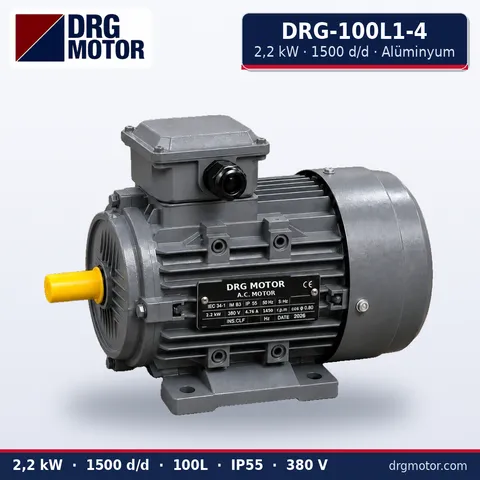
2.2 kW Three-Phase Motor 1500 rpm – DRG-100L1-4 Aluminium
- 2.2 kW · 1500 rpm (4 poles)
- Aluminium frame · IEC 100L
- Shaft: 28 × 60 mm

4 kW Three-Phase Motor 1500 rpm – DRG-112M-4 Aluminium
- 4 kW · 1500 rpm (4 poles)
- Aluminium frame · IEC 112M
- Shaft: 28 × 60 mm
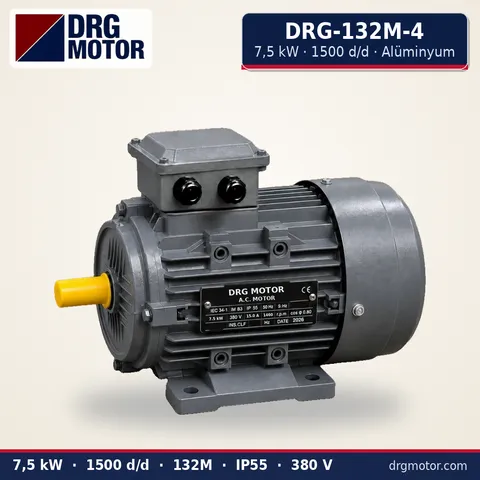
7.5 kW Three-Phase Motor 1500 rpm – DRG-132M-4 Aluminium
- 7.5 kW · 1500 rpm (4 poles)
- Aluminium frame · IEC 132M
- Shaft: 38 × 80 mm
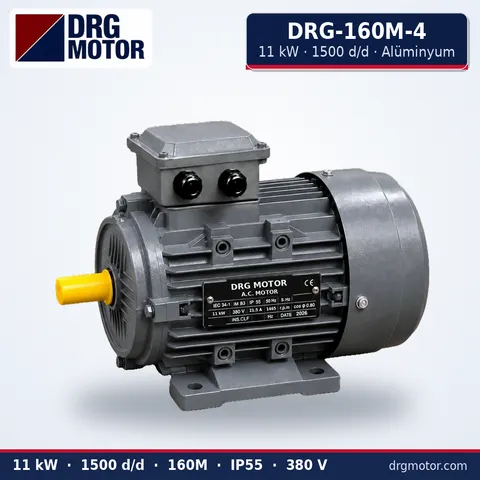
11 kW Three-Phase Motor 1500 rpm – DRG-160M-4 Aluminium
- 11 kW · 1500 rpm (4 poles)
- Aluminium frame · IEC 160M
- Shaft: 42 × 110 mm
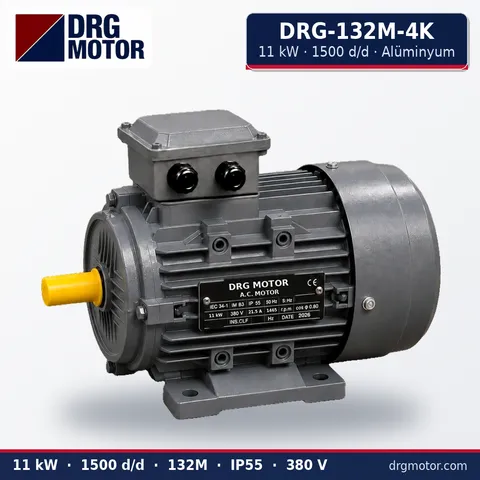
11 kW Compact Three-Phase Motor 1500 rpm – DRG-132M-4K Aluminium
- 11 kW · 1500 rpm (4 poles)
- Aluminium frame · IEC 132M
- Shaft: 38 × 80 mm
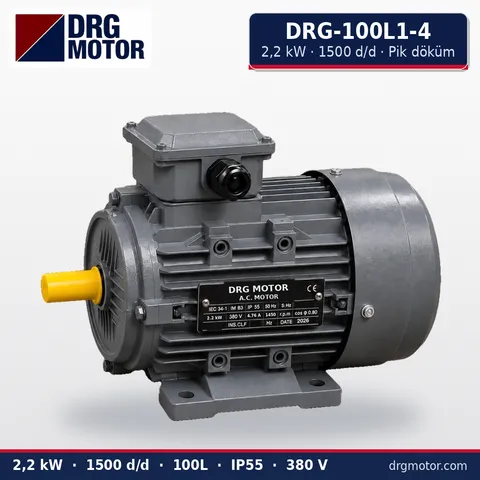
2.2 kW Three-Phase Motor 1500 rpm – DRG-100L1-4 Cast Iron
- 2.2 kW · 1500 rpm (4 poles)
- Cast iron frame · IEC 100L
- Shaft: 28 × 60 mm