English
 Le français
 Türkçe




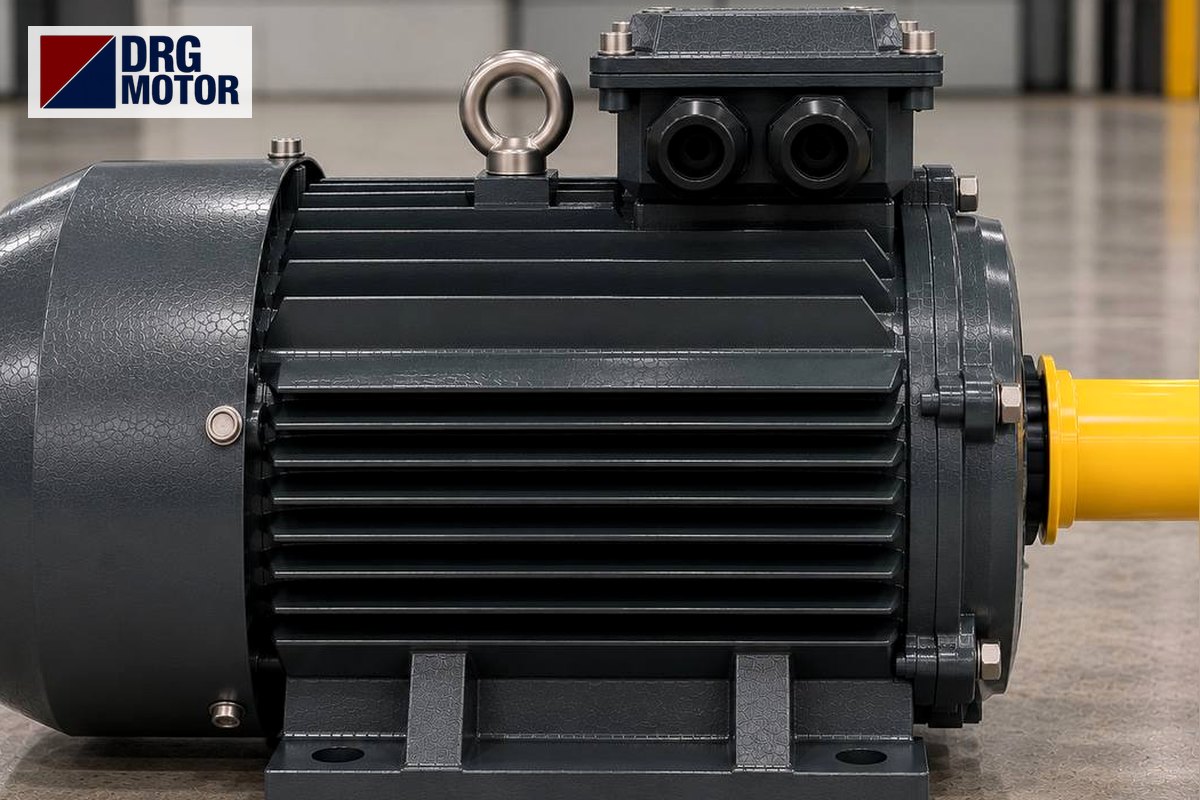

The torque of an electric motor is found with a simple relationship once its power and speed are known: T = 9550 · P(kW) / n(rpm). The result is in newton-metres (Nm). In other words, multiply the motor's power in kW by 9550 and divide by the speed in revolutions per minute to get its rated torque.
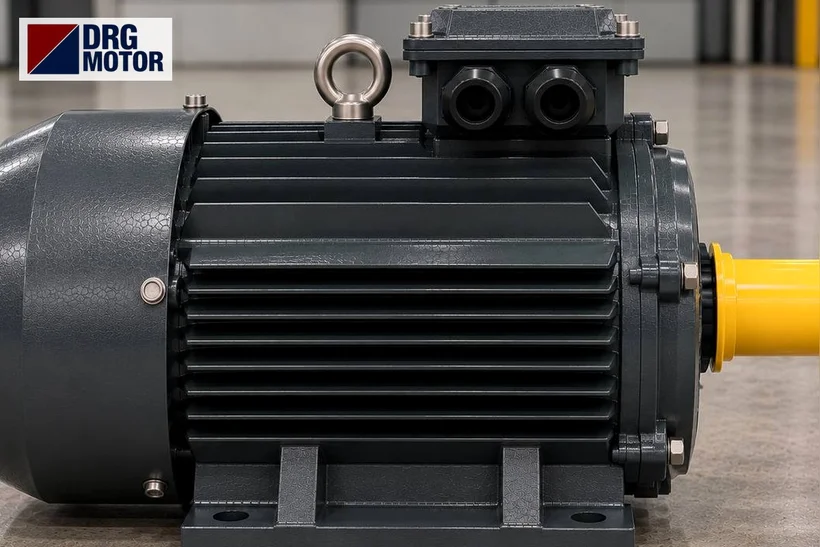
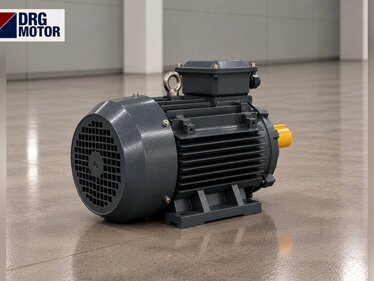
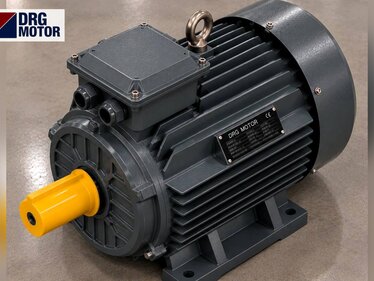
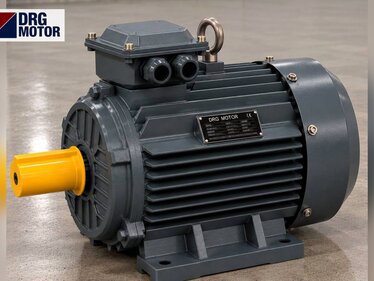
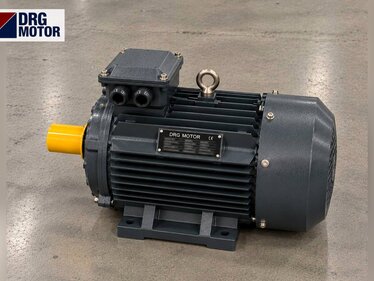
DRG Motor is a manufacturer, supplier and seller of three-phase asynchronous electric motors. Below we explain the formula step by step and show the relationship between speed and torque on real DRG models. You can compare every power and speed option in the online motor shop or in the three-phase asynchronous electric motors category.
What is torque?
Torque is the turning force of the motor shaft; it describes the shaft's ability to turn, lift or accelerate a load. Its unit is the newton-metre (Nm). Power (kW) is the work done per unit time and is the combined result of torque and speed. That is why two motors of the same power running at different speeds produce different torque: as speed falls torque rises, and as speed rises torque falls.
The formula T = 9550 · P / n
The most widely used relationship is:
- T = rated torque (Nm)
- P = shaft power (kW)
- n = speed in revolutions per minute (rpm)
- 9550 = constant converting kW and rpm to Nm (60000 / 2π ≈ 9549)
Use the actual load speed from the nameplate (for example 1450 rpm) to find the rated torque; using the synchronous speed (1500 rpm) gives a slightly lower value. Example: for a 4 kW motor at 1450 rpm, T = 9550 · 4 / 1450 ≈ 26.3 Nm.
Click to see current electric motor prices and order nowSEE PRICES →
Worked examples at different kW and speeds
The table below shows how torque grows with power in 1500 rpm (4-pole) DRG models. The values can be checked with T = 9550 · P / n using the nameplate speed.
| Power | Speed (nameplate) | Calculation | Torque |
|---|---|---|---|
| 4 kW | 1450 rpm | 9550·4/1450 | 26.3 Nm |
| 5.5 kW | 1460 rpm | 9550·5.5/1460 | 36.0 Nm |
| 7.5 kW | 1460 rpm | 9550·7.5/1460 | 49.1 Nm |
| 11 kW | 1465 rpm | 9550·11/1465 | 71.7 Nm |
As you can see, at constant speed torque grows in proportion to power. To do the same calculation quickly for your own motor, use the electric motor calculator, and check the rated current with the motor current chart.
Why does torque rise as speed falls?
Speed is in the denominator of the formula, so when power stays the same and speed drops, torque rises. The clearest example is the same 4 kW power offered in three speed classes:
| Model (4 kW) | Poles / Speed | Calculation | Torque |
|---|---|---|---|
| DRG-112M-2 | 2 poles / 2905 rpm | 9550·4/2905 | 13.1 Nm |
| DRG-112M-4 | 4 poles / 1450 rpm | 9550·4/1450 | 26.3 Nm |
| DRG-132M1-6 | 6 poles / 968 rpm | 9550·4/968 | 39.5 Nm |
At the same power the 2-pole motor gives about 13 Nm while the 6-pole gives about 40 Nm: as speed drops to roughly a third, torque roughly triples. This is why low-speed (high pole count) motors are chosen for mechanisms that need high starting torque.
Pole count and torque
Speed depends on the pole count: synchronous speed = 120 · frequency / poles. On a 50 Hz supply, 2 poles ≈ 3000 rpm, 4 poles ≈ 1500 rpm, 6 poles ≈ 1000 rpm. More poles means lower speed, and lower speed means more torque at the same power. So when choosing a motor, consider not only power but also the speed and torque the application needs:
- 2 poles (≈3000 rpm): high speed, low torque — fast applications such as pumps and fans.
- 4 poles (≈1500 rpm): balanced speed and torque — the most common general-drive choice.
- 6 poles (≈1000 rpm): low speed, high torque — heavy starting and slow-moving mechanisms.
Common mistakes in the calculation
- Confusing synchronous speed (1500 rpm) with nameplate speed (1450 rpm): use the nameplate speed for rated torque.
- Putting power in HP into the formula: convert to kW first (1 HP ≈ 0.746 kW).
- Mixing up starting torque with rated torque: the formula gives rated torque; starting torque differs and depends on the load type.
- Ignoring the load torque: the motor's rated torque must exceed the torque demanded by the driven load.
Send a photo of your current motor nameplate and we will find the suitable DRG model together.Send on WhatsApp
See the models and current prices of three-phase asynchronous motors in the power, speed and torque class you needSEE PRICES
Frequently asked questions
Which formula calculates motor torque?
The most practical relationship is T = 9550 · P(kW) / n(rpm), giving the result in Nm. The constant 9550 converts kW and rpm to newton-metres.
Where does the number 9550 come from?
It derives from power = torque · angular speed. After arranging the units you get 60000 / 2π ≈ 9549, rounded to 9550 in practice.
Does torque rise as speed falls?
Yes. With power constant, speed is in the denominator, so a lower speed raises torque. That is why a 6-pole motor of the same power produces noticeably more torque than a 2-pole model.
How do I use power given in HP?
Convert to kW first: 1 HP ≈ 0.746 kW. For example 10 HP ≈ 7.5 kW, which is then entered into the formula as 7.5.
Electric Motors Related to This Topic — Models and Current Prices
Suitability is not decided by power alone: compare the speed, voltage, mounting, shaft and fixing dimensions of your machine with the product data; if unsure, send us the nameplate of your current motor.
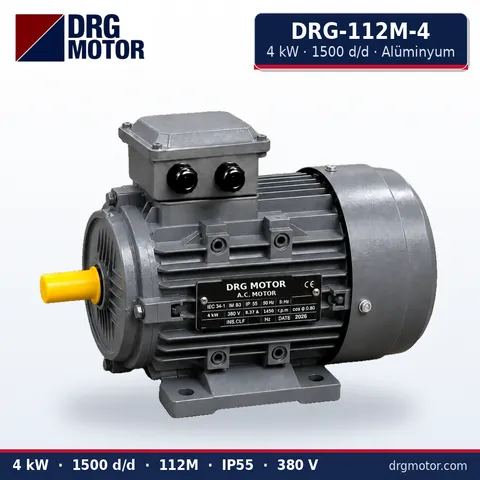
4 kW Three-Phase Motor 1500 rpm – DRG-112M-4 Aluminium
- 4 kW · 1500 rpm (4 poles)
- Aluminium frame · IEC 112M
- Shaft: 28 × 60 mm
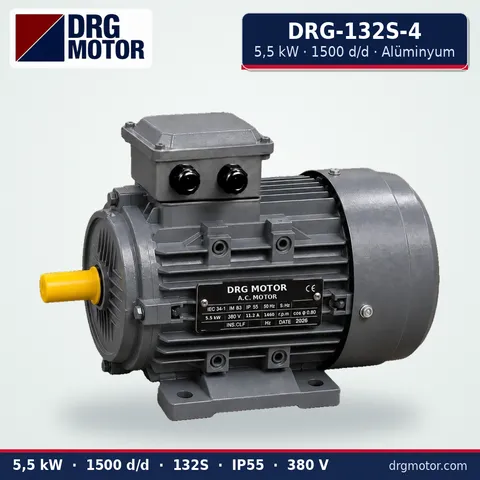
5.5 kW Three-Phase Motor 1500 rpm – DRG-132S-4 Aluminium
- 5.5 kW · 1500 rpm (4 poles)
- Aluminium frame · IEC 132S
- Shaft: 38 × 80 mm
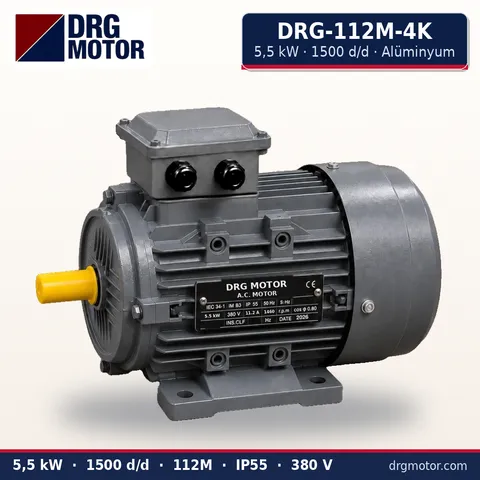
5.5 kW Compact Three-Phase Motor 1500 rpm – DRG-112M-4K Aluminium
- 5.5 kW · 1500 rpm (4 poles)
- Aluminium frame · IEC 112M
- Shaft: 28 × 60 mm
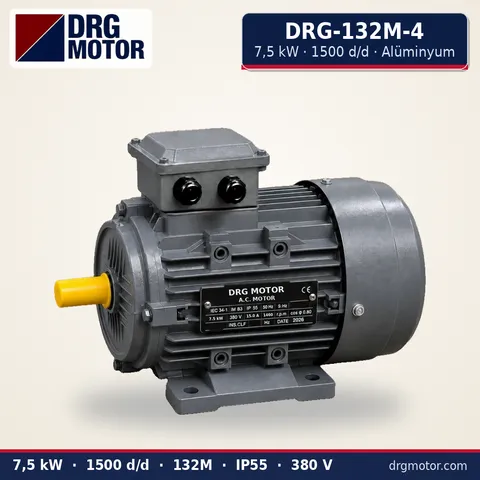
7.5 kW Three-Phase Motor 1500 rpm – DRG-132M-4 Aluminium
- 7.5 kW · 1500 rpm (4 poles)
- Aluminium frame · IEC 132M
- Shaft: 38 × 80 mm
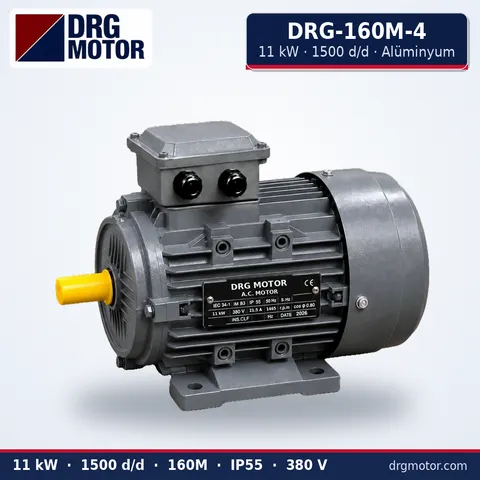
11 kW Three-Phase Motor 1500 rpm – DRG-160M-4 Aluminium
- 11 kW · 1500 rpm (4 poles)
- Aluminium frame · IEC 160M
- Shaft: 42 × 110 mm
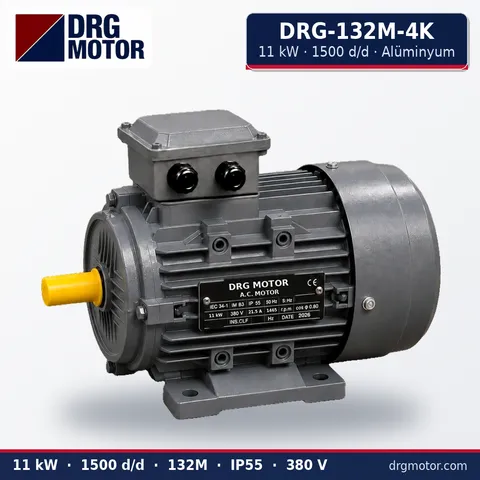
11 kW Compact Three-Phase Motor 1500 rpm – DRG-132M-4K Aluminium
- 11 kW · 1500 rpm (4 poles)
- Aluminium frame · IEC 132M
- Shaft: 38 × 80 mm