English
 Le français
 Türkçe




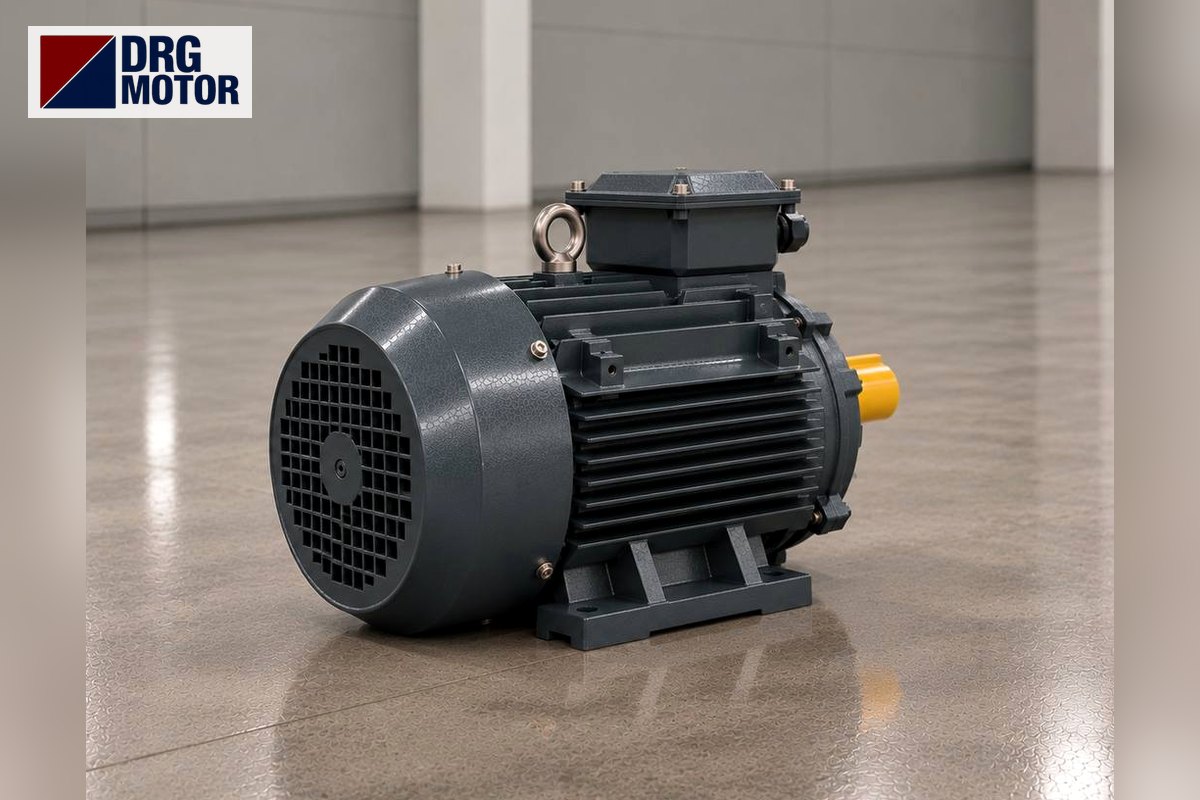

In short: no. A more powerful electric motor does not make the connected machine run faster on its own. The running speed of an electric motor is set by its speed rating (rpm), not by its power (kW); and that speed is fixed by the number of poles. Power is the capacity to turn a heavier load at the same speed. So power and speed are two different things.
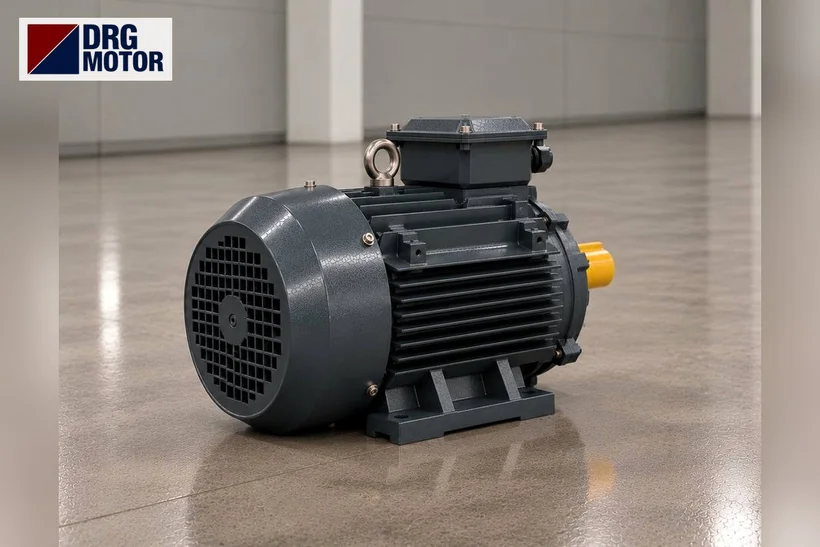
DRG Motor is a manufacturer, supplier and seller of electric motors. Below we explain this difference in plain language and show, with examples, what to choose in each case. You can filter by power and speed in the online electric motor shop and see every option together in the three-phase asynchronous electric motors category.
Why power and speed are not the same
This mix-up is very common: "My machine is slow, if I fit a more powerful electric motor it will speed up." But increasing power does not change the running speed. A 4 kW electric motor and an 11 kW electric motor turn at the same speed if they share the same speed rating. The difference is not in speed but in the weight of load they can turn. The more powerful one drives a heavier job without straining, yet it does not spin its shaft any faster.
Think of it this way: power is how heavy a load a worker can lift; speed is how often they take a step. A stronger worker carries a heavier sack, but the pace of steps can stay the same. The same holds for an electric motor.
What sets the speed? Poles and rpm
The speed of an asynchronous electric motor depends on the number of poles in its windings. At a 50 Hz supply the synchronous speed follows a simple ratio: speed ≈ 120 × frequency ÷ number of poles. So the more poles, the lower the speed:
| Poles | Speed class | General feel |
|---|---|---|
| 2 poles | ~3000 rpm | Spins fast |
| 4 poles | ~1500 rpm | Most common mid speed |
| 6 poles | ~1000 rpm | Slow, strong pulling feel |
The real speed stays a little below this under load (slip). The key point: if you want speed, look at the rpm (poles), not the power. For the basics you can also read what a three-phase electric motor is.
Click to see current electric motor prices and order nowSEE PRICES →
Same power, different speed: a 4 kW example
The clearest example is to place the same power at different speeds side by side. All three DRG electric motors below are 4 kW; only their pole counts, and therefore their speeds, differ:
| Model | Power | Speed | Torque |
|---|---|---|---|
| DRG-112M-2 | 4 kW | 3000 rpm (2 poles) | 13.1 Nm |
| DRG-112M-4 | 4 kW | 1500 rpm (4 poles) | 26.3 Nm |
| DRG-132M1-6 | 4 kW | 1000 rpm (6 poles) | 39.5 Nm |
The power is the same across all three, but the speed differs. The slow 6-pole model even delivers higher torque at the same power, because when power is fixed and speed drops, pulling force rises (torque ≈ 9550 × kW ÷ rpm). This answers the "will it speed up if I buy more power" question clearly: the power did not change; the speed was set by the poles.
Same speed, different power: what does power change?
So what is the point of more power? At the same speed class, higher power lets you turn a heavier load without strain. The three models below are all in the 1500 rpm class; their speed is the same, their power and the load they can turn are different:
| Model | Power | Speed | Torque |
|---|---|---|---|
| DRG-112M-4 | 4 kW | 1500 rpm | 26.3 Nm |
| DRG-132M-4 | 7.5 kW | 1500 rpm | 49.1 Nm |
| DRG-160M-4 | 11 kW | 1500 rpm | 71.7 Nm |
All three turn at the same speed. As power rises the rotation does not get faster; the motor simply lifts a heavier load comfortably, without straining or overheating. So power is not a "speed pedal" but a "margin of endurance".
I want my machine to run faster, what should I do?
If you truly need a higher speed there are two paths. First, choose an electric motor with a higher speed rating (fewer poles): for example a 2-pole model instead of a 4-pole one. Second, change the mechanical transmission: a pulley-and-belt ratio can raise or lower the input speed of the machine. For that second path our electric motor calculator helps you work through the power and speed pairing.
Buying a more powerful electric motor does neither of these; it only adds comfort when the load grows heavier. Tell us about your application and we will settle the right power-and-speed pairing together.
In summary: should I choose speed or power?
The decision is simple. If your machine turns the load fine but is too slow, the fix is speed, not power; look at a higher-rpm electric motor or a pulley change. If your machine is fast enough but strains, overheats or trips its overload, then a higher power class is what you need. Trying to solve a speed need with power, or a power need with speed, is the most common mistake. Clarify both figures together (kW and rpm) and you will pick the right electric motor in one go.
You can review every power and speed option in the online electric motor shop and write to us whenever you are unsure.
Make sure whether you need power or speed; click to see suitable models and current pricesSEE PRICES
Send a photo of your current motor nameplate and we will find the suitable DRG model together.Send on WhatsApp
Frequently asked questions
Will my machine run faster if I buy more kW?
No. At the same speed class, more kW does not speed up the machine; it only turns a heavier load without strain. The speed stays the same; what changes is pulling force and endurance margin.
How do I actually increase the speed?
By choosing an electric motor with a higher speed rating (fewer poles), or by changing the pulley-and-belt ratio. Moving from 4 poles to 2 poles raises the speed noticeably; changing pulley diameters sets the speed on the machine side.
Why are there different speeds at the same power?
Because speed is set by the pole count, not by power. You can find 4 kW at 3000, 1500 and 1000 rpm; all are 4 kW, but their speeds and torque differ. That is why you should state the speed alongside the power when ordering.
I am not sure, what information should I give?
Tell us the speed your machine needs (or the pole count of your current electric motor) and the load it will drive. If you like, send a photo of your current motor nameplate; we will settle the power-and-speed pairing and find the most suitable model together.
Electric Motors Related to This Topic — Models and Current Prices
Suitability is not decided by power alone: compare the speed, voltage, mounting, shaft and fixing dimensions of your machine with the product data; if unsure, send us the nameplate of your current motor.
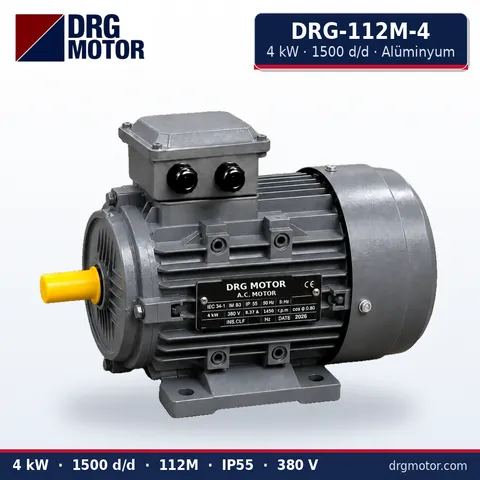
4 kW Three-Phase Motor 1500 rpm – DRG-112M-4 Aluminium
- 4 kW · 1500 rpm (4 poles)
- Aluminium frame · IEC 112M
- Shaft: 28 × 60 mm
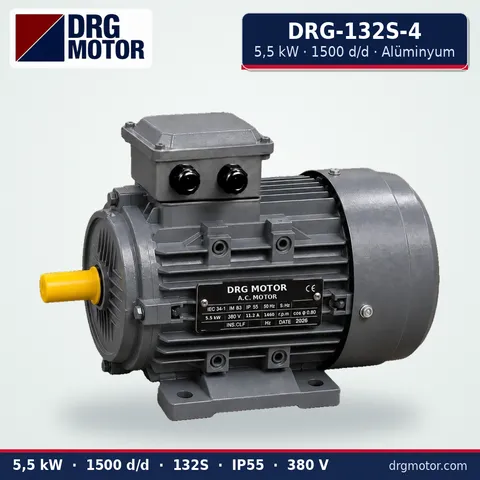
5.5 kW Three-Phase Motor 1500 rpm – DRG-132S-4 Aluminium
- 5.5 kW · 1500 rpm (4 poles)
- Aluminium frame · IEC 132S
- Shaft: 38 × 80 mm
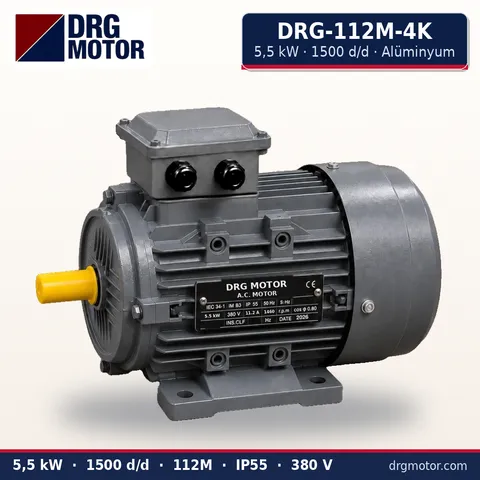
5.5 kW Compact Three-Phase Motor 1500 rpm – DRG-112M-4K Aluminium
- 5.5 kW · 1500 rpm (4 poles)
- Aluminium frame · IEC 112M
- Shaft: 28 × 60 mm
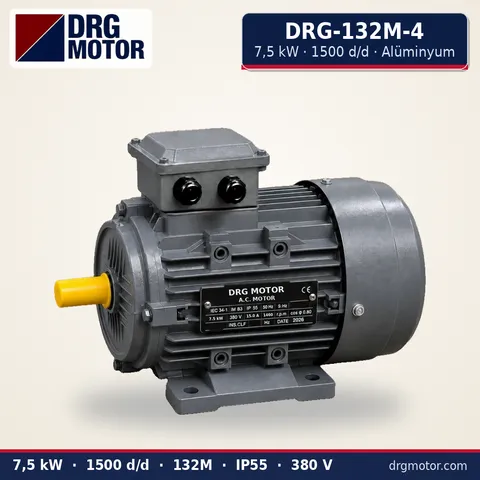
7.5 kW Three-Phase Motor 1500 rpm – DRG-132M-4 Aluminium
- 7.5 kW · 1500 rpm (4 poles)
- Aluminium frame · IEC 132M
- Shaft: 38 × 80 mm
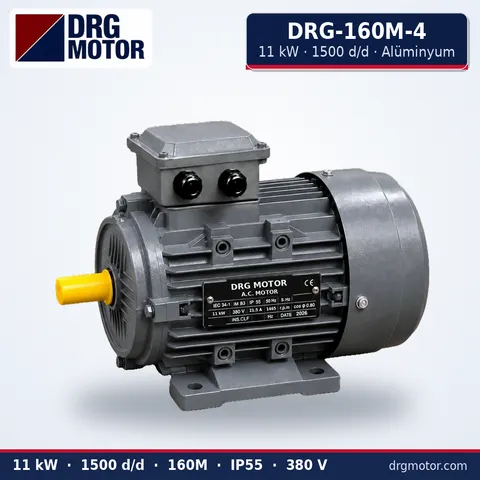
11 kW Three-Phase Motor 1500 rpm – DRG-160M-4 Aluminium
- 11 kW · 1500 rpm (4 poles)
- Aluminium frame · IEC 160M
- Shaft: 42 × 110 mm
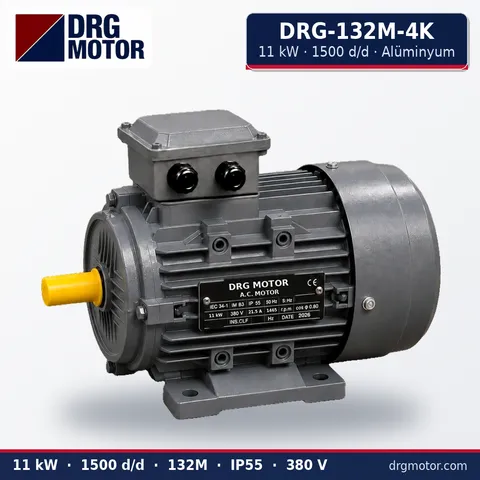
11 kW Compact Three-Phase Motor 1500 rpm – DRG-132M-4K Aluminium
- 11 kW · 1500 rpm (4 poles)
- Aluminium frame · IEC 132M
- Shaft: 38 × 80 mm