English
 Le français
 Türkçe




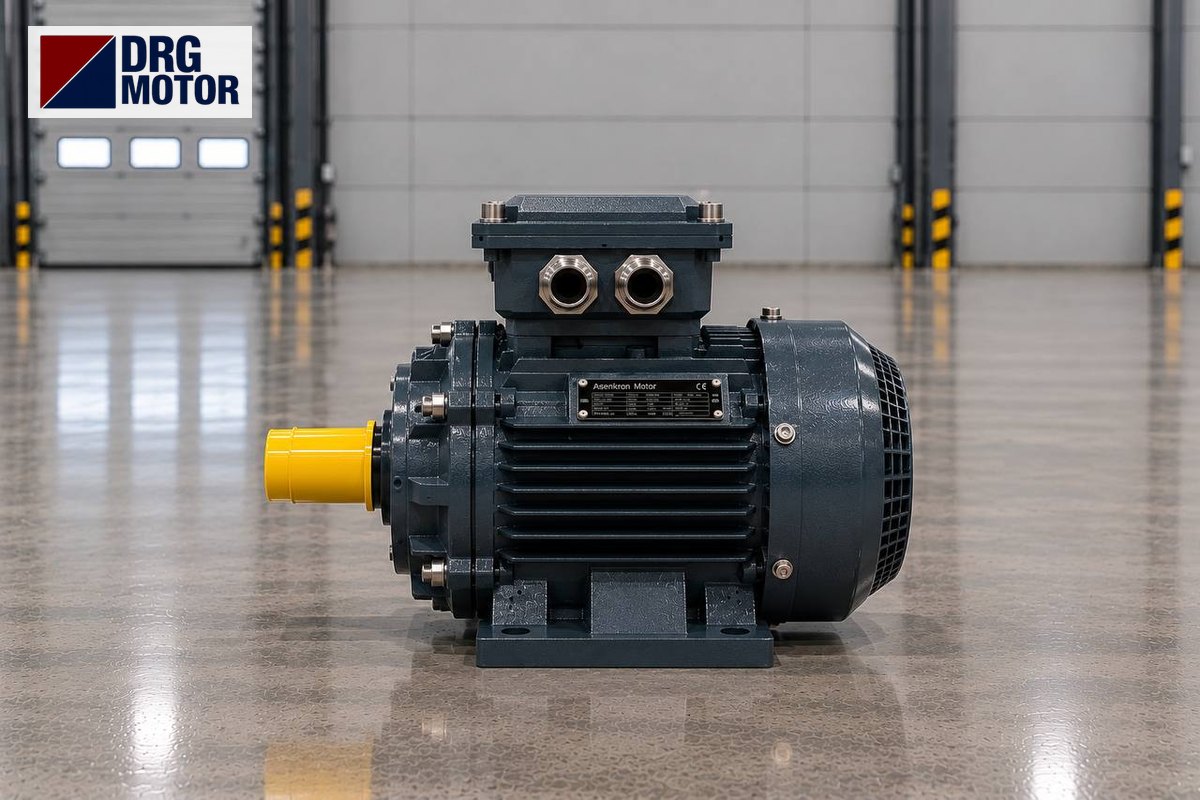

In a coffee roaster the drum motor provides the low-speed drive that keeps the beans turning inside the hot drum. The motor itself runs at a standard 1500 or 1000 rpm class speed; a gearbox, and where needed a chain or belt, brings it down to the few tens of rpm the drum needs. What decides the selection is the drum speed given by the machine builder, the gearbox ratio and the gearbox input flange; motor power comes after these.
DRG Motor is a manufacturer, supplier and seller of electric motors; it does not sell gearboxes but supplies the three-phase asynchronous motor that mounts on the gearbox. Models in suitable power ranges for the drum, the fans and the cooling tray are listed in the online shop. We cover motors for nut roasters (hazelnuts, chickpeas, sunflower seeds) and motor powers by machine group separately on the nut roasting machine motors page; this article focuses on matching speed and gearbox for a coffee drum.
Why Does a Coffee Drum Turn at This Speed?
Inside a coffee drum there are vanes, usually in a double-helix arrangement. As the drum turns, the vanes lift the beans and drop them through the hot air stream while also moving them between front and back. The beans take heat in two ways: by contact with the hot drum wall and from the hot air passing through the drum.
If the speed is too low, the beans stay too long on the drum floor, the side touching the metal darkens and the roast becomes uneven. If it is too high, centrifugal force holds the beans against the drum wall, they no longer fall through the air stream and heat transfer suffers. The upper limit depends on drum diameter: critical speed is roughly nc = 42.3 / √D (D in metres). For a 0.6 m drum, for example, critical speed is about 54.6 rpm and a roasting drum runs below it.
So the machine builder sets drum speed according to drum diameter and vane geometry. When replacing the motor the aim is to keep that speed exactly; a faster motor changes the roast profile and the result shows in the cup.
Gearbox Ratio and Drum Speed: a Worked Example
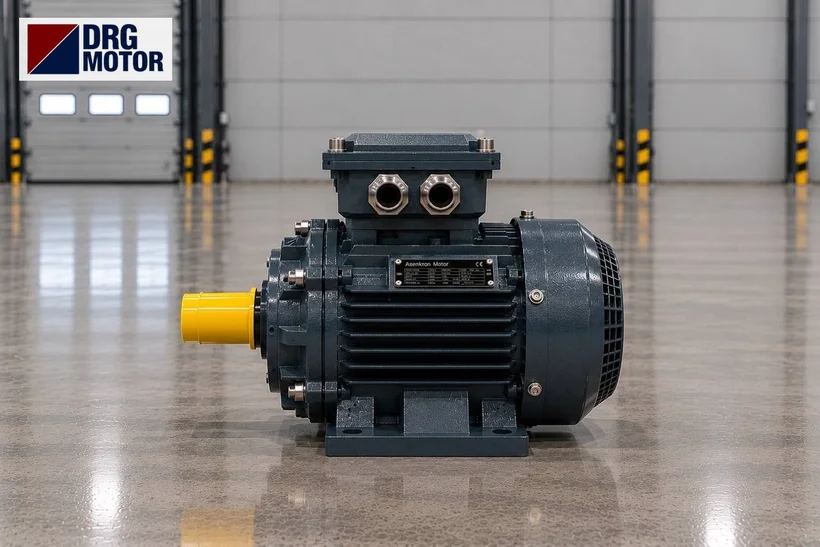
Example (assumption): a machine data sheet gives a drum speed of 48 rpm and a 1.5 kW drum motor. Drum speed is n2 = n1 / i. The table shows how the same drum speed is reached with three different drive arrangements:
| Motor | Gearbox / chain | Drum speed | Note |
|---|---|---|---|
| DRG-90L-4 (1445 rpm) | worm, i = 30 | 48.2 rpm | single stage, quiet |
| DRG-100L-6 (949 rpm) | helical, i = 20 | 47.5 rpm | smaller ratio |
| DRG-90L-4 (1445 rpm) | i = 15 + chain 1:2 | 48.2 rpm | chain ratio adjustable |
Torque at the drum shaft for 1.5 kW at 48.2 rpm is 9550 × 1.5 / 48.2 ≈ 297 Nm. Assuming a worm gearbox efficiency of 0.75, the torque reaching the drum drops to about 223 Nm; a helical gearbox delivers the same torque with lower losses. A worm gearbox is quiet and gives a high ratio in one stage, but its losses turn into heat, which means extra heat in an already hot drive compartment.
To test the ratio and output torque with your own values, use the gearbox output speed and torque calculator. Flange matching for motors fitted to gearbox inputs is explained on the electric motors for gearboxes page.
What to check when fitting a motor to the gearbox input
Most drum gearboxes have an IEC input flange: the keyed motor shaft enters the gearbox input bore and the motor flange bolts to the gearbox input flange. Here frame size, flange and shaft must match before motor power is even considered. In the DRG catalogue the B5 large flange dimensions are M 165 / N 130 / P 200 mm for frames 80 and 90 and M 215 / N 180 / P 250 mm for frame 100L; shaft diameters are 19, 24 and 28 mm respectively. The dimension of a small-flange (B14) input is confirmed with the order.
- Ratio (i) and input flange type on the gearbox nameplate: B5 or B14
- Input bore diameter: must equal motor shaft diameter D
- Rated speed of the old motor: 4-pole or 6-pole
- Motor power and voltage: 230/400 V up to 3 kW, 400/690 V from 4 kW
- If there is a chain or belt, sprocket teeth or pulley diameters
- Terminal box orientation and a cable route away from hot surfaces
- Drum direction: reversed vanes will not push beans out at discharge
Changing the pole count changes drum speed with the same gearbox: fitting a 6-pole motor in place of a 4-pole one slows the drum by about a third. If you want the same speed, keep the old motor's pole count.
Click to see current electric motor prices and order nowSEE PRICES →
Hot Zone, Drive Compartment and Where the Motor Sits
The drum is heated by a burner or electric elements and the inside of the casing stays hot. The motor and gearbox therefore sit behind the drum in a separate drive compartment or under the frame, with the drum shaft passing through bearings into that compartment. Heat travelling along the shaft reaches the gearbox first and then the motor flange. DRG motors are rated for −15…+40 °C ambient; if the drive compartment exceeds that, it needs ventilation.
During roasting the bean's thin skin (chaff) separates and is drawn to the cyclone; escaping chaff and oily smoke collect in the drive compartment. A fan cover clogged with chaff blocks the air intake of the motor's own fan in IC411 cooling, so periodic cleaning is essential for motor life. Chaff build-up in the compartment and cyclone line is also a fire risk, which makes the cleaning plan important for the machine, not only the motor.
Drum Speed Control by Inverter and Heating at Low Frequency
Some roasters adjust drum speed with an inverter to change the roast profile. DRG does not sell inverters; a standard motor can be used with a drive sourced separately. Drum load is constant torque: even when frequency drops, the torque needed to lift the beans stays the same, while the motor's own fan slows down and cooling falls.
| Frequency | Drum speed | Load torque | Motor cooling |
|---|---|---|---|
| 50 Hz | 48.2 rpm | constant | full fan cooling |
| 40 Hz | 38.5 rpm | constant | fan cooling reduced |
| 30 Hz | 28.9 rpm | constant | clear overheating risk |
If long roasts at low frequency are planned, either choose one power size up or provide separate cooling for the motor. Going above 50 Hz brings the drum closer to its critical speed; the limit for that is set by the machine builder.
Discharge, Power Failure and Restart
A coffee roaster drum is usually started empty, heated, and the beans are charged into the turning drum. When roasting ends, the front door opens and the vanes push the beans into the cooling tray. In this sequence starting is light; the hard moment is a power failure mid-roast that leaves the drum full and hot. The motor then has to start while lifting the bean mass. The starting torque ratio Ts/Tn is 2.3 for the 4-pole DRG-90L-4 and 2.0 for the 6-pole DRG-100L-6.
A hot drum should not stand still for long either; many builders want the drum to keep turning for a while after the burner shuts off. The drum motor's overload protection must therefore be set correctly so it does not trip needlessly and stop the drum.
The Other Motors on a Roaster
The drum motor is not the only motor on the machine. The stirring arms in the cooling tray run on their own gearbox and motor; the cooling fan under the tray and the exhaust fan that draws smoke and chaff from the drum are separate motors too. These are fan loads and connect directly to the impeller, not to a gearbox like the drum. Read each nameplate separately when replacing; putting one motor's power in place of another is a common mistake.
DRG Motors Suited to Coffee Roaster Drums
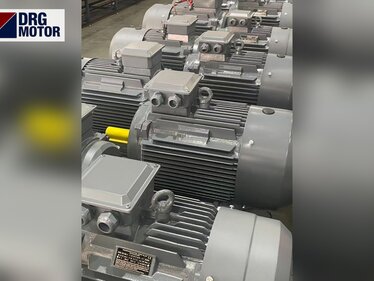
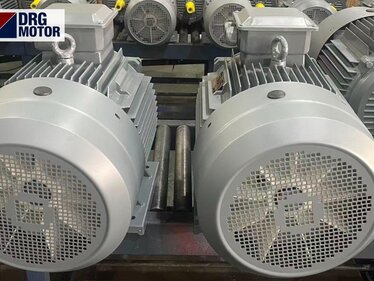
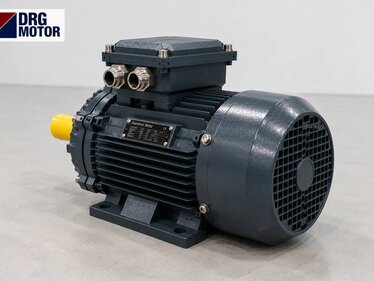
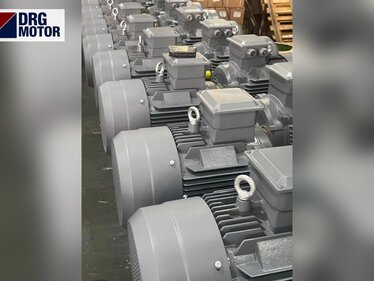
Four- and six-pole aluminium-housed models for gearbox inputs, covering drum and cooling tray drives from small drums to mid-capacity machines.
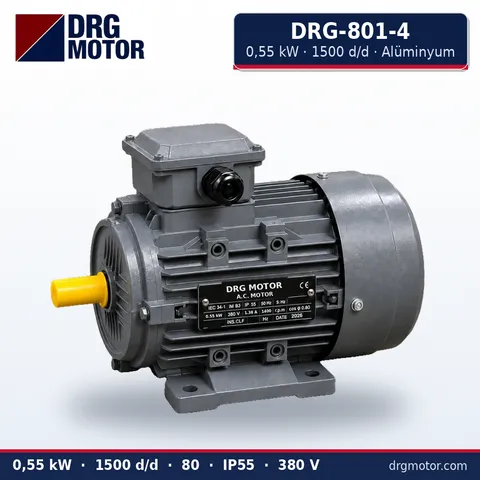
0.55 kW Three-Phase Motor 1500 rpm – DRG-801-4 Aluminium
- 0.55 kW · 1500 rpm (4 poles)
- Aluminium frame · IEC 80
- Mounting: B3 · B5 · B14 · B35
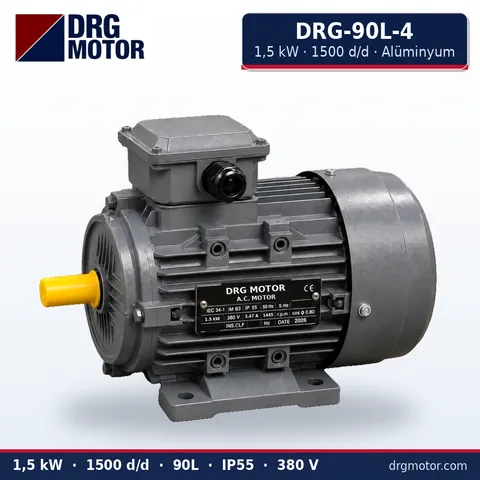
1.5 kW Three-Phase Motor 1500 rpm – DRG-90L-4 Aluminium
- 1.5 kW · 1500 rpm (4 poles)
- Aluminium frame · IEC 90L
- Mounting: B3 · B5 · B14 · B35
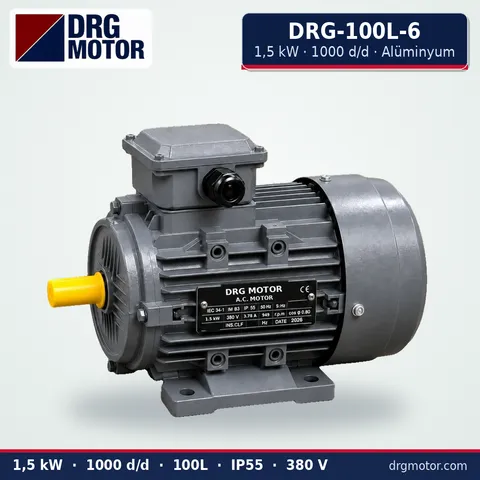
1.5 kW Three-Phase Motor 1000 rpm – DRG-100L-6 Aluminium
- 1.5 kW · 1000 rpm (6 poles)
- Aluminium frame · IEC 100L
- Mounting: B3 · B5 · B14 · B35
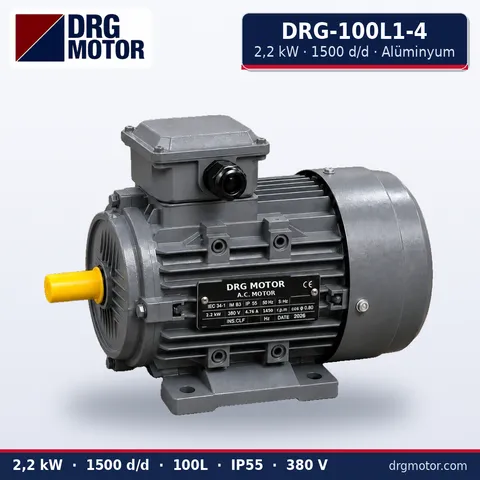
2.2 kW Three-Phase Motor 1500 rpm – DRG-100L1-4 Aluminium
- 2.2 kW · 1500 rpm (4 poles)
- Aluminium frame · IEC 100L
- Mounting: B3 · B5 · B14 · B35
Click to see current prices and order these motors nowSEE PRICES →
Coffee Roaster Motor: Frequently Asked Questions
How fast does a coffee roaster drum turn?
The builder sets drum speed according to drum diameter and vane design, and it stays below critical speed; the value is on the machine data sheet or can be calculated from the gearbox ratio. To keep it when replacing the motor, do not change the old motor's pole count or the gearbox ratio.
Is it the motor or the gearbox that has failed on my roaster?
Disconnect the motor from the gearbox and run it on its own. If the motor runs quietly and well below its rated current, the problem is in the gearbox or the drum bearings. Noise, oil leaks or play in the input bore point to a gearbox repair; DRG does not sell gearboxes.
Should I choose a 6-pole or a 4-pole motor for the drum?
Choose what the old motor was. If you are designing a new machine, a 6-pole motor reaches the same drum speed with a smaller gearbox ratio; a 4-pole motor has a smaller frame for the same power and needs a higher-ratio gearbox.
Why does my roaster motor overheat and trip?
Common causes: an overheated drive compartment, a fan cover clogged with chaff, long running at low frequency, binding in the gearbox or drum bearings and a wrong star-delta connection. Measure the current first, then run the motor unloaded.
For a quotation, send photos of the motor and gearbox nameplates with the motor power, speed, mounting (flange/foot), shaft size and drum speed via WhatsApp, or add the models you have chosen to the quote list. Phone: +90 (542) 666 11 11 · e-mail: info@drgmotor.com · contact page. Current prices are in the electric motor online shop.