English
 Le français
 Türkçe




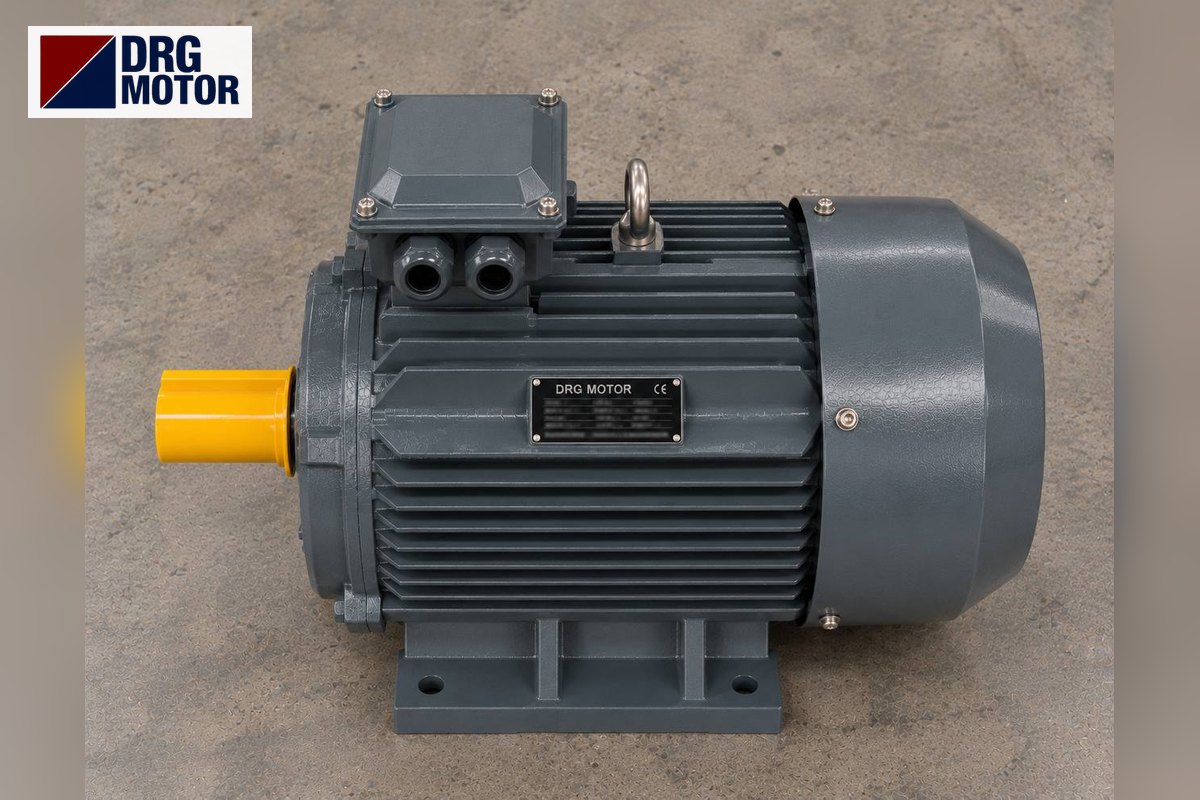

When choosing the mixer motor of a bentonite preparation unit, the value to look at is not the tank volume but the density of the slurry the unit pumps. Freshly mixed bentonite starts close to the density of water; slurry returning from a pile bore or drill hole, loaded with sand, becomes noticeably heavier. Because mixing and transfer are done with centrifugal pumps, motor load rises in direct proportion to density. The motor is chosen so that it stays within its current limit even on the heaviest return slurry.
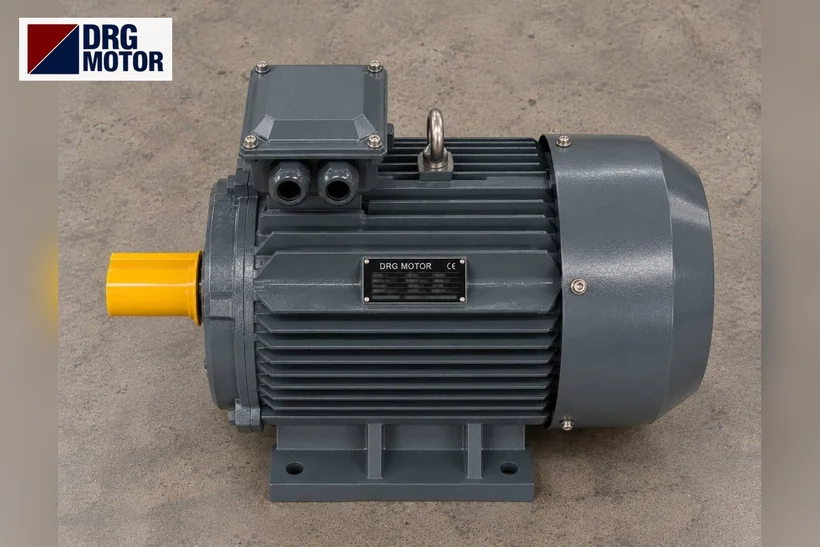
DRG Motor is a manufacturer, supplier and seller of electric motors. It does not supply the pump or mixer of the unit, but the three-phase asynchronous IEC motor that drives it. You can filter the power and speed needed to replace a burnt site motor on the buy electric motors online page.
What Turns in the Unit: Shear Mixer, Transfer Pump and Desander
A typical unit used for bored piles and horizontal drilling consists of several tanks and pumps on a skid. Bentonite powder is poured from a hopper into a venturi throat; the fast pump flow draws the powder in and mixes it with water. A high-speed mixer blade or the pump impeller breaks up the lumps that form the moment powder meets water. If these lumps are not broken, their core stays dry and the slurry never reaches the required consistency.
The prepared slurry hydrates in a holding tank, where a slow agitator prevents settling. Slurry returning from the pile goes to a desander: a pump feeds it to hydrocyclones, which separate the sand, and the cleaned slurry is reused. In short, the unit has at least two motor types: a fast shear/pump motor and a low-speed agitator motor.
How Much More Load Does a Heavier Slurry Put on the Pump Motor?
The head (in metres) produced by a centrifugal pump does not depend on the fluid, but the pressure corresponding to that head and the absorbed power rise with density. The shaft power relation used here is: P [kW] = Q [l/min] × p [bar] / (600 × η).
The table below is an example. Assumption: flow 1000 l/min, head 30 m, pump efficiency 0.6. The density values only illustrate a typical range; use the value you measure.
| Slurry condition | Example density | Pressure (30 m) | Pump shaft power |
|---|---|---|---|
| Freshly mixed | 1.03 kg/l | 3.03 bar | 8.4 kW |
| Used, low sand | 1.10 kg/l | 3.24 bar | 9.0 kW |
| Returning from pile | 1.20 kg/l | 3.53 bar | 9.8 kW |
| Heavy sandy return | 1.25 kg/l | 3.68 bar | 10.2 kW |
In this example an 11 kW motor that looks adequate for fresh slurry reaches its limit on heavy return slurry. As slurry consistency (Marsh funnel time) rises, pipe losses also increase, which this formula does not include. That is why stepping up one size on site, for example to 15 kW, is a common choice. The exact value is read from the pump manufacturer's curve. For your own flow figures, use the pump and fan motor power calculator.
Click to see current electric motor prices and order nowSEE PRICES →
Why the Speed of the Shear Pump Must Be Kept
High-shear mixing relies on the speed at the outer edge of the impeller or blade. In most of these units the pump is coupled directly to the motor and runs with a 2-pole motor. The 15 kW DRG-160M2-2 delivers 48.6 Nm at a rated 2945 rpm; the 22 kW DRG-180M-2 gives 71.1 Nm at 2955 rpm.
Centrifugal pumps follow the affinity laws: head changes with the square of speed and power with its cube. If a burnt 2-pole motor is replaced with a 4-pole motor that happens to be available, speed halves; head drops to a quarter, shear weakens and powder lumps. Conversely, fitting a 2-pole motor to a 4-pole transfer pump raises power demand roughly eightfold and the motor trips within minutes. When replacing, the pole count must match the old motor.
Site Power: Generator, Starting Current and Star-Delta
Bentonite units are often fed by a generator, and motor starting current is the real constraint. The DRG-160M2-2 has a rated current of 26.5 A at 400 V and a starting current ratio Is/In of 8.1; with direct-on-line starting the inrush is about 215 A. With star-delta starting, line current drops to roughly one third, about 72 A; starting torque also drops to one third (2.0 × 48.6 / 3 ≈ 32 Nm).
Because pump load is light at low speed, this torque is usually sufficient, but starting takes longer if the pipe is full and the valve open. Motors in this power class carry 400/690 V on the nameplate: on a 400 V site panel they run in delta, so they can be started with a star-delta switch. Details are on the star-delta starting page. Size the generator with its supplier according to the start of the largest motor.
Dust, Splashing Slurry and Outdoor Use
Bentonite powder is very fine and hangs in the air around the hopper. If the fan cover grille and frame fins clog with dust, the motor cannot cool; the frame should therefore be brushed dry at the end of each shift. DRG motors are IP55: resistant to dust ingress and water splashes, but a pressure hose should not be aimed directly at the motor while washing tanks.
The unit stays outside summer and winter. The motor's rated values apply for air temperatures between −15 and +40 °C and up to 1000 m above sea level; a sunshade helps a motor heating up on a skid in summer sun. On skids moved by forklift and shaken in transport, a cast iron frame withstands knocks better; the models in this article are given in cast iron for that reason. Other options for pump applications are on the pump motors page.
Replacing a Burnt Motor: Foot Holes and Coupling
Two motors of the same power can have different foot dimensions. For example, the 15 kW DRG-160M2-2 (2-pole) has foot hole spacing of 254 × 210 mm, while the 15 kW 4-pole DRG-160L-4 has 254 × 254 mm; both have a 160 mm shaft height and a 42×110 mm shaft. To avoid re-drilling the skid, read the old motor's frame code (160M, 160L, etc.) from the nameplate.
On a coupled pump, motor and pump shafts must be on the same axis; misalignment quickly ruins bearings and the gland. For smaller duties such as the desander or transfer pump, a 4-pole motor such as the 7.5 kW DRG-132M-4 (1460 rpm, shaft 38×80 mm) can be used. A close-coupled pump whose shaft is part of the motor needs a special motor outside the standard IEC range.
Prepare the following before ordering:
- Motor nameplate: kW, rpm (2 or 4 pole), voltage, frame code
- Pump type, flow and head; pump label
- Foot hole spacing (A × B), shaft diameter and length
- Starting method: direct, star-delta or soft starter
- Supply: mains or generator, generator rating
- Density of the heaviest slurry handled
DRG Motors Suitable for Bentonite Units
The list combines 2-pole models for the high-speed shear pump and 4-pole models for transfer and desander pumps; all have cast iron frames suited to skids that are moved and shaken.
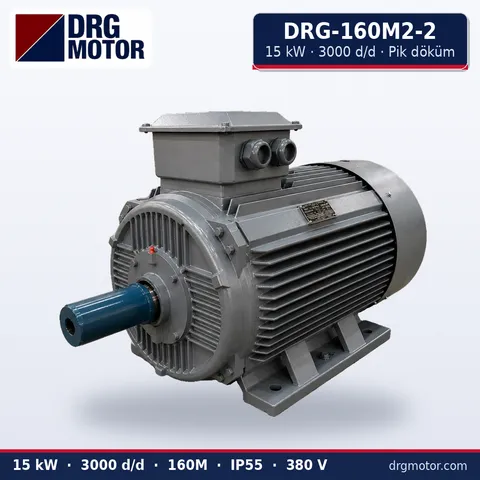
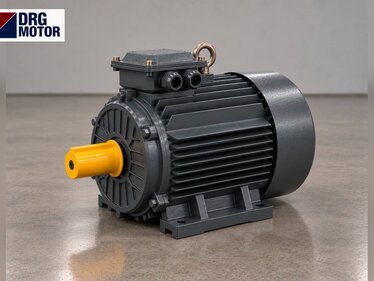
15 kW Three-Phase Motor 3000 rpm – DRG-160M2-2 Cast Iron
- 15 kW · 3000 rpm (2 poles)
- Cast iron frame · IEC 160M
- Mounting: B3 · B5 · B14 · B35
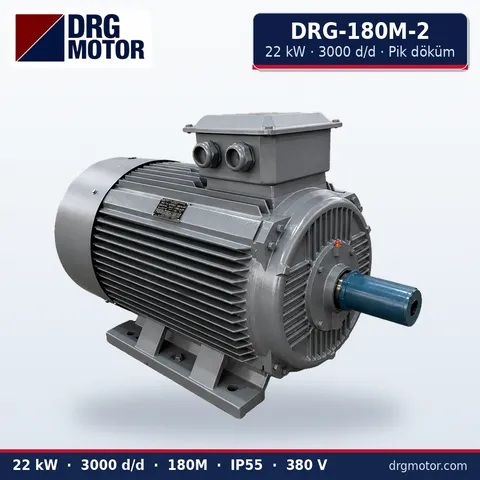
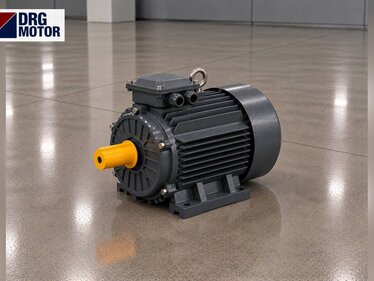
22 kW Three-Phase Motor 3000 rpm – DRG-180M-2 Cast Iron
- 22 kW · 3000 rpm (2 poles)
- Cast iron frame · IEC 180M
- Mounting: B3 · B5 · B14 · B35
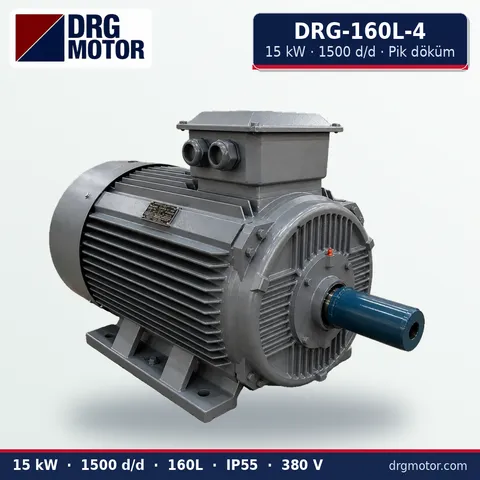
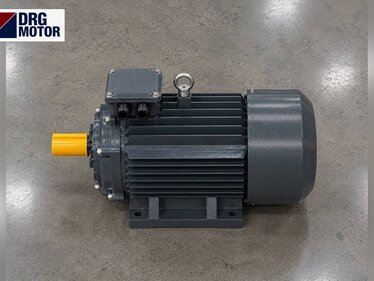
15 kW Three-Phase Motor 1500 rpm – DRG-160L-4 Cast Iron
- 15 kW · 1500 rpm (4 poles)
- Cast iron frame · IEC 160L
- Mounting: B3 · B5 · B14 · B35
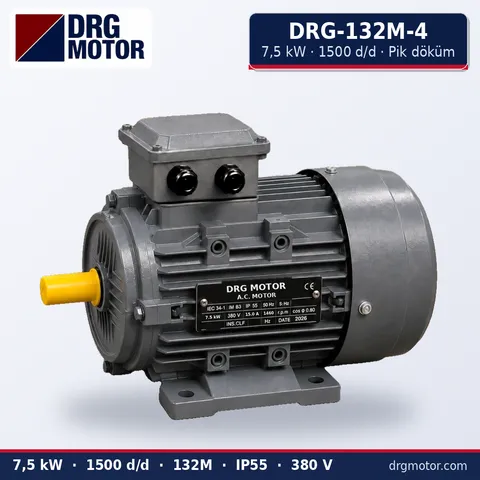
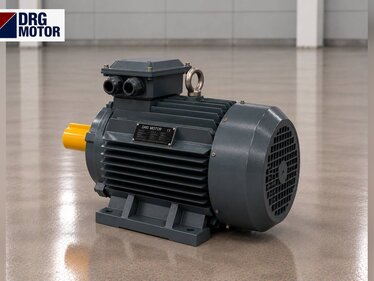
7.5 kW Three-Phase Motor 1500 rpm – DRG-132M-4 Cast Iron
- 7.5 kW · 1500 rpm (4 poles)
- Cast iron frame · IEC 132M
- Mounting: B3 · B5 · B14 · B35
Click to see current prices and order these motors nowSEE PRICES →
Bentonite Mixer Motor: Frequently Asked Questions
How much motor power does a bentonite mixer take?
It depends on the unit's flow and head. Small horizontal drilling units may use a few kW, while large units on bored pile sites can need fifteen kW or more. Only the unit or pump nameplate gives the exact figure.
Why does the motor trip when the slurry gets heavier?
The power drawn by a centrifugal pump rises in direct proportion to density. Sandy return slurry is heavier than fresh slurry, so a motor sized at the limit will exceed its overload setting.
Can I fit a 4-pole motor in place of a 2-pole pump motor?
No. Speed halves, head drops to a quarter and the shearing effect is lost. The pole count must match the old motor.
Why won't the motor start on a generator-fed unit?
With direct-on-line starting, inrush current is several times rated current and generator voltage can sag. Star-delta or soft starting and adequate generator capacity solve the problem.
On site, the simplest way is to send a WhatsApp photo of the burnt motor's nameplate with its kW and speed, its foot fixing, the shaft size and the pump label, or prepare a quote list. Phone: +90 (542) 666 11 11 · email: info@drgmotor.com · contact. Agitator and auxiliary pump motors are also available in the online shop.