English
 Le français
 Türkçe




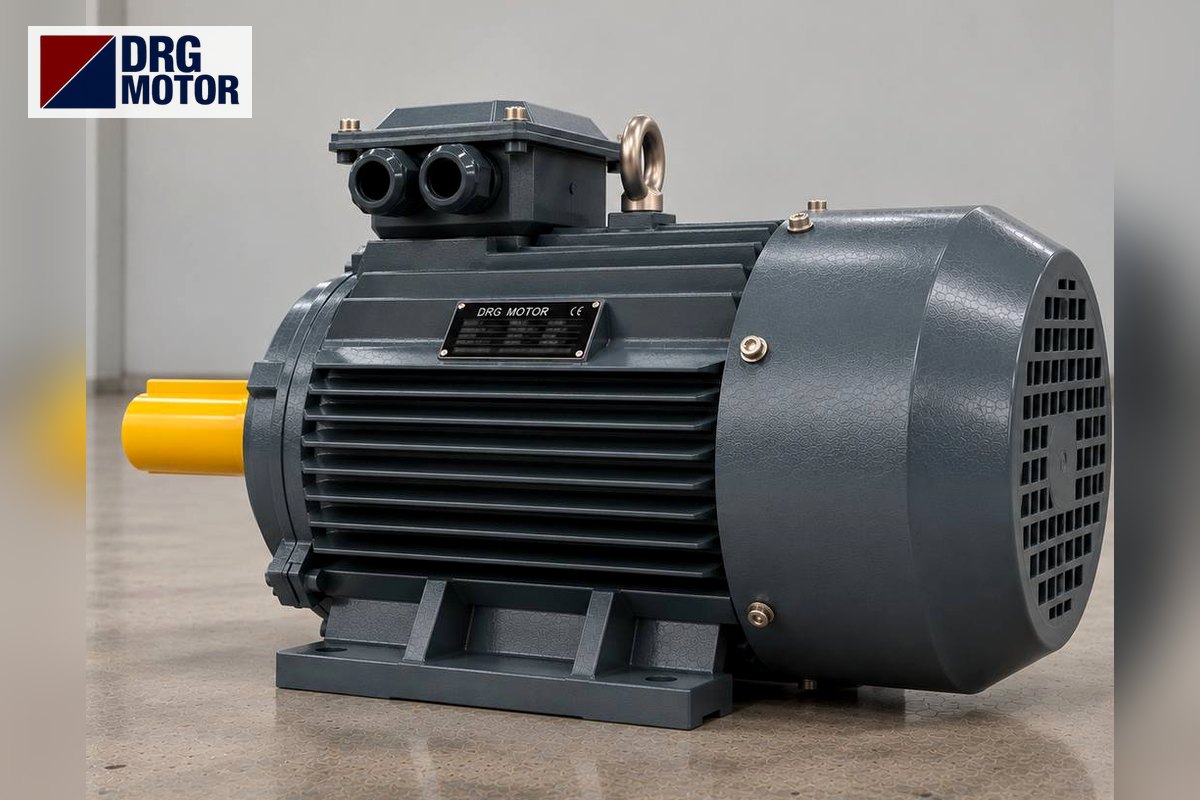

The core difference between an AC motor and a DC motor lies in how motion is produced: an AC motor turns on the grid's alternating current without a commutator or brushes, while a DC motor runs on direct current and, in the classic type, works through a commutator and brushes. That single structural point shapes maintenance, speed control, lifespan and where each belongs.
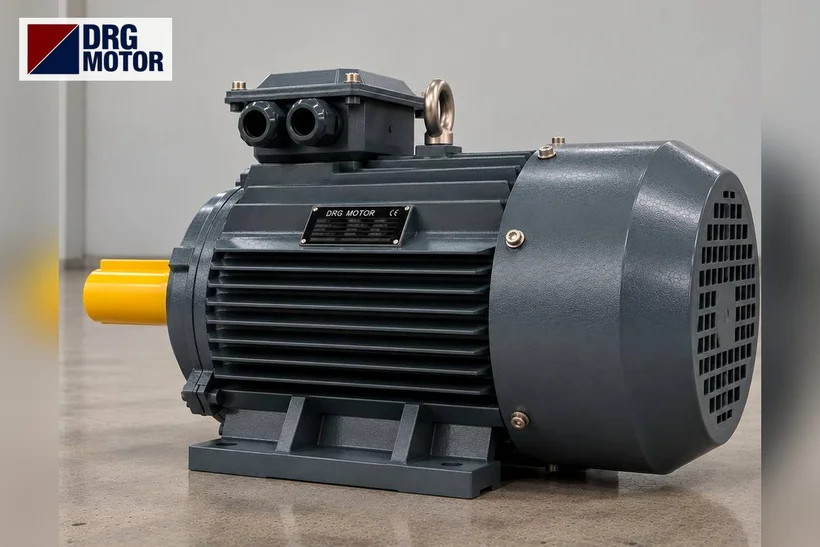
DRG Motor is a manufacturer, supplier and seller of electric motors. It is based in İzmir and ships quickly across all of Türkiye, that province included. The DRG range consists of three-phase AC asynchronous electric motors; DC motors are not sold. The comparison below is neutral and educational. Find the AC model that fits your need by power and speed in the online electric motor shop, and see every option in the three-phase asynchronous electric motors category.
AC and DC motors, put simply
An AC motor is named after the current it uses: alternating current that changes direction. The three-phase asynchronous type builds a rotating magnetic field in its windings, and the rotor is dragged along by that field. It has no brushes, slip rings or commutator on the cage rotor; the only turning part is the rotor itself. A DC motor runs on steady direct current. In most classic DC motors a segmented ring called the commutator, with carbon brushes pressing on it, keeps reversing the current direction as the rotor turns. This is where the most-discussed distinction comes from.
Commutator and brushes: the heart of the difference
Look inside a motor and the first sign that tells AC asynchronous from DC is the contacting parts. A DC motor's commutator and brushes wear over time; they create dust, can spark and need periodic replacement. An AC asynchronous motor has no such sliding contact. The turning part is a cage rotor with no current carried to it from outside, so the only moving parts that wear are the bearings. Less contact means less maintenance.
Side by side: AC and DC motor
| Feature | AC (asynchronous) electric motor | DC (direct current) motor |
|---|---|---|
| Supply | Alternating current, mostly three-phase | Direct current |
| Commutator / brushes | None | Present in the classic type |
| Maintenance load | Low (mainly bearings) | Brush/commutator service needed |
| Speed control | Via a drive (frequency converter) | By voltage, easy by nature |
Click to see current electric motor prices and order nowSEE PRICES →
Maintenance and durability
What decides durability is the number of wearing parts. A DC motor's brushes are a consumable; depending on running hours they need checking and replacing, and carbon dust fouls the surroundings. An AC asynchronous motor, with its enclosed frame, brushless build and few moving parts, runs at long intervals with relatively little trouble. For a drive going into a dusty, damp or hard-to-reach spot, that difference matters. Every motor still needs bearings, lubrication and heat management, but the day-to-day maintenance load is clearly lighter on the AC side.
How speed control is handled
In older applications the DC motor held an edge: its speed could be set simply and over a wide range by voltage, so it was long preferred on machines needing precise speed. Today the picture has changed. With a frequency converter (drive), an AC asynchronous motor's speed can also be adjusted smoothly over a wide range. In other words, DC's one clear advantage has largely moved to the AC side through drive technology. If your panel needs speed adjustment, an AC asynchronous solution with a suitable drive is enough for most jobs.
Where each motor is used
DC motors appear in battery-powered equipment, some vehicle drives, special machines needing precise variable speed, and low-power devices. AC asynchronous motors are the backbone of industry: pumps, fans, compressors, conveyors, crushers, mixers, machine tools and countless others turn with them. Being able to run straight off the grid, together with a rugged build, makes them the natural choice on the factory floor.
Why AC asynchronous is common in industry
Three reasons come together. First, an AC asynchronous motor connects directly to a three-phase grid; no complex converter in between is mandatory. Second, its brushless build makes maintenance infrequent and raises tolerance to the environment. Third, standard frame sizes and steps of power and speed make it easy to stock a spare and to source. Below are frequently requested DRG aluminium models in the 1500 rpm class with their 400 V currents; for a wider choice and a power estimate, see the electric motor calculator.
| Model | Power | Speed | Current (400 V) |
|---|---|---|---|
| DRG-112M-4-AL | 4 kW (5.5 HP) | 1500 rpm | 7.95 A |
| DRG-132S-4-AL | 5.5 kW (7.5 HP) | 1500 rpm | 10.7 A |
| DRG-112M-4K-AL | 5.5 kW (7.5 HP) | 1500 rpm | 10.7 A |
| DRG-132M-4-AL | 7.5 kW (10 HP) | 1500 rpm | 14.3 A |
| DRG-160M-4-AL | 11 kW (15 HP) | 1500 rpm | 20.4 A |
| DRG-132M-4K-AL | 11 kW (15 HP) | 1500 rpm | 20.4 A |
Once your choice is clear, sort the same models by power and speed in the online electric motor shop and read the technical data on each product page.
Frequently asked questions
Is an AC or a DC motor more durable?
There is no single winner; it depends on the need. But because it has no brushes or commutator, an AC asynchronous motor usually carries a lower day-to-day maintenance load and fewer wearing parts.
Does the DC motor's speed advantage still hold?
Largely not. A frequency converter gives an AC asynchronous motor wide, smooth speed control too; what was once seen as DC-only is now possible on the AC side.
Does DRG sell DC motors?
No. DRG's standard range is three-phase AC asynchronous electric motors. If you need a three-phase drive, we can pin down the right frame, power and speed together.
Will an AC asynchronous motor fit my machine, and how do I make sure?
Share the power, speed, voltage and mounting type (B3/B5) from the old motor's nameplate, and we will identify the right DRG model together.
To see current prices of an AC asynchronous electric motor by power and speed, visit the shop.SEE PRICES
Send a photo of your current motor nameplate and we will find the suitable DRG model together.Send on WhatsApp
Electric Motors Related to This Topic — Models and Current Prices
Suitability is not decided by power alone: compare the speed, voltage, mounting, shaft and fixing dimensions of your machine with the product data; if unsure, send us the nameplate of your current motor.
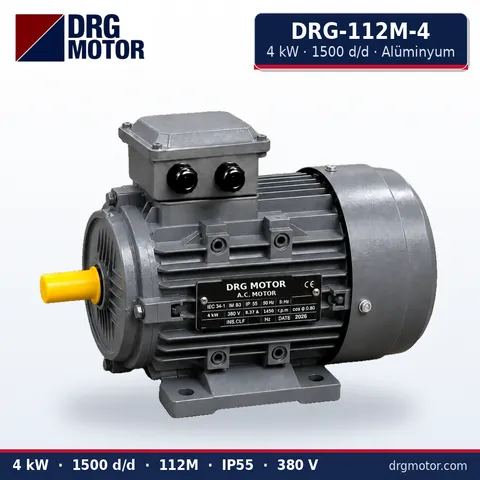
4 kW Three-Phase Motor 1500 rpm – DRG-112M-4 Aluminium
- 4 kW · 1500 rpm (4 poles)
- Aluminium frame · IEC 112M
- Shaft: 28 × 60 mm
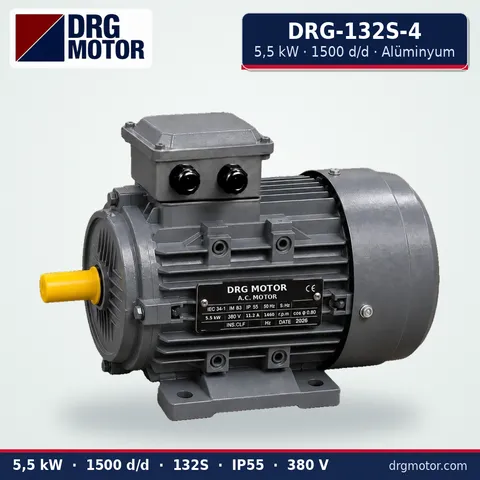
5.5 kW Three-Phase Motor 1500 rpm – DRG-132S-4 Aluminium
- 5.5 kW · 1500 rpm (4 poles)
- Aluminium frame · IEC 132S
- Shaft: 38 × 80 mm
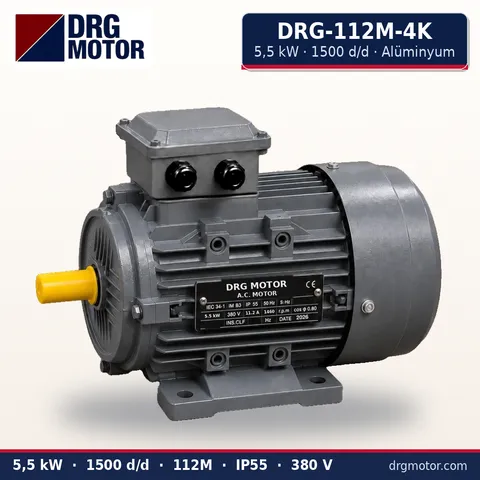
5.5 kW Compact Three-Phase Motor 1500 rpm – DRG-112M-4K Aluminium
- 5.5 kW · 1500 rpm (4 poles)
- Aluminium frame · IEC 112M
- Shaft: 28 × 60 mm
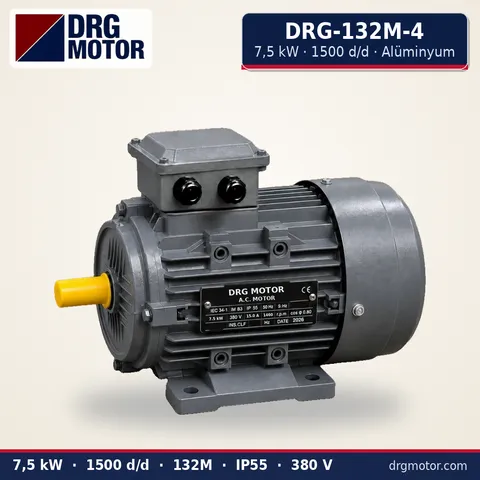
7.5 kW Three-Phase Motor 1500 rpm – DRG-132M-4 Aluminium
- 7.5 kW · 1500 rpm (4 poles)
- Aluminium frame · IEC 132M
- Shaft: 38 × 80 mm
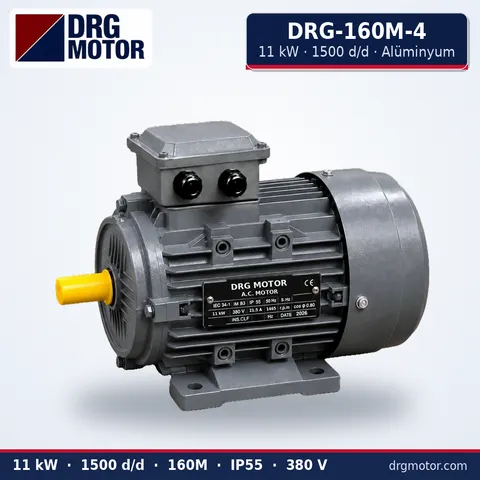
11 kW Three-Phase Motor 1500 rpm – DRG-160M-4 Aluminium
- 11 kW · 1500 rpm (4 poles)
- Aluminium frame · IEC 160M
- Shaft: 42 × 110 mm
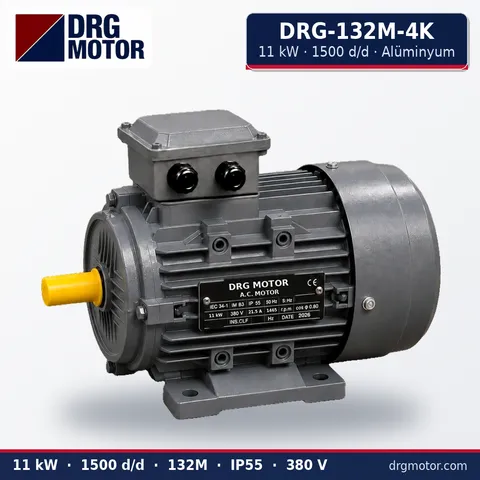
11 kW Compact Three-Phase Motor 1500 rpm – DRG-132M-4K Aluminium
- 11 kW · 1500 rpm (4 poles)
- Aluminium frame · IEC 132M
- Shaft: 38 × 80 mm