English
 Le français
 Türkçe




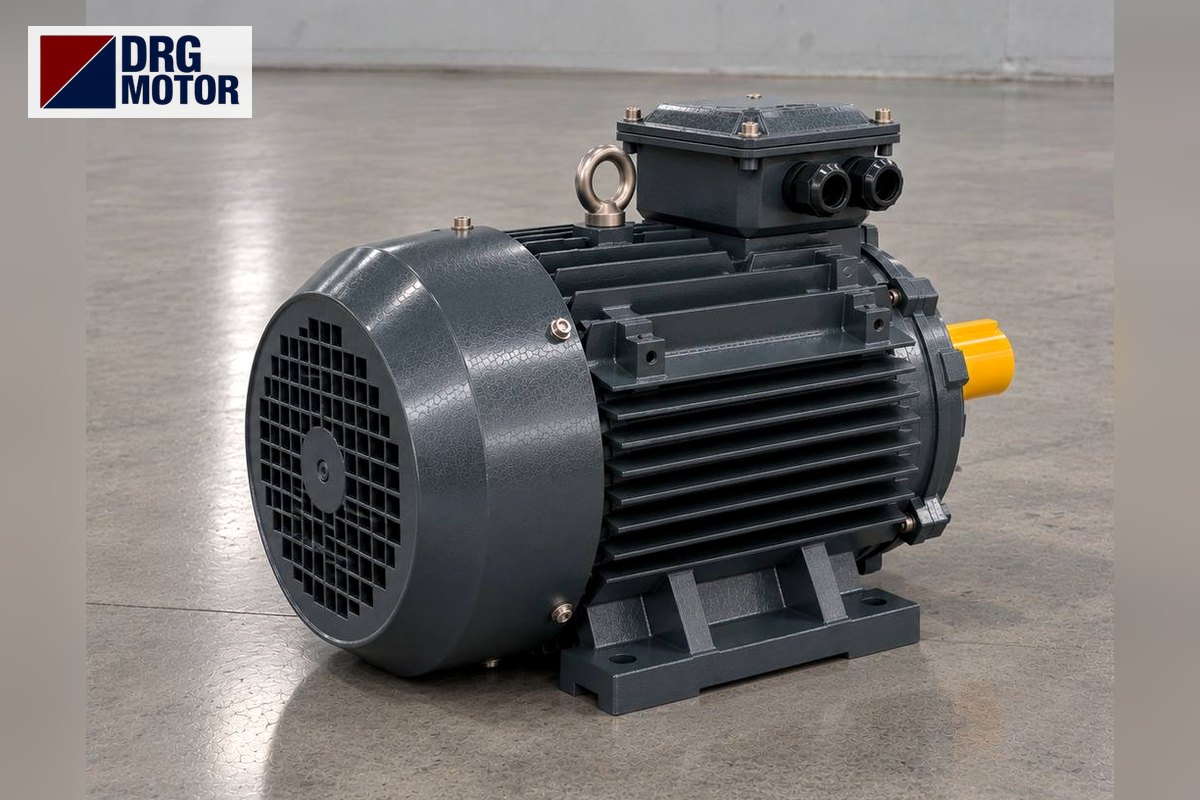

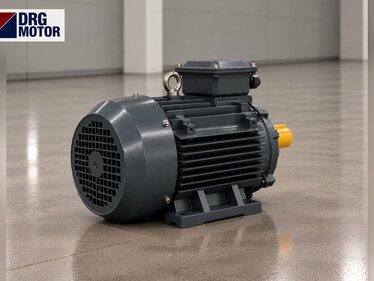
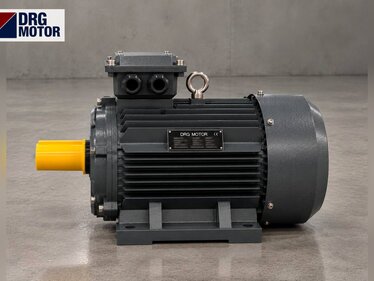
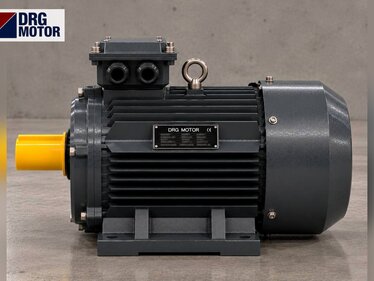
An AC asynchronous electric motor turns the electrical energy it draws from the mains or the panel into rotation and torque at the end of its shaft. Wherever something has to be turned, pushed or carried, it is the muscle that does the work; from pumps to conveyors, a large share of all industrial motion rests on these motors.
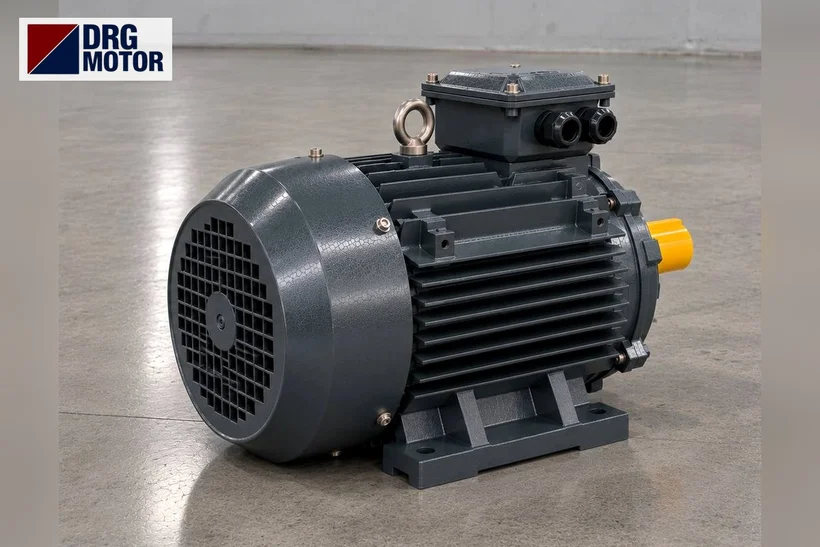
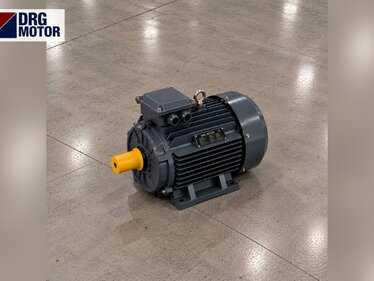
DRG Motor is a manufacturer, supplier and seller of three-phase asynchronous electric motors. You can find the right power and speed for your need in the online electric motor shop, and review the whole range together in the three-phase asynchronous electric motors category.
What does it do, in short?
If you had to sum up its job in one line: it converts electricity into rotation. When three-phase voltage reaches the windings, a rotating magnetic field forms inside the housing; the rotor turns as it chases that field and delivers torque through the shaft. You pass that torque to the machine you connect, and the machine pumps, grinds, compresses or carries.
The key point is that the motor is never an end in itself. It is the drive source turning a pump impeller, a fan blade, a conveyor drum or a machine-tool belt. That is why the shop-floor phrase "the motor failed, the line stopped" is so common; when it stops turning, all the work behind it stops too.
Where do we meet it?
The list is almost endless, but it falls into a few main groups. Wherever fluid moves there is a pump or a fan: clean-water and wastewater pumps, irrigation sets, boiler and flue fans, ventilation and extraction systems. In workshops that need compressed air, these motors drive the compressors.
In material-handling plants: conveyor belts, elevators and screw feeders; on production lines: lathes, milling machines, presses and benches; in food and chemicals: mixers, agitators and centrifuges; in mining and recycling: crushers and mills — all turn on the same logic. Feed grinding, threshing and irrigation in farm machinery belong to the same family. In short, if something turns, an asynchronous electric motor is very likely behind it.
Click to see current electric motor prices and order nowSEE PRICES →
Speed, the measure that really sets the job
An electric motor of the same power is built in different speeds, and the right speed for the job often comes even before power. Speed is set by the pole count: 2 poles about 3000 rpm, 4 poles about 1500 rpm, 6 poles about 1000 rpm. A compressor that must spin fast and a drive that turns a heavy conveyor slowly but strongly are not the same motor. The table below shows which job sits at which speed class, with a few real DRG models.
| Typical job | Speed | Power | Example DRG model |
|---|---|---|---|
| Compressor, circular saw, high-speed fan | 3000 rpm (2 poles) | 7.5 kW | DRG-132S2-2 |
| Centrifugal pump, machine tool, general drive | 1500 rpm (4 poles) | 7.5 kW | DRG-132M-4 |
| Conveyor, mixer, crusher, heavy load | 1000 rpm (6 poles) | 7.5 kW | DRG-160M-6 |
The three rows are in the same power class (7.5 kW) but in three different speeds; you can see clearly here that "how many kW" alone is not enough. A low speed delivers the same power more slowly but with higher torque, so it is preferred for demanding loads such as crushers and mixers. If you are unsure which speed suits you, the electric motor calculator helps point the way.
Why is it the most common industrial electric motor?
The answer lies in its simplicity. The rotor of an asynchronous motor has no brushes, commutator or constantly wearing contact part; its build is simple and robust. That means long years of work with little maintenance. It connects straight to the three-phase supply, is made across a wide power range, and comes in standard IEC dimensions, so sparing, mounting and replacement are easy.
The DRG range covers this whole span: aluminium-housing electric motors from 0.25 to 11 kW, cast-iron-housing electric motors from 0.55 to 355 kW, with 1000, 1500 and 3000 rpm options. From a small workshop bench to a large pump set, the choice follows the same logic. For a general bench drive, for example, DRG-112M-4 (4 kW, 1500 rpm) and for a mid-size centrifugal pump DRG-132M-4 (7.5 kW) are typical starting points.
How do you match the right electric motor?
In practice, pinning down three things is enough: the power your machine needs, the speed it must turn at, and the shaft and mounting dimensions. Once these are set, comparing on the shop takes minutes. If you have a working motor on hand, the soundest thing is to read its nameplate; power, speed, housing and shaft diameter are all written there. From our İzmir base we deliver fast by cargo to all of Türkiye, including that city; for heavy housings we plan the shipment together at the order stage.
Send a photo of your current motor nameplate and we will find the suitable DRG model together.Send on WhatsApp
To see current figures for the asynchronous electric motor that fits your job and to orderSEE PRICES
Frequently asked questions
What exactly does an AC asynchronous electric motor turn?
Whatever you fit to the end of the shaft: a pump impeller, a fan blade, a conveyor drum, a machine-tool belt, a mixer paddle. The motor converts electricity into rotation and torque, and you pass that motion to the machine.
Which speed does which job need?
Fast jobs (compressors, high-speed fans) use 2-pole/3000 rpm; general drives and pumps use 4-pole/1500 rpm; heavy, slow loads (conveyors, crushers) use 6-pole/1000 rpm. The right choice follows the speed the machine demands.
Is a single power figure enough for a machine?
Power is the starting point, but speed and mounting dimensions must fit too. The same kW exists in three speeds; the wrong speed surprises both performance and budget. If unsure, send us the nameplate and we will settle the suitable DRG model together.
Do you deliver outside İzmir?
Yes. DRG Motor is based in İzmir and delivers fast by cargo to all of Türkiye, including that city. For large, heavy motors we plan the shipment together at the time of order.
Electric Motors Related to This Topic — Models and Current Prices
Suitability is not decided by power alone: compare the speed, voltage, mounting, shaft and fixing dimensions of your machine with the product data; if unsure, send us the nameplate of your current motor.

4 kW Three-Phase Motor 1500 rpm – DRG-112M-4 Aluminium
- 4 kW · 1500 rpm (4 poles)
- Aluminium frame · IEC 112M
- Shaft: 28 × 60 mm
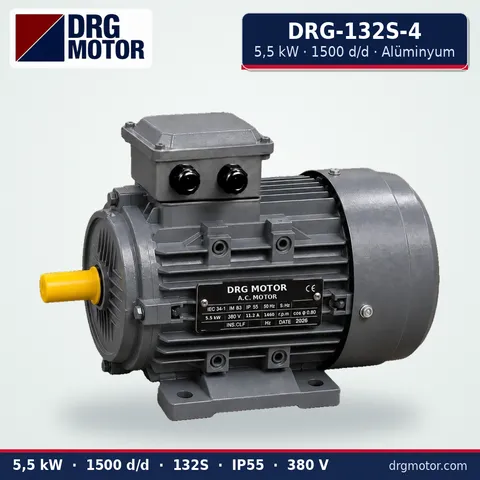
5.5 kW Three-Phase Motor 1500 rpm – DRG-132S-4 Aluminium
- 5.5 kW · 1500 rpm (4 poles)
- Aluminium frame · IEC 132S
- Shaft: 38 × 80 mm
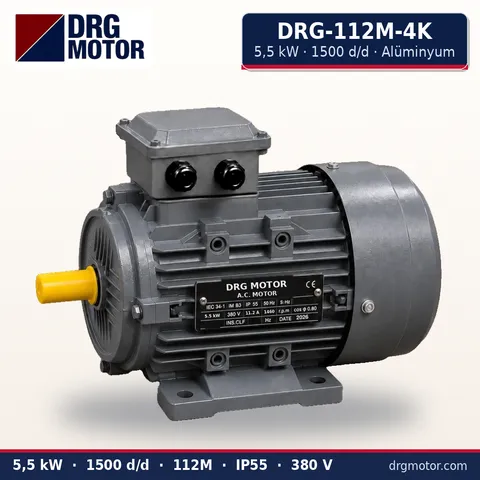
5.5 kW Compact Three-Phase Motor 1500 rpm – DRG-112M-4K Aluminium
- 5.5 kW · 1500 rpm (4 poles)
- Aluminium frame · IEC 112M
- Shaft: 28 × 60 mm
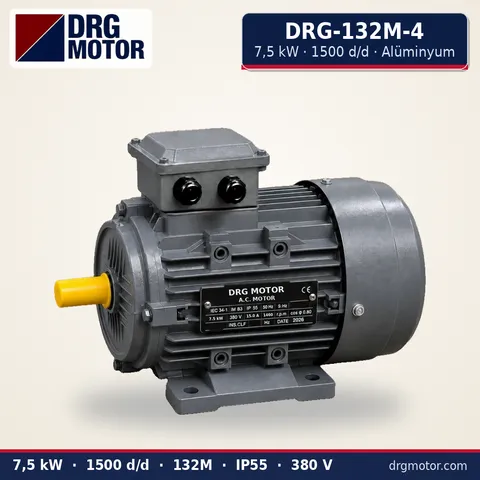
7.5 kW Three-Phase Motor 1500 rpm – DRG-132M-4 Aluminium
- 7.5 kW · 1500 rpm (4 poles)
- Aluminium frame · IEC 132M
- Shaft: 38 × 80 mm
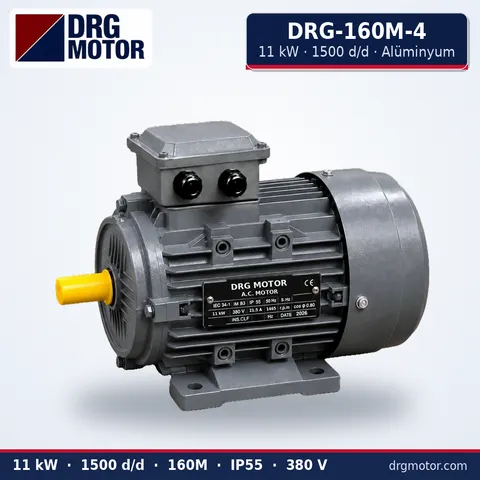
11 kW Three-Phase Motor 1500 rpm – DRG-160M-4 Aluminium
- 11 kW · 1500 rpm (4 poles)
- Aluminium frame · IEC 160M
- Shaft: 42 × 110 mm
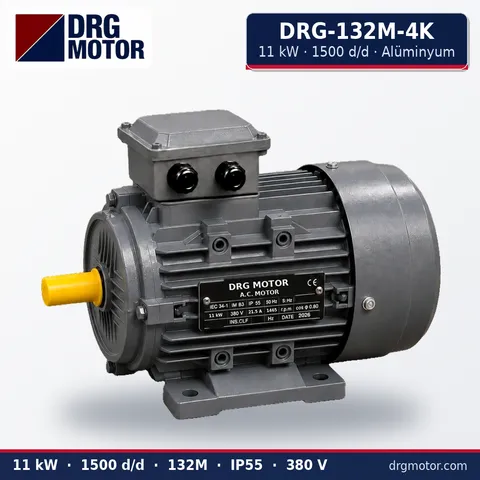
11 kW Compact Three-Phase Motor 1500 rpm – DRG-132M-4K Aluminium
- 11 kW · 1500 rpm (4 poles)
- Aluminium frame · IEC 132M
- Shaft: 38 × 80 mm