 English
 Le français
 Türkçe

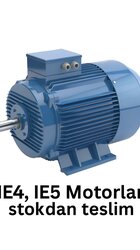
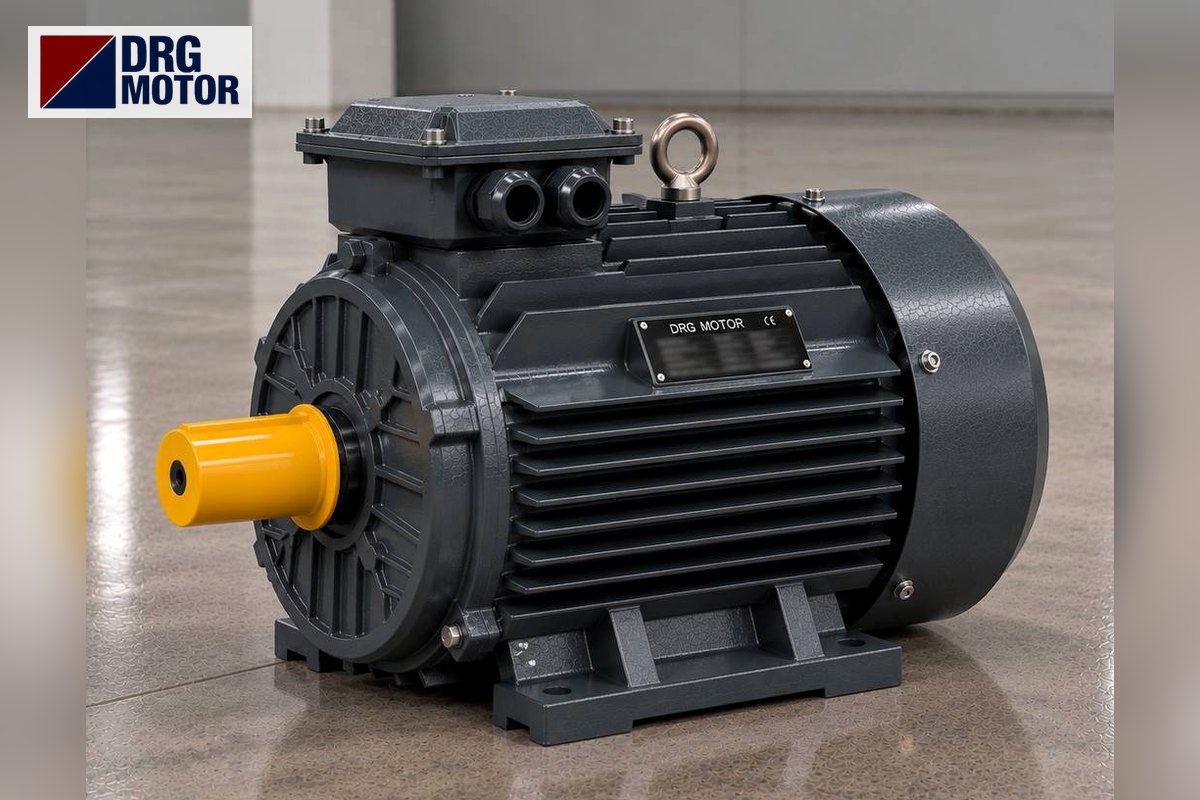

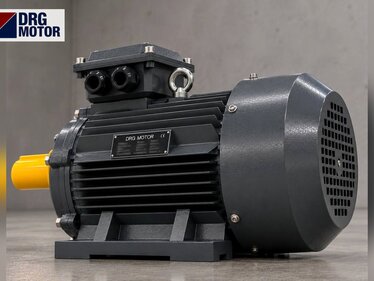
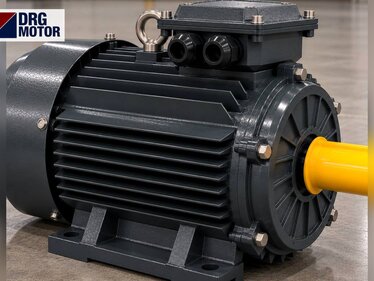
A 5.5 kW three-phase asynchronous electric motor running at 1500 rpm is 4-pole, and at 400 V its rated current is about 10.7 A. This pairing — medium power, medium speed — lands right in the middle of mills, large fans, extractors and a wide range of drives. The torque it gives at the shaft is roughly 35 Nm.
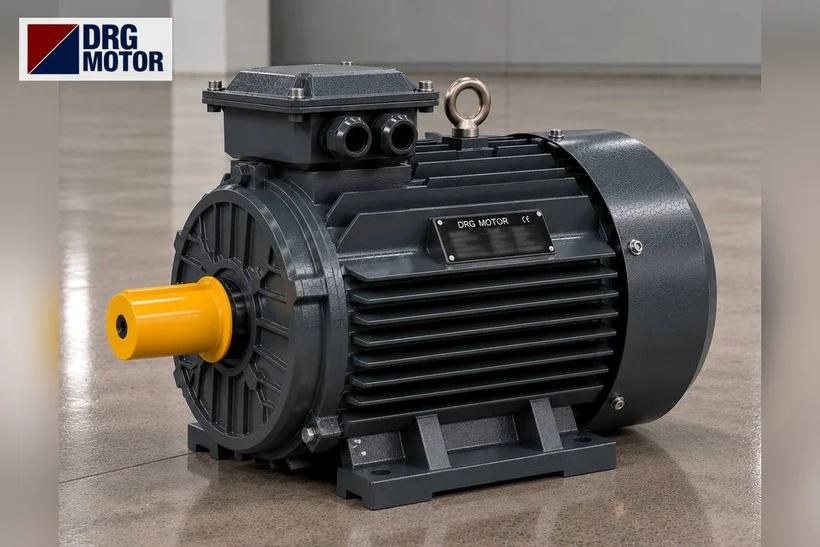
DRG Motor is a manufacturer, supplier and seller of electric motors. It is based in İzmir and ships quickly across all of Türkiye, that province included. You can see the 5.5 kW 1500 rpm model by frame in the online electric motor shop and compare the group side by side in the three-phase asynchronous electric motors category.
Why is 1500 rpm so often requested?
1500 rpm is the speed we are asked for most. The reason is simple: it is neither as harsh and loud as 3000 rpm nor as bulky as 1000 rpm. A customer wanting 5.5 kW (7.5 HP) at this speed usually has a mill, a large fan or a belt-and-pulley line in front of them. Torque and speed are balanced here, and setting the output speed with a pulley ratio is easy.
1500 rpm is actually the synchronous speed. Under load, the speed you read on the plate of an asynchronous electric motor is a little below it (around 1440–1460 rpm). That gap is slip — the natural cost of pulling a load, not a fault.
Where a 5.5 kW 1500 rpm motor fits
The typical jobs for this power-speed pair differ, but they share one thing: medium scale.
- Feed and grain mills: 5.5 kW is common in hammer mills and crushers; it demands torque on start, so shaft and coupling choice matter.
- Large fans and extractors: in high-flow air work — paint booths, dust collection, flue extractors — 1500 rpm keeps noise reasonable.
- Pump and compressor drives: medium-flow centrifugal pumps and belt compressors run at this rating.
- Conveyors and mixers: used on continuously turning drives in mortar, feed and food lines.
Whatever the job, power alone does not decide the choice; the speed the machine needs, the mounting type and the shaft size do.
Same 5.5 kW, three speeds: how torque changes
5.5 kW delivers the same mechanical power at every speed, but shaft torque rises as speed falls. Torque is roughly T = 9550 · P / n. The table below shows why 1500 rpm is seen as the "sweet spot".
| Poles / Speed | Approx. torque | Current (400 V) | Typical job |
|---|---|---|---|
| 2 poles · 3000 rpm | ~18 Nm | 10.1 A | High-speed fan, compressor |
| 4 poles · 1500 rpm | ~35 Nm | 10.7 A | Mill, large fan, pump |
| 6 poles · 1000 rpm | ~53 Nm | 12.0 A | Heavy-start slow drive |
For a load that struggles on start, like a mill, the ~35 Nm at 1500 rpm is enough for most jobs; if you need even more torque you move to 1000 rpm, but then the frame grows and the current rises.
Click to see current electric motor prices and order nowSEE PRICES →
How many amps does 5.5 kW at 1500 rpm draw?
Panel, fuse and cable sizing rest on current. A 5.5 kW 4-pole electric motor draws about 10.7 A at 400 V under rated load. That is the continuous-load figure; starting current is a multiple of it and governs the starting method.
Size the cable and protection to this current, and set the thermal relay to the motor plate and panel document. For a first check, the motor current chart and cable size calculator help.
Starting: does 5.5 kW start direct-on-line?
5.5 kW is around the boundary where direct-on-line starting begins to stress the panel and supply. In small plants direct starting is still used, but star-delta or soft starters are also common to cut inrush and lift loads like mills gently. On DRG electric motors above 4 kW the plate reads 400/690 V; on a 400 V supply the motor is wired in delta (Δ), while 690 V is the star (Y) value.
Before wiring, cut the power, confirm it is dead and have a qualified electrician do the work. Our electric motor calculator guides the selection stage.
Aluminium or cast iron?
5.5 kW 1500 rpm is offered in both aluminium and cast-iron frames in the DRG range; the technical figures (power, speed, current, shaft) are the same, the difference is the frame material. Aluminium is lighter and easier to carry and mount — practical for clean workshops and general drives. Cast iron is heavier and tougher, preferred in vibrating, impact-prone, heavy-industry settings such as mills and crushers.
The environment decides: if your machine vibrates and runs under continuous load, cast iron suits; if you are building a light, portable line, aluminium makes more sense.
132S and compact 112M: same power, two frame sizes
One detail to watch: 5.5 kW 1500 rpm can come in two different IEC frames. The standard model is a 132S frame with a 38×80 mm shaft. Where space is tight, the same power is available in a smaller 112M frame with a 28×60 mm shaft.
This difference directly affects coupling, pulley and base alignment. If you are replacing an existing electric motor, compare the frame size and shaft diameter even when power and speed match; otherwise the new motor will not seat on the machine.
DRG 5.5 kW 1500 rpm models
Below are the models at this power-speed with frame and shaft size. Each code links to the product page; for a wider comparison see the online electric motor shop.
| Model | Frame | IEC / Shaft | Current (400 V) |
|---|---|---|---|
| DRG-132S-4 | Aluminium | 132S / 38×80 mm | 10.7 A |
| DRG-112M-4K | Aluminium (compact) | 112M / 28×60 mm | 10.7 A |
| DRG-132S-4 | Cast iron | 132S / 38×80 mm | 10.7 A |
All three are 5.5 kW (7.5 HP), 1500 rpm, 400/690 V, IP55 protection and class F insulation. They differ in frame material and shaft size.
What to confirm when ordering
On 5.5 kW 1500 rpm orders these points cause the most confusion: mounting type (foot B3 or flange B5/B35), shaft diameter (38×80 on 132S, 28×60 mm on the compact 112M) and frame material. Knowing power and speed is not enough; if the connection and base do not match, the motor will not fit. If you are replacing an old electric motor, photograph its plate and shaft end.
To see the current price and frame options of the 5.5 kW 1500 rpm three-phase electric motor, visit the shop.SEE PRICES
Send a photo of your current motor nameplate and we will find the suitable DRG model together.Send on WhatsApp
Frequently asked questions
How many HP is 5.5 kW?
5.5 kW is about 7.5 HP (1 HP ≈ 0.746 kW). It is a popular rating for mill and large-fan drives.
Does a 1500 rpm motor really turn at 1500 rpm?
1500 rpm is the synchronous speed. Under load the plate speed is a little lower (around 1440–1460 rpm). The gap is slip, the nature of an asynchronous electric motor.
Is 5.5 kW 1500 rpm enough for a mill?
It is a common rating for medium hammer mills and crushers. For loads that demand torque on start, a cast-iron frame and a suitable starting method are preferred; send us your machine for the exact choice.
Why are there two frames at the same power?
5.5 kW 1500 rpm can be a standard 132S frame (38×80 mm shaft) or, where space is tight, a compact 112M frame (28×60 mm shaft). When replacing, always compare the frame and shaft.
Electric Motors Related to This Topic — Models and Current Prices
Suitability is not decided by power alone: compare the speed, voltage, mounting, shaft and fixing dimensions of your machine with the product data; if unsure, send us the nameplate of your current motor.
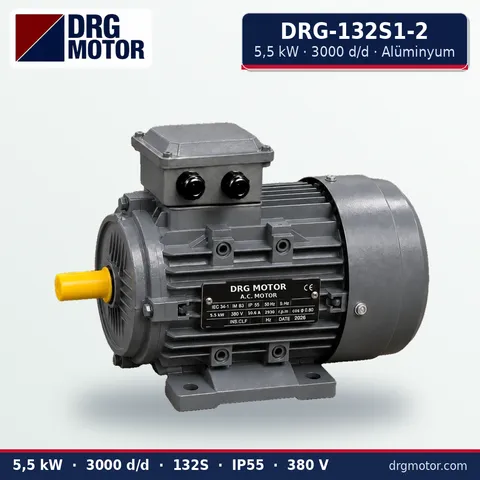
5.5 kW Three-Phase Motor 3000 rpm – DRG-132S1-2 Aluminium
- 5.5 kW · 3000 rpm (2 poles)
- Aluminium frame · IEC 132S
- Shaft: 38 × 80 mm
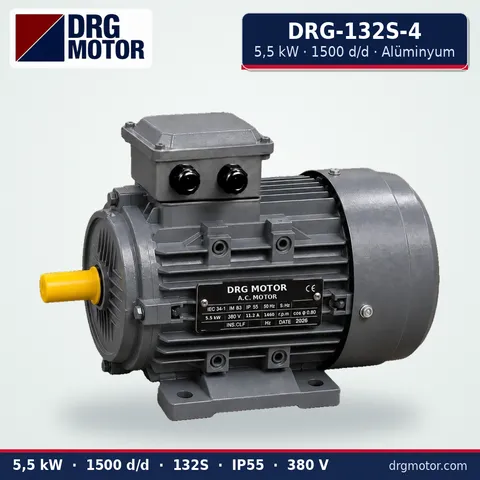
5.5 kW Three-Phase Motor 1500 rpm – DRG-132S-4 Aluminium
- 5.5 kW · 1500 rpm (4 poles)
- Aluminium frame · IEC 132S
- Shaft: 38 × 80 mm
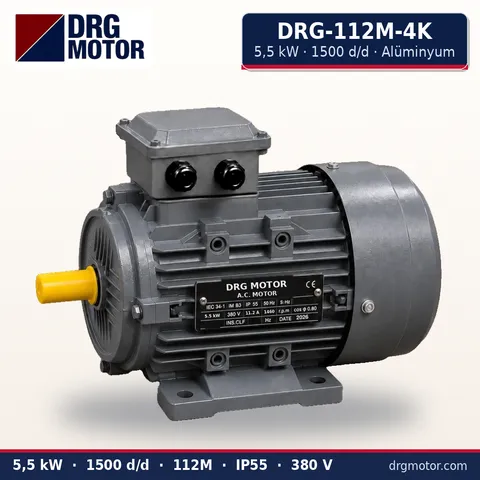
5.5 kW Compact Three-Phase Motor 1500 rpm – DRG-112M-4K Aluminium
- 5.5 kW · 1500 rpm (4 poles)
- Aluminium frame · IEC 112M
- Shaft: 28 × 60 mm
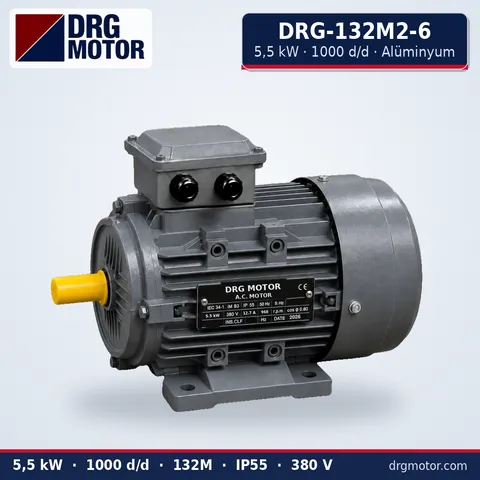
5.5 kW Three-Phase Motor 1000 rpm – DRG-132M2-6 Aluminium
- 5.5 kW · 1000 rpm (6 poles)
- Aluminium frame · IEC 132M
- Shaft: 38 × 80 mm
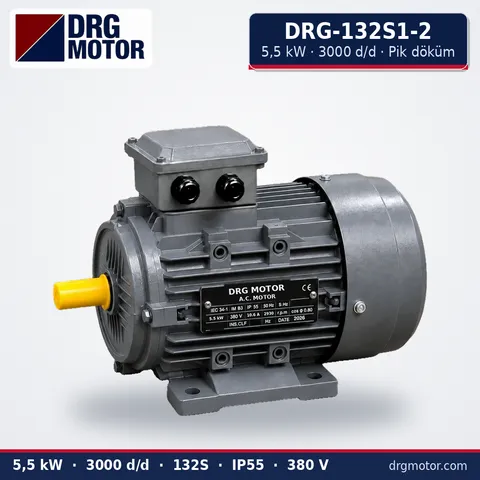
5.5 kW Three-Phase Motor 3000 rpm – DRG-132S1-2 Cast Iron
- 5.5 kW · 3000 rpm (2 poles)
- Cast iron frame · IEC 132S
- Shaft: 38 × 80 mm
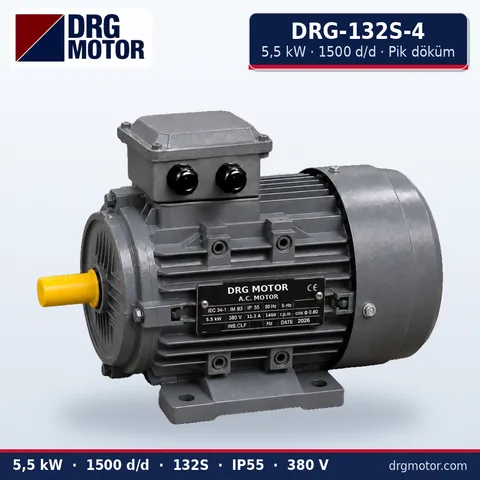
5.5 kW Three-Phase Motor 1500 rpm – DRG-132S-4 Cast Iron
- 5.5 kW · 1500 rpm (4 poles)
- Cast iron frame · IEC 132S
- Shaft: 38 × 80 mm