 English
 Le français
 Türkçe


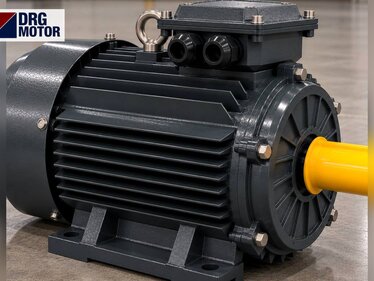
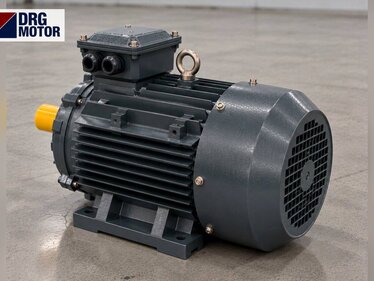
When start-up time gets longer, the first move is not to keep retrying the motor blindly but to run the measurements that narrow the cause in order: check that the supply voltage is full and balanced across all three phases, read the current drawn per phase at the moment of starting, confirm the mechanical load turns freely, and check that the connections are sound. These four headings explain most cases of extended starting; insulation and resistance measurements on the winding come afterwards, once the electrical and mechanical sides are clear, and are carried out by authorised personnel. Always compare readings against the references on the motor nameplate and in the device document.
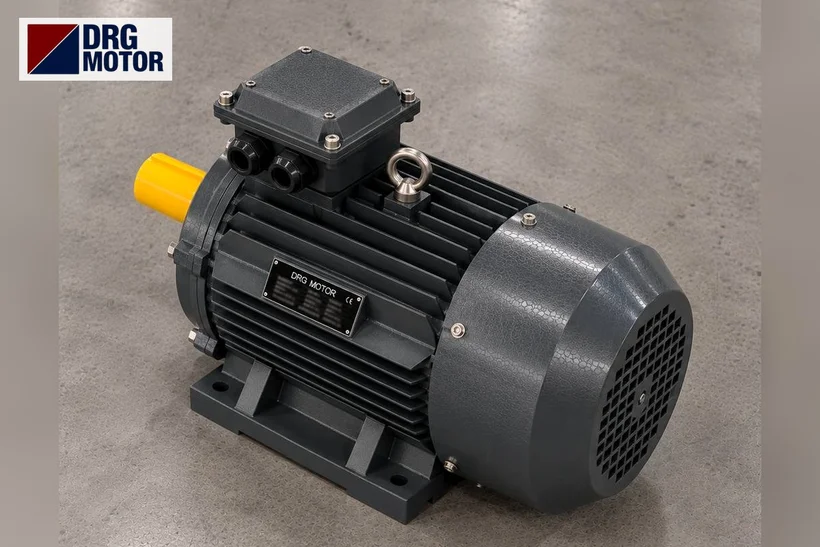
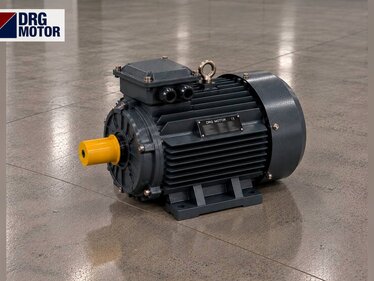
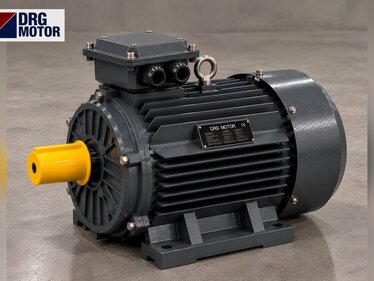
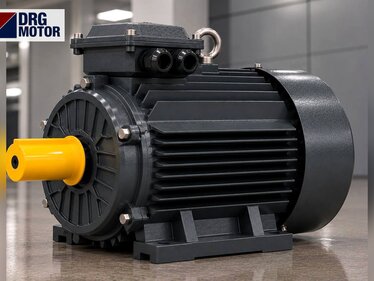
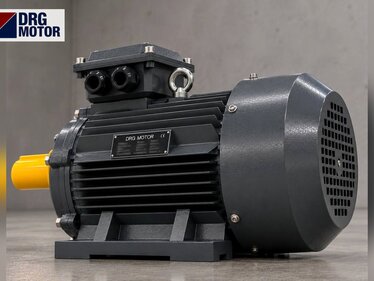
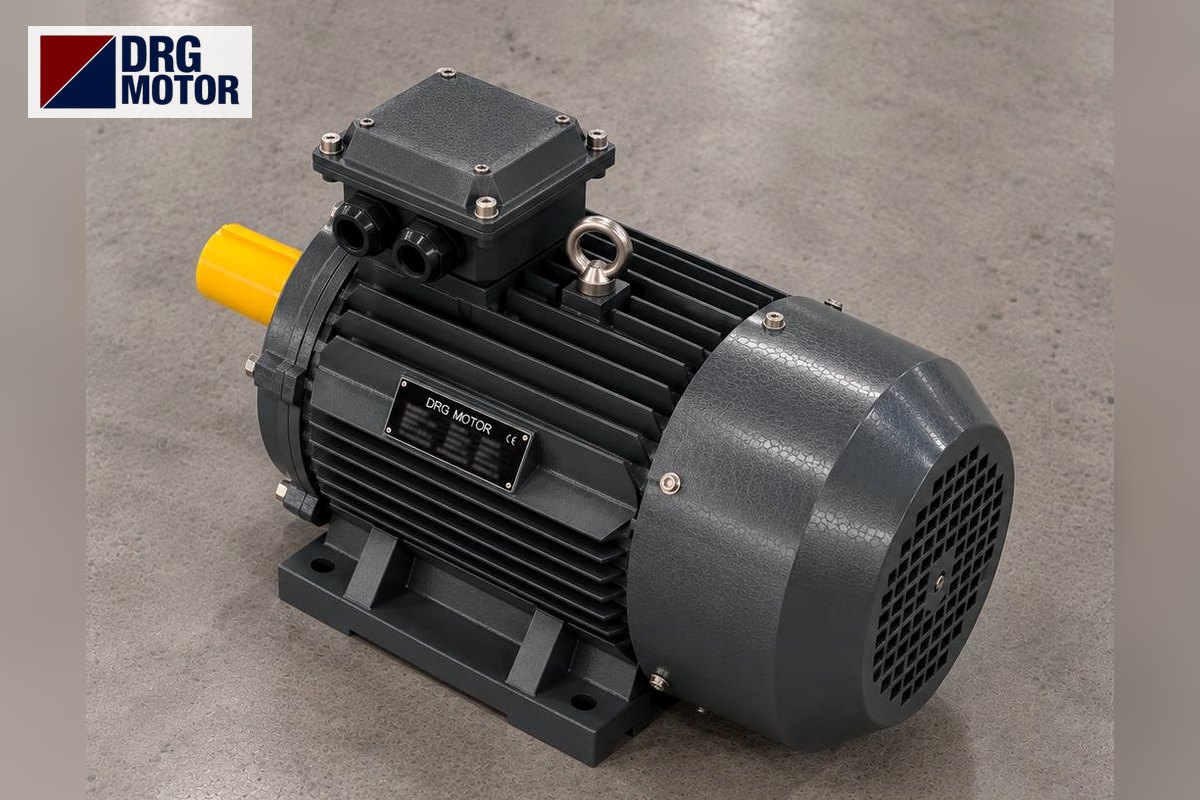
DRG Motor is a manufacturer, supplier and seller of electric motors. It is based in İzmir and ships quickly across all of Türkiye, that province included. If the measurements show the motor needs replacing, pick the right power and speed in the online electric motor shop and see the same models together in the three-phase asynchronous electric motors category.
Why does starting take longer?
As an asynchronous electric motor runs up, it produces a strong turning torque to accelerate the stationary mass of shaft and load. When it cannot produce that torque, or the load is heavier than expected, it reaches speed late; starting stretches from seconds into longer, and the winding heats more than normal meanwhile. Extended starting usually has three groups of causes: a weak or unbalanced supply (low voltage, lost phase), a heavier mechanical side (a seized bearing, a misaligned coupling, a blocked driven machine), and a fault inside the motor (a winding or connection defect). Correct measurement aims to separate these three groups.
Safety first: how to begin measuring
Before any work in the panel or terminal box, cut the power, verify the absence of voltage with a suitable instrument, and have the work done by authorised electrical personnel. Live measurements such as voltage and current are made only with proper personal protective equipment and correctly rated instruments. This article explains which measurements are meaningful; it does not give field instructions on how to make connections, because correct practice depends on the motor nameplate, the panel diagram and the rules in force.
Supply voltage measurement
The supply is the first place to look. Voltages between the three phases are measured both with the motor stopped and at the moment of starting. Even if the no-load voltage looks close to the nameplate value, a serious dip during starting means the motor cannot build enough torque and the start stretches. Two things matter: the level of the voltage (is it low against the nameplate) and the balance between phases (if one phase is clearly lower than the others there is imbalance). Long, thin supply cables, loose connections or excess load on the same line are typical causes of a voltage dip at start.
Starting current and phase balance
With a clamp ammeter, the current of the three phases is read separately at start and in running. In a healthy motor the three phase currents are close to one another. One phase clearly high or low, one phase drawing no current at all (lost phase), or current staying high longer than expected all point to where the problem is. With a lost phase the motor usually starts with difficulty, hums and heats quickly; the first thing to protect here is the motor, so instead of retrying repeatedly, have the supply checked.
Click to see current electric motor prices and order nowSEE PRICES →
Checking the mechanical load
If the electrical side is sound, the mechanical load is next. With the power off, turn the shaft by hand to feel whether it rotates freely; binding, friction or heaviness can come from the bearing, the coupling or the driven machine. If the coupling is misaligned, the belt and pulley over-tensioned, or the driven machine (pump, fan, conveyor) blocked, the motor spends more torque than needed and the start stretches. Where possible, uncoupling the motor from the load and testing it unloaded quickly tells you whether the problem is in the motor or in the load.
Connections and the winding side
Sound and correct connections (star/delta) in the terminal box directly affect starting behaviour. A loose or oxidised connection hampers the path through one phase. If the connections are sound and the problem persists, winding insulation resistance and phase-to-phase winding resistance measurements come into play; these can point to moisture in the winding, an earth leakage or a winding defect. These measurements require special instruments and should be done by authorised personnel. Rather than quoting exact thresholds from memory, assess them against the references on the motor nameplate and in the device document.
Measurement order and what to check
The table below summarises a typical order of measurements when start-up time gets longer. Always compare the values with the motor's own documents.
| Measurement | What to check | Hint: possible cause |
|---|---|---|
| Supply voltage | Level and phase balance | Low voltage, imbalance |
| Starting current | Current of three phases | Lost phase, overload |
| Shaft freedom | Turning by hand (de-energised) | Bearing, coupling, blockage |
| Connections | Terminal, star/delta | Loose/wrong connection |
| Winding side | Insulation and resistance | Moisture, leakage, defect |
If the measurements show the motor must be changed, here are examples of 1500 rpm (4-pole) aluminium-body DRG models common on frequently starting lines. Choose the power by the shaft power the load actually demands.
| DRG model | Power (kW) | Speed (rpm) | Voltage (V) |
|---|---|---|---|
| DRG-90L-4 | 1.5 | 1500 | 230/400 V |
| DRG-112M-4 | 4 | 1500 | 400/690 V |
| DRG-132S-4 | 5.5 | 1500 | 400/690 V |
| DRG-132M-4 | 7.5 | 1500 | 400/690 V |
| DRG-160M-4 | 11 | 1500 | 400/690 V |
You can reach the detailed model pages from the table above and compare all power and speed options in the electric motor shop.
Common mistakes
- Blaming the motor: Extended starting is often the supply or the load; measure voltage, current and shaft freedom before opening the motor.
- Retrying a hot motor: Every failed start heats the winding more; find the cause first.
- Defeating the thermal protection: Bypassing it because it tripped hides the problem; have the thermal current set to the nameplate.
- Guessing instead of measuring: Use the instrument rather than assuming "the voltage is fine"; the number decides.
When ordering or assessing a fault, sharing a photo of the current motor nameplate is the most reliable step.
Send a photo of your current motor nameplate and we will find the suitable DRG model together.Send on WhatsApp
If the measurements call for a motor change, review three-phase models in the right power and speed.SEE PRICES
When start-up time gets longer the method is clear: make it safe while de-energised, then measure voltage, current, load and connections in order, read the values against the nameplate, and leave the winding measurements to an authorised person.
Frequently asked questions
Which measurement should I make first when starting is slow?
The supply voltage. Measure the voltage between the three phases both at standstill and at the moment of starting; low or unbalanced voltage is among the most common causes of extended starting. As these are live measurements they must be done by an authorised person with a suitable instrument.
How do I recognise a lost phase?
Read the current of the three phases with a clamp ammeter; if one phase draws no current, or the motor starts with difficulty, hums and heats quickly, suspect a lost phase. In that case do not keep trying, have the supply checked.
How do I tell whether the problem is in the motor or the load?
With the power off, turn the shaft by hand to check its freedom; where possible, uncouple the motor from the load and test it unloaded. If the motor starts cleanly unloaded, the problem is in the load; if it still stretches unloaded, look to the motor or the supply.
Can I measure the winding insulation resistance myself?
This measurement needs a special instrument and carries electrical risk; it should be done by authorised electrical personnel. Assess the result against the motor nameplate and the device document, not against a threshold from memory.
Electric Motors Related to This Topic — Models and Current Prices
Suitability is not decided by power alone: compare the speed, voltage, mounting, shaft and fixing dimensions of your machine with the product data; if unsure, send us the nameplate of your current motor.
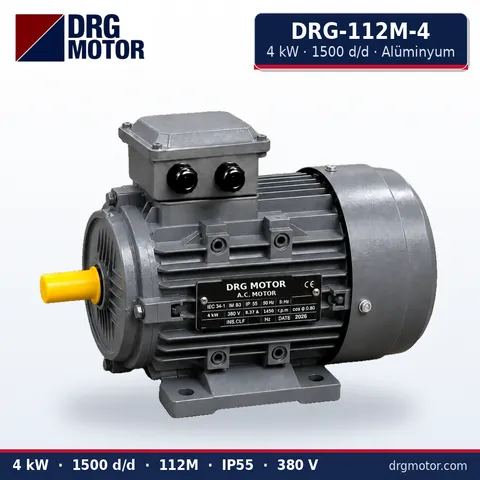
4 kW Three-Phase Motor 1500 rpm – DRG-112M-4 Aluminium
- 4 kW · 1500 rpm (4 poles)
- Aluminium frame · IEC 112M
- Shaft: 28 × 60 mm
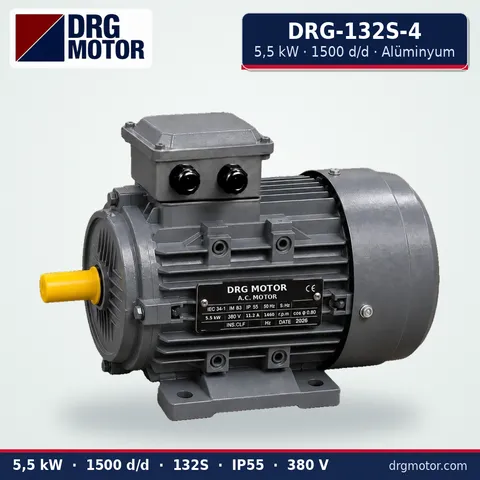
5.5 kW Three-Phase Motor 1500 rpm – DRG-132S-4 Aluminium
- 5.5 kW · 1500 rpm (4 poles)
- Aluminium frame · IEC 132S
- Shaft: 38 × 80 mm
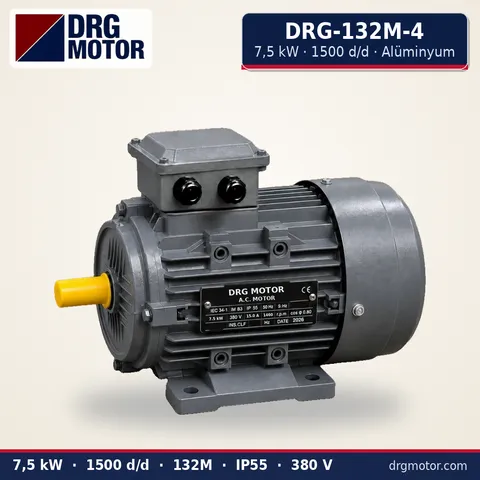
7.5 kW Three-Phase Motor 1500 rpm – DRG-132M-4 Aluminium
- 7.5 kW · 1500 rpm (4 poles)
- Aluminium frame · IEC 132M
- Shaft: 38 × 80 mm
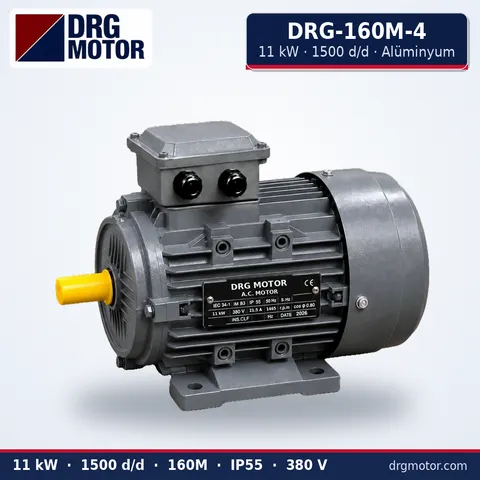
11 kW Three-Phase Motor 1500 rpm – DRG-160M-4 Aluminium
- 11 kW · 1500 rpm (4 poles)
- Aluminium frame · IEC 160M
- Shaft: 42 × 110 mm
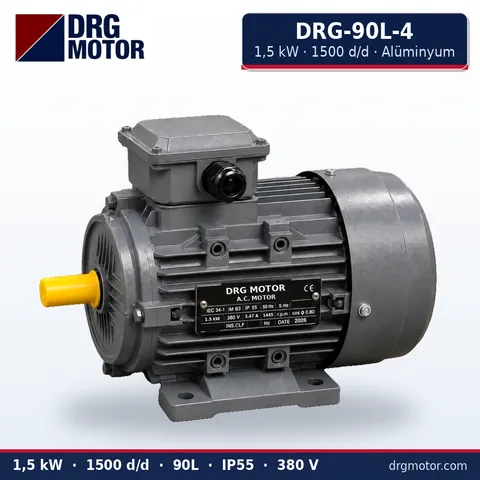
1.5 kW Three-Phase Motor 1500 rpm – DRG-90L-4 Aluminium
- 1.5 kW · 1500 rpm (4 poles)
- Aluminium frame · IEC 90L
- Shaft: 24 × 50 mm