English
 Le français
 Türkçe




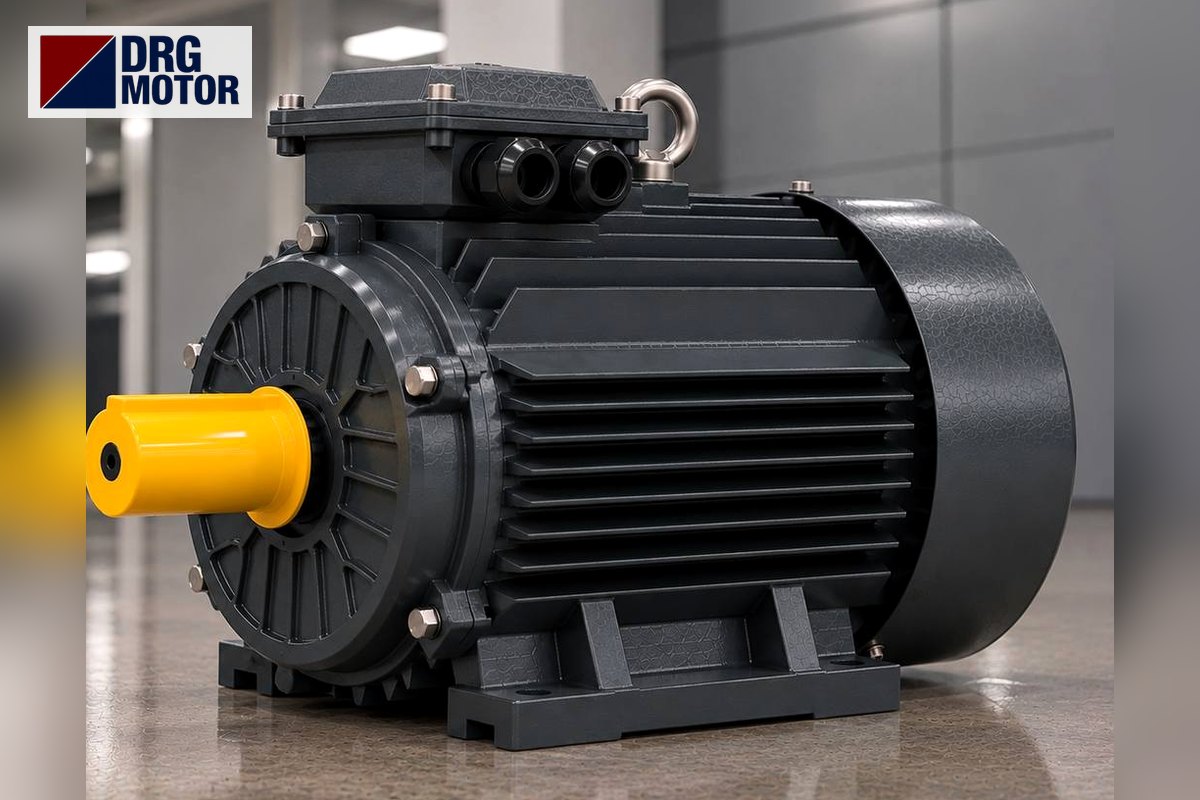

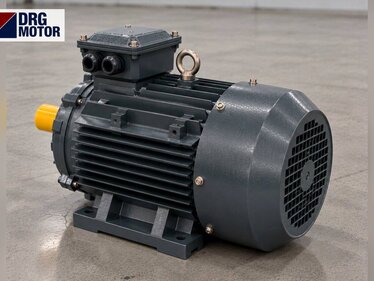
There is no fixed number: how many times in a row you can start an electric motor depends on the motor size, the inertia of the load and how much cooling time you allow between starts. The limit is set by heat, not by a count. If you restart repeatedly before the heat built up during each start can dissipate, the motor suffers; that is why the reference for the permitted number of starts is the motor nameplate and the device documentation.
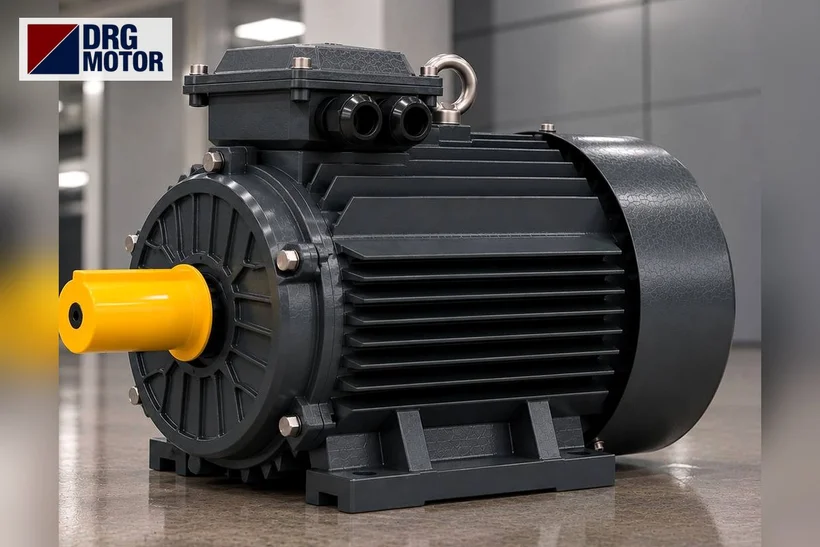
DRG Motor is a manufacturer, supplier and seller of electric motors. It is based in İzmir and ships quickly across all of Türkiye, that province included. You can pick the three-phase asynchronous model that suits your application by power and speed in the online electric motor shop and see the same products together in the three-phase asynchronous electric motors category.
Why is restarting in a row limited?
A stationary asynchronous electric motor draws several times its rated current at the first instant. This high current lasts only a few seconds, yet each time it heats the winding and the rotor. Once the motor reaches rated speed and the current settles, heat generation drops. The catch: if you stop and start in quick succession, you add a new start before the previous heat has cleared. Heat accumulates and the temperature climbs toward the insulation limit. So the real question behind "how many times" is "how much time you give it to cool".
Why can't an exact number be given?
The expectation we hear most often is a single figure like "so many per hour". But two motors of the same power behave differently under different loads. A small-frame motor heats quickly yet cools quickly too; a large-frame motor has more thermal mass, heats slowly and cools slowly. If the load inertia is high (a heavy flywheel, a full conveyor) the start lasts longer and more heat builds up. That is why the permitted number of consecutive starts is not one universal value; it is set by the value stated on the nameplate or in the product documentation and by the conditions of the application.
Factors that set the starting frequency
When you plan repeated starting, all of the points below play a role. None gives an exact number on its own; they are weighed together.
| Factor | Effect on repeated starting |
|---|---|
| Motor frame size | A large frame heats/cools slowly; a small frame does the opposite |
| Load inertia | High inertia lengthens the start and raises heat |
| Time between starts | A longer pause allows cooling and more starts |
| Ambient temperature | A hot environment slows cooling and narrows the limit |
| Starting method | Soft starting lowers the inrush current and the heat |
Click to see current electric motor prices and order nowSEE PRICES →
Small motor or large motor for frequent starts?
In an application that needs very frequent stop-start, a smaller-frame motor that sheds the start heat quickly is often more comfortable. A large motor turning a heavy load slowly, by contrast, is chosen for rare but long starts. Below are DRG aluminium models often preferred in the 1500 rpm class; weigh power and frame size together when you plan your repeated-start scheme.
| Model | Power | Speed | Frame |
|---|---|---|---|
| DRG-90L-4-AL | 1.5 kW (2 HP) | 1500 rpm | Aluminium |
| DRG-112M-4-AL | 4 kW (5.5 HP) | 1500 rpm | Aluminium |
| DRG-132S-4-AL | 5.5 kW (7.5 HP) | 1500 rpm | Aluminium |
| DRG-132M-4-AL | 7.5 kW (10 HP) | 1500 rpm | Aluminium |
| DRG-160M-4-AL | 11 kW (15 HP) | 1500 rpm | Aluminium |
To settle the right power and speed, see the product pages in the electric motor shop and, for load and current checks, the electric motor calculation and motor current table tools.
What to watch on site when starting in a row
A few simple habits let you stop and start without needlessly straining the motor:
- Give the motor cooling time between starts; if the frame is too hot to touch, hold off the next start.
- Where frequent stop-start is needed, choose the starting method to fit the application; soft starting softens the inrush.
- Set the thermal overload relay to the current on the motor nameplate; do not assign the value yourself, follow the nameplate and the panel documentation.
- Before any setting, connection or check, cut the power, confirm it is de-energised and have a qualified electrician do the work.
Common mistakes
The most common error is to force the motor over and over because "it didn't start". Restarting while there is a mechanical jam or a supply fault raises the heat fast. The second frequent mistake is to put a large, slow-starting motor where very frequent stop-start is needed. The third is to disable or mis-set the thermal protection; that protection exists precisely against the heat caused by repeated starting.
Frequently asked questions
It didn't start — can I press again right away?
Find out why first. If there is a mechanical jam, a missing phase or a seizure, repeated attempts raise the heat and cause damage. Cut the power, check, then try again if it is clear.
How many times per hour can I start it?
A single figure would be misleading. The permitted value depends on the nameplate, the load and the cooling time between starts; do not exceed the limit stated in its documentation.
Why does repeated starting heat the motor?
Each start draws a brief high current that heats the winding. If a new start is added before the heat clears, temperature accumulates; that temperature is the limit.
What should I do for very frequent stop-start?
Describe the application so the frame size and starting method can be chosen together. Send a photo of your current motor nameplate and we will settle the right DRG model together.
To see the current price of a three-phase electric motor that fits your repeated-start pattern, browse the shop.SEE PRICES
Send a photo of your current motor nameplate and we will find the suitable DRG model together.Send on WhatsApp
Electric Motors Related to This Topic — Models and Current Prices
Suitability is not decided by power alone: compare the speed, voltage, mounting, shaft and fixing dimensions of your machine with the product data; if unsure, send us the nameplate of your current motor.

4 kW Three-Phase Motor 1500 rpm – DRG-112M-4 Aluminium
- 4 kW · 1500 rpm (4 poles)
- Aluminium frame · IEC 112M
- Shaft: 28 × 60 mm

5.5 kW Three-Phase Motor 1500 rpm – DRG-132S-4 Aluminium
- 5.5 kW · 1500 rpm (4 poles)
- Aluminium frame · IEC 132S
- Shaft: 38 × 80 mm

7.5 kW Three-Phase Motor 1500 rpm – DRG-132M-4 Aluminium
- 7.5 kW · 1500 rpm (4 poles)
- Aluminium frame · IEC 132M
- Shaft: 38 × 80 mm

11 kW Three-Phase Motor 1500 rpm – DRG-160M-4 Aluminium
- 11 kW · 1500 rpm (4 poles)
- Aluminium frame · IEC 160M
- Shaft: 42 × 110 mm

1.5 kW Three-Phase Motor 1500 rpm – DRG-90L-4 Aluminium
- 1.5 kW · 1500 rpm (4 poles)
- Aluminium frame · IEC 90L
- Shaft: 24 × 50 mm