English
 Le français
 Türkçe




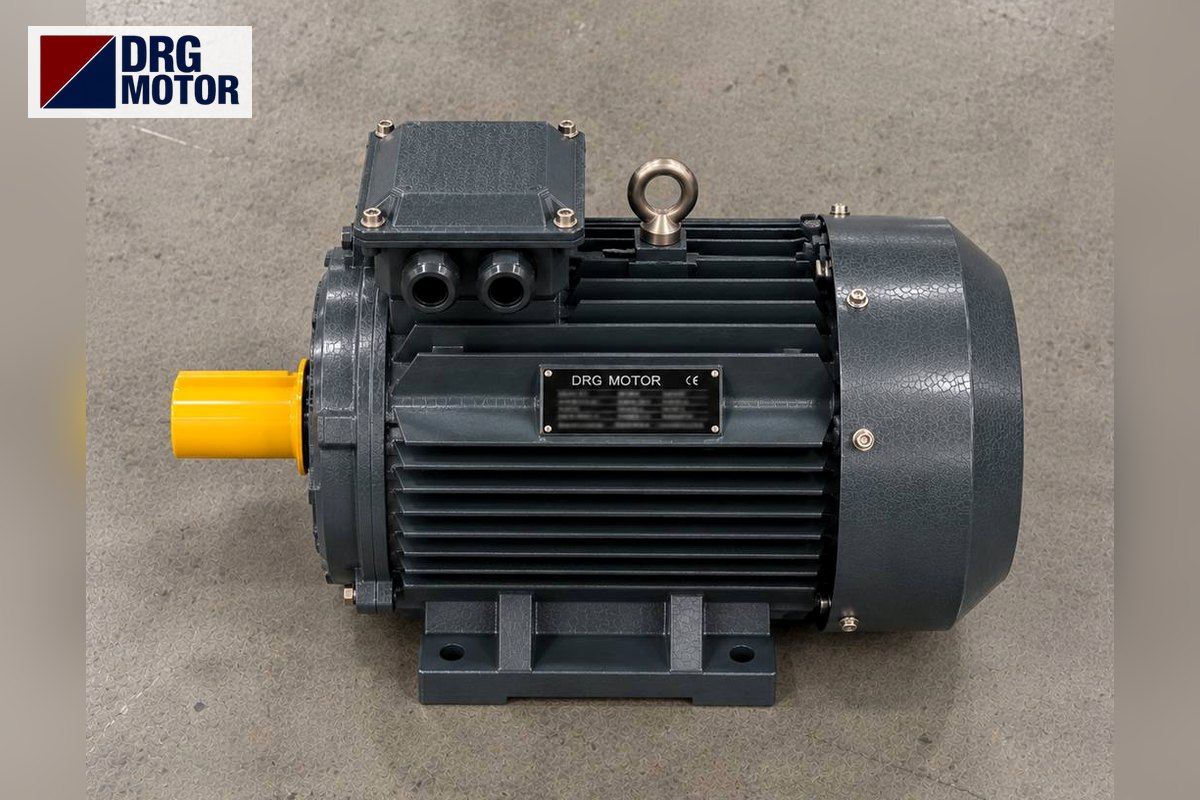

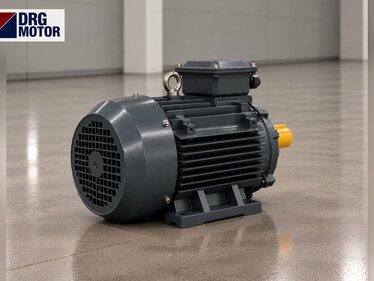
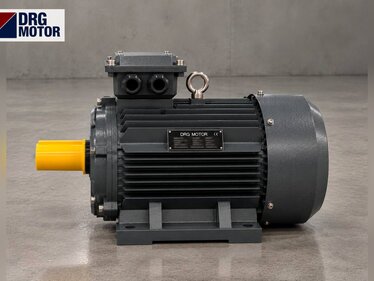
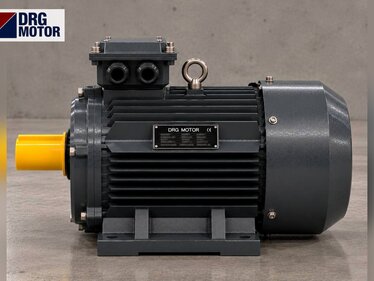
A 1.5 kW three-phase electric motor runs on what we call a 380 V supply; on the nameplate that voltage now reads 230/400 V. In the 4-pole, 1500 rpm version it draws about 3.3 A on the 400 V side and is wired in star (Y). Current and frame both change with the speed option — and that is where the real detail lies.
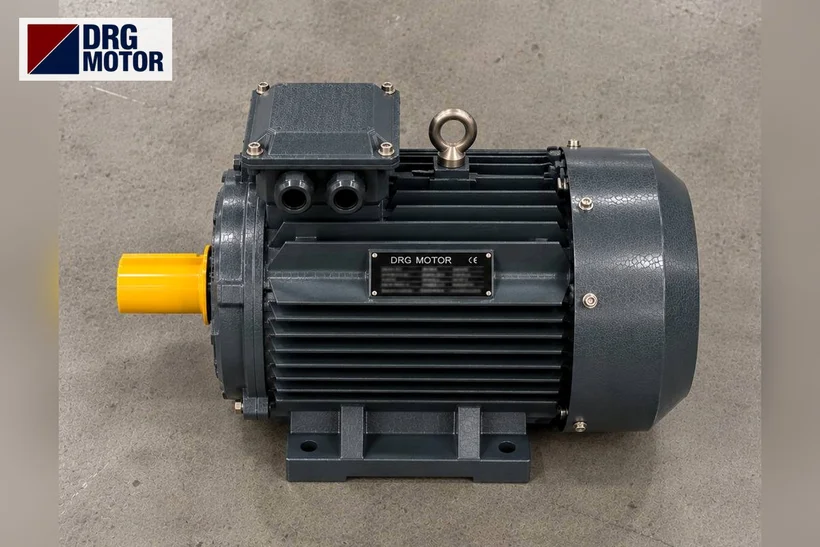
DRG Motor is a manufacturer, supplier and seller of electric motors. It is based in İzmir and ships quickly across all of Türkiye, that province included. Compare the three speed options in the 1.5 kW class in the online electric motor shop and see the same models together in the three-phase asynchronous electric motors category.
Where does 1.5 kW fit?
1.5 kW is that practical step between small and medium power. It is the 2 HP equivalent and is most often asked for in booster pumps, small compressors, wood and metal workbenches, conveyors and fan-extractor sets. It neither feels "too little" like 0.75 kW nor oversized like 2.2 kW. That is why it is among the most frequently quoted ratings.
What matters is not the kW alone but the speed you want that power at. The same 1.5 kW behaves very differently at 3000 rpm and at 1000 rpm. That is the first thing to settle when ordering.
Speed options and current: 2, 4, 6 poles
On a 50 Hz supply the pole count sets the speed: 2 poles ≈ 3000, 4 poles ≈ 1500, 6 poles ≈ 1000 rpm (the real value sits a few rpm below because of slip). For the same 1.5 kW, the 400 V current and shaft size of the three options are:
| Speed | Poles | Current (400 V) | Shaft dia.×length |
|---|---|---|---|
| 3000 rpm | 2 | 3.06 A | 24x50 mm |
| 1500 rpm | 4 | 3.3 A | 24x50 mm |
| 1000 rpm | 6 | 3.59 A | 28x60 mm |
Note that as speed drops, the current drawn rises slightly. From 3.06 A at 3000 rpm you reach 3.59 A at 1000 rpm; this comes from the slow-speed motor delivering the same power at a lower power factor — not a fault. Size cable and thermal relay to the highest current and you will not go wrong.
Click to see current electric motor prices and order nowSEE PRICES →
380 V or 400 V? The 230/400 V on the plate
In everyday speech we say "380 volts", but that is the old nominal value of the line-to-line voltage; the standard today is 400 V and both describe the same supply. The nameplate of 1.5 kW DRG electric motors prints voltage as a pair, 230/400 V (Δ/Y). The first number is the delta (Δ), the second the star (Y) connection.
The practical result is clear: on a normal 380–400 V three-phase installation this motor is wired in star (Y). The 230 V end is for a separate 230 V line-to-line supply or a starting scheme. Before changing the links on the terminal block, switch off the supply, verify it is de-energised and have the work done by a qualified electrician.
Star or delta?
At 1.5 kW this range is small enough for direct-on-line (DOL) starting; in the panel it is usually energised through a single contactor, wired in star. The inrush reaches a few times the rated current, but most installations handle it easily at this power. Still, if the load is sensitive or starts frequently, compare the current against the motor current chart and plan your protection accordingly.
Star-delta starting really earns its place at larger ratings; at 1.5 kW it is rarely needed. To grasp the logic, just remember that the 230/400 V plate allows two different link arrangements.
Cable and thermal by current
The backbone of a correct installation is the current figure. Depending on speed, a 1.5 kW motor draws a little over 3 A at 400 V; this is the first number you reach for to set cable size and the thermal relay range. Always set the exact value from the motor's own plate and the panel documentation. For the cross-section, the motor cable size calculator gives a handy first check.
Frame: aluminium or cast iron?
1.5 kW is built in both frames. The aluminium frame is light and easy to handle and mount; it is preferred for booster pumps, fans and light benches. The cast iron frame is heavier and tougher against impact and vibration; it suits compressors, pumps and harsh industrial settings. The electrical values (current, speed, voltage) are identical in both; the difference is mechanical. At this power the frame is IEC 90L for 2 and 4 poles and 100L for 6 poles; the shaft is 24x50 mm at 4 poles and 28x60 mm at 6 poles.
1.5 kW DRG models and values
Below are the DRG models in the 1.5 kW class with their speed, 400 V current and frame. Each code links to its product page; for a wider comparison see the online electric motor shop.
| Model | Speed | Current (400 V) | Frame |
|---|---|---|---|
| DRG-90S-2-AL | 3000 rpm | 3.06 A | Aluminium |
| DRG-90L-4-AL | 1500 rpm | 3.3 A | Aluminium |
| DRG-100L-6-AL | 1000 rpm | 3.59 A | Aluminium |
| DRG-90S-2-GG | 3000 rpm | 3.06 A | Cast iron |
| DRG-90L-4-GG | 1500 rpm | 3.3 A | Cast iron |
| DRG-100L-6-GG | 1000 rpm | 3.59 A | Cast iron |
Frequently asked questions
How many amps does a 1.5 kW motor draw at 380 V?
It depends on the speed. On the 400 V side: 2 poles (3000 rpm) ≈ 3.06 A, 4 poles (1500 rpm) ≈ 3.3 A, 6 poles (1000 rpm) ≈ 3.59 A. Everyday "380 V" and the 400 V on the plate are the same supply.
Is a 1.5 kW motor wired in star or delta?
A 1.5 kW motor marked 230/400 V is wired in star (Y) on a 380–400 V three-phase installation. At this power direct-on-line (DOL) starting is usually enough.
Which speed option should I choose?
Match your machine's required speed: 3000 rpm for high-speed fans/compressors, 1500 rpm for general drives, 1000 rpm where high torque at low speed is needed. If unsure, describe the machine and we will settle it together.
Is there a performance difference between aluminium and cast iron?
Electrically none; current, speed and voltage are the same. The difference is weight and durability: aluminium is light, cast iron is sturdier and more vibration-resistant.
To see the speed and frame options of the 1.5 kW three-phase electric motor with current prices, visit the shop.SEE PRICES
Send a photo of your current motor nameplate and we will find the suitable DRG model together.Send on WhatsApp
Electric Motors Related to This Topic — Models and Current Prices
Suitability is not decided by power alone: compare the speed, voltage, mounting, shaft and fixing dimensions of your machine with the product data; if unsure, send us the nameplate of your current motor.
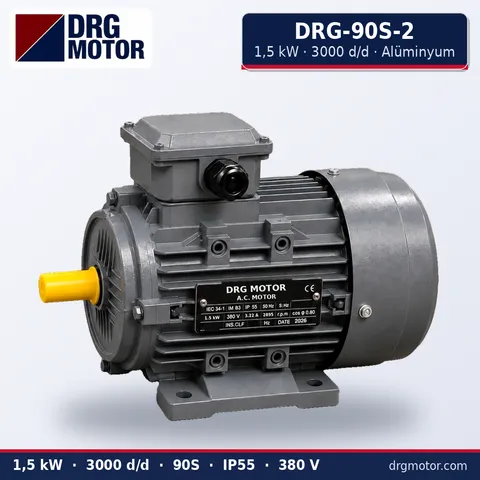
1.5 kW Three-Phase Motor 3000 rpm – DRG-90S-2 Aluminium
- 1.5 kW · 3000 rpm (2 poles)
- Aluminium frame · IEC 90S
- Shaft: 24 × 50 mm
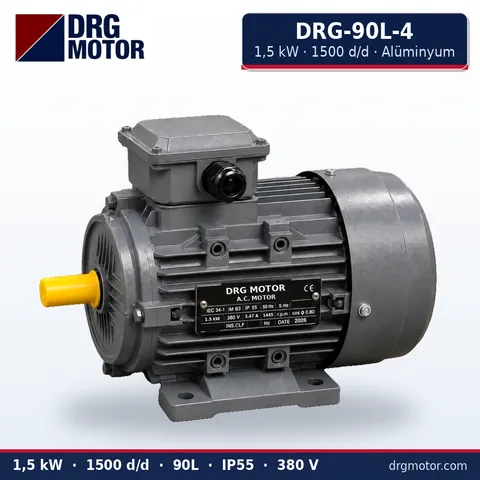
1.5 kW Three-Phase Motor 1500 rpm – DRG-90L-4 Aluminium
- 1.5 kW · 1500 rpm (4 poles)
- Aluminium frame · IEC 90L
- Shaft: 24 × 50 mm
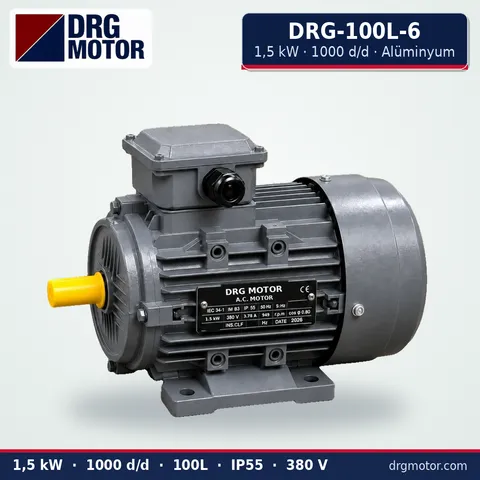
1.5 kW Three-Phase Motor 1000 rpm – DRG-100L-6 Aluminium
- 1.5 kW · 1000 rpm (6 poles)
- Aluminium frame · IEC 100L
- Shaft: 28 × 60 mm
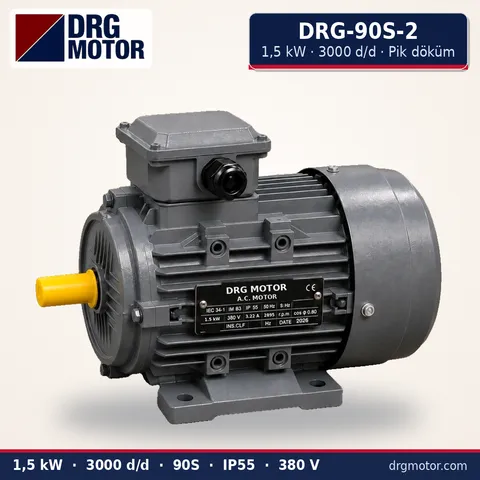
1.5 kW Three-Phase Motor 3000 rpm – DRG-90S-2 Cast Iron
- 1.5 kW · 3000 rpm (2 poles)
- Cast iron frame · IEC 90S
- Shaft: 24 × 50 mm
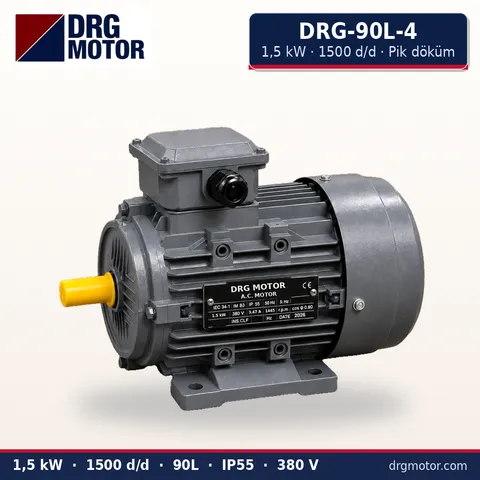
1.5 kW Three-Phase Motor 1500 rpm – DRG-90L-4 Cast Iron
- 1.5 kW · 1500 rpm (4 poles)
- Cast iron frame · IEC 90L
- Shaft: 24 × 50 mm
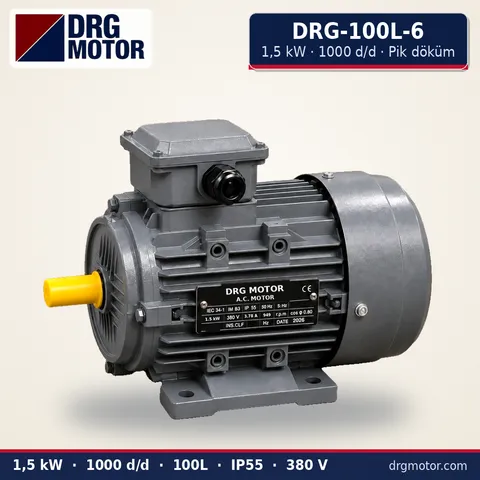
1.5 kW Three-Phase Motor 1000 rpm – DRG-100L-6 Cast Iron
- 1.5 kW · 1000 rpm (6 poles)
- Cast iron frame · IEC 100L
- Shaft: 28 × 60 mm