 English
 Le français
 Türkçe




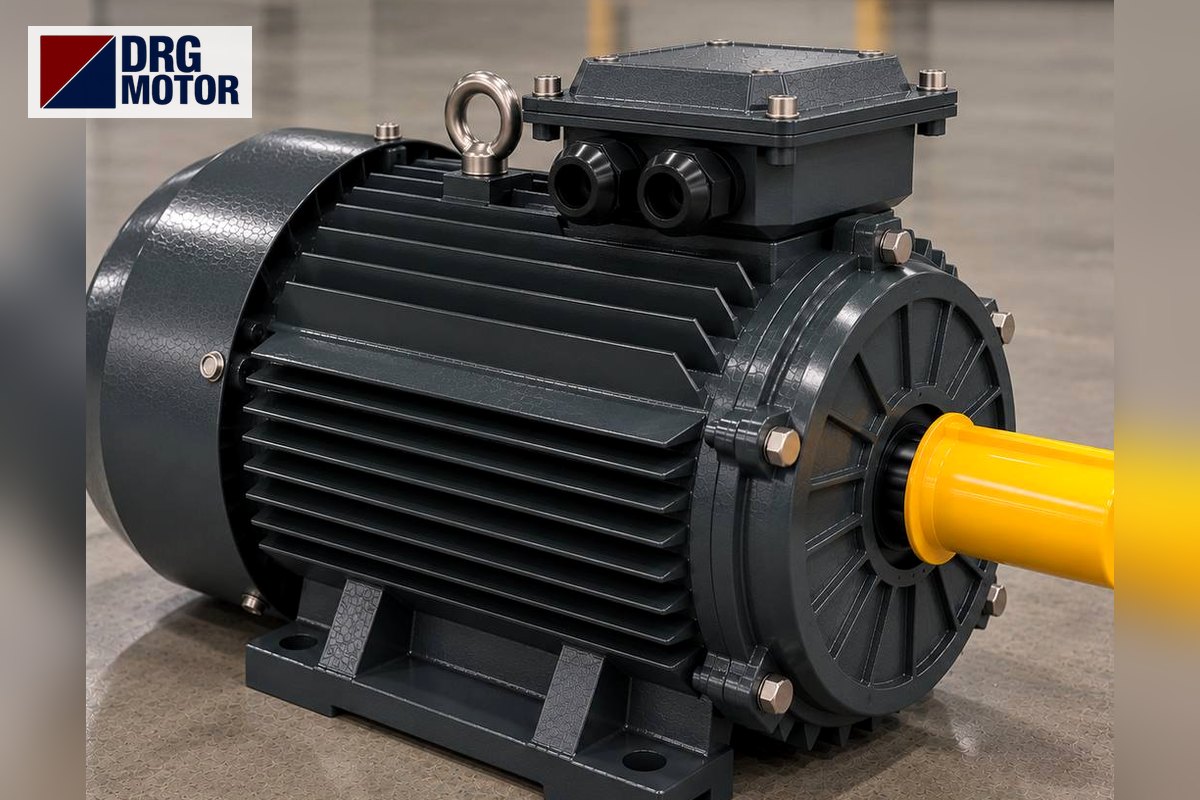

A 15 kW three-phase electric motor is a 20 HP machine and runs on Türkiye's 380/400 V three-phase supply. Its rated current at 400 V ranges roughly from 26.5 to 29.3 A depending on speed; because the winding is 400/690 V (Δ/Y), it connects in delta (Δ) on a 400 V grid, and at this power star-delta starting becomes a real consideration.
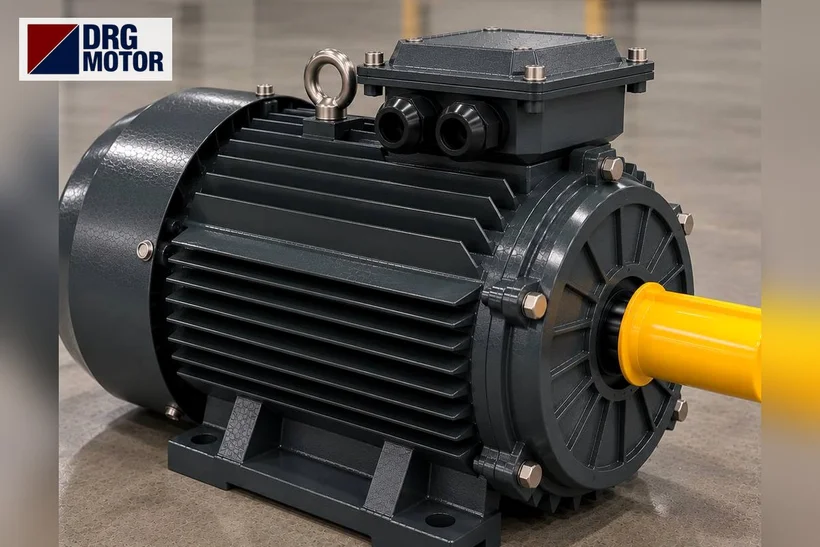
DRG Motor is a manufacturer, supplier and seller of electric motors. It is based in İzmir and ships quickly across all of Türkiye, that province included. Once you have settled on the speed and shaft size, pick the 15 kW models in the online electric motor shop, or see the whole class in the three-phase asynchronous electric motors category.
Why only cast iron at 15 kW?
At low ratings aluminium and cast-iron frames sit side by side. 15 kW is where that choice ends: DRG's aluminium range goes up to 11 kW, while 15 kW and above are built only in cast iron. The reason is mechanical — at this power the shaft torque, bearing load and vibration call for the stiffness and mass damping that a cast-iron frame provides. In most plants, 15 kW is the first step into the "heavy" class of electric motors. That is why all three models below carry the GG (cast iron) code; there is no aluminium 15 kW to look for, and the right move is straight to cast iron.
Speed, poles and frame
In an asynchronous electric motor the pole count sets the speed. At 50 Hz the synchronous speed comes from 120·f/poles: 2 poles ≈ 3000, 4 poles ≈ 1500, 6 poles ≈ 1000 rpm. The real figure on the plate is slightly below that; the gap is slip. 15 kW is the same power, but as the speed drops the frame grows and the shaft thickens:
| Poles | Speed | Frame (IEC) | Shaft (dia×len) |
|---|---|---|---|
| 2 poles | 3000 rpm | 160M | 42x110 mm |
| 4 poles | 1500 rpm | 160L | 42x110 mm |
| 6 poles | 1000 rpm | 180L | 48x110 mm |
Note that the 2- and 4-pole models stay in the same 160 frame family (160M / 160L) with a 42x110 mm shaft, while the 6-pole moves to a 180L frame and a 48x110 mm shaft. Plan the coupling, pulley and foot holes around this difference, because a shaft going from 42 to 48 mm also changes the coupling hub.
Click to see current electric motor prices and order nowSEE PRICES →
Current and torque at 400 V
You size the cable and set the overload relay range from this current. The figures come from DRG's actual 15 kW cast-iron records; torque is estimated with T = 9550·P/n:
| Model | Speed | Current (400 V) | Approx. torque |
|---|---|---|---|
| DRG-160M2-2-GG | 3000 rpm | 26.5 A | ≈ 48 Nm |
| DRG-160L-4-GG | 1500 rpm | 27.3 A | ≈ 96 Nm |
| DRG-180L-6-GG | 1000 rpm | 29.3 A | ≈ 143 Nm |
The table captures the core trade-off of 15 kW: as speed drops the current rises a little, but torque nearly triples. The 1000 rpm model delivers the same power as the 3000 rpm one yet produces far more turning force at the shaft. To check the sizing, the motor current chart is a good guide.
400/690 V (Δ/Y): why delta at this power?
On small electric motors the plate shows 230/400 V and the motor connects in star on a 400 V line. At 15 kW it is the other way round: the winding is 400/690 V (Δ/Y). The first value is delta (Δ), the second star (Y). On Türkiye's 400 V grid this motor runs in delta (Δ); the 690 V star option matters for higher-voltage industrial lines and for star-delta starting. Set the terminal links according to the motor nameplate and the panel documentation; before touching any connection, switch off the supply, verify it is dead and have a qualified electrician do the work.
When is star-delta starting needed?
15 kW is where direct-on-line starting starts to reach its limit. On a direct start the motor draws several times its rated current, which can both sag the supply and give a hard mechanical shock to belts and couplings. So above 15 kW — especially on fans, compressors and conveyors that start under load — star-delta starting is a common choice: the motor first starts in star at a lower current, then switches to delta as it nears speed. For that to be possible, all six ends of the 400/690 V winding must reach the terminal box, which they do on these models. Decide the starting method by the machine's starting load and the panel setup; if unsure, settle it before ordering.
Cable size and thermal protection
With current in the 26–30 A band at 15 kW, cable and protection sizing can no longer be casual. Size the cable to the motor's 400 V current, the run length and the installation method, and set the overload relay to the rated current. Confirm the exact value from the motor nameplate and the panel documentation rather than guessing. For a suitable cross-section you can use the cable size calculator. Keep in mind that a star-delta panel changes the cable and contactor selection somewhat.
Where a 15 kW motor works
This power is the daily workhorse of heavy industry. Mid-to-large screw and piston compressors, water and wastewater pump stations, extractors and radial fans, crushing and screening lines, feed and flour mills, hydraulic power units, long conveyors and augers all turn around 15 kW. Here the talk is less about power and more about speed and starting character: pumps and fans usually want 1500 or 3000 rpm, mills and heavy drives 1000 rpm. When replacing a machine, the safest route is to read the old electric motor's nameplate and match the power, speed and shaft exactly.
Frequently asked questions
How many horsepower is 15 kW?
About 20 HP. Since 1 HP ≈ 0.746 kW, 15 kW ≈ 20.1 HP, so it is called 20 horsepower in the trade.
Does a 15 kW electric motor connect in delta or star at 380 V?
In delta (Δ). As the winding is 400/690 V, it runs in delta on a 400 V grid; the 690 V star option exists for higher-voltage lines and star-delta starting.
Is there an aluminium frame at this power?
No. DRG's aluminium frame goes up to 11 kW; 15 kW is built only in cast iron. For this rating the right choice is cast iron directly.
Should I use direct-on-line or star-delta?
It depends on the machine's starting load and your panel setup. For fans, compressors and conveyors that start under load, star-delta lowers the inrush; for light starts, direct-on-line can be used. If unsure, let us settle it together before you order.
See the speed and frame options of the 15 kW three-phase electric motor that fits your need, with current prices, in the shop.SEE PRICES
Send a photo of your current motor nameplate and we will find the suitable DRG model together.Send on WhatsApp
Electric Motors Related to This Topic — Models and Current Prices
Suitability is not decided by power alone: compare the speed, voltage, mounting, shaft and fixing dimensions of your machine with the product data; if unsure, send us the nameplate of your current motor.
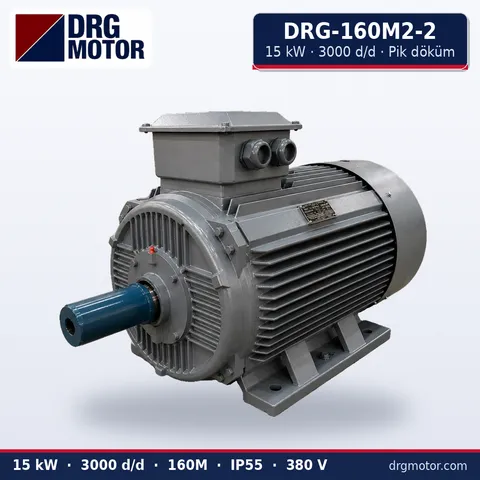
15 kW Three-Phase Motor 3000 rpm – DRG-160M2-2 Cast Iron
- 15 kW · 3000 rpm (2 poles)
- Cast iron frame · IEC 160M
- Shaft: 42 × 110 mm
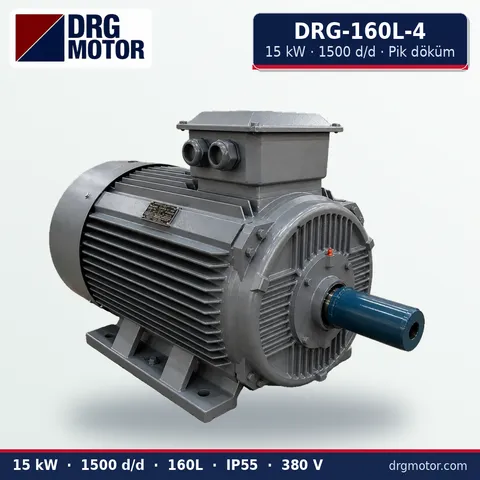
15 kW Three-Phase Motor 1500 rpm – DRG-160L-4 Cast Iron
- 15 kW · 1500 rpm (4 poles)
- Cast iron frame · IEC 160L
- Shaft: 42 × 110 mm
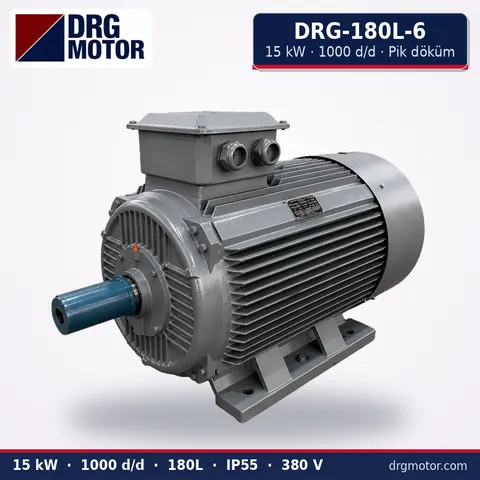
15 kW Three-Phase Motor 1000 rpm – DRG-180L-6 Cast Iron
- 15 kW · 1000 rpm (6 poles)
- Cast iron frame · IEC 180L
- Shaft: 48 × 110 mm





