 English
 Le français
 Türkçe

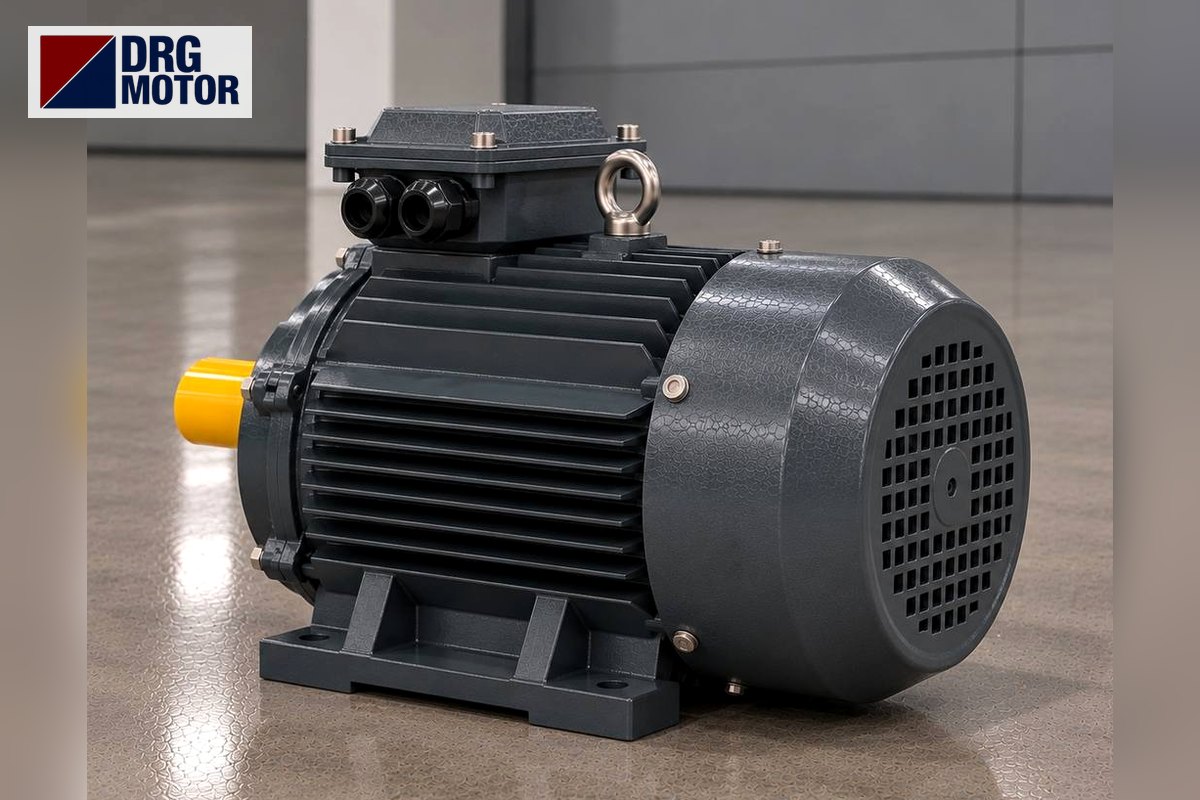

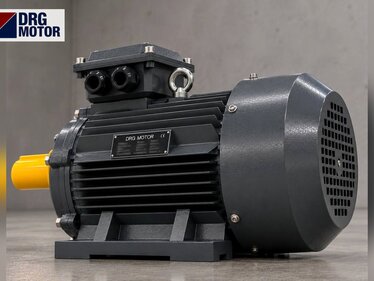
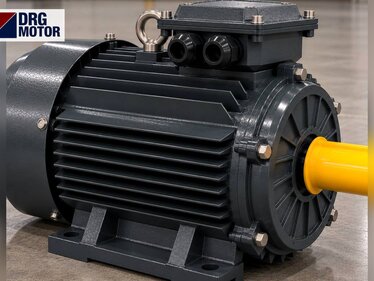
An 11 kW three-phase electric motor shows 400/690 V (Δ/Y) on its nameplate and runs in delta (Δ) on a 380–400 V three-phase supply. At 400 V the rated current is between 19.6 and 22.0 A depending on the number of poles; speed options are 3000, 1500 and 1000 rpm, with frame sizes from 132 to 160 IEC.
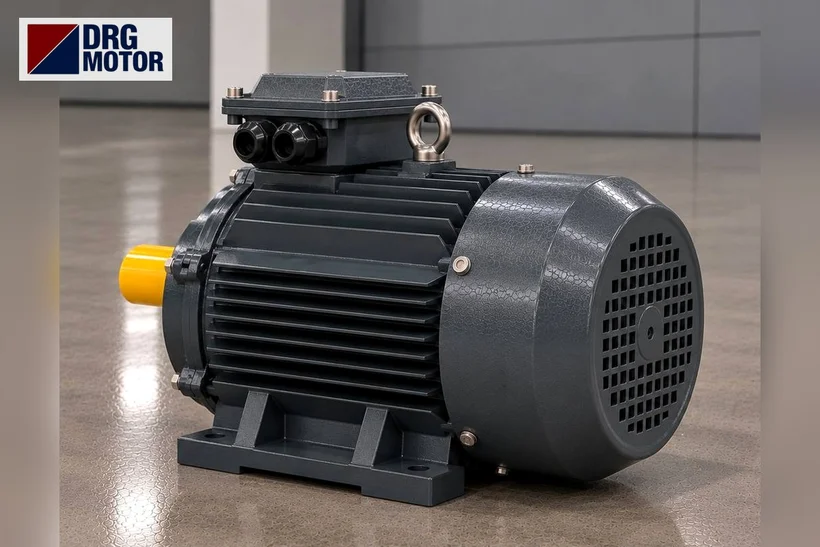
DRG Motor is a manufacturer, supplier and seller of electric motors. It is based in İzmir and ships quickly across all of Türkiye, that province included. You can review the 11 kW models by speed and frame in the online electric motor shop and see the whole group in the three-phase asynchronous electric motors category.
Where does 11 kW fit, and in which machines?
In the field, 11 kW is a mid-range power step: screw and piston compressors, medium centrifugal pumps, conveyor and elevator drives, hydraulic units, crusher and mill feed groups often sit here. As it equals 15 HP, many requests for a "15 hp motor" actually point to 11 kW. If your machine asks for an odd value such as 10 kW, the nearest IEC step is 11 kW, so choosing this step directly is the sound move.
Speed, poles and torque: what each speed gives
The same 11 kW appears as different speed and torque depending on the poles. Pumps and fans that like high speed take 2 or 4 poles; slow, high-torque drives take 6 poles. A rough torque measure is T = 9550·P/n; the values below are approximate results of that formula.
| Poles | Speed | Torque (approx.) | Frame (IEC) |
|---|---|---|---|
| 2 poles | 3000 rpm | 35 Nm | 160M |
| 4 poles | 1500 rpm | 70 Nm | 160M / 132M (compact) |
| 6 poles | 1000 rpm | 105 Nm | 160L |
The speed on the plate is slightly below these figures (for example around 1455 instead of 1500). The difference is slip and is normal for an asynchronous electric motor. If you are unsure of the right speed, the electric motor calculator helps match load to speed.
Click to see current electric motor prices and order nowSEE PRICES →
Why 400/690 V (Δ/Y), and how it relates to 380 V
At small ratings you see 230/400 V, but at 11 kW you see 400/690 V because the winding at this power is designed to be wired in delta (Δ) on a 400 V three-phase supply. The 690 value is the star (Y) connection, used mainly for starting or for 690 V networks. The voltage people call "380 V" is 400 V in today's standard, and the plate is read against 400 V.
The practical outcome is clear: to run an 11 kW electric motor on a normal 400 V supply, the terminal links are set to delta. Before changing the connection, switch off the power, verify it is dead, and have a qualified electrician do the work.
Why star-delta starting comes up at 11 kW
On direct-on-line (DOL) starting, an asynchronous electric motor draws several times its rated current at the first instant. At a power like 11 kW this inrush can cause voltage dips and thermal trips, which is why star-delta starting is common at this step: the motor starts in star at a lower current, then switches to delta once it is up to speed. A winding marked 400/690 V is already suited to star-delta starting on a 400 V supply. The starting method is chosen by the panel builder according to the load's starting behaviour.
Rated current, cable size and thermal setting
The first figure that sets cable size and the thermal overload range is the rated current at 400 V. In the 11 kW class it changes with the poles:
- 2 poles (3000 rpm): 19.6 A
- 4 poles (1500 rpm): 20.4 A
- 6 poles (1000 rpm): 22.0 A
These currents are for rated load; the instantaneous value at starting is much higher, and cable and protection are chosen accordingly. Set the exact value from the motor nameplate and the panel documentation; for a quick first check the motor current chart and motor cable size calculator are useful.
Frame and shaft: 160 IEC, 42×110 mm and the aluminium limit
11 kW is the top step of DRG's aluminium frame range; above this power the frame continues in cast iron. So at 11 kW both aluminium and cast iron are available. Aluminium is lighter and easier to handle; cast iron is more robust in vibrating, shock-loaded settings. On standard models the shaft diameter×length is 42x110 mm; the compact 132-frame type gives a smaller shaft (38x80 mm). The number 160 in the frame code means the shaft axis is 160 mm above the base, which is critical for coupling and pulley alignment.
11 kW DRG models and their values
Below we list the 11 kW aluminium-frame models with their speed and 400 V currents. Each code links straight to the product page; for a wider choice and current prices see the online electric motor shop.
| Model | Speed | Current (400 V) | Shaft |
|---|---|---|---|
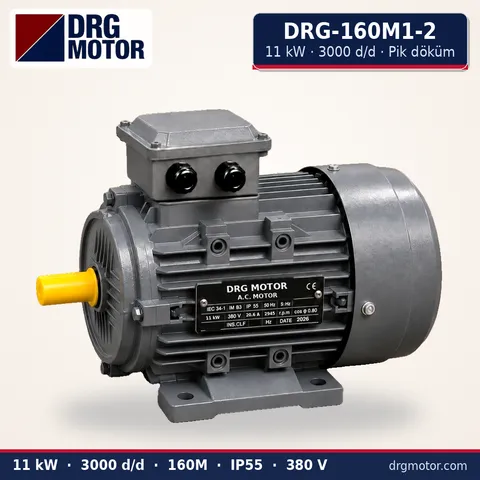
| DRG-160M1-2-AL | 3000 rpm (2 poles) | 19.6 A | 42x110 mm |
| DRG-160M-4-AL | 1500 rpm (4 poles) | 20.4 A | 42x110 mm |
| DRG-132M-4K-AL | 1500 rpm (4 poles, compact) | 20.4 A | 38x80 mm |
| DRG-160L-6-AL | 1000 rpm (6 poles) | 22.0 A | 42x110 mm |
See the current price of the 11 kW electric motor by speed and frame in the shop.SEE PRICES
Send a photo of your current motor nameplate and we will find the suitable DRG model together.Send on WhatsApp
Frequently asked questions
Is an 11 kW motor wired in delta or star at 380 V?
An 11 kW electric motor with a 400/690 V (Δ/Y) plate runs in delta (Δ) on a 400 V (commonly called 380 V) supply. The star connection is used during starting or on 690 V networks.
How many horsepower is 11 kW?
About 15 HP (1 HP ≈ 0.746 kW). Many requests for "15 hp" are met with 11 kW.
What is the 400 V current of an 11 kW motor?
It varies with the poles: around 19.6 A at 2 poles, 20.4 A at 4 poles and 22.0 A at 6 poles. The exact value is on the motor nameplate.
Should I choose aluminium or cast iron?
If handling and mounting ease matter, aluminium; for vibrating, shock-loaded heavy duty, cast iron fits better. Both exist at 11 kW; tell us your application and we will clarify it together.
Electric Motors Related to This Topic — Models and Current Prices
Suitability is not decided by power alone: compare the speed, voltage, mounting, shaft and fixing dimensions of your machine with the product data; if unsure, send us the nameplate of your current motor.
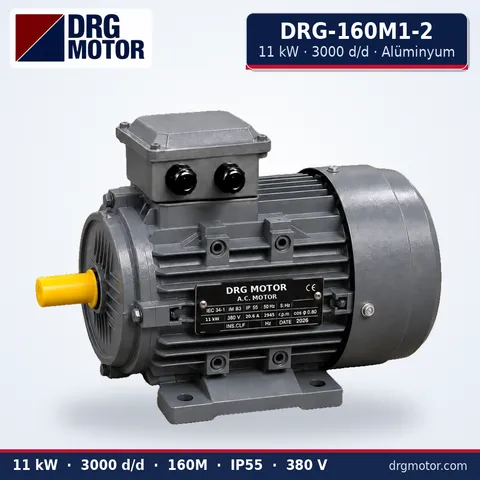
11 kW Three-Phase Motor 3000 rpm – DRG-160M1-2 Aluminium
- 11 kW · 3000 rpm (2 poles)
- Aluminium frame · IEC 160M
- Shaft: 42 × 110 mm
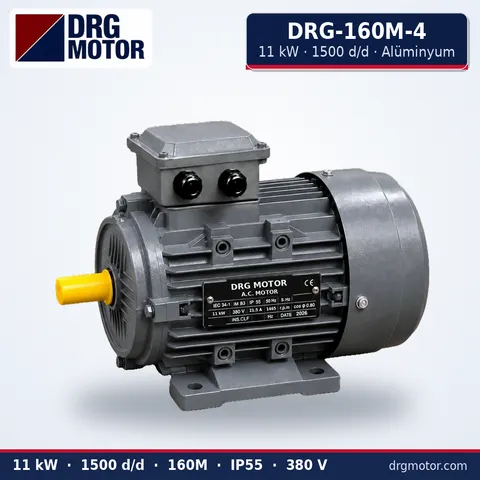
11 kW Three-Phase Motor 1500 rpm – DRG-160M-4 Aluminium
- 11 kW · 1500 rpm (4 poles)
- Aluminium frame · IEC 160M
- Shaft: 42 × 110 mm
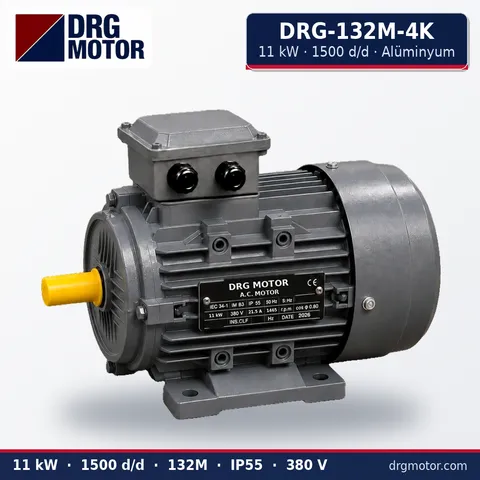
11 kW Compact Three-Phase Motor 1500 rpm – DRG-132M-4K Aluminium
- 11 kW · 1500 rpm (4 poles)
- Aluminium frame · IEC 132M
- Shaft: 38 × 80 mm
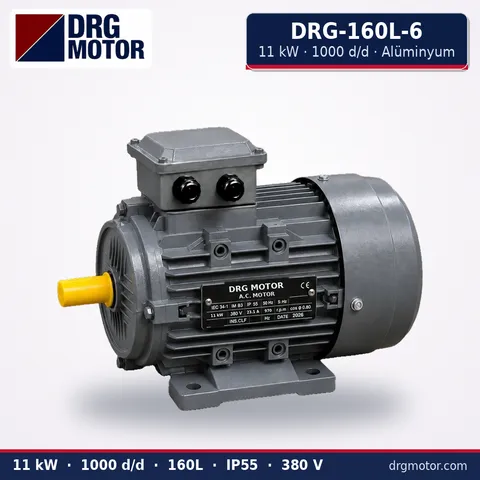
11 kW Three-Phase Motor 1000 rpm – DRG-160L-6 Aluminium
- 11 kW · 1000 rpm (6 poles)
- Aluminium frame · IEC 160L
- Shaft: 42 × 110 mm
11 kW Three-Phase Motor 3000 rpm – DRG-160M1-2 Cast Iron
- 11 kW · 3000 rpm (2 poles)
- Cast iron frame · IEC 160M
- Shaft: 42 × 110 mm
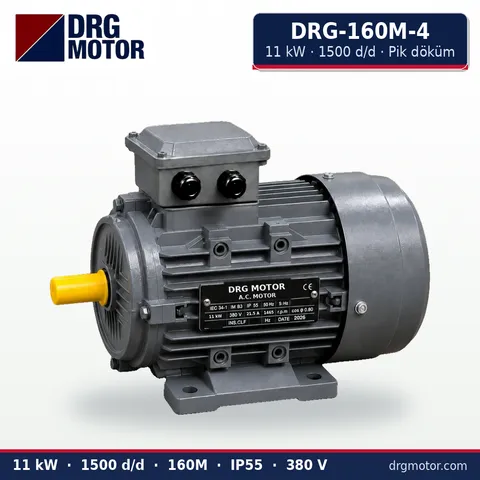
11 kW Three-Phase Motor 1500 rpm – DRG-160M-4 Cast Iron
- 11 kW · 1500 rpm (4 poles)
- Cast iron frame · IEC 160M
- Shaft: 42 × 110 mm