 English
 Le français
 Türkçe




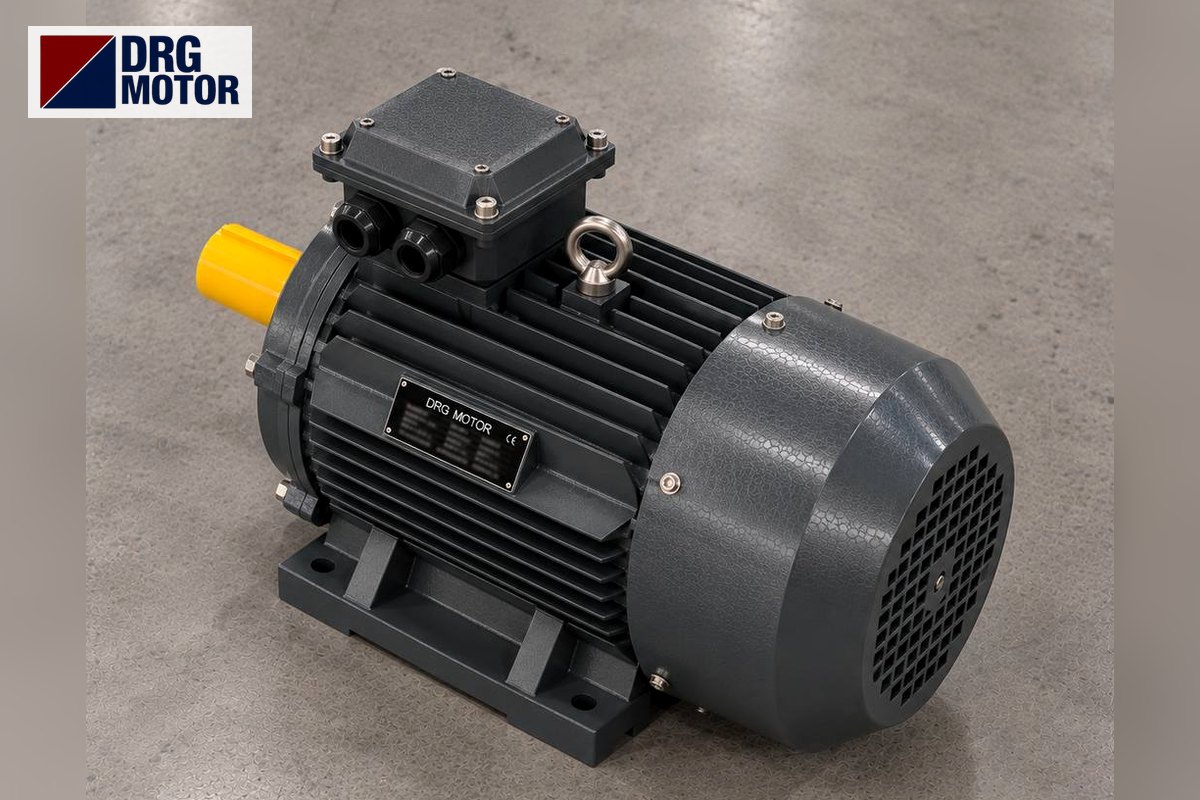

A 1000 RPM three-phase asynchronous electric motor is a 6-pole machine that runs at roughly 1000 revolutions per minute on a 50 Hz supply — slower, but with high torque. It is the usual choice for conveyors, crushers, mixers and mills that must turn a heavy load at low speed.
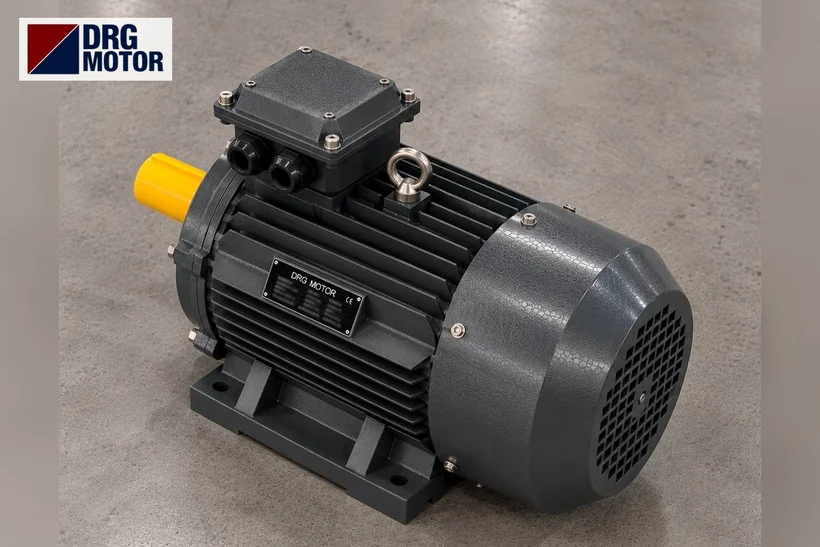
DRG Motor is a manufacturer, supplier and seller of electric motors. Based in İzmir, it ships quickly across all of Türkiye, that province included. You can browse the 1000 RPM range by power in the online electric motor shop and see every three-phase option together in the three-phase asynchronous electric motors category.
What does 1000 RPM actually mean?
Speed follows pole count directly. At 50 Hz the synchronous speed comes from 120·f/poles: 2 poles give 3000, 4 poles give 1500, and 6 poles give 1000 RPM. So when we say "1000 RPM" we are really talking about a 6-pole electric motor.
The figure on the nameplate is slightly lower — something like 960–975 RPM is normal. An asynchronous electric motor runs a little behind the synchronous speed of the magnetic field in order to produce torque. That gap is called slip, and it grows a bit as the load rises.
Why slower but stronger?
Here is the balance that confuses many people. If an electric motor of the same power turns more slowly, it delivers more torque at the shaft. The logic is simple: power is torque times speed. When speed drops, torque has to rise to carry the same power.
To see it clearly, compare the torque of a 4 kW electric motor at three pole counts (using T = 9550·P/n):
| Poles / Speed | Power | Torque (approx.) |
|---|---|---|
| 2 poles / 3000 RPM | 4 kW | 12.7 Nm |
| 4 poles / 1500 RPM | 4 kW | 25.5 Nm |
| 6 poles / 1000 RPM | 4 kW | 38.2 Nm |
Even with power held constant, the 6-pole model produces about three times the torque of the 2-pole one. That is why it can move a heavy load from standstill and not stall under strain.
Click to see current electric motor prices and order nowSEE PRICES →
Which machines need 1000 RPM?
In the field we see the 6-pole electric motor most on belt conveyors, stone and ore crushers, mixers and agitators, flour and feed mills, heavy fans and extractors, and some pumps and grinding rigs. The common thread: the load needs a steady, strong rotation rather than high speed.
Think of a crusher. As the material changes, the load jumps instantly. A fast-spinning electric motor struggles with such shock loads; a 1000 RPM model absorbs them more easily thanks to its high torque. On the fan side, lower speed often means quieter, steadier airflow.
If your machine is driven by a coupling or a pulley-belt, check the speed ratio with the cable size calculator for wiring and estimate the required power with the electric motor calculator.
DRG 1000 RPM electric motor models
Below are DRG's aluminium-frame 1000 RPM (6-pole) three-phase models by power. Torque is estimated at 1000 RPM; each code links straight to its product page.
| Model | Power | Current (400 V) | Torque (approx.) |
|---|---|---|---|
| DRG-132M1-6-AL | 4 kW (5.5 HP) | 8.99 A | 38.2 Nm |
| DRG-132M2-6-AL | 5.5 kW (7.5 HP) | 12.0 A | 52.5 Nm |
| DRG-160M-6-AL | 7.5 kW (10 HP) | 15.4 A | 71.6 Nm |
| DRG-160L-6-AL | 11 kW (15 HP) | 22.0 A | 105.0 Nm |
The same ratings are also made in cast iron, which is preferred for larger, heavier duty. If you are unsure which suits you, compare them on the shop page.
What to watch when choosing
First, settle the speed your machine truly needs. Buying a 1000 RPM unit "for more power" and then raising speed with a pulley is usually wasted money and space. If you need high speed, 1500 or 3000 RPM is the better fit.
Frame size, shaft diameter and mounting type (foot B3, flange B5/B14) matter as much as power. Even with the right power and speed, the wrong flange means the electric motor will not fit the machine. If you need a very low-speed, geared arrangement, say so separately; DRG's standard range is plain three-phase electric motors, not geared ones, and we will clarify the right option together.
See the current price of the 1000 RPM electric motor that fits your need in the shop.SEE PRICES
Frequently asked questions
How many poles is 1000 RPM?
On a 50 Hz supply, 1000 RPM means a 6-pole winding. Synchronous speed is 120·50/6 = 1000 RPM; the nameplate value is slightly lower because of slip.
Is a 1000 RPM electric motor more powerful?
Not more powerful at the same kW, but higher in torque. The power is the same, yet because it turns slowly it delivers more torque at the shaft — an advantage for heavy, shock loads.
Can I use a 1000 RPM instead of a 1500 RPM one?
If your machine wants low speed and high torque, yes. But if the target speed is 1500, a 1000 RPM model will not run it at the same speed; you would need to change the pulley ratio. The safest path is to review the existing nameplate and the machine together.
Which power should I pick at 1000 RPM?
It depends entirely on the load. Once the torque and speed your conveyor or crusher needs are set, we can work out the right kW together; if unsure, send us the dimensions and the machine.
Send a photo of your current motor nameplate and we will find the suitable DRG model together.Send on WhatsApp
Electric Motors Related to This Topic — Models and Current Prices
Suitability is not decided by power alone: compare the speed, voltage, mounting, shaft and fixing dimensions of your machine with the product data; if unsure, send us the nameplate of your current motor.

4 kW Three-Phase Motor 1500 rpm – DRG-112M-4 Aluminium
- 4 kW · 1500 rpm (4 poles)
- Aluminium frame · IEC 112M
- Shaft: 28 × 60 mm

5.5 kW Three-Phase Motor 1500 rpm – DRG-132S-4 Aluminium
- 5.5 kW · 1500 rpm (4 poles)
- Aluminium frame · IEC 132S
- Shaft: 38 × 80 mm
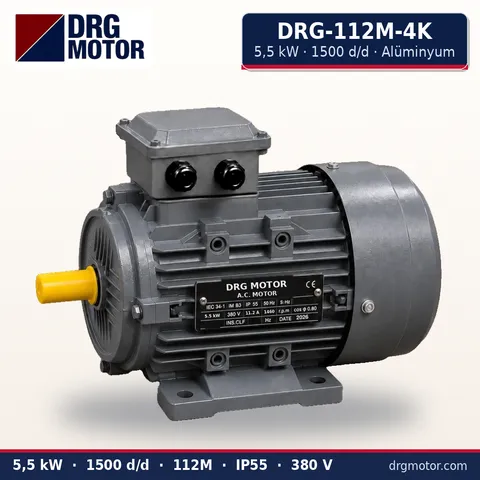
5.5 kW Compact Three-Phase Motor 1500 rpm – DRG-112M-4K Aluminium
- 5.5 kW · 1500 rpm (4 poles)
- Aluminium frame · IEC 112M
- Shaft: 28 × 60 mm

7.5 kW Three-Phase Motor 1500 rpm – DRG-132M-4 Aluminium
- 7.5 kW · 1500 rpm (4 poles)
- Aluminium frame · IEC 132M
- Shaft: 38 × 80 mm

11 kW Three-Phase Motor 1500 rpm – DRG-160M-4 Aluminium
- 11 kW · 1500 rpm (4 poles)
- Aluminium frame · IEC 160M
- Shaft: 42 × 110 mm
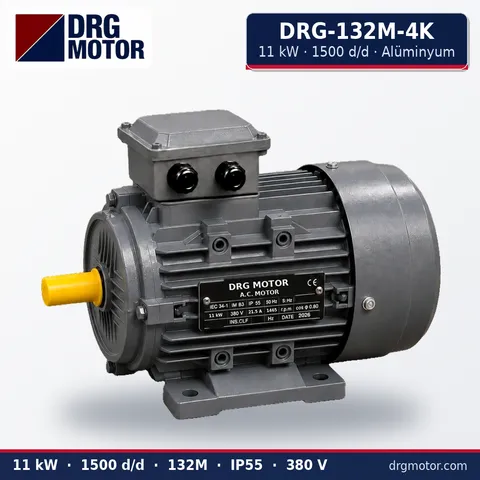
11 kW Compact Three-Phase Motor 1500 rpm – DRG-132M-4K Aluminium
- 11 kW · 1500 rpm (4 poles)
- Aluminium frame · IEC 132M
- Shaft: 38 × 80 mm





