English
 Le français
 Türkçe




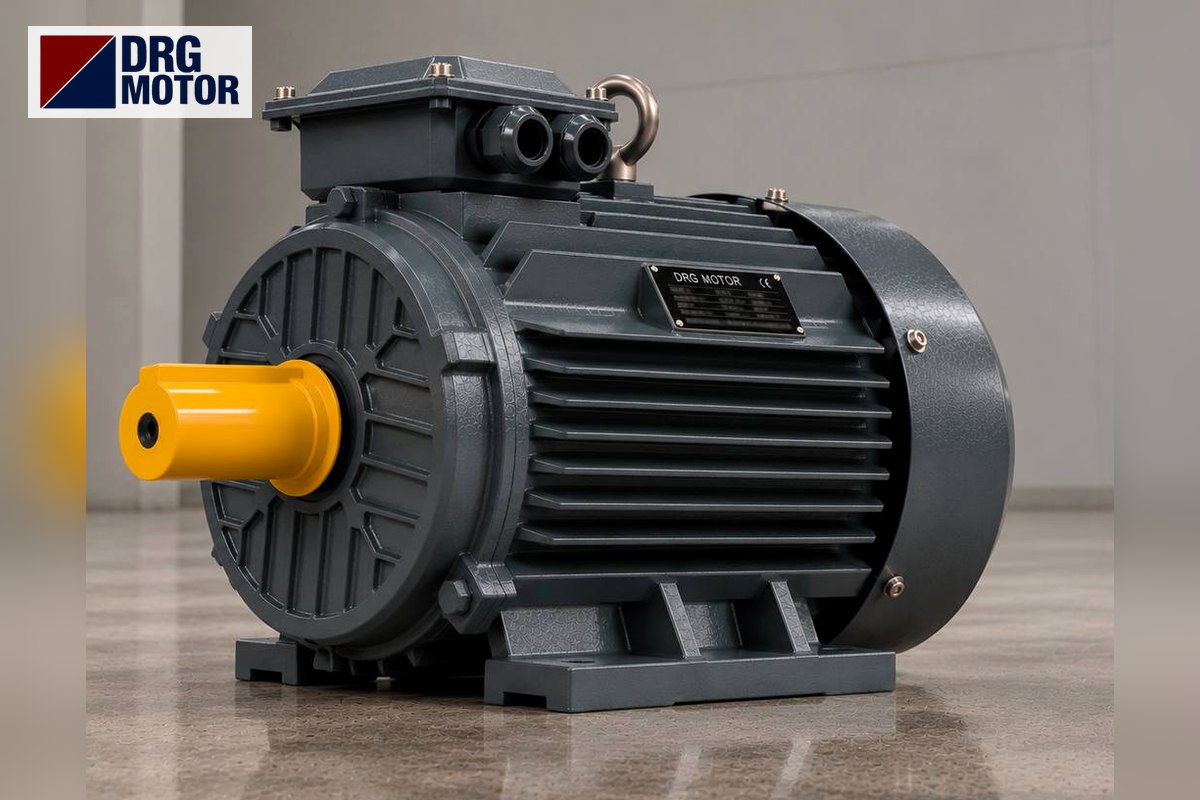

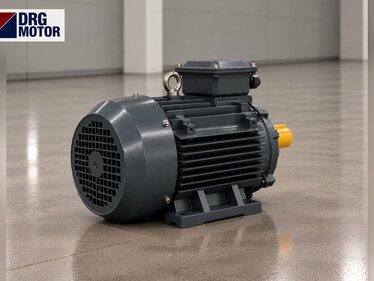
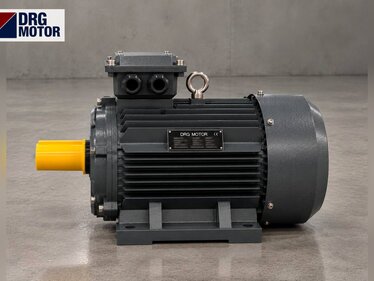
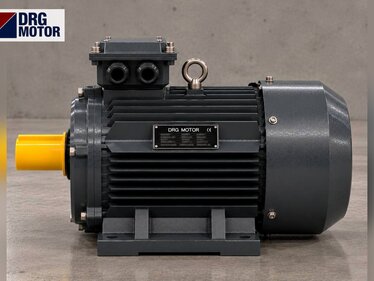
A 0.37 kW three-phase asynchronous electric motor is a small drive unit that runs on a 380–400 V supply, offered by DRG in three speeds: 3000, 1500 and 1000 rpm. Its rated current at 400 V ranges from about 0.89 to 1.04 A; because the plate reads 230/400 V (Δ/Y), it is wired in star (Y) on a 400 V supply. Below we open up the current, speed, shaft and connection values for this rating one by one.
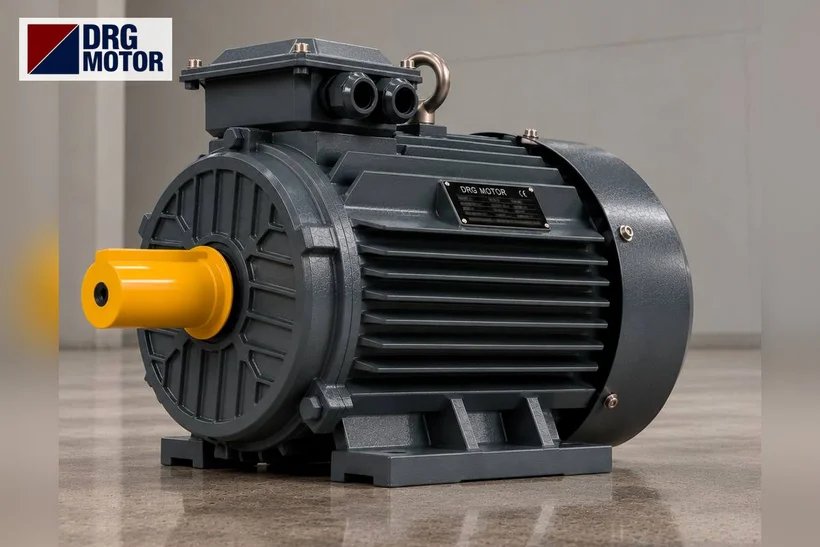
DRG Motor is a manufacturer, supplier and seller of electric motors. It is based in İzmir and ships quickly across all of Türkiye, that province included. You can pick the aluminium models in the 0.37 kW class by speed in the online electric motor shop and see the same products together in the three-phase asynchronous electric motors category.
How many HP is 0.37 kW?
The conversion is simple: 1 HP is about 0.746 kW, so 0.37 kW is roughly 0.5 HP (half horsepower). The kW on the plate is the mechanical power the electric motor delivers at the shaft, not the electrical power it draws from the grid. This is the lower rung of the range most asked for in small pumps, fans, dosing and conveyor drives.
380 V or 400 V? Voltage and the plate
The supply commonly called "380 volt" is nominally 400 V in today's standard; in practice both describe the same three-phase line. The plate usually prints voltage as two values, 230/400 V. The first number is the delta (Δ) connection, the second is star (Y). So this 0.37 kW electric motor runs correctly on your 400 V line when wired in star. The 50 Hz line states the frequency the winding is made for; the Turkish grid is 50 Hz.
Poles and synchronous speed
Speed depends on the number of poles. At 50 Hz the synchronous speed is 120·f/poles. 0.37 kW is built in all three pole options:
| Poles | Synchronous speed (50 Hz) | Approx. loaded speed | Typical use |
|---|---|---|---|
| 2 poles | 3000 rpm | ~2800–2900 rpm | High-speed small fan, centrifugal pump |
| 4 poles | 1500 rpm | ~1400–1450 rpm | Conveyor, mixer, general drive |
| 6 poles | 1000 rpm | ~900–950 rpm | Slow drives needing low speed |
The plate value sitting slightly below synchronous speed is normal; that gap is slip. An asynchronous electric motor always turns a touch behind the rotating field.
Click to see current electric motor prices and order nowSEE PRICES →
0.37 kW current values (400 V)
Current is the first line to check for cable size and the thermal relay range. At 0.37 kW the rated current at 400 V shifts a little with pole count; on the low-speed (6-pole) model the power factor drops, so the current rises slightly. Set the exact value by the motor plate and panel documentation; for a quick check the motor current chart and cable size calculator help.
| Model | Poles / Speed | Current (400 V) | Voltage |
|---|---|---|---|
| DRG-711-2-AL | 2 poles / 3000 rpm | 0.89 A | 230/400 V (Δ/Y) |
| DRG-712-4-AL | 4 poles / 1500 rpm | 0.92 A | 230/400 V (Δ/Y) |
| DRG-801-6-AL | 6 poles / 1000 rpm | 1.04 A | 230/400 V (Δ/Y) |
The star (Y) connection logic
To connect a 230/400 V plated electric motor to a 400 V supply, the links in the terminal box are set to star (Y). The three winding ends meet at a common point and phase feeds the other three terminals. At this rating the motor is started direct-on-line; at small powers like 0.37 kW there is no need for star-delta starting, which is used on large motors to limit inrush current.
Before changing any connection, switch off the supply, verify it is de-energised and have the work done by a qualified electrician. A wrong link means a winding in delta on a 400 V line, which burns it out.
Shaft size and frame (IEC)
Mechanical fit matters as much as power and speed. At 0.37 kW the frame changes with poles: the 2- and 4-pole models come in an IEC 71 frame with a 14 mm shaft, while the 6-pole model uses the larger IEC 80 frame with a 19 mm shaft. The shaft size is the diameter the coupling or pulley seats on; always check it before ordering.
| Model | Poles | Frame (IEC) | Shaft (D×E, mm) |
|---|---|---|---|
| DRG-711-2-AL | 2 | 71 | 14x30 |
| DRG-712-4-AL | 4 | 71 | 14x30 |
| DRG-801-6-AL | 6 | 80 | 19x40 |
DRG's standard electric motors in this class are aluminium-bodied, IP55 rated and class F. The frame number (71, 80) gives the shaft centre height above the feet in millimetres; this figure is critical for aligning couplings and pulleys.
Choosing the right 0.37 kW model
The order is: first decide the speed your machine needs (fast, medium or slow), then pick the matching pole count, and finally confirm the shaft and frame fit your existing arrangement. All three models deliver the same 0.37 kW; the difference is in speed, current and mechanical size. For a wider choice and other ratings, browse the online electric motor shop.
Frequently asked questions
How many amps does a 0.37 kW electric motor draw at 380 V?
At 400 V the rated current is about 0.89 A (2 poles) to 1.04 A (6 poles), depending on the model. 380 V and 400 V describe the same line in practice; check the motor plate for the exact value.
Does this power need star-delta starting?
No. 0.37 kW is a small rating and starts direct-on-line. A 230/400 V plated motor is simply wired in star (Y) on a 400 V line.
What is the difference between 2, 4 and 6 poles?
Pole count sets the speed: 2 poles give 3000, 4 poles 1500, 6 poles 1000 rpm synchronous. At the same power, more poles mean lower speed and relatively higher torque.
Is 0.37 kW the same as 0.5 HP?
Yes, practically equal. 0.37 kW corresponds to about half a horsepower.
To see the current price of the 0.37 kW three-phase electric motor by speed, visit the shop.SEE PRICES
Send a photo of your current motor nameplate and we will find the suitable DRG model together.Send on WhatsApp
Electric Motors Related to This Topic — Models and Current Prices
Suitability is not decided by power alone: compare the speed, voltage, mounting, shaft and fixing dimensions of your machine with the product data; if unsure, send us the nameplate of your current motor.
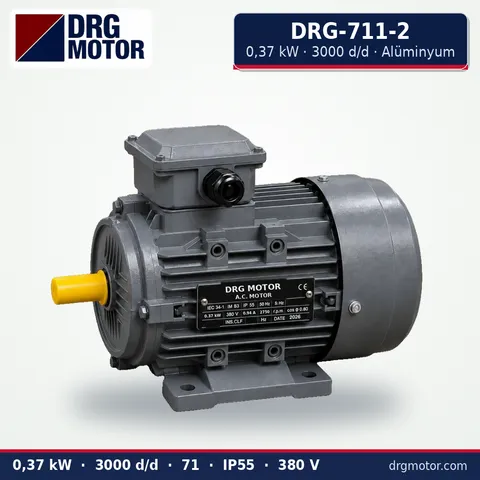
0.37 kW Three-Phase Motor 3000 rpm – DRG-711-2 Aluminium
- 0.37 kW · 3000 rpm (2 poles)
- Aluminium frame · IEC 71
- Shaft: 14 × 30 mm
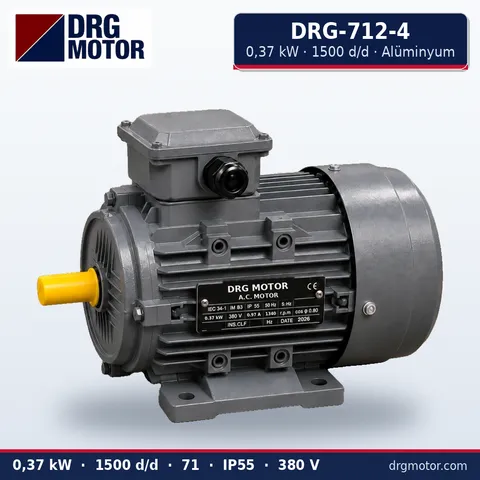
0.37 kW Three-Phase Motor 1500 rpm – DRG-712-4 Aluminium
- 0.37 kW · 1500 rpm (4 poles)
- Aluminium frame · IEC 71
- Shaft: 14 × 30 mm
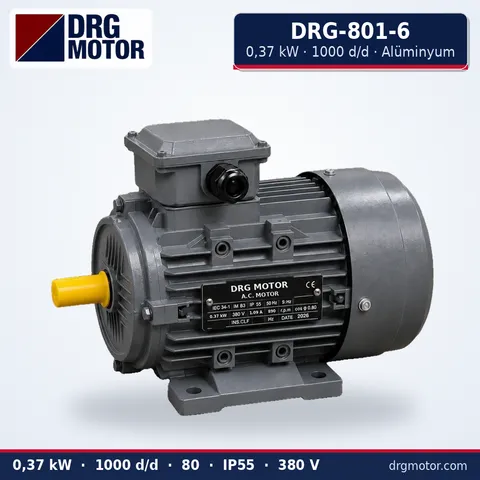
0.37 kW Three-Phase Motor 1000 rpm – DRG-801-6 Aluminium
- 0.37 kW · 1000 rpm (6 poles)
- Aluminium frame · IEC 80
- Shaft: 19 × 40 mm