English
 Le français
 Türkçe




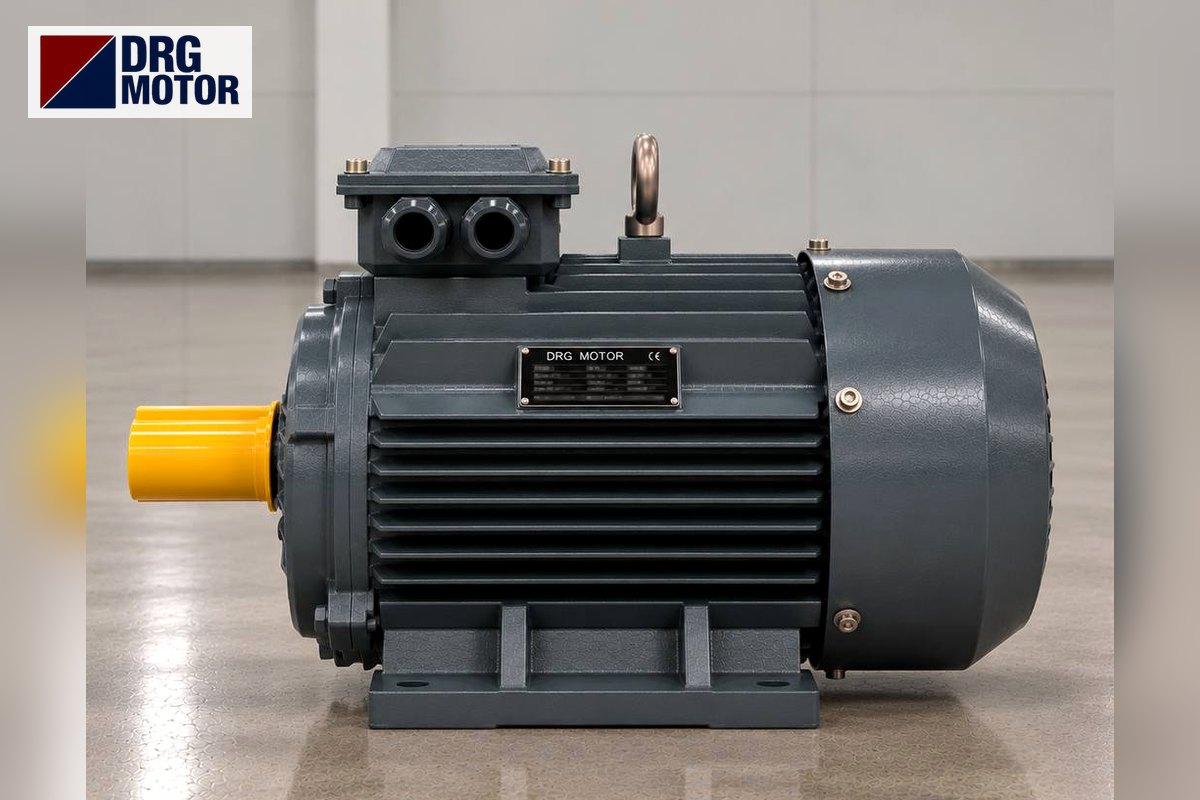

An electric motor, chosen correctly and looked after well, runs trouble-free for many years. When it fails early there are almost always a few familiar reasons behind it: overload, the wrong power rating, poor cooling, moisture, vibration and misalignment, voltage problems, lack of maintenance and too-frequent starting. This article explains each cause in plain language and adds a simple way to prevent it.
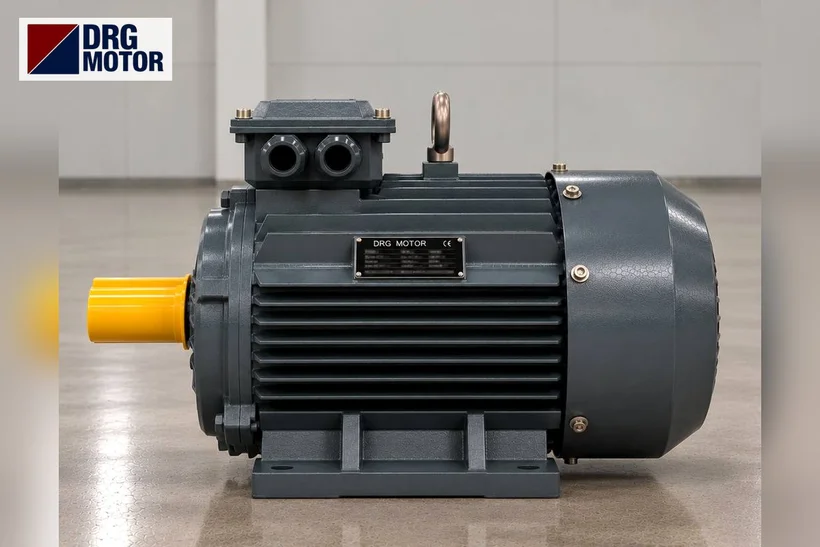
DRG Motor is a manufacturer, supplier and seller of electric motors. After reading the points below you can find the electric motor that best fits your need by power and speed in the online electric motor shop, and see the same models together in the three-phase asynchronous electric motors category. Most early failures are avoided from the start with the right choice and regular maintenance.
Overload: the most common cause
When an electric motor runs with more load than it can carry continuously, it strains. The current it draws rises, the windings heat up, and over time that heat ages the insulation. If the load only rises now and then you may not notice, but a constant overload quietly shortens the life.
Prevention: Know the real load of your machine and choose the electric motor with a little margin, not right at the limit. Measuring the current it draws from time to time is a good habit; a motor current chart helps you compare it with the rated current on the nameplate. Let qualified electrical personnel take the measurement.
Wrong power rating: a disadvantage from the start
An undersized electric motor strains constantly, heats up and trips its thermal protection often. Choosing it too large is no solution either: it stresses the supply more at start-up and is usually an unnecessary load. The wrong power is the earliest cause of premature failure, because the problem began in the selection, before installation.
Prevention: Set the power according to your application; if you are unsure, let us settle it together with the speed, load and size. The electric motor calculator helps you find your way.
Poor cooling and blocked ventilation
Most three-phase electric motors cool themselves with a fan at the back. If dust, lint or dirt on the fan cover blocks the airflow, the electric motor heats up inside. A unit squeezed into a tight, airless corner or sitting near another heat source has the same problem. As heat builds up, insulation life drops.
Prevention: Keep the fan cover and fins clean and leave space around the electric motor for air to circulate. If the housing runs hotter than usual, check the ventilation first.
Click to see current electric motor prices and order nowSEE PRICES →
Moisture, water and dusty environments
Moisture is an electric motor's invisible enemy. Damp that seeps inside weakens the winding insulation; water and dust together also wear the bearings early. An electric motor left idle for a long time in a cold, damp place suffers condensation and may give trouble at first start.
Prevention: Discuss the protection class suited to your environment; DRG three-phase electric motors are offered with IP55 protection. In dusty or wet places, choosing the right level of protection from the outset prevents later failures.
Vibration and misalignment
If the electric motor and the machine it drives are not on the same axis (a misaligned coupling or pulley), or the belt is over-tensioned, the shaft and bearings are under constant strain. That strain first shows up as vibration and noise, and in time wears the bearing and its seat. A loose foot fixing makes the vibration worse.
Prevention: Have the coupling/pulley alignment and belt tension checked, and fix the electric motor firmly to a solid, flat base. If the vibration keeps growing, do not ignore it.
Voltage problems: phase loss and imbalance
A three-phase electric motor likes a balanced supply from three phases. If one phase is lost (phase failure) the electric motor draws excess current from the remaining phases and heats up fast; this is one of the hardest conditions on the windings. Imbalance between phases, under-voltage or over-voltage shorten the life in the same way.
Prevention: Have the supply voltage and connections checked regularly by qualified electrical personnel. Make sure protection devices such as phase protection and the thermal relay work properly, and set their values according to the electric motor's nameplate and the device documentation.
Lack of maintenance and frequent starting
Bearings are the most worn part of an electric motor. Grease ages over time; in a unit that is not maintained the bearing noise rises and failure eventually follows. Add frequent starting and stopping and the load grows: at every start the electric motor draws the highest current and heats up. In an application that stops and starts many times a minute this effect accumulates.
Prevention: Do not neglect bearing/grease maintenance as per the maker's advice, and act early on abnormal noise and heat. For applications that start and stop very often, make the selection with that duty in mind, and let us assess it together if needed.
For a long life, an example: the right power and speed class
The first step to preventing early failure is to choose the power and speed class suited to your job from the outset. The table below lists a few 4-pole (about 1500 rpm) DRG electric motors with their power and rated current at 400 V. The model codes link straight to the product page.
| Model | Power | Speed class | Current (400 V) |
|---|---|---|---|
| DRG-112M-4 | 4 kW | 1500 rpm | 7.95 A |
| DRG-132S-4 | 5.5 kW | 1500 rpm | 10.7 A |
| DRG-132M-4 | 7.5 kW | 1500 rpm | 14.3 A |
| DRG-160M-4 | 11 kW | 1500 rpm | 20.4 A |
The housing material affects life too: aluminium for lightness and easy mounting, cast iron for vibrating and harsh environments. You can find the difference in the aluminium housing vs cast iron housing article and review every power and speed option in the online electric motor shop.
To choose the long-lasting electric motor that best fits your need, see current prices and place your orderSEE PRICES
Frequently asked questions
What is the most common reason an electric motor fails early?
In practice the most common cause is overload and its close relative, the wrong power rating. Both strain the electric motor continuously, heat it and age the insulation. Choosing an electric motor of the right power reduces the risk of early failure from the very start.
Is heating always a sign of a fault?
No; the housing of a running electric motor warms up somewhat, and that is normal. What matters is heat that is clearly more than usual, that keeps rising, or that comes with a burnt smell. In that case, check the load and the ventilation first.
Does regular maintenance really prevent early failure?
Yes. Not neglecting bearing/grease maintenance, keeping the fan cover clean, and having the connections and voltage checked regularly noticeably extend the life of an electric motor. Noticing abnormal noise, vibration and heat early also stops a small problem from turning into a major failure.
Send a photo of your current motor nameplate and we will find the suitable DRG model together.Send on WhatsApp
Electric Motors Related to This Topic — Models and Current Prices
Suitability is not decided by power alone: compare the speed, voltage, mounting, shaft and fixing dimensions of your machine with the product data; if unsure, send us the nameplate of your current motor.

4 kW Three-Phase Motor 1500 rpm – DRG-112M-4 Aluminium
- 4 kW · 1500 rpm (4 poles)
- Aluminium frame · IEC 112M
- Shaft: 28 × 60 mm
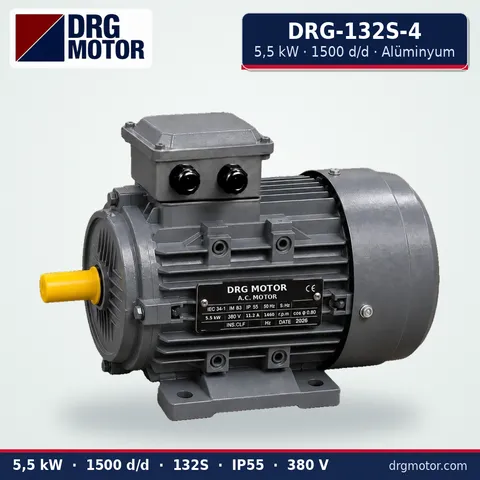
5.5 kW Three-Phase Motor 1500 rpm – DRG-132S-4 Aluminium
- 5.5 kW · 1500 rpm (4 poles)
- Aluminium frame · IEC 132S
- Shaft: 38 × 80 mm
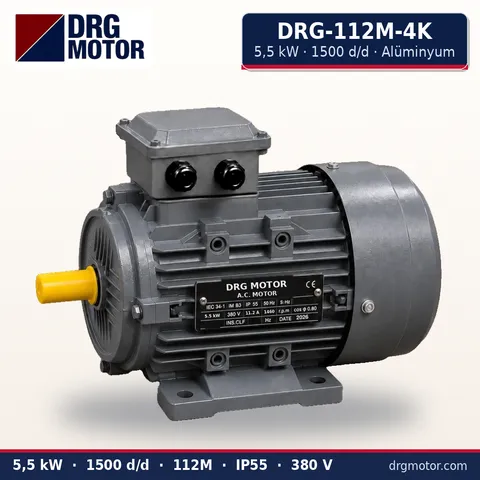
5.5 kW Compact Three-Phase Motor 1500 rpm – DRG-112M-4K Aluminium
- 5.5 kW · 1500 rpm (4 poles)
- Aluminium frame · IEC 112M
- Shaft: 28 × 60 mm
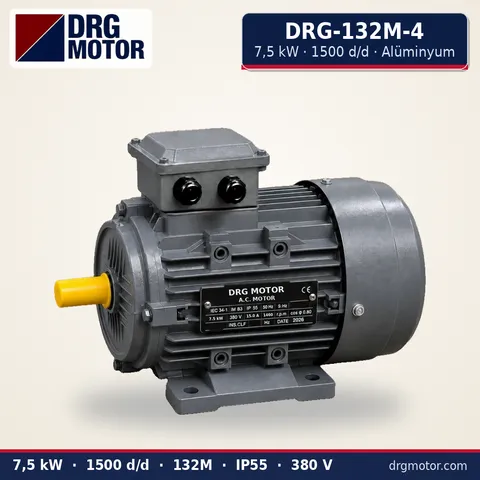
7.5 kW Three-Phase Motor 1500 rpm – DRG-132M-4 Aluminium
- 7.5 kW · 1500 rpm (4 poles)
- Aluminium frame · IEC 132M
- Shaft: 38 × 80 mm
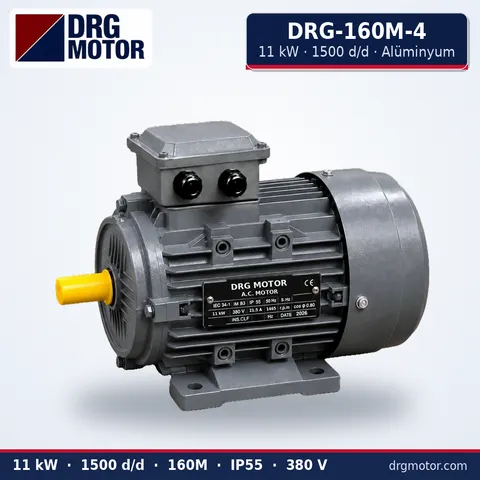
11 kW Three-Phase Motor 1500 rpm – DRG-160M-4 Aluminium
- 11 kW · 1500 rpm (4 poles)
- Aluminium frame · IEC 160M
- Shaft: 42 × 110 mm
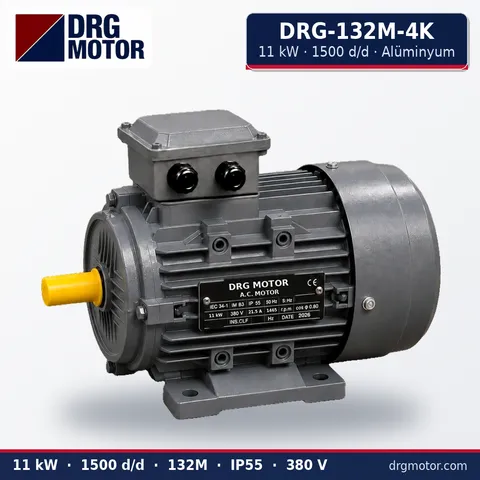
11 kW Compact Three-Phase Motor 1500 rpm – DRG-132M-4K Aluminium
- 11 kW · 1500 rpm (4 poles)
- Aluminium frame · IEC 132M
- Shaft: 38 × 80 mm