English
 Le français
 Türkçe




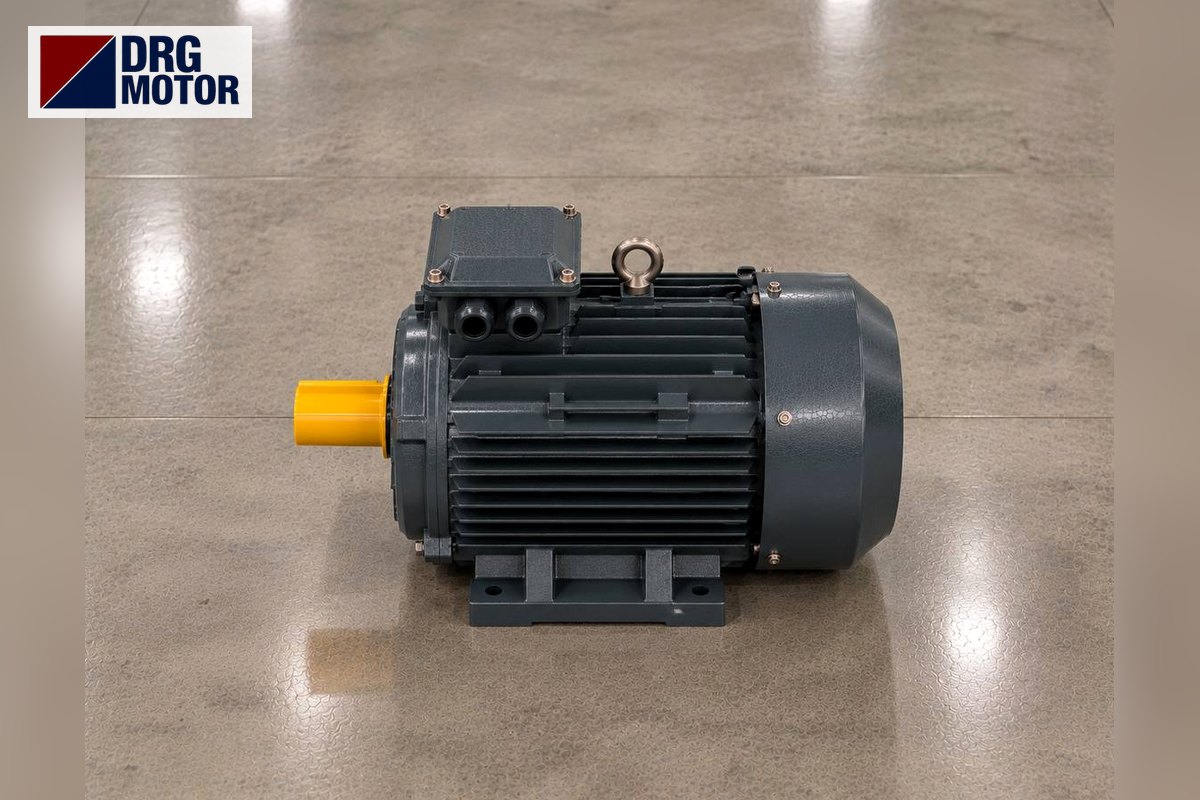

An electric motor usually "burns out" when its windings overheat and the insulation breaks down. Behind this you almost always find overload, phase loss, under- or over-voltage, poor cooling, exposure to moisture, or a bearing failure. A burnt smell, smoke and a tripping fuse are the clearest signs of this process.
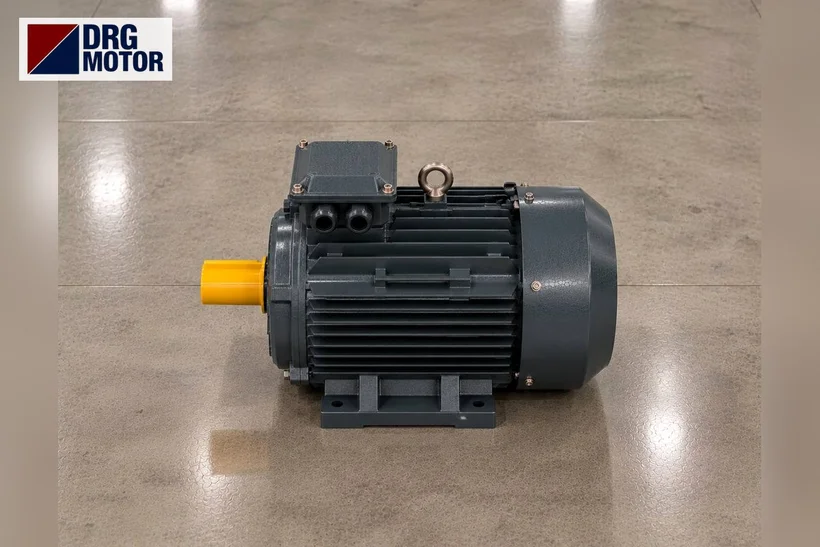
DRG Motor is a manufacturer, supplier and seller of electric motors. You can compare a suitable replacement by power and speed in the online motor shop. All three-phase options are listed together in the three-phase asynchronous electric motors category.
Why does an electric motor burn out? The basic idea
The stator windings of a three-phase asynchronous motor are copper wire coated with a thin layer of insulation. That insulation has a temperature limit. As the current through the motor rises, the windings heat up; once the temperature exceeds the insulation's limit, the insulation chars, the windings short to each other or to the frame, and the motor becomes unusable. This is what people call a "burnt-out motor".
So nearly every cause of burnout meets at a single point: overheating of the winding due to higher-than-expected current and/or insufficient cooling. Recognising the causes helps you both understand the present fault and choose the new motor correctly to avoid a repeat.
The main causes that burn a motor
The table below summarises the most common causes, their effect on the motor and the typical symptom:
| Cause | Effect on the motor | Typical symptom |
|---|---|---|
| Overload | Current above rating, gradual heating | Heat, power loss, smell over time |
| Phase loss | Excess current on two phases, unbalanced draw | Humming, hard start, rapid heating |
| Under/over-voltage | Current imbalance, extra heat | Vibration, heating, unstable run |
| Poor cooling | Heat cannot escape, surface temperature rises | Very hot frame, burnt smell |
| Moisture / water | Insulation resistance drops, leakage | Leakage current, tripping fuse |
| Bearing failure | Mechanical friction, indirect load rise | Noise, vibration, heat from the bearing |
Overload and phase loss
Overload means the motor is pushed beyond the power on its nameplate. A blocked pump, a jammed conveyor, or a motor that was undersized from the start draws current above the rating and heats the winding. The motor power must therefore be scaled to the application; to assess the required power and current, the electric motor calculator and the motor current chart are helpful.
Phase loss is one of the most common reasons three-phase motors burn out. When one of the three phases is lost, the motor keeps trying to run on the remaining two; the current through those phases rises quickly and the winding overheats in a short time. That is why phase protection and a properly sized thermal/motor protection device are among the most effective ways to prevent burnout.
Click to see current electric motor prices and order nowSEE PRICES →
Voltage, cooling, moisture and bearings
Under- or over-voltage: If the mains voltage deviates significantly from the rated value, the motor runs unevenly. At low voltage more current is drawn to deliver the same power; at high voltage magnetic saturation and extra heating occur. Both raise the winding temperature.
Poor cooling: The fan and fins at the back of the motor expel heat. If dust, dirt or faulty mounting blocks the airflow, the motor cannot shed its own heat and overheats. In closed, hot or dusty environments this risk grows.
Moisture and water: Moisture reaching the winding lowers the insulation resistance and causes leakage current; over time a short circuit and burnout can follow. In wet or damp environments the right protection class becomes important.
Bearing failure: A worn or dry bearing increases mechanical friction. The motor strains harder to do the same job, the current rises and the winding heats indirectly. Heat is also conducted straight from the bearing into the winding.
Signs that a motor has burnt out
You can recognise a burnt or soon-to-burn motor from these signs:
- A sharp, characteristic smell of burnt insulation (often the first and clearest sign).
- Smoke or sooting from the terminal box or the frame.
- The fuse or protection device trips immediately when the motor is switched on.
- Unusual humming, hard starting, falling speed and loss of power.
- A frame much hotter than usual and noticeable vibration.
When one of these signs appears, repeatedly forcing the motor to start only makes the damage worse.
What to do when a motor burns out
This article is informative and is not a set of field instructions. Before any check or connection, first switch off the power, verify the absence of voltage, and have all electrical work done only by authorised electrical personnel. Do not set protection values (such as the thermal current) or insulation measurement thresholds by guesswork; assess them according to the motor nameplate and the device documentation.
A burnt motor can often be rewound, but once businesses weigh downtime, the risk of a repeat failure and the total cost of ownership, they frequently choose to move to a new motor. When selecting a new motor you must also remove the root cause of the burnout (wrong power selection, lack of protection, bad environment); otherwise the new motor may be damaged the same way.
Choosing a new motor: DRG three-phase models
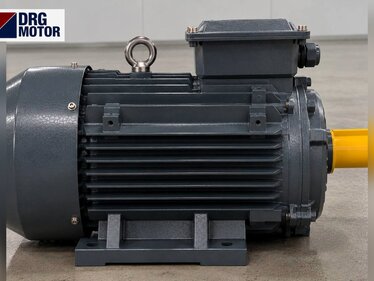
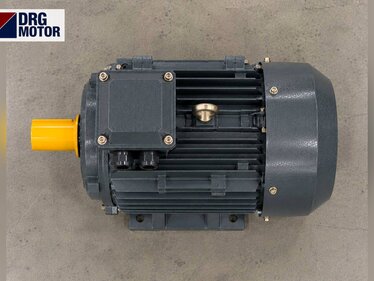
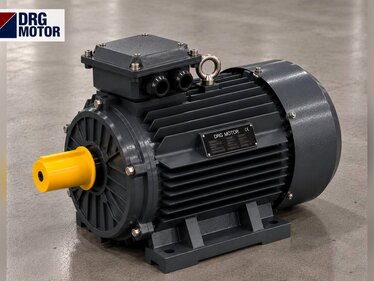
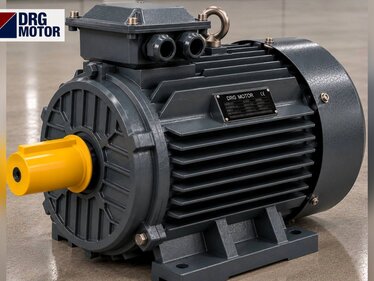
Replacing a burnt motor with a three-phase asynchronous motor of the same power and speed class is the most practical route. Below are DRG models from the 1500 rpm (4-pole) class that make it easy to pick the most suitable option. The model codes link straight to the product page; the voltage on all of them is 400/690 V (Δ/Y).
| Model | Power | Speed class | Rated current (400 V) |
|---|---|---|---|
| DRG-112M-4 (aluminium) | 4 kW (5.5 HP) | 4-pole / 1500 rpm | 7.95 A |
| DRG-132S-4 (aluminium) | 5.5 kW (7.5 HP) | 4-pole / 1500 rpm | 10.7 A |
| DRG-112M-4K (aluminium, compact) | 5.5 kW (7.5 HP) | 4-pole / 1500 rpm | 10.7 A |
| DRG-132M-4 (aluminium) | 7.5 kW (10 HP) | 4-pole / 1500 rpm | 14.3 A |
| DRG-160M-4 (aluminium) | 11 kW (15 HP) | 4-pole / 1500 rpm | 20.4 A |
| DRG-132M-4K (aluminium, compact) | 11 kW (15 HP) | 4-pole / 1500 rpm | 20.4 A |
When replacing, compare not only the power but also the speed (pole count) on the old nameplate, the frame size, the shaft diameter and the mounting type (B3/B5/B14). That way the new motor also fits mechanically.
Send a photo of your current motor nameplate and we will find the suitable DRG model together.Send on WhatsApp
Once you have identified the right model, you can see all power and speed options in the shop.
See suitable three-phase asynchronous motor models and current prices to replace your burnt motorSEE PRICES
Frequently asked questions
Is it smarter to rewind a burnt motor or buy a new one?
At small and medium powers rewinding is possible, but when downtime and the risk of another failure are considered, a new motor is often the more practical choice in many applications. When deciding, you also need to remove the cause of the burnout.
Why does the motor smell burnt but still turn?
This is an early sign that the insulation is thermally stressed. If there is a smell, the motor may not be fully burnt yet; continuing to push it quickly turns into a full failure. Switching off the power and having authorised personnel inspect it is the right move.
How does phase loss burn a motor?
When one of the three phases is lost, the motor tries to run on the remaining two and the current through those phases rises quickly. The increased current overheats the winding in a short time. A phase-protection relay and a suitable protection device greatly reduce this risk.
What should I watch for in a new motor to prevent burnout?
Select the power correctly for the application, use suitable phase/overload protection, keep the airflow open for cooling, and choose a motor suited to the ambient conditions (moisture, dust). For power and current checks you can use the calculator tools.
Electric Motors Related to This Topic — Models and Current Prices
Suitability is not decided by power alone: compare the speed, voltage, mounting, shaft and fixing dimensions of your machine with the product data; if unsure, send us the nameplate of your current motor.

4 kW Three-Phase Motor 1500 rpm – DRG-112M-4 Aluminium
- 4 kW · 1500 rpm (4 poles)
- Aluminium frame · IEC 112M
- Shaft: 28 × 60 mm
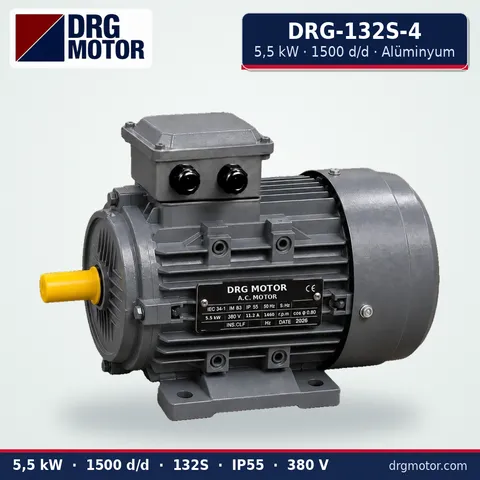
5.5 kW Three-Phase Motor 1500 rpm – DRG-132S-4 Aluminium
- 5.5 kW · 1500 rpm (4 poles)
- Aluminium frame · IEC 132S
- Shaft: 38 × 80 mm
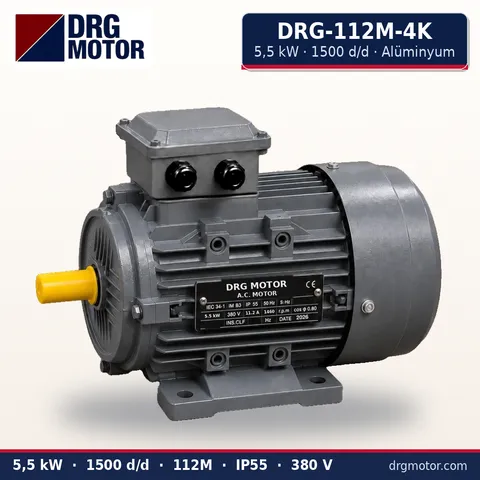
5.5 kW Compact Three-Phase Motor 1500 rpm – DRG-112M-4K Aluminium
- 5.5 kW · 1500 rpm (4 poles)
- Aluminium frame · IEC 112M
- Shaft: 28 × 60 mm
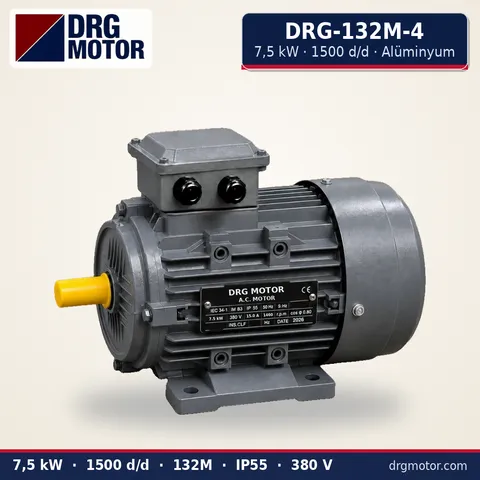
7.5 kW Three-Phase Motor 1500 rpm – DRG-132M-4 Aluminium
- 7.5 kW · 1500 rpm (4 poles)
- Aluminium frame · IEC 132M
- Shaft: 38 × 80 mm
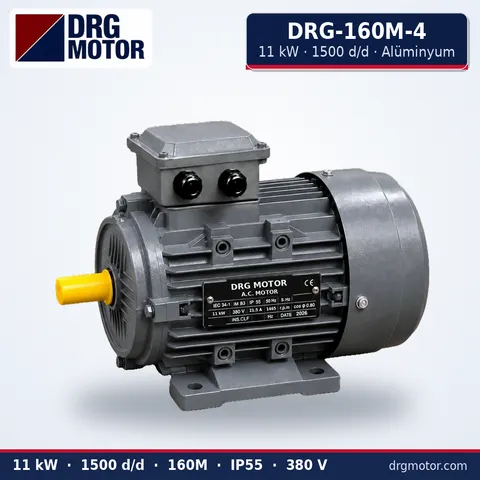
11 kW Three-Phase Motor 1500 rpm – DRG-160M-4 Aluminium
- 11 kW · 1500 rpm (4 poles)
- Aluminium frame · IEC 160M
- Shaft: 42 × 110 mm
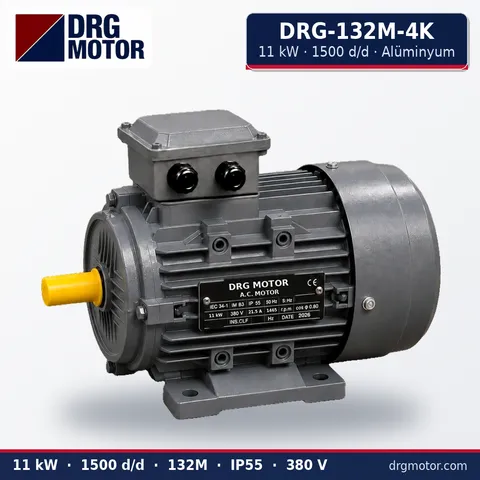
11 kW Compact Three-Phase Motor 1500 rpm – DRG-132M-4K Aluminium
- 11 kW · 1500 rpm (4 poles)
- Aluminium frame · IEC 132M
- Shaft: 38 × 80 mm