 English
 Le français
 Türkçe




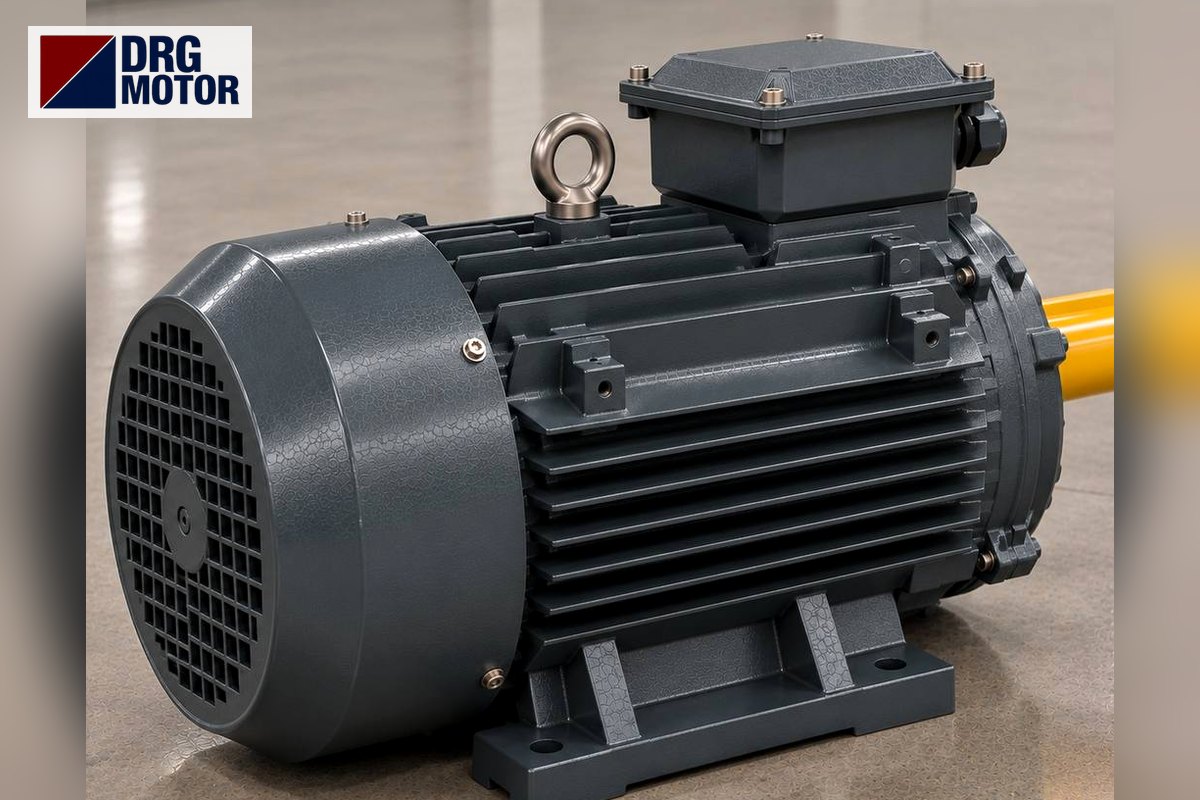

A clamp meter measures only current (amperes); current alone does not define energy consumption. The electricity a motor actually uses depends, besides current, on voltage, the power factor (cosφ) and how these play out over time. So saying "it draws this many amps" is not the same as saying "it uses this many kilowatt-hours".
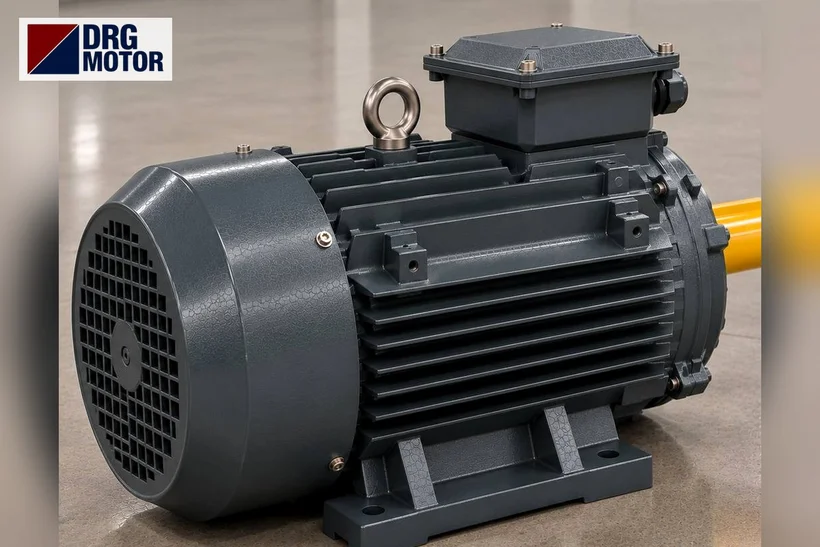
DRG Motor is a manufacturer, supplier and seller of electric motors; it is based in İzmir and ships quickly across all of Türkiye. Once measurement has clarified what you consume, find the three-phase models that suit your need by power and speed in the online electric motor shop and see the same group together in the three-phase asynchronous electric motors category.
What does a clamp meter actually measure?
A clamp meter reads the magnetic field around the conductor it encloses and reports the current flowing through that wire. It is handy, fast and can be slipped over a single phase conductor without opening the panel. But the single figure it gives is amperes. Current hints at how much load the motor is drawing at that moment; on its own, though, it tells you neither the voltage, nor the power factor, nor the energy used. This is exactly where things get confused on site: current is an indicator, not the bill.
Two values missing for real power: voltage and power factor
The real power a three-phase motor draws follows roughly this relation: P = √3 × V × I × cosφ, where V is line voltage, I is line current and cosφ is the power factor. A clamp meter supplies only I in this equation. If you do not measure the voltage and do not know the power factor, you cannot turn that current into power. Supply voltage can shift through the day; the power factor changes markedly with load. Filling in two unknowns by guessing turns the resulting kilowatt figure into a guess as well.
Why power factor makes current misleading
An asynchronous motor always draws some magnetising current to set up its magnetic field. When the motor is idle or lightly loaded, this makes up the bulk of the total current; you see amperes, but much of it is not real power doing work. In that state the power factor is low and current overstates the real power. As the motor nears full load the power factor rises and current and real power move closer together. So the same amperage can mean very different kilowatts at light load versus full load.
Click to see current electric motor prices and order nowSEE PRICES →
From current to energy (kWh)
Energy is power spread over time: roughly energy = power × time. To get kilowatt-hours (kWh) you first have to establish the instantaneous power (kW) correctly, then multiply it by the running time. A clamp meter's single instantaneous amp reading does not supply any full link of this chain. If you genuinely want to measure energy, you need a power/energy analyser (or a panel meter) that reads voltage, current and power factor together and totals them over time. In this picture the clamp meter is a quick pre-check tool, not an energy meter.
| What do you want to know? | Quantity needed | Does a clamp meter give it? |
|---|---|---|
| How much current the motor draws | Current (A) | Yes |
| Instantaneous real power | Voltage (V) + current + cosφ | No, on its own |
| Energy consumption | Power (kW) × time | No |
| Whether phases are balanced | Current of all three phases (A) | Partly (current-wise) |
What is a clamp meter still good for?
Don't get it wrong: the tool is not worthless, just limited. For a quick health check it is ideal. By comparing the current drawn with the rated current on the nameplate you can tell whether the motor runs idle, loaded, or is struggling. Reading the three phases separately and checking for a marked difference between them also catches phase imbalance early. So use the clamp meter for the "is there an issue?" question; switch to an analyser or meter for the "how much energy?" question. Comparing the current you read with the motor current table and the power with the electric motor calculation tool also makes the job easier.
What to watch for safe measurement
Let authorised electrical personnel carry out the measurement. Before starting any work inside the panel, cut the power, verify the absence of voltage with a suitable device and take the necessary safety precautions. A few rules matter when using a clamp meter:
- Clamp around a single phase conductor; if you enclose more than one conductor the reading becomes meaningless.
- Read the current of all three phases separately and note the differences.
- Do not trust a single instantaneous value; measure when the motor is idle, when working and at its heaviest load.
- Switch to a separate instrument or analyser for voltage and power factor.
- Set thresholds and limits by the motor nameplate and device documentation, not by guesswork.
DRG three-phase asynchronous models
If the measurement leads you to renew your motor, the task becomes matching the values on the old motor's nameplate correctly: power (kW), speed, frame size and voltage. When ordering, photograph the old motor's nameplate. The 1500 rpm aluminium-frame three-phase models below are examples of the power range commonly measured in industry.
| Model | Power | Speed | Frame / Voltage |
|---|---|---|---|
| DRG-90L-4 | 1.5 kW | 1500 rpm | 90L / 230/400 V |
| DRG-112M-4 | 4 kW | 1500 rpm | 112M / 400/690 V |
| DRG-132S-4 | 5.5 kW | 1500 rpm | 132S / 400/690 V |
| DRG-132M-4 | 7.5 kW | 1500 rpm | 132M / 400/690 V |
| DRG-160M-4 | 11 kW | 1500 rpm | 160M / 400/690 V |
Send a photo of your current motor nameplate and we will find the suitable DRG model together.Send on WhatsApp
Click to compare three-phase models matching the power and speed you measuredSEE PRICES
Common mistakes
- Reading only amps and jumping to "it uses this much energy", skipping voltage and power factor.
- Mistaking high no-load current for load; ignoring the low power factor.
- Trusting a single instantaneous reading and overlooking the motor's variable load.
- Clamping around more than one conductor and reading a meaningless value.
- Attempting the measurement without cutting power and taking safety precautions.
Frequently asked questions
Can I calculate the motor's power knowing only the current?
Not really. Real power also needs voltage and power factor (P = √3 × V × I × cosφ). A calculation from current alone falls well short of reality, especially if the motor is lightly loaded.
What should I use to measure energy consumption (kWh)?
A power/energy analyser or panel energy meter that reads voltage, current and power factor together and totals them over time is suitable. A clamp meter alone is not enough for this.
Why does an idle motor still draw current?
An asynchronous motor continuously draws a magnetising current to set up its magnetic field. That is why you see amps even at idle; but because the power factor is low, the real power behind that current is small.
Is it necessary to measure the three phases separately?
It is recommended. A marked current difference between phases can point to imbalance or a fault. Spotting that difference early strengthens both the measurement and any renewal decision.
Electric Motors Related to This Topic — Models and Current Prices
Suitability is not decided by power alone: compare the speed, voltage, mounting, shaft and fixing dimensions of your machine with the product data; if unsure, send us the nameplate of your current motor.

4 kW Three-Phase Motor 1500 rpm – DRG-112M-4 Aluminium
- 4 kW · 1500 rpm (4 poles)
- Aluminium frame · IEC 112M
- Shaft: 28 × 60 mm

5.5 kW Three-Phase Motor 1500 rpm – DRG-132S-4 Aluminium
- 5.5 kW · 1500 rpm (4 poles)
- Aluminium frame · IEC 132S
- Shaft: 38 × 80 mm

7.5 kW Three-Phase Motor 1500 rpm – DRG-132M-4 Aluminium
- 7.5 kW · 1500 rpm (4 poles)
- Aluminium frame · IEC 132M
- Shaft: 38 × 80 mm

11 kW Three-Phase Motor 1500 rpm – DRG-160M-4 Aluminium
- 11 kW · 1500 rpm (4 poles)
- Aluminium frame · IEC 160M
- Shaft: 42 × 110 mm

1.5 kW Three-Phase Motor 1500 rpm – DRG-90L-4 Aluminium
- 1.5 kW · 1500 rpm (4 poles)
- Aluminium frame · IEC 90L
- Shaft: 24 × 50 mm





