 English
 Le français
 Türkçe


The clearest sign of an undersized transformer is lights that dim and voltage that visibly sags the instant the motor starts. A three-phase electric motor draws several times its rated current at the moment of starting; if the transformer cannot meet that sudden demand, voltage collapses, the motor struggles to start or will not start at all, and even when it does it runs hot. A momentary voltage dip in the panel on starting, neighbouring machines being affected, and contactors humming usually point not to the motor but to insufficient power on the supply side.
DRG Motor is a manufacturer, supplier and seller of electric motors. It is based in İzmir and ships quickly across all of Türkiye, that province included. You can choose the right-rated three-phase motor by speed and power in the online electric motor shop and see the same products together in the three-phase asynchronous electric motors category. Safety first: before any check below, cut the power, confirm it is dead, and have the measurement and wiring done by qualified electrical personnel.
Why does the transformer struggle at start-up?
At standstill, an asynchronous electric motor behaves almost like a short circuit on its winding. Until the shaft starts turning, it draws several times the rated current, and this high current lasts for seconds. If the transformer lacks the headroom for this brief demand, the inrush causes a voltage drop across the internal resistances of the transformer and the supply cable. As the voltage reaching the motor falls, so does its torque; if the turning force cannot overcome the load, the shaft either speeds up very slowly or stays locked. The problem is not the motor itself but the supply chain behind it.
Field symptoms of an undersized transformer
In the field these signs tend to cluster:
- Lights dimming at start-up: if the lighting dims the moment the motor engages, the supply is barely carrying that instantaneous load.
- Slow or incomplete start: if the motor groans and reaches speed late, or never reaches it, the voltage is insufficient.
- Protection tripping on start: during a prolonged start the current stays high and the protection opens the circuit.
- Neighbouring machines affected: if other devices on the same transformer stumble as one motor starts, the shared supply is weak.
- Contactor hum and voltage fluctuation: under sagging voltage the contactor coil pulls in erratically; that buzzing is a typical warning.
A single symptom is not proof, but several together call for a measured assessment.
Click to see current electric motor prices and order nowSEE PRICES →
Why does inrush current matter so much?
What matters is not only the current the motor draws continuously, but the peak current at the instant of starting. With direct-on-line starting a three-phase electric motor briefly draws about six to seven times its rated current. If transformer power is not chosen with enough margin for this peak, it is strained most at start-up. The table below uses approximate values for a few 1500 rpm DRG models to show how large this peak becomes (values are approximate; the final selection is made for the specific project by a qualified person).
| Model | Power | Approx. rated current (400 V) | Approx. inrush current |
|---|---|---|---|
| DRG-90L-4-AL | 1.5 kW (2 HP) | 3.5 A | ~21-25 A |
| DRG-112M-4-AL | 4 kW (5.5 HP) | 8 A | ~48-56 A |
| DRG-132S-4-AL | 5.5 kW (7.5 HP) | 11 A | ~66-77 A |
| DRG-132M-4-AL | 7.5 kW (10 HP) | 14.5 A | ~87-101 A |
| DRG-160M-4-AL | 11 kW (15 HP) | 20.5 A | ~123-143 A |
The table shows a single motor; if several motors run from the same transformer or start together, the sum of their peak currents loads the transformer even more.
Is it the transformer or the motor?
The practical way to tell is to watch when the problem appears. If voltage drops only during start-up and recovers once the motor is up to speed, that is a typical sign of supply or transformer shortfall. If voltage stays low even while the motor runs, the issue is more likely cable cross-section, a long run, or the grid side in general. If the motor itself is faulty (winding, bearing), the symptoms usually appear as heat, smell, abnormal vibration and noise; in that case the motor struggles even with a sound supply. This assessment must be made by measurement, and the measurement must be done by a qualified person.
Where to look along the supply chain?
Insufficient power does not always mean the transformer itself; the whole chain matters. Whether the transformer has headroom for the plant's total starting demand, the cross-section and length of the supply cable, loose connections and contact resistances, and other loads on the same line are all weighed together. To roughly check cable cross-section and motor current, the motor current table and motor cable cross-section calculator are useful; the final selection is still made with the approval of a qualified engineer or electrician.
Approaches that ease start-up difficulty
If transformer power is at the limit, methods that lower the peak current at start-up can relieve the load. On larger motors, star-delta starting or a soft starter reduces the initial current compared with direct starting. Energising several motors in sequence rather than all at once also lowers the simultaneous peak on the transformer. These solutions must be weighed together with the supply design; qualified personnel should plan and commission the work. Choosing a motor of the right power and speed also reduces strain from the outset: a motor larger than needed draws unnecessary peak current, while one too small is under constant strain.
Choosing a motor of the right power
If the supply side is sound, the remaining task is to select the power suited to the application. In the DRG range, 1500 rpm three-phase aluminium-bodied models run from 1.5 kW up to 11 kW; models of 3 kW and below suit 230/400 V supply, and those of 4 kW and above suit 400/690 V. Match the power and voltage on the nameplate to your application. If unsure, describe the machine and the supply conditions, and we will settle on a suitable model together. You can also study models on individual pages such as the 7.5 kW DRG-132M-4.
Frequently asked questions
Lights flicker when the motor starts — is it dangerous?
A brief flicker is seen in most plants; but a marked, lasting dip signals that the supply or transformer is barely carrying the starting peak. If it persists, have a qualified person measure it.
How many motors can be connected to one transformer?
There is no fixed number; the motors' powers, whether they start together or in sequence, and the transformer's power decide it together. A qualified person makes the assessment against the total starting demand.
Can I measure the voltage drop myself?
Measurement is live work and carries risk. Do not tamper with live equipment needlessly; leave the measurement and the assessment to qualified electrical personnel.
Does star-delta starting always solve the problem?
Not always. It lowers the initial current, but if the transformer is seriously undersized you may still be on the edge. The solution is to address the supply and the starting method together.
To see the current price of a three-phase electric motor rated for your supply conditions, browse the shop.SEE PRICES
Send a photo of your current motor nameplate and we will find the suitable DRG model together.Send on WhatsApp
Electric Motors Related to This Topic — Models and Current Prices
Suitability is not decided by power alone: compare the speed, voltage, mounting, shaft and fixing dimensions of your machine with the product data; if unsure, send us the nameplate of your current motor.
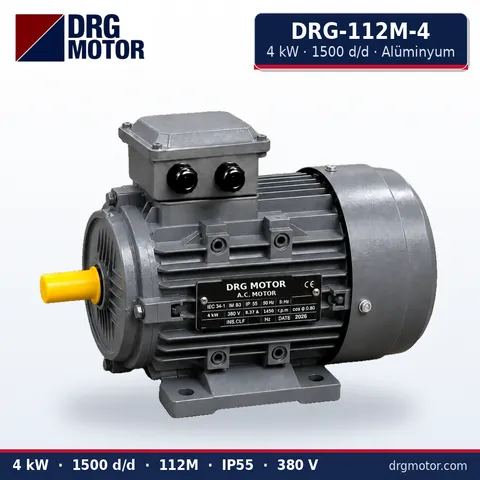
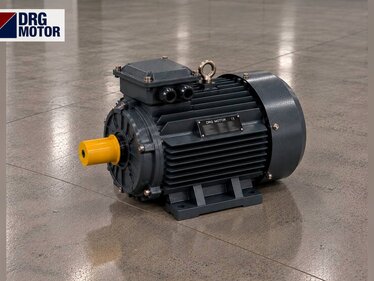
4 kW Three-Phase Motor 1500 rpm – DRG-112M-4 Aluminium
- 4 kW · 1500 rpm (4 poles)
- Aluminium frame · IEC 112M
- Shaft: 28 × 60 mm
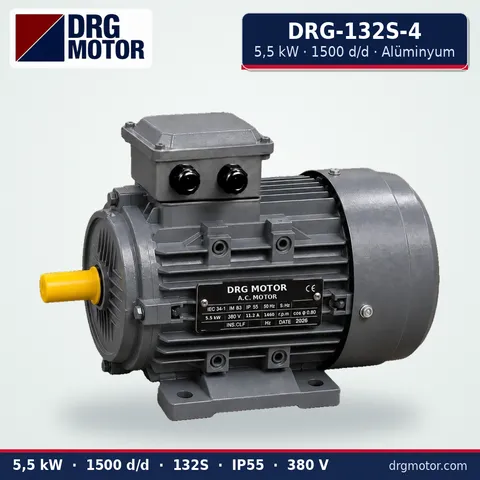
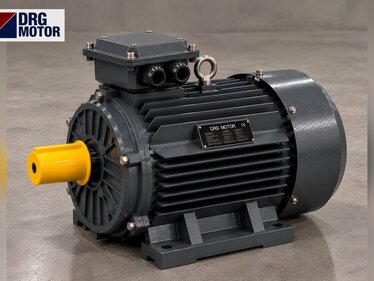
5.5 kW Three-Phase Motor 1500 rpm – DRG-132S-4 Aluminium
- 5.5 kW · 1500 rpm (4 poles)
- Aluminium frame · IEC 132S
- Shaft: 38 × 80 mm
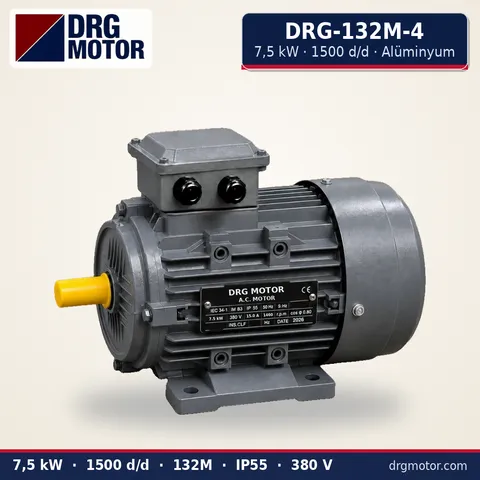
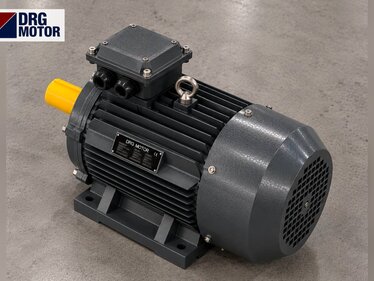
7.5 kW Three-Phase Motor 1500 rpm – DRG-132M-4 Aluminium
- 7.5 kW · 1500 rpm (4 poles)
- Aluminium frame · IEC 132M
- Shaft: 38 × 80 mm
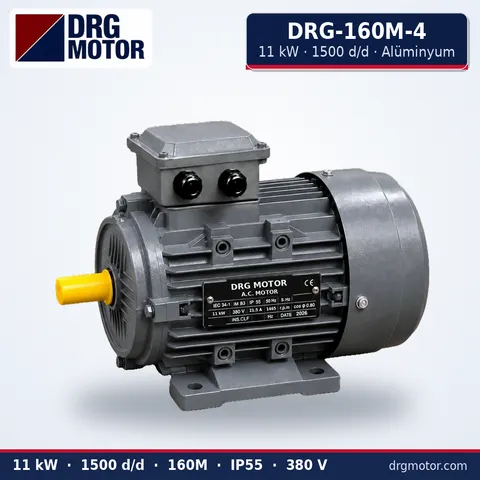
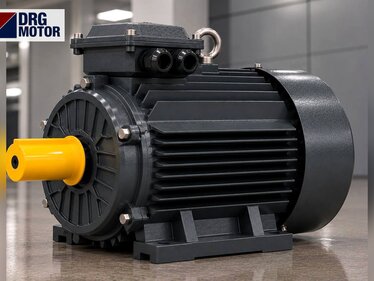
11 kW Three-Phase Motor 1500 rpm – DRG-160M-4 Aluminium
- 11 kW · 1500 rpm (4 poles)
- Aluminium frame · IEC 160M
- Shaft: 42 × 110 mm
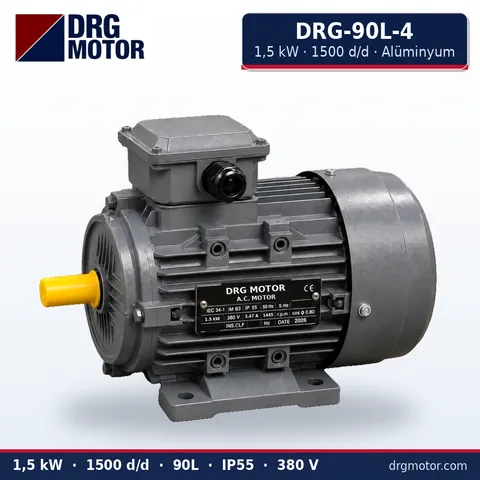
1.5 kW Three-Phase Motor 1500 rpm – DRG-90L-4 Aluminium
- 1.5 kW · 1500 rpm (4 poles)
- Aluminium frame · IEC 90L
- Shaft: 24 × 50 mm