 English
 Le français
 Türkçe

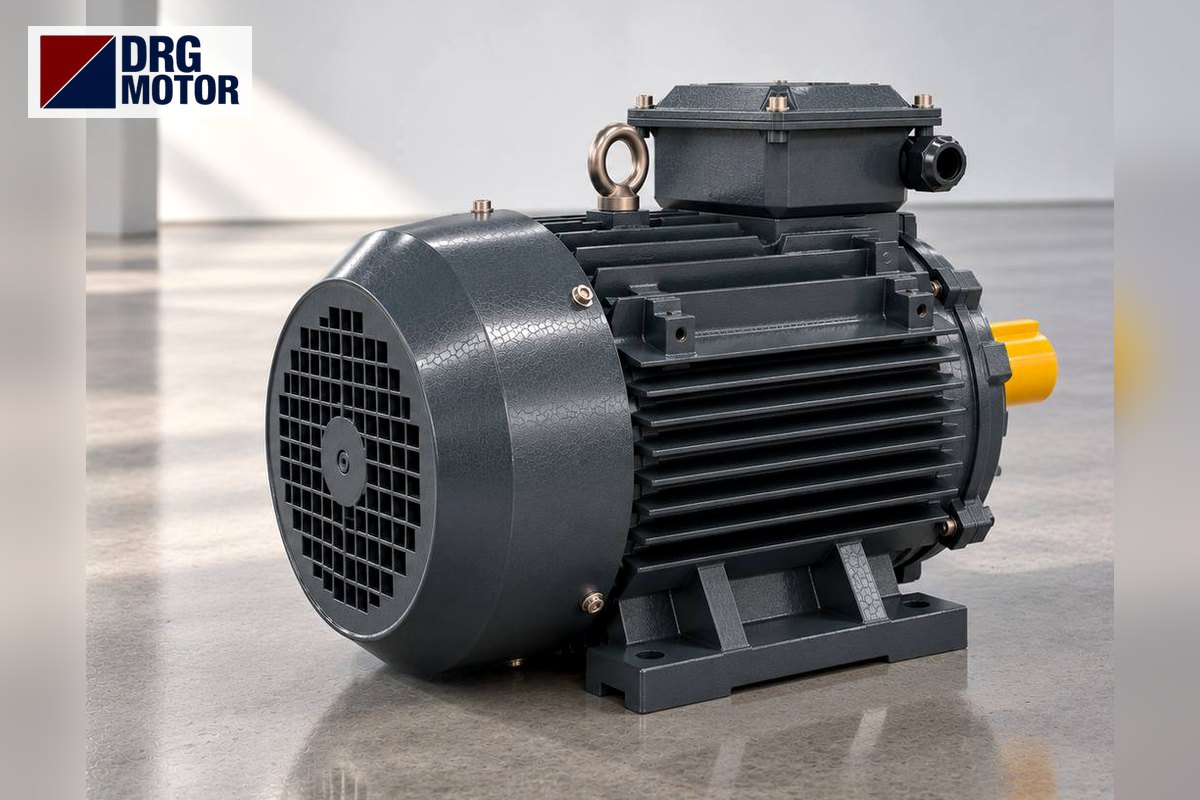

Thermal memory is the ability of a motor protection relay to "remember" the heat built up in the windings from a previous run or an overload trip, and to refuse a restart until the motor has cooled. When a three-phase electric motor starts and stops repeatedly, heat accumulates in the frame; thermal memory tracks that build-up and stops a hot motor from being loaded again and burning its winding. In short, protection looks not only at the present current but also at the heat stored from the past.
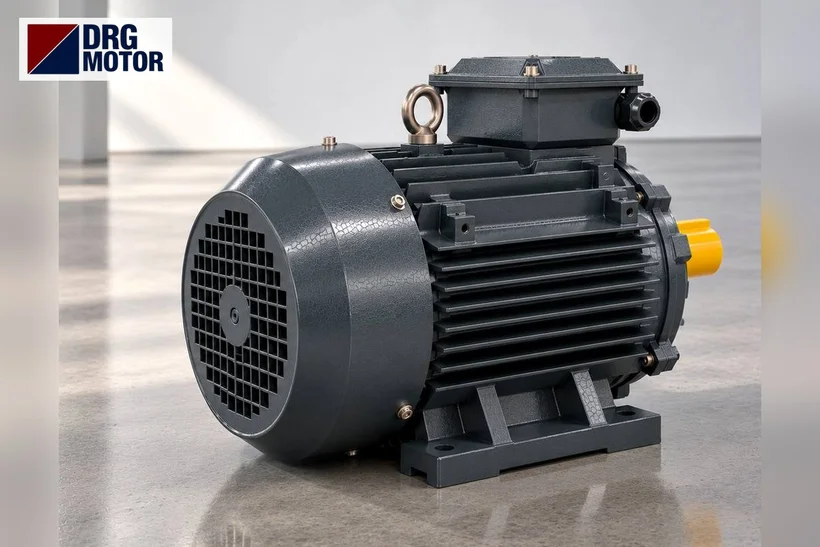
DRG Motor is a manufacturer, supplier and seller of electric motors. It is based in İzmir and ships quickly across all of Türkiye, that province included. You can pick a well-protected three-phase motor by power and speed in the online electric motor shop and see the same products together in the three-phase asynchronous electric motors category. Safety first: before any protection setting, measurement or wiring, switch off the power, confirm it is dead, and let qualified electrical personnel do the work.
What is thermal memory?
A motor protection device measures the current the motor draws and estimates how hot the winding has become. As current rises the winding heats up; when current drops or the motor stops, it cools slowly. Thermal memory is the relay keeping that heat estimate for a while after the motor stops or after it has tripped. The relay does not forget that "this motor was just stressed and is still hot." So when someone tries to restart a hot motor before it cools, protection acts sooner and at a lower current. A device that ignores stored heat treats every start from zero and misses the motor's real temperature.
Why does a motor heat up and store heat?
An asynchronous electric motor draws several times its rated current for a short moment at every start. That high current produces heat in the winding. A single start is usually harmless; trouble begins as starts get more frequent. If the motor restarts before it has fully cooled, new heat piles on top of the old. After a few repeats the winding temperature climbs toward the limit the insulation can bear. Even if the frame feels only warm by hand, the winding inside can be far hotter, because heat is born in the copper first and takes time to reach the metal frame. Thermal memory models this delayed, accumulated heat and brings the protection decision closer to reality.
What happens without thermal memory?
Protection without memory resets its heat estimate every time the motor stops. If an operator immediately resets and restarts a motor that tripped on overload, the relay treats it as cool and lets it run. But the winding is still hot; a few repeats push the temperature to a level that burns the insulation. The result is usually a burnt winding, a short circuit and a full motor replacement. Thermal memory breaks this chain: while the motor is hot the relay stays open and does not allow a reclose until a certain cooling time has passed. That wait is annoying — "why won't it start?" — but it is exactly what saves the motor.
Click to see current electric motor prices and order nowSEE PRICES →
Memory in bimetal versus electronic protection
A classic bimetal thermal relay works by metal strips that heat and bend with current. As long as those strips stay physically hot they provide a kind of natural memory; but the relay sits in its own box, separate from the motor, and its cooling is not identical to the motor's. Electronic motor protection relays track heat with a calculation model and can hold the last known thermal state for a while even if power is cut. Whatever the type, the aim is the same: to follow the motor's real thermal state, if only roughly. Detailed behaviour is written in the device document; setting and selection are always done by a qualified person according to the nameplate and the device manual.
Example DRG models and start load
The high current drawn at start rises with power, so in larger motors the stored heat — and the importance of thermal memory — grows too. The table below shows approximate values for a few 1500 rpm DRG aluminium-frame three-phase models (values are approximate; the exact choice is made for the project by a qualified person).
| Model | Power | Approx. rated current (400 V) | Voltage |
|---|---|---|---|
| DRG-90L-4-AL | 1.5 kW (2 HP) | 3.5 A | 230/400 V |
| DRG-112M-4-AL | 4 kW (5.5 HP) | 8 A | 400/690 V |
| DRG-132S-4-AL | 5.5 kW (7.5 HP) | 11 A | 400/690 V |
| DRG-132M-4-AL | 7.5 kW (10 HP) | 14.5 A | 400/690 V |
| DRG-160M-4-AL | 11 kW (15 HP) | 20.5 A | 400/690 V |
The table describes a single start; if the same motor starts many times at short intervals, the heat of each start adds up. You can roughly check motor current with the electric motor data and match power to speed before you buy.
The role of thermal memory on restart
The real benefit shows up in frequently starting applications. In compressors, pumps, conveyors, presses or hoists that stop and start at short intervals, the motor never gets a chance to cool. Protection with thermal memory follows the heat accumulated by back-to-back starts and, once a threshold is reached, stops the motor and prevents a restart before it cools. This stops the operator's "try again" reflex from killing the motor. If start frequency is high, choosing the right-sized motor matters as much as choosing the right protection; a small motor under constant strain shortens its life no matter how good the memory is.
Common mistakes in the field
The most common mistake is resetting a tripped protection without understanding it and restarting the motor at once. If protection tripped, look for the cause first. The second mistake is setting the protection current arbitrarily high without reading the nameplate; that disables everything the memory protects. The third is running the motor on a very frequently starting job and assuming protection will "handle it"; protection saves the motor from burning but does not lighten the work. The protection setting and type must always be decided by qualified electrical personnel according to the nameplate and device document; this article gives no exact current or time value, because the right value is specific to the motor and the application.
Choosing the right-sized motor
Good protection cannot save a wrongly chosen motor. If your application starts often, the motor must be sized to carry that load comfortably. In the DRG range, 1500 rpm three-phase aluminium-frame models run from 1.5 kW to 11 kW; models up to 3 kW suit 230/400 V and those from 4 kW suit 400/690 V supply. Match the power and voltage on the nameplate to your application. For a medium-power job, for example, you can review models such as the 7.5 kW DRG-132M-4 or the 4 kW DRG-112M-4 on their individual pages. If unsure, describe the application and the start frequency; let us settle the right model together.
See the current price of a three-phase electric motor sized for your frequently starting application in the shop.SEE PRICES
Send a photo of your current motor nameplate and we will find the suitable DRG model together.Send on WhatsApp
Frequently asked questions
Does thermal memory protect the motor in every case?
No. Thermal memory tracks heat build-up and prevents the early restart of a hot motor, but it is no substitute for a correct current setting, a sound winding or a healthy supply. Protection is one layer, not a stand-alone guarantee.
Why won't the motor start right after protection trips?
Because the relay still considers the motor hot. The wait is deliberate; it gives the motor time to cool. Rather than forcing it, find the cause and let it cool.
Does a bimetal thermal relay also provide memory?
To some extent yes; as long as its metal strips stay hot it behaves like a natural memory. But the relay's cooling is not identical to the motor's. Electronic relays can model heat in more detail; the type is chosen for the application by a qualified person.
What should I do for a very frequently starting application?
First choose the right-sized motor, then have a qualified person set up suitable protection. If needed, plan a work pattern that reduces start frequency; protection saves the motor from burning but does not, on its own, solve excessive starting.
Electric Motors Related to This Topic — Models and Current Prices
Suitability is not decided by power alone: compare the speed, voltage, mounting, shaft and fixing dimensions of your machine with the product data; if unsure, send us the nameplate of your current motor.
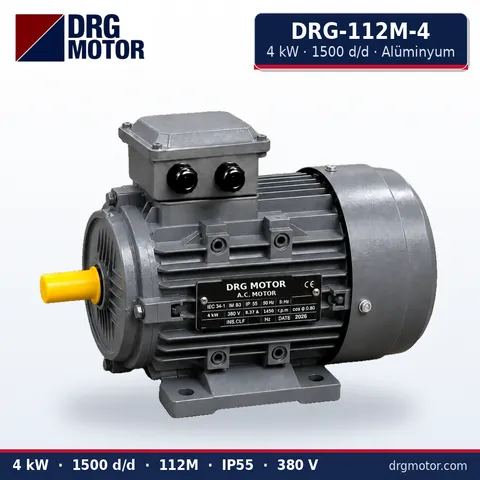
4 kW Three-Phase Motor 1500 rpm – DRG-112M-4 Aluminium
- 4 kW · 1500 rpm (4 poles)
- Aluminium frame · IEC 112M
- Shaft: 28 × 60 mm
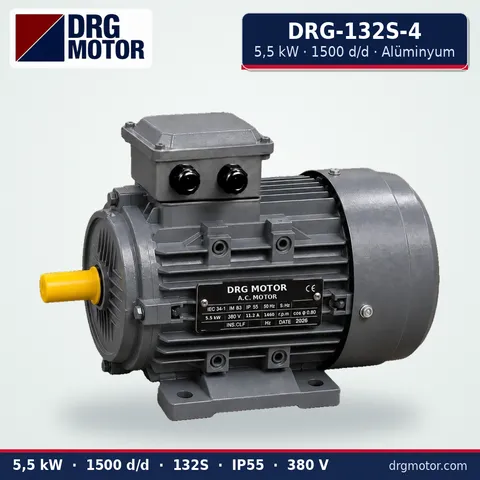
5.5 kW Three-Phase Motor 1500 rpm – DRG-132S-4 Aluminium
- 5.5 kW · 1500 rpm (4 poles)
- Aluminium frame · IEC 132S
- Shaft: 38 × 80 mm
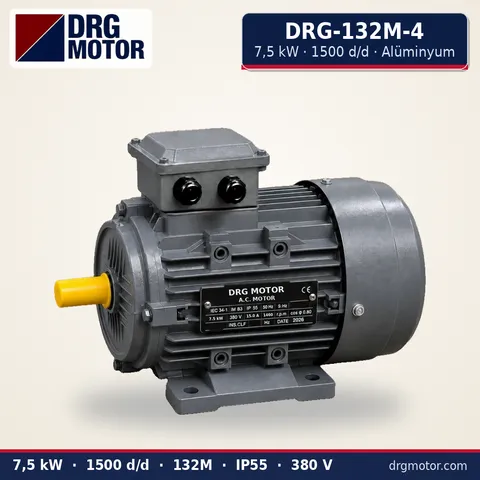
7.5 kW Three-Phase Motor 1500 rpm – DRG-132M-4 Aluminium
- 7.5 kW · 1500 rpm (4 poles)
- Aluminium frame · IEC 132M
- Shaft: 38 × 80 mm
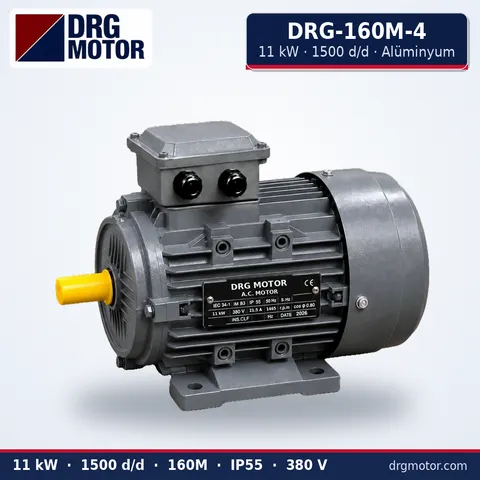
11 kW Three-Phase Motor 1500 rpm – DRG-160M-4 Aluminium
- 11 kW · 1500 rpm (4 poles)
- Aluminium frame · IEC 160M
- Shaft: 42 × 110 mm
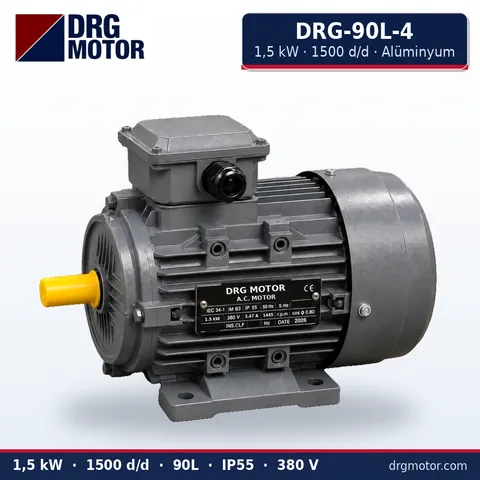
1.5 kW Three-Phase Motor 1500 rpm – DRG-90L-4 Aluminium
- 1.5 kW · 1500 rpm (4 poles)
- Aluminium frame · IEC 90L
- Shaft: 24 × 50 mm