English
 Le français
 Türkçe




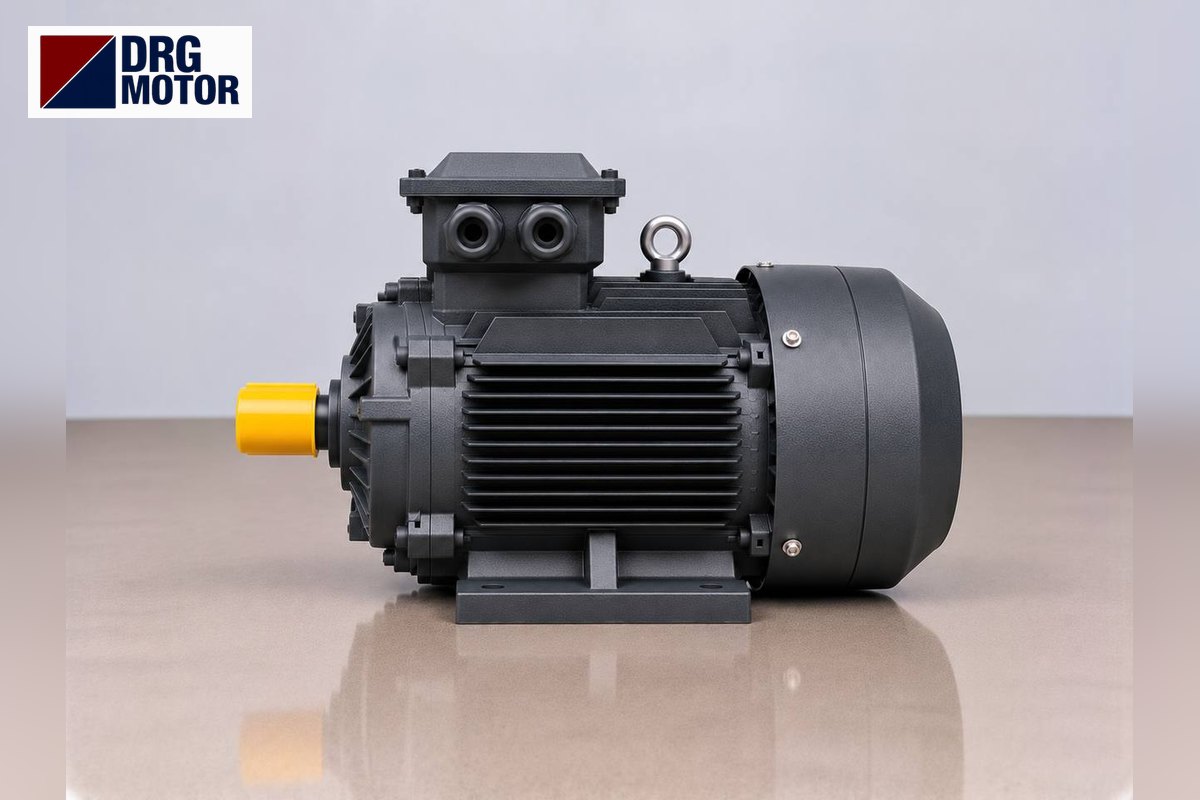

When a WAT electric motor driving a fan is to be renewed, the selection starts from the fan's air duty: a fan is as sensitive to speed and power as the motor itself. This article shows how to identify the type of WAT motor on your fan, the checks specific to fan applications, and which motor types involve additional certification or functional requirements.
First identify the motor type: standard or smoke extraction?
Besides standard three-phase motors, the WAT catalogue includes F300 and F400 class smoke extraction motors, with type codes starting S3H or S2H. These motors are classified to run for a set time at a set temperature during a fire and form part of the building's fire safety system. These applications carry specific certification requirements; the certification requirement must be checked separately before any motor is selected. If your nameplate shows F300, F400 or a type code starting S3H/S2H, an uncertified standard motor is not recommended as a replacement; the change must be handled by the relevant specialists within the fire safety requirements of the system.
Motors with type codes starting Q3D have an integrated inverter, and WAT brake motors appear in the catalogue as a separate family. This assessment covers the selection of the electric motor to be connected to the existing equipment. If your motor has a brake, a separate fan or a drive integrated into the motor, state this too; these features change the assessment. The rest of this article covers ventilation, extraction, process and air handling unit fans fitted with a standard three-phase WAT motor.
How does a fan load the motor?
In centrifugal and axial fans, absorbed power rises quickly with speed; according to the general fan laws, power varies roughly with the cube of speed. Even a small speed difference can therefore change motor load noticeably. Replacing a 4-pole motor with a 2-pole one is rarely suitable for a fan; impeller and motor are overstressed. The same kW and the same speed class do not prove suitability either: on a belt-driven fan whose pulley ratio has been changed, fan speed differs even with the same motor.
In fan applications, also pay attention to:
- Drive type: is the impeller mounted directly on the motor shaft or driven by belt and pulley? With direct drive, shaft diameter, shaft length and hub size are critical.
- Run-up time: large impellers have high inertia, so the motor takes longer to reach speed. Starting method and protection settings should be checked by competent technical personnel.
- Airflow and temperature: state whether the conveyed air is hot or dusty, or whether the motor sits in the air stream. DRG motors are specified for −15…+40 °C ambient and IP55 protection.
- Mounting position: on axial fans the motor is often carried by flange or feet in a horizontal or vertical position; always state position and mounting.
Information to collect from the nameplate and the site
The WAT nameplate carries the type code, power, speed, voltage, current, efficiency class and 50/60 Hz lines; newer nameplates with a QR code also give access to production data. If the nameplate says IE3 or IE4, include that too. The current measured while the fan runs shows how heavily the motor is actually loaded; compare it with DRG's motor current chart.
Send DRG MOTOR photos of the fan nameplate, motor nameplate and drive arrangement, so whether a standard motor is suitable can be assessed together with the fan's operating data.
DRG models that can be assessed for standard fan motors
DRG Motor is a manufacturer, supplier and seller of electric motors. Example models for fans fitted with a standard three-phase WAT motor are on the DRG electric motor online sales page:
- DRG-112M-4 – 4 kW, 4 poles, aluminium, 112M, rated speed 1450 rpm, 7.95 A at 400 V.
- DRG-132M1-6 – 4 kW, 6 poles, cast iron, 132M, rated speed 968 rpm, 8.99 A at 400 V.
- DRG-160M-6 – 7.5 kW, 6 poles, cast iron, 160M, rated speed 970 rpm, shaft 42×110 mm.
The two 4 kW models differ in frame and speed; which one could be assessed for your fan depends on the fan's design speed. For other options, see fan motors.
Frequently asked questions
What should I check when replacing the WAT motor on a car park or stairwell pressurisation fan?
If the fan is part of a smoke extraction or emergency system and the motor is F300/F400 class, these applications carry specific certification requirements, which must be checked separately before any motor is selected. Replacement in such systems must be planned by competent specialists according to fire safety requirements.
My fan motor runs on an inverter; does that change the selection?
Yes, it is important information. The frequency range set on the inverter and whether cooling is adequate at low speed must be assessed separately; send the inverter details together with the motor data.
Can I change the pulley ratio and use a higher-speed motor?
Not without knowing the impeller's permitted speed and the motor's new load. The fan maker's data and measurements must be reviewed together.
My nameplate is illegible; what can I do?
Send the frame size (foot hole spacing and shaft height), shaft diameter and the fan nameplate; an assessment can start from these, though with more uncertainty.
Information to send to DRG MOTOR
- Photo of the WAT nameplate and the full type code (including whether it is S3H/S2H, Q3D or a brake motor)
- Fan nameplate: fan type, design speed, flow and pressure
- Drive type: direct drive or belt and pulley; pulley diameters
- Mounting arrangement and position, shaft diameter × length
- Current measured with the fan running and starting method
- Temperature, dust and humidity of the conveyed air
Send this information via WhatsApp, through the quote list, by phone on +90 (542) 666 11 11 or to info@drgmotor.com. The fan's operating data is compared with DRG technical data for the assessment. Contact page
See current prices of DRG MOTOR electric motors and order online in our storeSEE PRICES →
Technical Sources
- WAT Motor Sanayi ve Ticaret A.Ş. — Ürün Kataloğu (Product Catalogue, Turkish edition) — IM tr 24.0 — Motor type codes (Motor Tip Kodları) — printed page 16 (PDF page 18).
- WAT Motor Sanayi ve Ticaret A.Ş. — Ürün Kataloğu (Product Catalogue, Turkish edition) — IM tr 24.0 — Technical information, motor nameplate fields (Teknik Bilgiler) — printed page 23 (PDF page 25).
- WAT Motor Sanayi ve Ticaret A.Ş. — Ürün Kataloğu (Product Catalogue, Turkish edition) — IM tr 24.0 — Smoke extraction motors, F300 series electrical data — printed page 84 (PDF page 86).
- WAT Motor Sanayi ve Ticaret A.Ş. — Ürün Kataloğu (Product Catalogue, Turkish edition) — IM tr 24.0 — Smoke extraction motors, F400 series electrical data — printed page 91 (PDF page 93).
- WAT Motor Sanayi ve Ticaret A.Ş. — Ürün Kataloğu (Product Catalogue, Turkish edition) — IM tr 24.0 — Brake motors, technical information (Frenli Motorlar) — printed page 100 (PDF page 102).