English
 Le français
 Türkçe




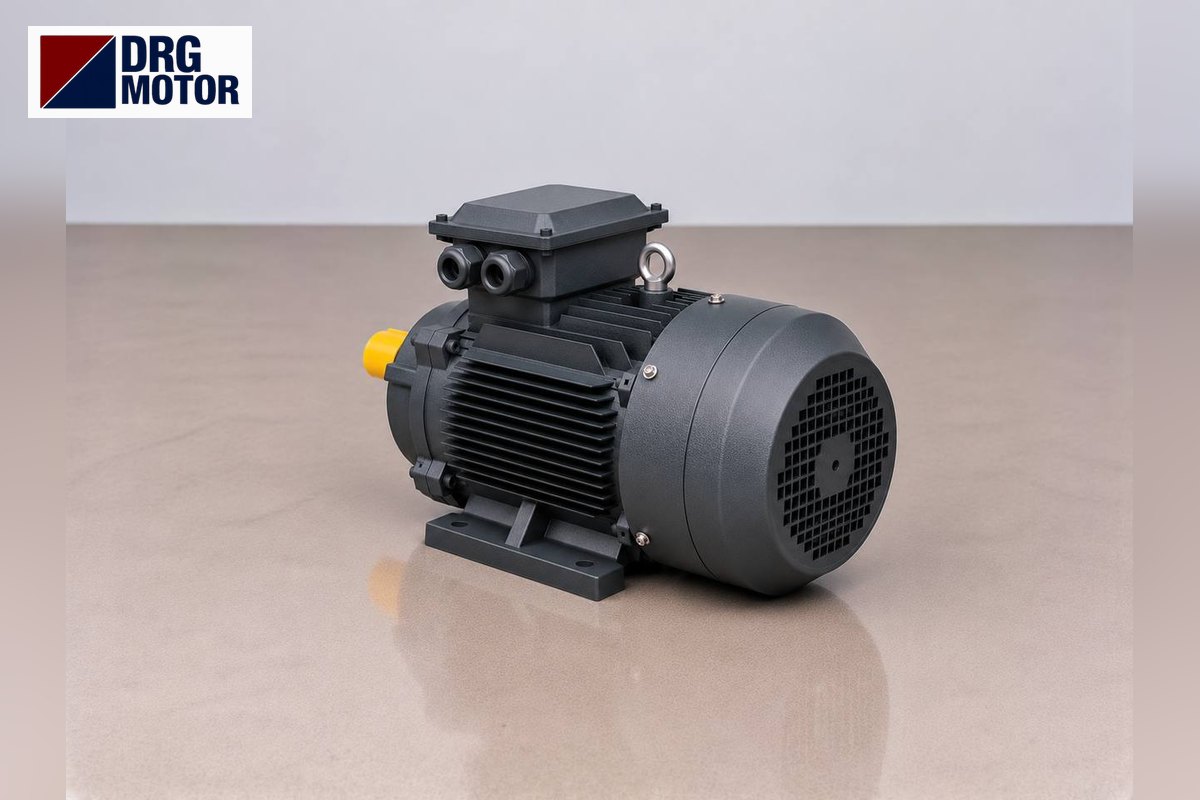

If you need to replace an 11 kW WAT electric motor, pinning down how the old motor actually works on site matters more than browsing a catalogue. This article explains which values to read from the nameplate, which operating conditions to measure and record, and how DRG MOTOR options can then be assessed against that information.
What does the type code tell you about an 11 kW motor's frame?
In the WAT catalogue, 11 kW IE3 motors are listed in frame 160M for both 2 and 4 poles, with a 42×110 mm shaft. For the same output, compact versions in frame 132M with a 38×80 mm shaft also exist. So two WAT motors that both read "11 kW" may have different frames and shafts. The type code shows the frame number (for example 160M or 132M) and the pole count; a G or P in the code means a cast iron housing, otherwise the housing is aluminium.
In the standard design shown in the WAT catalogue, three-phase motors above 3 kW are given as 400 V delta / 690 V star; for the replacement, go by the voltage and connection data on your motor's nameplate. The nameplate may carry separate lines for 50 Hz and 60 Hz; use the voltage, current and rated speed on the line that matches your supply frequency. If the type code starts with Q3D, the motor has an integrated inverter. If your motor has a brake, a separate fan or a drive integrated into the motor, state this too; these features change the assessment.
How to record operating conditions on site
In the 11 kW class, motors typically drive pumps, fans, compressors, mills or conveyors, and each loads the motor differently. Before replacement, write down the following:
- Load current: how close is the current measured with a clamp meter during normal production to the nameplate current? A reading above the nameplate value means the load or supply needs to be investigated.
- Starting method: direct-on-line, star-delta, soft starter or inverter? Does the motor start under load?
- Start frequency and daily running hours: how many starts per hour, how many hours per day?
- Environment: ambient temperature, dust, humidity, water spray, chemical vapours, outdoor installation and altitude.
- Cooling: is the fan cowl unobstructed, or is the motor inside a closed cabinet?
When comparing, keep DRG's operating limits in mind: IP55 protection, class F insulation, IC411 cooling, ambient −15…+40 °C and altitude up to 1000 m. The WAT catalogue states IP56 as standard protection; if your motor is exposed to wash water, rain or heavy dust, this difference should be considered together with the site conditions. The motor current chart can help you compare the currents you measure.
Why replacing without knowing the failure cause is risky
If your motor has failed, look for the cause behind the result, whether it is a burnt winding, a damaged bearing or a broken shaft. Single phasing, low voltage, overload, frequent starts, coupling misalignment, belt tension or blocked cooling paths will repeat with the next motor. A new motor fitted before the cause is found will be stressed in the same way. Protection relay settings and connection arrangements should be checked by competent technical personnel.
Send DRG MOTOR the nameplate photo, your measured load current and how the machine runs, so options can be reviewed with data from your own site.
DRG MOTOR options that can be assessed
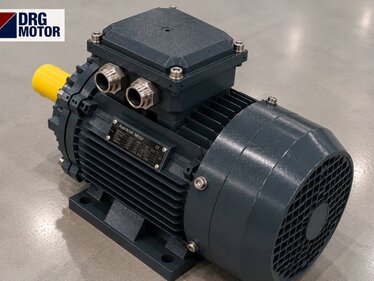
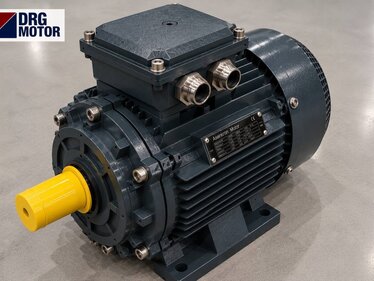
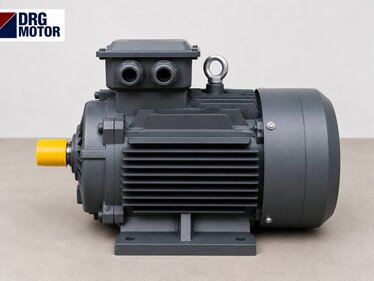
DRG Motor is a manufacturer, supplier and seller of electric motors. Models in the 11 kW class in the DRG online shop that can be assessed on technical data:
- DRG-160M-4 – 11 kW, 4 poles, aluminium housing, 160M, rated speed 1465 rpm, 400/690 V, 20.4 A at 400 V, shaft 42×110 mm.
- DRG-160M1-2 – 11 kW, 2 poles, cast iron housing, 160M, rated speed 2945 rpm, 19.6 A at 400 V, shaft 42×110 mm.
- DRG-132M-4K – 11 kW, 4 poles, compact aluminium housing, 132M, rated speed 1465 rpm, shaft 38×80 mm.
Even when 11 kW and the 1500 rpm class match the nameplate, that alone does not make a motor a suitable replacement: if a 132M compact motor is considered for a 160M WAT electric motor, the foot holes, shaft and coupling all change. Even in the same frame, ambient and starting conditions can change the choice. For more general-purpose options, see general purpose electric motors.
Frequently asked questions
My WAT motor runs outdoors; can a DRG motor be used?
DRG motors are IP55 and specified for −15…+40 °C. If there is direct rain, wash water or temperatures outside this range, whether extra protection is needed must be assessed with site information; no firm answer can be given without it.
My measured current is above the nameplate current; should I choose a larger motor?
Possibly, but causes such as voltage imbalance, mechanical binding or wrong connection must be ruled out first. A larger output may also change frame and shaft size, so the decision should rest on measurements and machine data.
Does it matter whether the motor runs a few hours a day or a full shift?
Yes. Running time, number of starts and the duty type stated on the nameplate all affect heating. Without this information no clear assessment of a suitable motor is possible.
What if the site is above 1000 m?
DRG motor ratings are specified up to 1000 m. For a higher installation, possible derating must be examined separately.
Information to send to DRG MOTOR
- A clear photo of the WAT nameplate and the full type code (e.g. frame 160M or 132M)
- kW, rated speed, voltage and frequency line
- Mounting (foot, B5 flange, foot-and-flange) and shaft diameter × length
- Current measured under normal load and starting method
- Daily running hours and starts per hour
- Ambient temperature, dust/humidity/water, indoor or outdoor, altitude
- Machine type and any failure history
You can send this list via WhatsApp or the quote list, call +90 (542) 666 11 11 or write to info@drgmotor.com. A suitable option will be assessed by placing your operating conditions next to the technical data. Contact page: drgmotor.com/en/contact.
See current prices of DRG MOTOR electric motors and order online in our storeSEE PRICES →
Technical Sources
- WAT Motor Sanayi ve Ticaret A.Ş. — Ürün Kataloğu (Product Catalogue, Turkish edition) — IM tr 24.0 — Motor type codes (Motor Tip Kodları) — printed page 16 (PDF page 18).
- WAT Motor Sanayi ve Ticaret A.Ş. — Ürün Kataloğu (Product Catalogue, Turkish edition) — IM tr 24.0 — Degree of protection (Koruma Sınıfı) — printed page 8 (PDF page 10).
- WAT Motor Sanayi ve Ticaret A.Ş. — Ürün Kataloğu (Product Catalogue, Turkish edition) — IM tr 24.0 — Star-delta starting and voltage & frequency (Yıldız-Üçgen Yolverme, Gerilim & Frekans) — printed page 10 (PDF page 12).
- WAT Motor Sanayi ve Ticaret A.Ş. — Ürün Kataloğu (Product Catalogue, Turkish edition) — IM tr 24.0 — IE3 three-phase aluminium motors, electrical data at 50 Hz — printed pages 36–37 (PDF pages 38–39).
- WAT Motor Sanayi ve Ticaret A.Ş. — Ürün Kataloğu (Product Catalogue, Turkish edition) — IM tr 24.0 — IE3 three-phase aluminium motors, dimensions B3 — printed pages 43–44 (PDF pages 45–46).
- WAT Motor Sanayi ve Ticaret A.Ş. — Ürün Kataloğu (Product Catalogue, Turkish edition) — IM tr 24.0 — IE3 three-phase cast iron motors, dimensions B3 — printed page 75 (PDF page 77).