 English
 Le français
 Türkçe




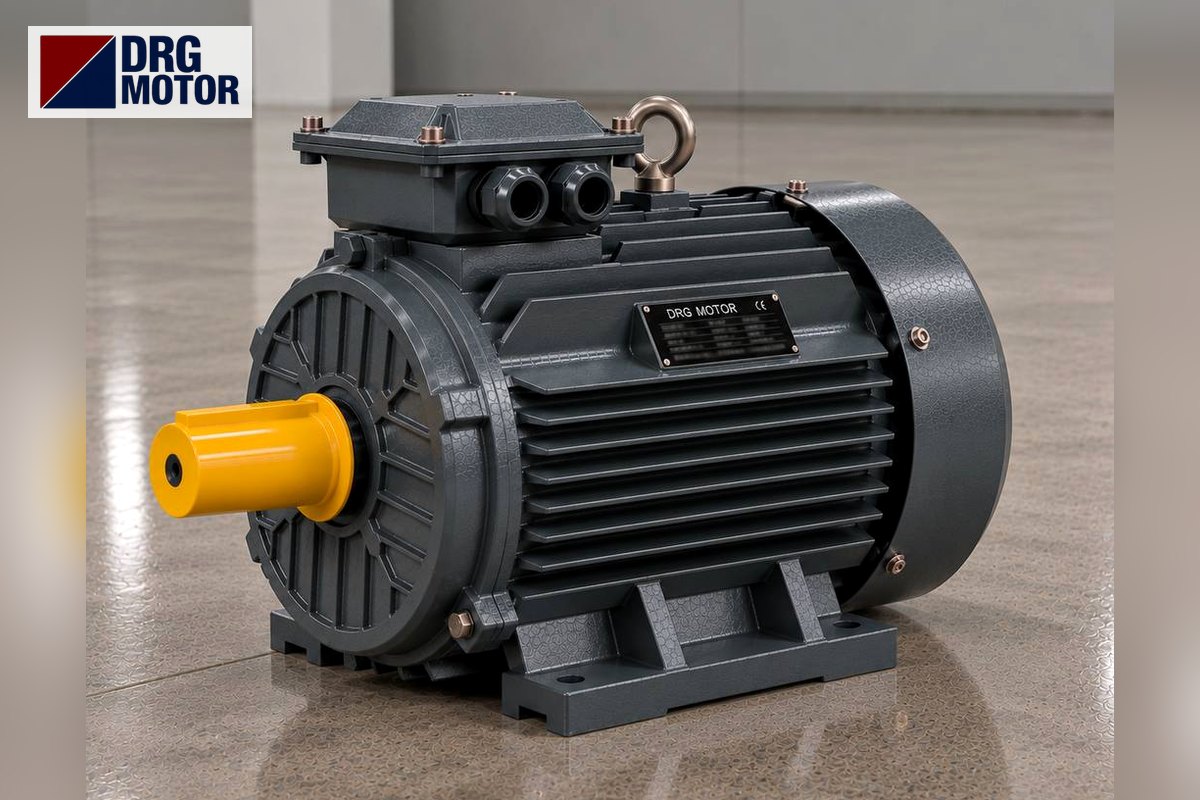

If a motor turns freely or once warm on a generator but strains and stalls at the first start, the root cause is usually an imbalance between the starting current and the generator's capacity. A three-phase asynchronous electric motor draws several times its rated current while starting; when the generator cannot supply that sudden demand, its voltage sags, and because the motor's starting torque falls with voltage, the shaft never reaches speed.
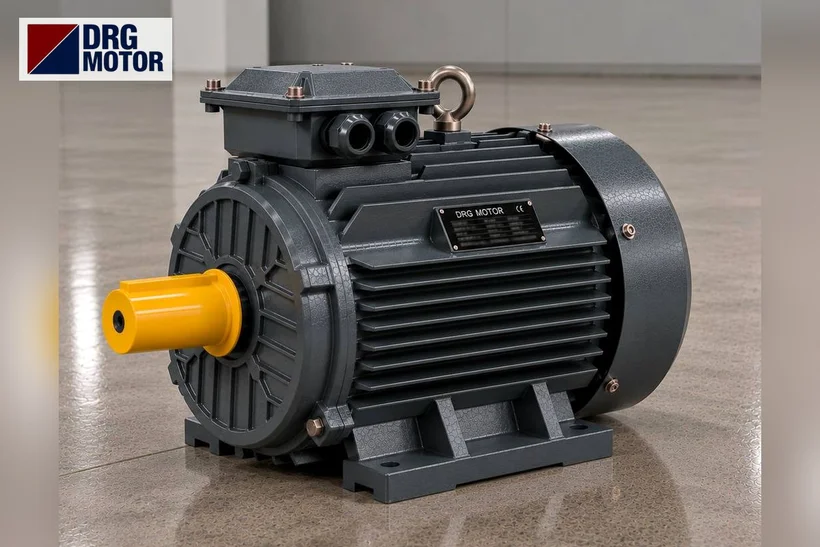
DRG Motor is a manufacturer, supplier and seller of electric motors. It is based in İzmir and ships quickly across all of Türkiye, that province included. To choose the right power for generator supply, compare models by power and speed in the online electric motor shop and see the same models together in the three-phase asynchronous electric motors category.
Why it starts on the grid but not on a generator?
The grid meets a motor's brief high-current demand almost without flinching. A generator is a limited source: both the alternator's output and the prime mover (diesel or petrol set) have fixed power. An asynchronous motor demands high current as it accelerates from standstill. If that current exceeds what the generator can deliver at that instant, the voltage collapses first, then speed and frequency dip momentarily. Since torque is proportional to the square of the voltage, even a small sag noticeably cuts starting torque. The result: the motor growls, draws current, heats up, but will not reach speed.
The link between starting current and generator power
A directly started (DOL) three-phase asynchronous motor can draw roughly five to seven times its rated current at the moment of starting. The critical figure for sizing a generator is not the motor's rated power but this starting demand. In practice a genset is chosen clearly larger than the biggest motor it feeds, because it must cope not with the steady power but with those few seconds of high current. When one plant starts cleanly and an identical one stalls, this is usually why: the generator's rated power looks adequate but it has no reserve for the inrush.
Speed and frame affect this too. A four-pole 1500 rpm motor and a two-pole 3000 rpm motor do not start the same way; the greater the load inertia, the longer the high current lasts before the motor reaches speed. For a generator, how long the current lasts matters as much as its peak value.
Click to see current electric motor prices and order nowSEE PRICES →
What to check first?
After cutting power and making the area safe, working through the following points usually narrows the problem:
- Generator capacity: Is the set's rated power enough for the starting demand of the motor it feeds? With several motors, do they start at once?
- Connection type: Should the motor be wired star (Y) or delta (Δ) for the voltage on its nameplate? The wrong connection lowers starting torque.
- Starting method: Direct-on-line, or star-delta / soft starter? A method that lowers the inrush eases the generator.
- Load condition: Is the shaft unloaded at start or under full load? A seized coupling, a tight belt or a blocked pump makes the motor look heavier than it is.
- Voltage drop: If the cable between generator and motor is long or undersized, the starting current adds extra voltage drop in the cable.
- Frequency/voltage setting: Do the set's speed and voltage regulation match the nameplate values?
We do not give exact settings (such as thermal current or insulation resistance) here; these are determined by qualified electrical personnel according to the motor's nameplate and the equipment manual.
Starting demand across DRG three-phase models
The four-pole 1500 rpm models below can serve as a reference when planning generator power. Remember each draws several times its rated current at start; the generator is sized against that multiple.
| Model | Power | Voltage | Speed |
|---|---|---|---|
| DRG-90L-4 | 1.5 kW (2 HP) | 230/400 V | 1500 rpm |
| DRG-112M-4 | 4 kW (5.5 HP) | 400/690 V | 1500 rpm |
| DRG-132S-4 | 5.5 kW (7.5 HP) | 400/690 V | 1500 rpm |
| DRG-132M-4 | 7.5 kW (10 HP) | 400/690 V | 1500 rpm |
| DRG-160M-4 | 11 kW (15 HP) | 400/690 V | 1500 rpm |
To estimate a motor's starting current roughly, use our motor current table, and for the cable side see the cable cross-section calculator.
What does the starting method change?
Direct-on-line is the simplest method but the hardest on a generator; the motor demands the whole starting current at once. Star-delta starting lifts the motor first at reduced voltage (star) and switches to delta once speed rises, cutting the first current peak. Soft starters raise the voltage gradually and spread the starting current. Their shared aim is to lower the generator's instantaneous power demand and prevent voltage collapse. Which method fits depends on the motor's power, its load and the generator's reserve; this choice should be made per project.
Safety warning
Before any check or measurement inside the panel or at the motor terminals, cut the power, verify it is dead, and leave the work to qualified electrical personnel. Generator sets also carry back-feed and fuel/exhaust risks; do not touch connections on a running set. This article is for information, not a field procedure.
To be sure you have the right motor, you can share your current motor's nameplate and, if available, the generator set's data:
Send a photo of your current motor nameplate and we will find the suitable DRG model together.Send on WhatsApp
To pick the three-phase electric motor that suits your job by power and speedSEE PRICES
Frequently asked questions
My generator is bigger than the motor's power, so why won't it start?
Even when the rated power looks sufficient, the set may lack the reserve for the several-times-higher current at start. A generator should be sized against the motor's starting demand, not its steady power.
The motor starts fine on the grid but not on the generator — is the fault in the motor?
In most cases the motor is sound; the problem is the generator failing to hold voltage during start. Even so, connection and load should be checked.
Does star-delta starting solve it?
Because it lowers the first current peak, it often helps, but if the motor's load is heavy at start it may not be enough alone. Load and generator reserve must be weighed together.
Does cable length affect starting?
Yes. A long, undersized cable adds voltage drop under starting current, further reducing the motor's starting torque.
Electric Motors Related to This Topic — Models and Current Prices
Suitability is not decided by power alone: compare the speed, voltage, mounting, shaft and fixing dimensions of your machine with the product data; if unsure, send us the nameplate of your current motor.

4 kW Three-Phase Motor 1500 rpm – DRG-112M-4 Aluminium
- 4 kW · 1500 rpm (4 poles)
- Aluminium frame · IEC 112M
- Shaft: 28 × 60 mm

5.5 kW Three-Phase Motor 1500 rpm – DRG-132S-4 Aluminium
- 5.5 kW · 1500 rpm (4 poles)
- Aluminium frame · IEC 132S
- Shaft: 38 × 80 mm

7.5 kW Three-Phase Motor 1500 rpm – DRG-132M-4 Aluminium
- 7.5 kW · 1500 rpm (4 poles)
- Aluminium frame · IEC 132M
- Shaft: 38 × 80 mm

11 kW Three-Phase Motor 1500 rpm – DRG-160M-4 Aluminium
- 11 kW · 1500 rpm (4 poles)
- Aluminium frame · IEC 160M
- Shaft: 42 × 110 mm

1.5 kW Three-Phase Motor 1500 rpm – DRG-90L-4 Aluminium
- 1.5 kW · 1500 rpm (4 poles)
- Aluminium frame · IEC 90L
- Shaft: 24 × 50 mm





