 English
 Le français
 Türkçe


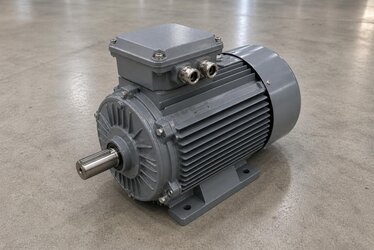
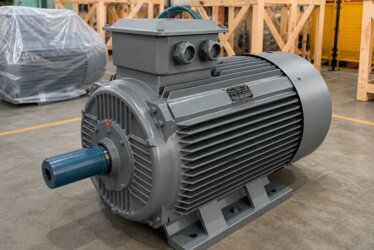
Picture three quotes on the purchasing desk for the same motor: all 15 kW, all 4-pole, all described as a "three-phase asynchronous motor". The prices are clearly different, and all three carry the word "offer". When deciding which one to pick, what matters is not the bottom-line figure but what lies behind it. We wrote this article as a working note for the maintenance manager, purchasing officer or machine builder sitting at that desk: which questions to ask the manufacturer, what the different types of offers actually mean, which mistakes are made most often in the field, and which route makes sense in which situation.
Same Nameplate, Different Motor: Where Does the Price Gap Come From?
Two three-phase motors may have the same power and speed, yet one runs trouble-free for ten years while the other starts making bearing noise in its first summer. The items that create this difference are usually covered in a single line of the quote, or not mentioned at all. The main choices that push the price down are a lower efficiency class, thin sheet or a lightweight frame, less copper in the winding, cheap bearings, incomplete varnish impregnation and limited testing. None of these is noticeable on the day you take delivery; they show up on the electricity bill, in a vibration measurement or during an unexpected shutdown.
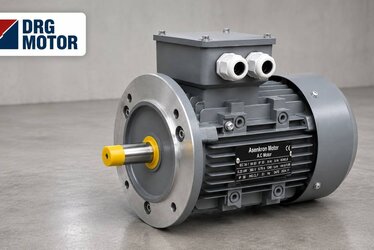
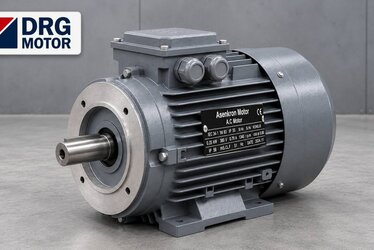
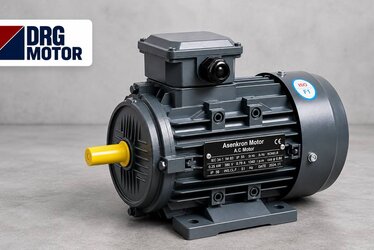
Mounting type and number of poles are also part of the comparison. Floor-mounted B3 foot motors, B5 flange motors bolted directly to the machine, small-flange B14 motors and B35 motors combining feet and flange are priced differently even at the same kW rating. A 2-pole motor turns at roughly 3000 rpm and a 4-pole motor at around 1500 rpm; 6- and 8-pole motors run slower but deliver higher torque. When comparing quotes, make sure these details are exactly the same; otherwise you are comparing apples with oranges.
Questions That Tell You About a Manufacturer
Regardless of the brand name, you can get to know a three-phase motor manufacturer through a few clear questions. Questions answered quickly and in writing build confidence; questions that are brushed aside should be noted down.
Questions on paper
- Which standards is the motor built to? The IEC 60034 series is expected for performance and IEC 60072 for frame and shaft dimensions. If the dimensions are not standard, fitting another motor in the same place tomorrow becomes difficult.
- What is the efficiency class, and is it on the nameplate? Under the EU ecodesign regulation and Türkiye's harmonised ecodesign regulation, at least IE3 is mandatory for 2-, 4-, 6- and 8-pole three-phase motors from 0.75 to 1000 kW. IE4 and IE5 provide additional savings on loads that run long hours.
- Can you provide a test report? A report showing current, efficiency, winding and insulation resistance and vibration values should be requested, especially for project purchases.
Questions about what is inside the motor
- What is the frame material? Aluminium is common at low power ratings; where there is heavy load, vibration and impact, a cast iron frame is the sturdier choice.
- What is the insulation class? At least class F insulation (155 °C) should be expected. If the motor will be driven by a frequency inverter, ask separately whether the winding is suitable for it.
- Which brand of bearing is used? If you cannot get a clear brand and type in answer to this question, you may not get a clear answer at the first failure either.
- What is the protection class? IP55 is a common standard in industry; a higher level should be discussed for washdown or outdoor areas.
Questions about after-sales
- Are spare parts available? Parts such as the fan, fan cover, terminal box, flange and bearings must be easy to obtain.
- Who do I contact in case of a failure? Knowing the technical support line and service approach from the start shortens downtime.
- Is this motor in the warehouse right now, and if not, how many days will it take? The word "in stock" needs to turn into a concrete delivery date.
What Is an "Offer" Really?
In the motor market, the word "offer" or "campaign" covers very different practices. Knowing which one you are dealing with is the first step to reading a quote correctly:
- Bulk purchase and project pricing: A special price worked out according to quantity and power distribution when many motors are bought at once for a facility.
- Seasonal campaigns: Periodic pricing for pump motors before the irrigation season, or for certain product groups during investment periods.
- Stock campaigns: Selling particular power ratings and types held in large quantities in the warehouse on better terms.
- Old motor replacement and efficiency upgrades: Offers aimed at replacing old, low-efficiency motors with IE3, IE4 or IE5 motors.
- Payment terms and flexibility: Arrangements that offer an advantage in the payment plan rather than in the price.
- Dealer prices: A pricing structure offered in return for regular purchases to companies that resell motors or build panels and machines.
If you want to see the general trend in prices, our article on electric motor prices 2026–2030 is a good place to start.
Five Common Mistakes in the Field
- Replacing a motor by looking only at kW: When the old motor burns out, a new one of the same power is bought, but the shaft diameter, flange size or foot holes do not match. Before replacing, always confirm the frame size and mounting type from the old motor's nameplate or measurements.
- Not checking the nameplate of the discounted product: The nameplate of the motor delivered should show the efficiency class stated in the quote. Read the nameplate before installation, not after.
- Not mentioning that it will run on a drive: A motor driven by a frequency inverter may need extra measures on the winding and bearing side. If this is not stated at the time of order, the problem appears months later.
- Ignoring the environment: For a dusty crushing plant, a humid pump room or a food line that is washed down, the protection class and frame material are dictated by the environment, not by the price.
- Trusting "in stock" without a written date: For a line that is down and waiting, put the delivery date in writing together with the order.
Decision Guide: Which Route in Which Situation?
- The line has stopped and you need the motor tomorrow: Your priority is real stock and the right dimensions. In this case, the price difference takes second place to the cost of downtime.
- You are building a new facility: Ask for bulk and project pricing; request test reports and technical data sheets for all motors at the quotation stage.
- The motor runs two shifts a day or longer: Always get a price for IE4 or IE5 as well; the efficiency difference may close the price gap over time.
- You have many old, low-efficiency motors: Plan a phased replacement as part of an efficiency upgrade, starting with the motors that run the most.
- You fit motors to your machines and sell them: Discuss dealer prices and regular supply terms; for you, consistent delivery times matter as much as the unit price.
Do not forget the total cost of ownership
In most industrial applications, the cost of the electricity a motor consumes over its lifetime far exceeds its purchase price. That is why the comparison should include the purchase price, energy consumption based on annual operating hours, maintenance and bearing replacement, the cost of possible downtime to production, and access to spare parts. Reading an offer with this calculation in mind can show that the quote that looks expensive at first glance is actually the more economical one.
A Short Checklist on Delivery
When the motor arrives at your door, spend a few minutes on these checks before the installation team gets to work. If there is a problem, a return or exchange is much easier before the motor is mounted.
- Do the power, speed, voltage and efficiency class on the nameplate match the order?
- Do the mounting type (B3, B5, B14, B35), shaft diameter and flange size fit the machine on site?
- Are there any cracks or dents from transport on the frame, fan cover or terminal box?
- Does the shaft turn freely and quietly when rotated by hand?
- Is the terminal connection diagram inside the cover, and is the star/delta connection suitable for your supply?
- Did the warranty certificate and, if available, the test report come with the motor?
Ask DRG Motor the Same Questions
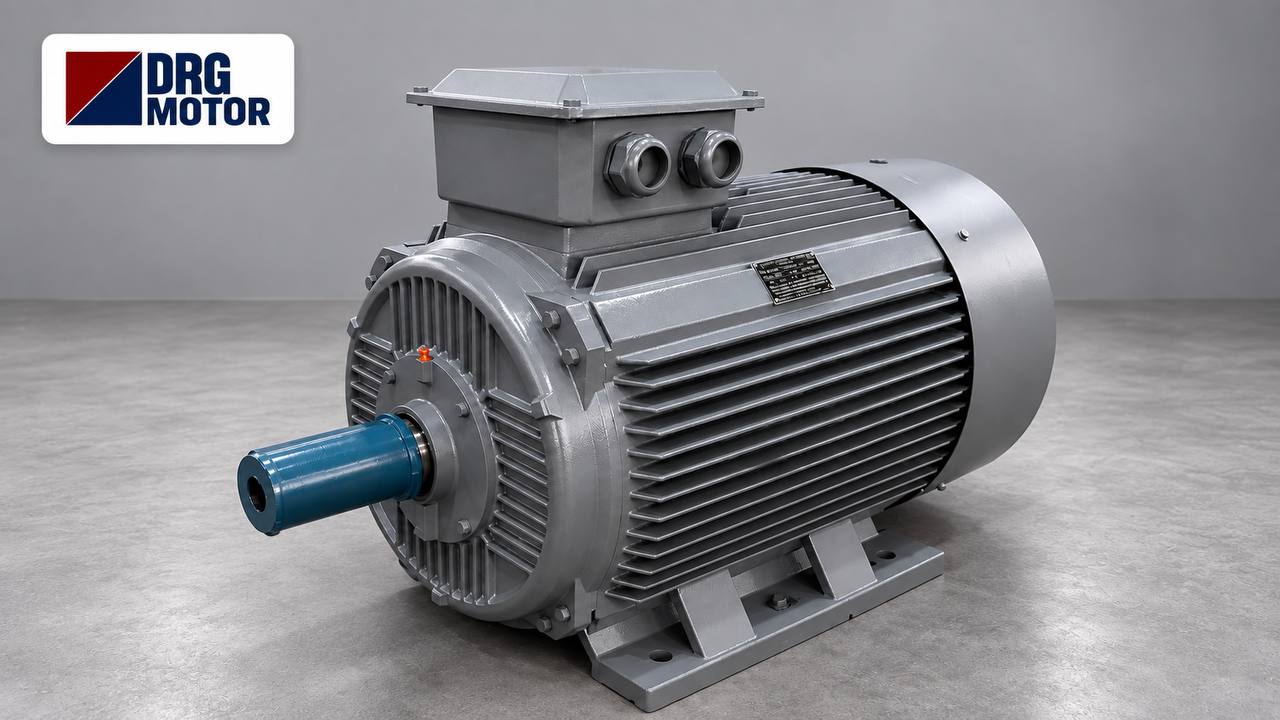
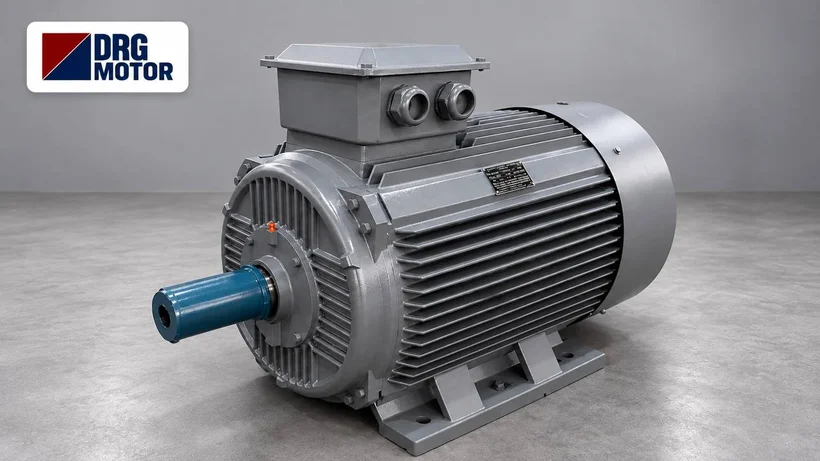
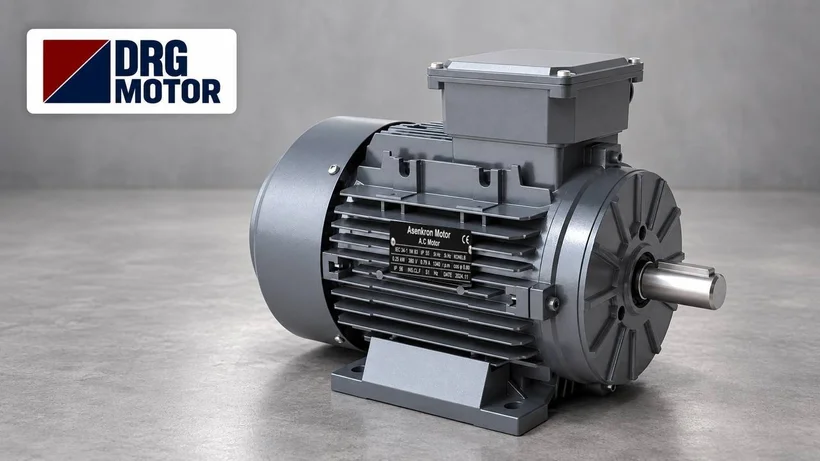
DRG Motor manufactures single-phase and three-phase electric motors in efficiency classes IE3, IE4 and IE5 at its facility in Buca, İzmir. The product range extends from 0.25 kW to 355 kW, with 2-, 4-, 6- and 8-pole options and B3, B5, B14 and B35 mounting types. Cast iron frames are used for medium and large power ratings, and the motors are designed for pump, fan, conveyor and crusher applications.
We would like you to put the list above to us in exactly the same way. Frame dimensions, technical values and product groups can be found on our products page. We offer fast delivery from stock for frequently requested power ratings and types and ship throughout Türkiye; dealership opportunities are also available for companies that sell motors or build machines.
Let us be clear about offers: our prices depend on quantity, power, number of poles, mounting type and delivery time. Call us for current offers and project prices; we can clarify stock status and delivery date in the same conversation.
Frequently Asked Questions
Is IE3 mandatory for three-phase motors?
Yes. Under the EU ecodesign regulation and Türkiye's harmonised regulation, at least efficiency class IE3 is required for 2-, 4-, 6- and 8-pole three-phase asynchronous motors from 0.75 to 1000 kW. Although there are exemptions for some special uses, IE3 is the minimum for standard industrial applications.
Should I choose a cast iron or an aluminium frame?
An aluminium frame may be sufficient for light loads and low power ratings. For applications with vibration, crushers, large pumps and heavy conveyors, a cast iron frame is the more durable choice.
What should I pay most attention to when buying a motor on offer?
Check the efficiency class, the written warranty terms, whether the product is really in the warehouse, and whether the nameplate data matches the technical documentation. Then evaluate the price together with the energy the motor will consume over its lifetime.
How can I find out DRG Motor's current offers and prices?
Since prices are given according to quantity, power and type, you will get the most accurate information by phone or e-mail. Simply send us the power, speed, mounting type and quantity.
Contact Us for Quotes and Information
For your three-phase motor requirements, project pricing or a dealership application, call us on +90 (542) 666 11 11 and +90 (533) 777 04 44, or write to [email protected]. For our factory address and other details, visit our contact page.