English
 Le français
 Türkçe




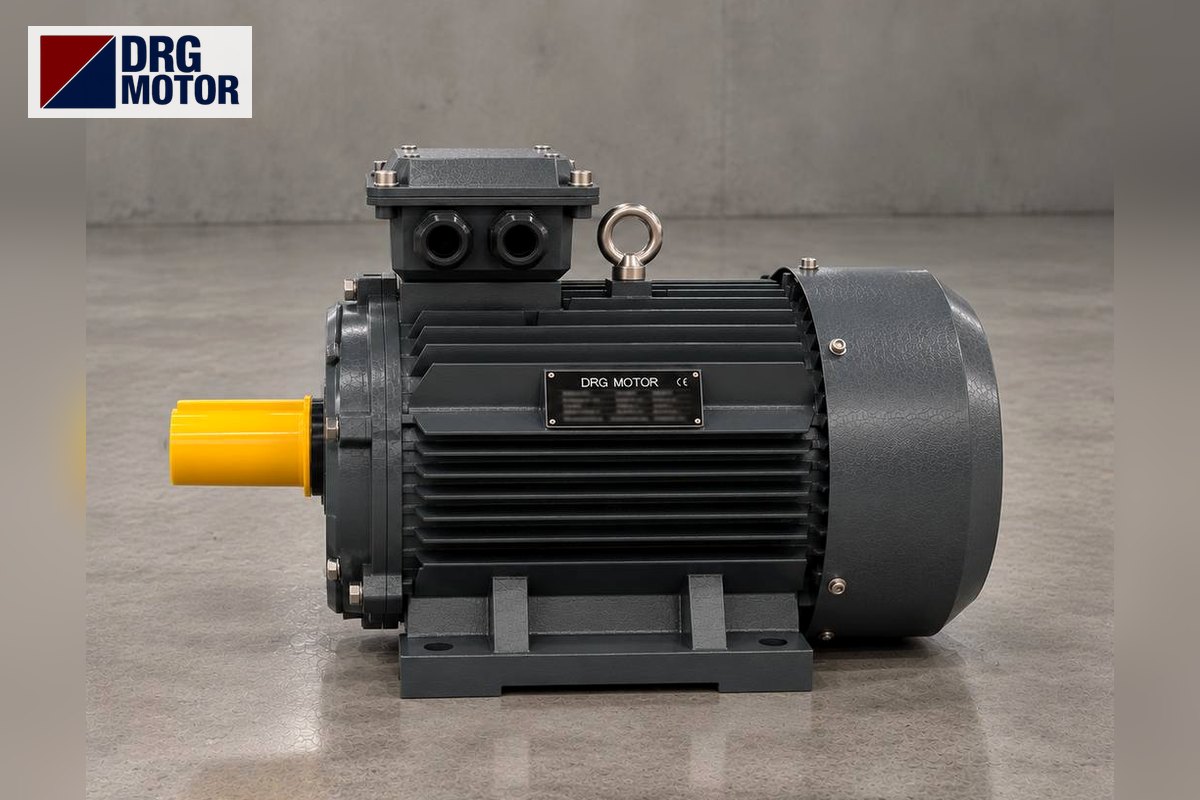

You can usually tell an electric motor is overloaded from a handful of signs: the speed visibly drops, the frame runs hotter than usual, the current it draws rises, the thermal protection trips repeatedly, the sound changes and, in time, a faint burnt smell may appear. These signs mean "overload": the electric motor is being asked to do more work than its capacity. Below we explain each sign in plain language and show the right fix.
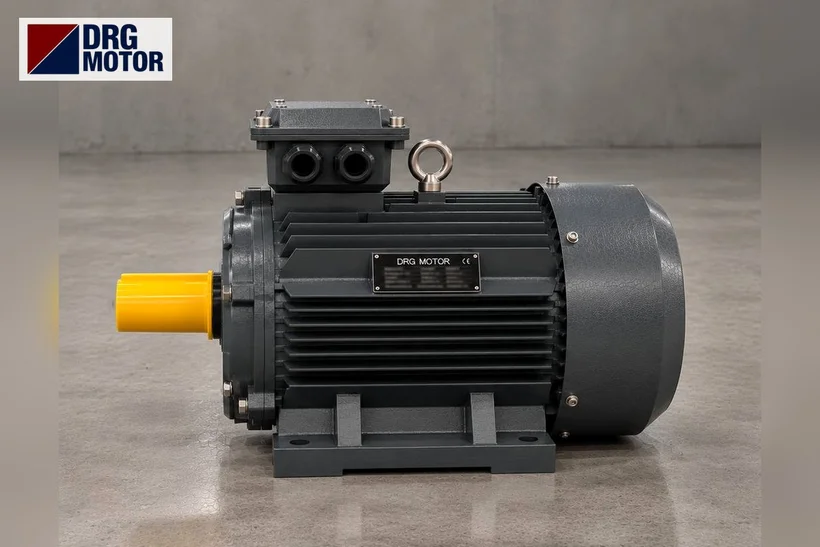
DRG Motor is a manufacturer, supplier and seller of electric motors. The usual culprit behind an overloaded electric motor is the wrong power rating; you can find the power that best fits your need by power and speed in the online electric motor shop and see the same models together in the three-phase asynchronous electric motors category.
What does overload mean?
Every electric motor has a rated power and a rated current on its nameplate. These describe the load it can turn comfortably all day. When the driven machine demands more than this limit, the electric motor is "overloaded": the torque required at the shaft rises, so it draws more current and the heat inside it climbs. A brief overload is usually harmless, but a continuous one ages the winding insulation and the bearings and shortens the motor's life.
Signs of an overloaded electric motor
Overload rarely shows up as a single sign; several usually appear together:
- Speed drop: As the load grows heavier the shaft slows and the machine no longer runs as fast. In an asynchronous electric motor a little more slip under load is normal, but a clear slow-down is the first hint of overload.
- Heating: The higher current produces more heat in the windings. Some warmth is normal, but a frame too hot to keep a hand on and steadily rising temperature deserves attention.
- Rising current: Measured with a clamp meter, a current above the nameplate value is the clearest sign of overload.
- Thermal protection tripping: The thermal relay or motor protection switch stops the electric motor when it sees high current. Frequent tripping is a warning, not a coincidence.
- Change in sound: The smooth hum gives way to a straining, groaning or knocking noise; a "can't get up to speed" feel at start-up also points to overload.
- Smell: Overheated insulation can give off a faint burnt or ozone smell. Take it seriously, as it shows the winding is under strain.
Click to see current electric motor prices and order nowSEE PRICES →
What is each sign telling you?
The same sign can come from more than one cause. The table below pairs common signs with likely causes; a proper diagnosis needs measurement.
| Sign | Common cause | Where to look first |
|---|---|---|
| Speed dropping | Load too heavy or power too small | Load and nameplate power |
| Overheating | Continuous overload, poor cooling | Fan, ventilation, load |
| High current | Overload or voltage problem | Supply voltage, load |
| Thermal trips often | Mechanical seizure, phase issue | Drive, belt, connection |
Why does an electric motor overload?
The reason usually falls under one of three headings:
1. Wrong power choice
This is the most common cause. An electric motor smaller than the machine needs strains constantly to turn the job. It may look like it "runs" at first, but a motor working at its limit all day tires quickly. The right approach is to pick a power class that matches your real load, leaving a small margin if needed.
2. Mechanical seizure and drive problems
A tired bearing, shaft misalignment, a tight or badly fitted belt, a dry seat, a blocked pump or a fault in a gearbox all add extra resistance for the electric motor. Here the fault is usually not in the motor but in the connected machinery; check the drive first.
3. Voltage and supply problems
Low or unbalanced supply voltage, or a weak or lost phase, makes the electric motor do the same work at a higher current, which shows as heating and strain. An undersized cable also stresses the line.
The right power prevents overload from the start
The most lasting cure for overload is choosing the right power from the outset. Below are a few DRG electric motors often chosen in the 1500 rpm class with the approximate current on their nameplates; these values help you judge whether a current you measure in the field is "normal or high".
| Model | Power | Speed | Current (400 V) |
|---|---|---|---|
| DRG-112M-4 | 4 kW | 1500 rpm | 7.95 A |
| DRG-132S-4 | 5.5 kW | 1500 rpm | 10.7 A |
| DRG-132M-4 | 7.5 kW | 1500 rpm | 14.3 A |
| DRG-160M-4 | 11 kW | 1500 rpm | 20.4 A |
If you are unsure which power suits you, use our electric motor calculator and compare different power and speed options in the online electric motor shop.
Choose the right power for your overloaded electric motor; click to see current prices and orderSEE PRICES
What to watch when measuring and checking
If you suspect overload, measuring the current it draws is the best start; compare the measured value with the rated current on the nameplate. You can use our motor current chart for reference. Safety comes first in electrical measurement and wiring: switch off the power, confirm it is de-energised, and let only authorised electrical personnel carry out measurement and intervention. Set values such as the thermal relay setting according to the nameplate and the device documentation; raising them carelessly defeats the purpose of protection.
Frequently asked questions
If an electric motor warms up a bit, is it already overloaded?
No. Every electric motor heats up somewhat while running, which is normal. Overload shows when signs appear together: steadily rising heat, current above the nameplate value and a drop in speed. A merely warm frame on its own is not a cause for concern.
Is moving up one power size the solution for an overloaded motor?
Often yes, because the real reason is usually insufficient power. But first determine whether the strain truly comes from the load or from a mechanical seizure. If something is seizing, a bigger electric motor hides the problem for a while without solving it.
Why does the thermal relay trip so often?
The thermal opens the circuit when the current exceeds its setting. Frequent tripping usually signals overload, mechanical resistance or a phase problem. Solve it by finding the cause, not by raising the setting; measurement should be done by authorised personnel.
Send a photo of your current motor nameplate and we will find the suitable DRG model together.Send on WhatsApp
Electric Motors Related to This Topic — Models and Current Prices
Suitability is not decided by power alone: compare the speed, voltage, mounting, shaft and fixing dimensions of your machine with the product data; if unsure, send us the nameplate of your current motor.
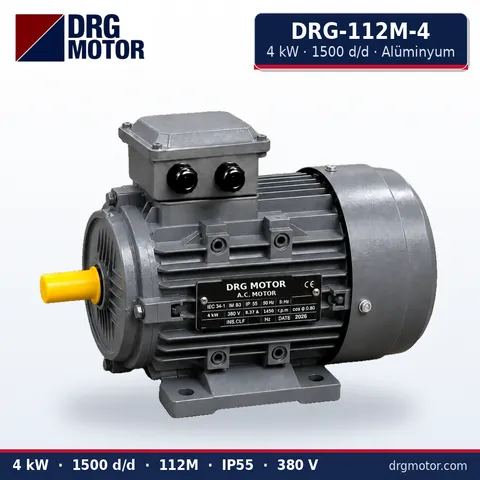
4 kW Three-Phase Motor 1500 rpm – DRG-112M-4 Aluminium
- 4 kW · 1500 rpm (4 poles)
- Aluminium frame · IEC 112M
- Shaft: 28 × 60 mm
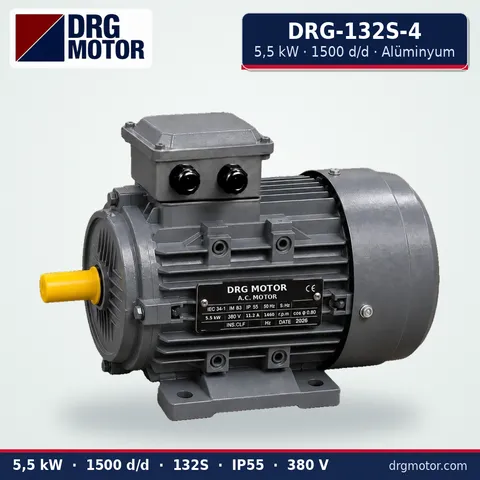
5.5 kW Three-Phase Motor 1500 rpm – DRG-132S-4 Aluminium
- 5.5 kW · 1500 rpm (4 poles)
- Aluminium frame · IEC 132S
- Shaft: 38 × 80 mm
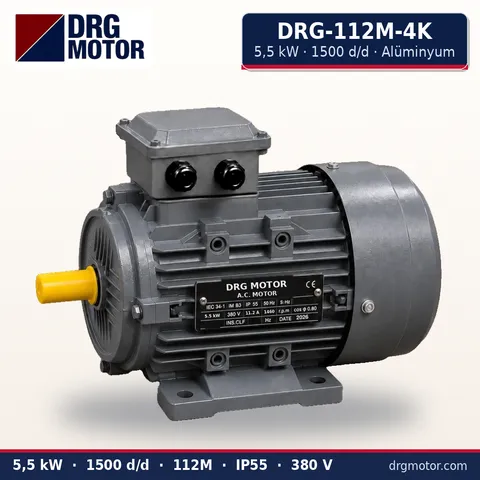
5.5 kW Compact Three-Phase Motor 1500 rpm – DRG-112M-4K Aluminium
- 5.5 kW · 1500 rpm (4 poles)
- Aluminium frame · IEC 112M
- Shaft: 28 × 60 mm
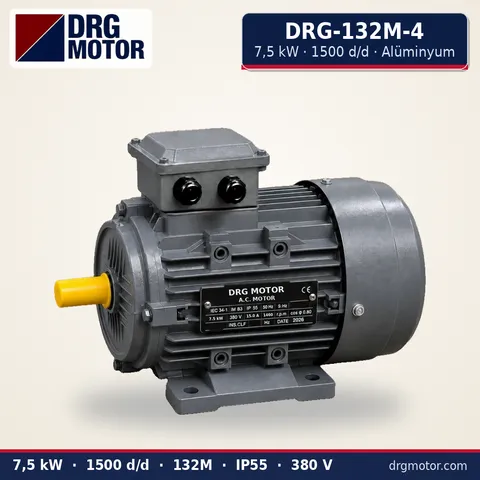
7.5 kW Three-Phase Motor 1500 rpm – DRG-132M-4 Aluminium
- 7.5 kW · 1500 rpm (4 poles)
- Aluminium frame · IEC 132M
- Shaft: 38 × 80 mm
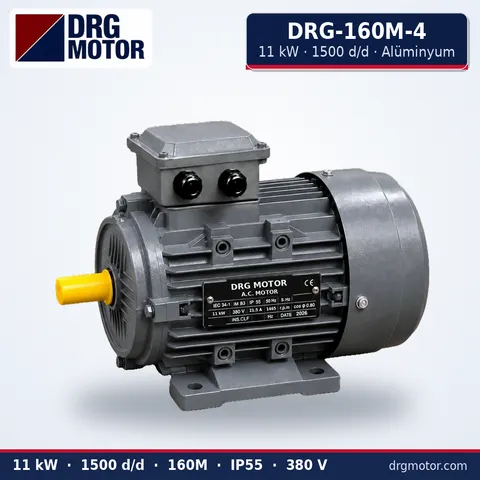
11 kW Three-Phase Motor 1500 rpm – DRG-160M-4 Aluminium
- 11 kW · 1500 rpm (4 poles)
- Aluminium frame · IEC 160M
- Shaft: 42 × 110 mm
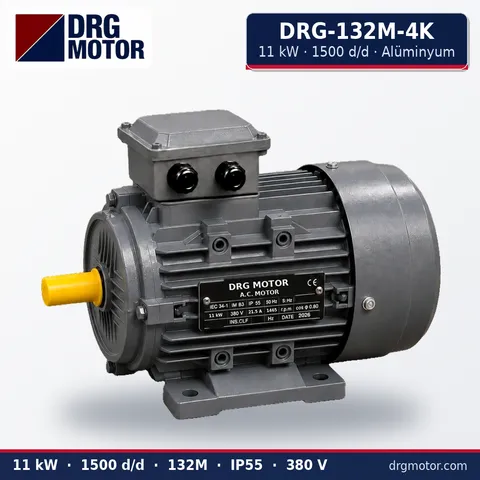
11 kW Compact Three-Phase Motor 1500 rpm – DRG-132M-4K Aluminium
- 11 kW · 1500 rpm (4 poles)
- Aluminium frame · IEC 132M
- Shaft: 38 × 80 mm