English
 Le français
 Türkçe




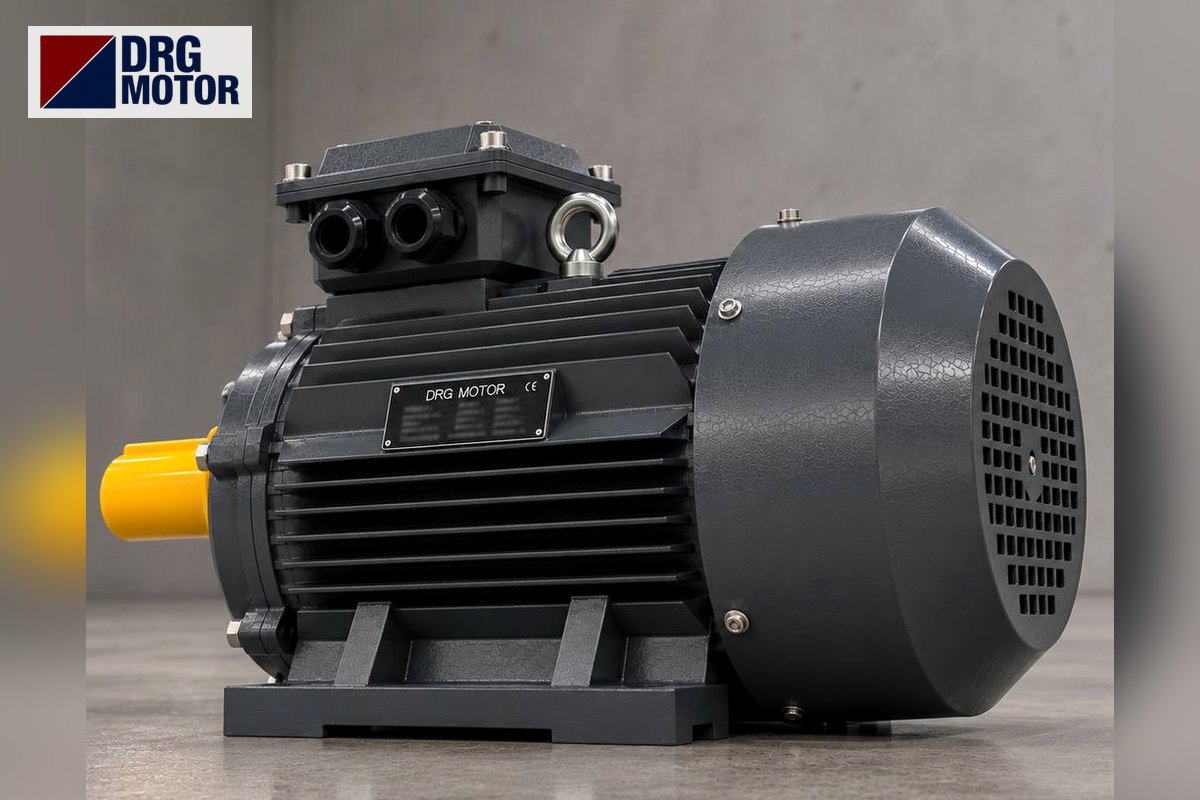

If your pump motor has burnt out, the problem is usually not the motor itself but the operating conditions that overstress it. Dry running, clogging, overload, frequent cycling and phase loss are the most common reasons a pump motor fails. Below we explain these causes and how to choose the right three-phase replacement motor.
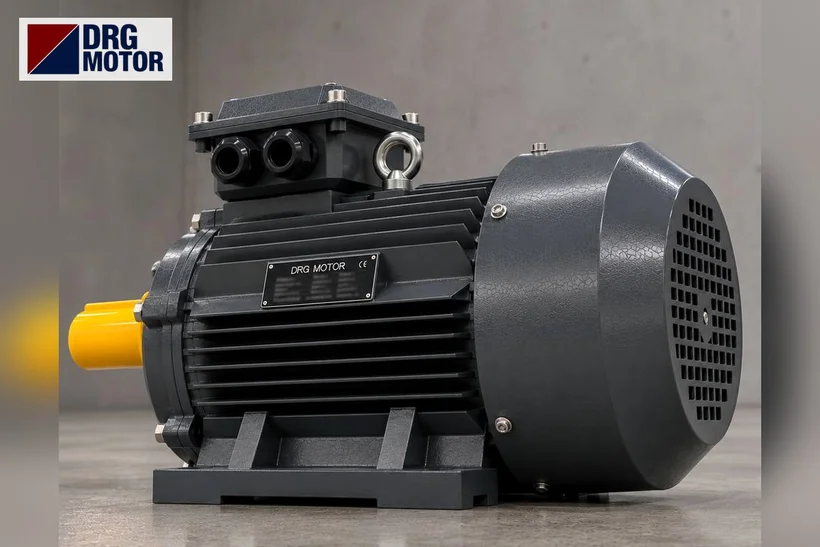
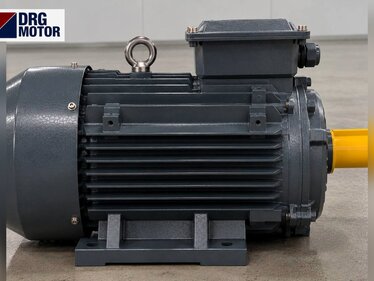
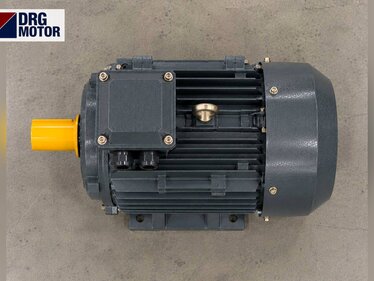
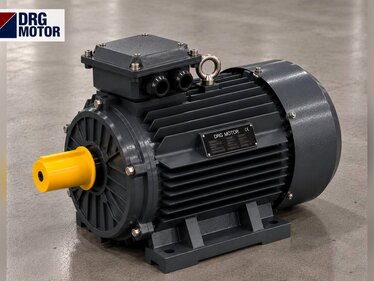
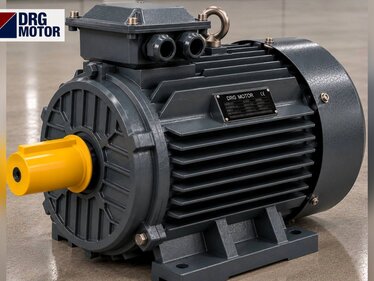
DRG Motor is a manufacturer, supplier and seller of electric motors. You can review the three-phase asynchronous motors used in pumps by power and speed in the online motor shop, and see the same motors together in the three-phase asynchronous electric motors category.
Why does a pump motor burn out?
An electric motor burns when the insulation in its windings overheats. In pump applications this overheating usually starts when the motor draws more current than normal, or when its cooling is impaired. The damage often builds up from repeated stress rather than a single event, which is why fitting a new motor without finding the cause can lead to the same failure again.
Main reasons a pump motor burns out
- Dry running: When a pump runs empty because the water runs out or suction is lost, the cooling and lubrication provided by the liquid disappear. The seal and bearings heat up, that heat reaches the motor and the winding insulation breaks down.
- Clogging: When the impeller or suction line is blocked, the motor draws excessive current while trying to turn. As the load rises, winding temperature climbs quickly.
- Overload: When flow, pressure or liquid density exceed the motor's rated power, the motor is continuously overstressed. An undersized motor falls into this situation easily.
- Frequent cycling: Especially in booster sets, if the pressure switch stops and restarts the motor at short intervals, the high current drawn at each start fatigues and heats the winding. Sudden, frequent starts wear down the insulation over time.
- Phase loss: If one phase is lost on a three-phase supply, the motor tries to run on two phases; excessive current flows through the remaining ones and the winding can burn out very quickly. A phase-protection relay is used to reduce this risk.
How to tell the motor has burnt out
A burnt motor usually shows a burnt-insulation smell, darkening in the terminal box, overheating, failure to run or a tripped fuse. A definite assessment is made by measuring winding resistance and insulation resistance; however, those measurements are a job for qualified electrical personnel.
Safety warning: Before any check or disassembly, switch off the power, verify the absence of voltage with a suitable device and have the work done only by qualified electrical personnel. Do not set values such as the insulation-resistance threshold or thermal-protection setting from memory; base them on the rated current on the motor nameplate and on the device documentation.
Click to see current electric motor prices and order nowSEE PRICES →
Choosing a new motor to replace a burnt one
The safest approach is to base the new motor on the old motor's nameplate data. Match these four essentials:
- Power (kW): Keep the kW value on the nameplate. If the motor was often overstressed, stepping up to the next standard power can be safer than running continuously overloaded.
- Speed (rpm): Pump flow and pressure depend on speed. Water pumps and booster sets mostly run on high-speed 2-pole motors (around 3000 rpm); do not change the speed class on the nameplate.
- Shaft diameter and length: Because the coupling or pump hub is selected to match the shaft, the shaft dimension (for example 24×50 mm) must be the same.
- Mounting type: The foot (B3), flange (B5/B14) or combined (B35) mounting must fit the pump body. You can review the mounting types in the B3, B5, B14 and B35 comparison article.
To verify the required power and current, use the electric motor calculator and the motor current chart; for the supply cable, use the motor cable size calculator.
2-pole (3000 rpm) DRG motors for pumps
Water pumps and booster sets most often use 2-pole motors at about 3000 rpm. The table below lists the aluminium-housing DRG models in this class; the model codes link straight to the product page. The same powers are also available with a cast-iron housing.
| Model | Power | Speed class | Shaft diameter |
|---|---|---|---|
| DRG-90L-2-AL | 2.2 kW | 3000 rpm (≈2895 rpm) | 24×50 mm |
| DRG-100L-2-AL | 3 kW | 3000 rpm (≈2895 rpm) | 28×60 mm |
| DRG-112M-2-AL | 4 kW | 3000 rpm (≈2905 rpm) | 28×60 mm |
| DRG-132S1-2-AL | 5.5 kW | 3000 rpm (≈2930 rpm) | 38×80 mm |
Torque can be estimated with T = 9550 · P / n: 2-pole motors have high speed and low torque, which matches the character of centrifugal pumps.
Aluminium or cast-iron housing?
2-pole pump motors are offered with both aluminium and cast-iron housings, and their electrical values are the same. The aluminium housing is light and easy to carry and mount, which is practical for portable pump sets. The cast-iron housing is more robust and preferred in fixed installations with high vibration. You can see the aluminium options together on the aluminium-housing electric motors page.
Send a photo of your current motor nameplate and we will find the suitable DRG model together.Send on WhatsApp
Once you have identified the right model, you can compare all power and speed options through the shop.
See the 2-pole three-phase motor models suitable for your pump and current prices in the shopSEE PRICES
Frequently asked questions
Should a burnt pump motor be repaired or replaced?
A motor with a burnt winding can be rewound, but after rewinding its characteristics may differ from the original. If the cause of the burn-out is not removed, the new motor meets the same fate. The decision should be based on the motor's power, age and the root cause of the fault.
What speed should a pump motor be?
Most water pumps and booster sets run on 2-pole motors at about 3000 rpm. For the exact value, use the speed on the old motor's nameplate; if the speed changes, the pump's flow and pressure change too.
Why does dry running burn out the motor?
In a pump the liquid provides both cooling and lubrication. When the water is cut off, the seal and bearings heat up and load and temperature rise; this heat can reach the winding and break down its insulation. Using a level or flow protection against dry running reduces this risk.
How quickly does phase loss burn out a motor?
Under load, when a three-phase motor loses one phase it draws very high current through the remaining windings and can be damaged within minutes. That is why a phase-protection / phase-sequence relay and correctly set overcurrent protection are important.
Electric Motors Related to This Topic — Models and Current Prices
Suitability is not decided by power alone: compare the speed, voltage, mounting, shaft and fixing dimensions of your machine with the product data; if unsure, send us the nameplate of your current motor.
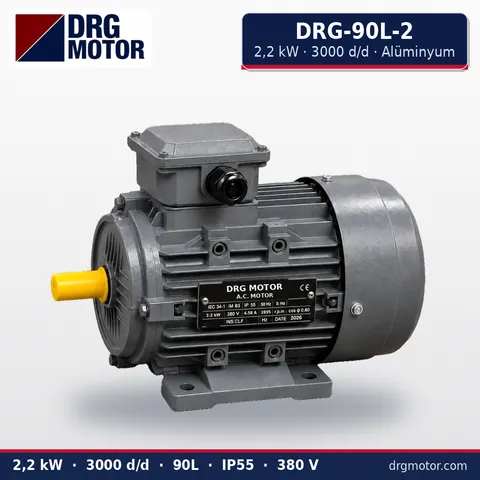
2.2 kW Three-Phase Motor 3000 rpm – DRG-90L-2 Aluminium
- 2.2 kW · 3000 rpm (2 poles)
- Aluminium frame · IEC 90L
- Shaft: 24 × 50 mm
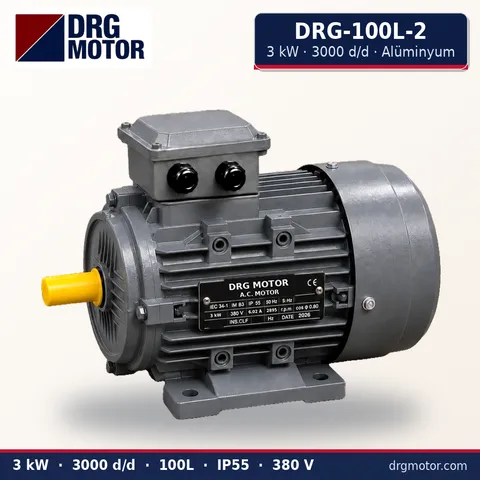
3 kW Three-Phase Motor 3000 rpm – DRG-100L-2 Aluminium
- 3 kW · 3000 rpm (2 poles)
- Aluminium frame · IEC 100L
- Shaft: 28 × 60 mm
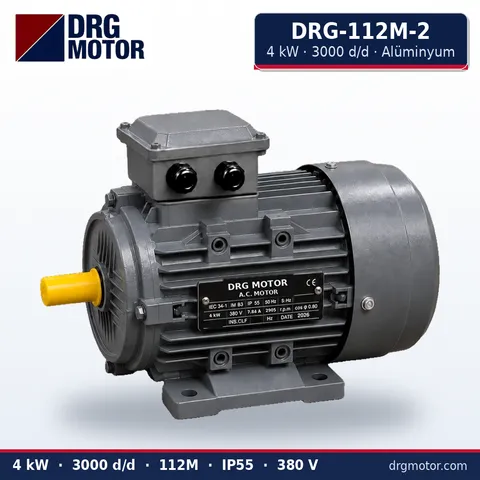
4 kW Three-Phase Motor 3000 rpm – DRG-112M-2 Aluminium
- 4 kW · 3000 rpm (2 poles)
- Aluminium frame · IEC 112M
- Shaft: 28 × 60 mm
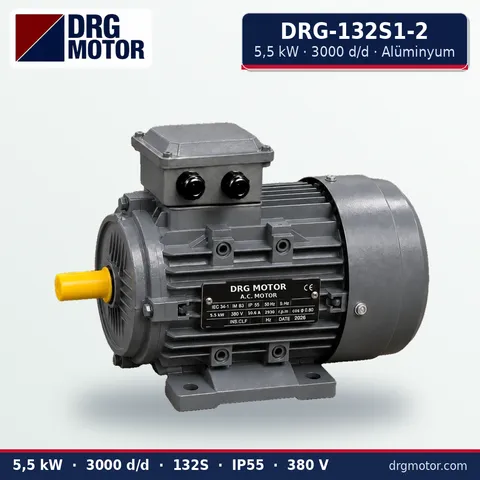
5.5 kW Three-Phase Motor 3000 rpm – DRG-132S1-2 Aluminium
- 5.5 kW · 3000 rpm (2 poles)
- Aluminium frame · IEC 132S
- Shaft: 38 × 80 mm
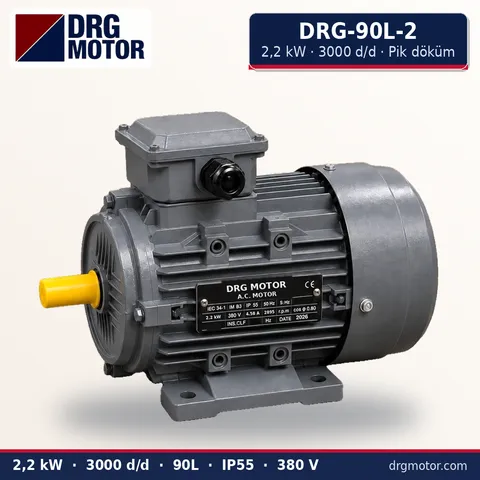
2.2 kW Three-Phase Motor 3000 rpm – DRG-90L-2 Cast Iron
- 2.2 kW · 3000 rpm (2 poles)
- Cast iron frame · IEC 90L
- Shaft: 24 × 50 mm
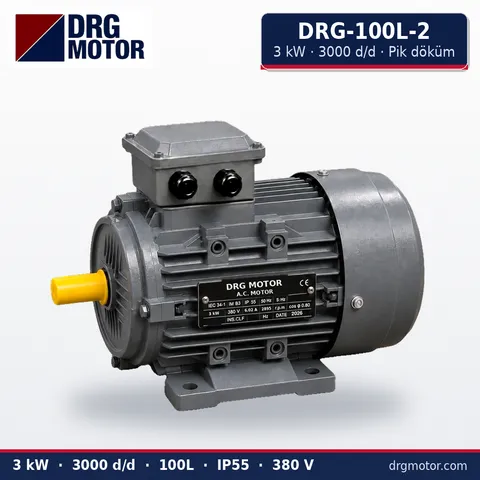
3 kW Three-Phase Motor 3000 rpm – DRG-100L-2 Cast Iron
- 3 kW · 3000 rpm (2 poles)
- Cast iron frame · IEC 100L
- Shaft: 28 × 60 mm