English
 Le français
 Türkçe




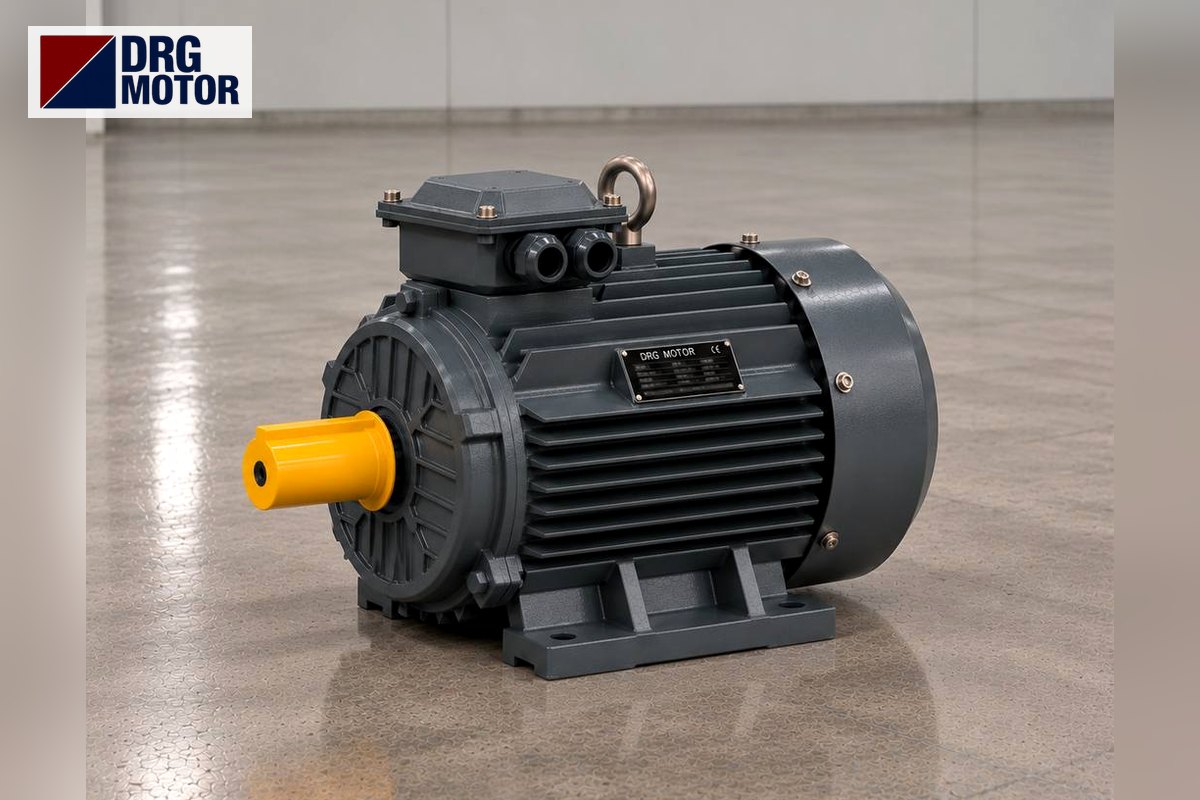

The cooling fan (impeller) on an electric motor is a bladed disc fixed to the shaft at the rear (non-drive) end. As the motor runs it continuously blows air over the housing, carrying away the heat that builds up in the windings and frame. In short, the fan is the part that lets a three-phase electric motor cool itself.
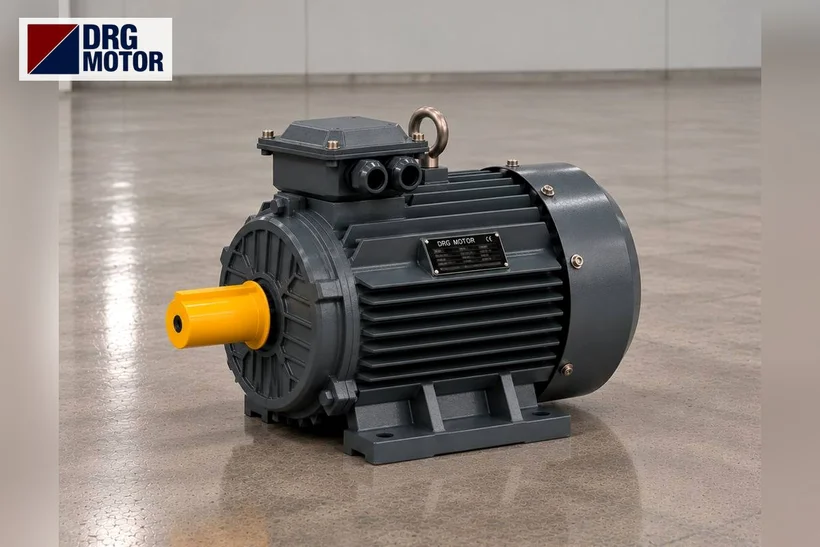
DRG Motor is a manufacturer, supplier and seller of electric motors. Every standard three-phase asynchronous motor uses this self-cooling design; you can browse the models by power and speed in the online motor shop and in the three-phase asynchronous electric motors category.
What is the cooling fan (impeller) and where is it?
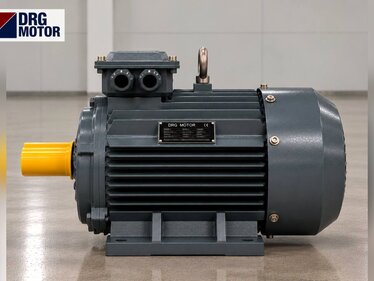
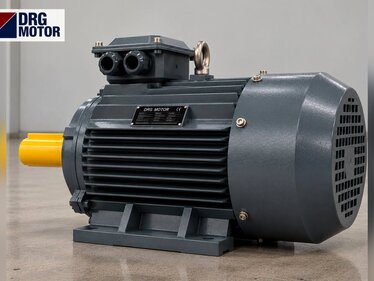
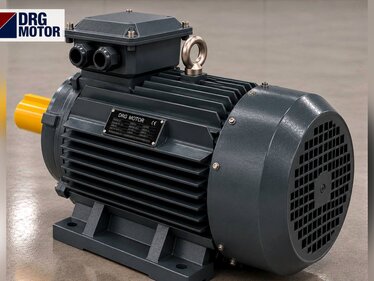
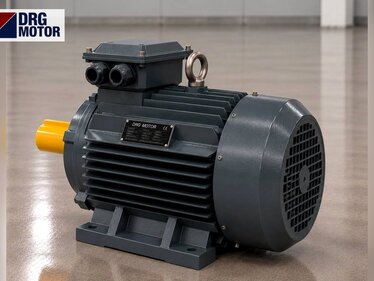
The fan is a bladed plastic or metal part pressed onto the rear end of the motor shaft, covered by a perforated fan cowl. As the shaft turns, the fan turns at the same speed, drawing air through the holes in the back of the cowl and blowing it forward along the motor frame. The cowl both directs the air and guards against fingers or foreign objects reaching the spinning fan.
Because the fan sits on the motor’s own shaft, it needs no separate power source or motor. Cooling runs on its own whenever the motor runs, and stops when the motor stops.
How does the fan cool the motor? Self-cooling (IC411)
The cooling method of standard surface-cooled motors is defined as IC411: the shaft-mounted fan draws in ambient air and passes it directly over the outer frame of the motor. There is no air exchange between the inside and outside of the motor; heat is conducted to the frame surface and removed by the external airflow. That is why the frame is fully enclosed (IP55, dust and water protected) yet still cools thanks to the fan.
Most of the heat is generated in the windings and rotor. It first passes into the iron/aluminium of the frame and is then carried away by the airflow the fan produces. The better the fan blows, the better the frame cools and the safer the winding temperature stays.
Airflow and the role of the cooling fins
Thin cooling fins run the length of the motor frame, multiplying the surface area in contact with the air. The air blown by the fan flows through these channels and carries heat away far more effectively. Without the fins, the same fan would leave the motor running much hotter.
The frame material also affects this heat transfer; the fast-conducting aluminium housing properties help cooling at small and medium ratings. For uninterrupted airflow, the fin gaps and the cowl holes must stay clear.
Click to see current electric motor prices and order nowSEE PRICES →
How does speed affect cooling?
Because the fan is on the motor shaft, the amount of air it moves depends directly on motor speed. On a high-speed motor (2-pole, ~3000 rpm) the fan spins fast and delivers plenty of air, so cooling is strong. As speed drops (4-pole ~1500 rpm, 6-pole ~1000 rpm) the airflow falls too, meaning a low-speed motor cools less with the same fan. The table compares DRG models of the same 4 kW power in different speed classes:
| Model | Poles / Speed | Nameplate speed | Fan tip speed |
|---|---|---|---|
| DRG-112M-2 | 2-pole / 3000 rpm | 2905 rpm | scales with speed |
| DRG-112M-4 | 4-pole / 1500 rpm | 1450 rpm | scales with speed |
| DRG-132M1-6 | 6-pole / 1000 rpm | 968 rpm | scales with speed |
This is why motors whose speed is cut very low by a variable frequency drive need attention: while the motor turns slowly its own fan cannot move enough air, yet if the load torque continues the motor may overheat. Such applications may require a separately powered external (forced) cooling fan that runs independently of shaft speed. Just tell us your speed range and we can match a suitable model.
Why does a dirty or blocked fan cowl overheat the motor?
Since cooling depends entirely on airflow, blocking the cowl holes leads straight to overheating. Dust, chips, cotton/fibre, an oil-dust mix or paint closing the grille stops the fan drawing enough air; less air passes over the frame and the temperature climbs. Dirt or mud filling the gaps between the fins has the same effect.
- Visible dust/fibre build-up on the cowl grille
- Fin gaps clogged with dirt, oil or paint
- A cracked or broken fan; a missing or wrongly fitted cowl
- The motor set too close to a wall or panel, choking the rear air inlet
For these reasons the frame runs hotter than expected. We cover the normal limits and when they count as abnormal in the electric motor normal operating temperature article.
Fan and cooling maintenance: what to do
Protecting cooling is largely a matter of cleanliness and layout. The following steps help keep the motor at a safe temperature:
- Keep the cowl holes and frame fins clean at regular intervals.
- Leave enough space behind the motor so the fan can draw air.
- If the fan is cracked or broken, have an authorised service check it before running.
- For continuous very-low-speed duty, assess the need for an external fan up front.
Before any cleaning or inspection, switch off and lock out the power, verify it is de-energised and have qualified electrical/maintenance staff carry out the work. Never touch a spinning fan by hand.
Send a photo of your current motor nameplate and we will find the suitable DRG model together.Send on WhatsApp
To choose the DRG models with the right speed and cooling for your application and to see current pricesSEE PRICES
Frequently asked questions
What does the fan at the back of an electric motor do?
It turns on the shaft and blows air over the frame, removing the heat generated in the windings. This lets the motor cool itself, with no separate cooling motor needed.
What happens if the fan cowl gets blocked?
Airflow drops and the frame and winding temperatures rise. Running like this for long periods ages the insulation. Keeping the cowl grille and fins clean is key to maintaining cooling.
Why does a motor heat up at low speed?
The fan slows down too and moves less air. With load torque still present, weaker cooling can overheat the motor. Where a wide speed range is needed, an external (forced) fan independent of shaft speed is considered.
Does every motor need an external cooling fan?
No. In standard fixed- or high-speed duty the motor’s own fan is enough. An external fan becomes relevant mainly when running continuously under load at very low speed on a drive.
Electric Motors Related to This Topic — Models and Current Prices
Suitability is not decided by power alone: compare the speed, voltage, mounting, shaft and fixing dimensions of your machine with the product data; if unsure, send us the nameplate of your current motor.

4 kW Three-Phase Motor 1500 rpm – DRG-112M-4 Aluminium
- 4 kW · 1500 rpm (4 poles)
- Aluminium frame · IEC 112M
- Shaft: 28 × 60 mm
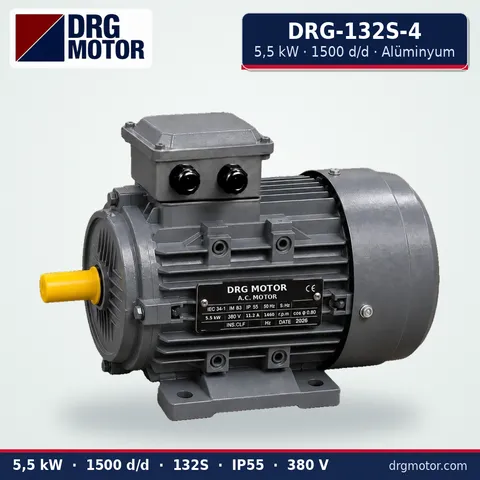
5.5 kW Three-Phase Motor 1500 rpm – DRG-132S-4 Aluminium
- 5.5 kW · 1500 rpm (4 poles)
- Aluminium frame · IEC 132S
- Shaft: 38 × 80 mm
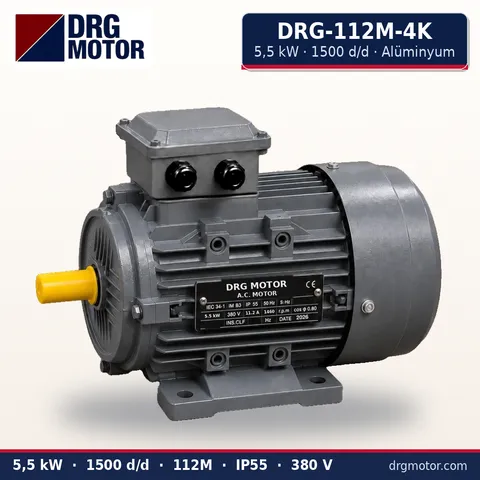
5.5 kW Compact Three-Phase Motor 1500 rpm – DRG-112M-4K Aluminium
- 5.5 kW · 1500 rpm (4 poles)
- Aluminium frame · IEC 112M
- Shaft: 28 × 60 mm
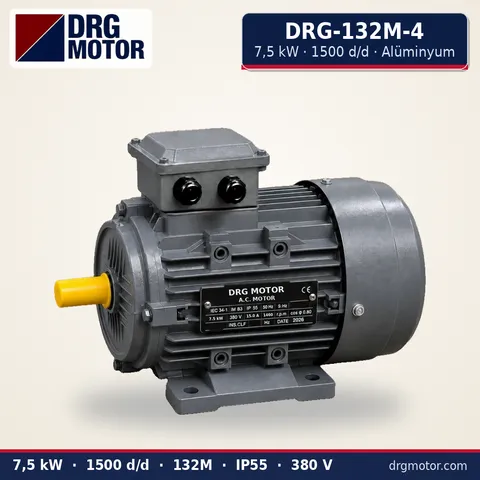
7.5 kW Three-Phase Motor 1500 rpm – DRG-132M-4 Aluminium
- 7.5 kW · 1500 rpm (4 poles)
- Aluminium frame · IEC 132M
- Shaft: 38 × 80 mm
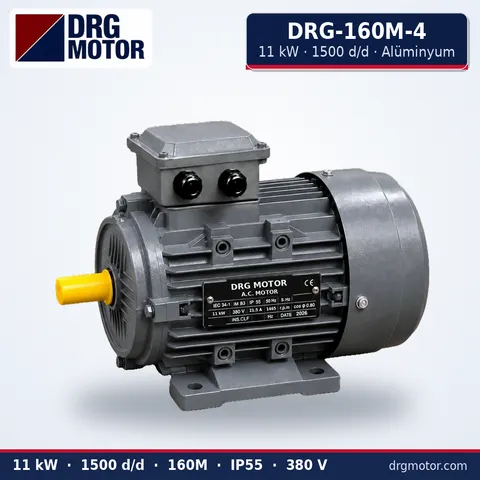
11 kW Three-Phase Motor 1500 rpm – DRG-160M-4 Aluminium
- 11 kW · 1500 rpm (4 poles)
- Aluminium frame · IEC 160M
- Shaft: 42 × 110 mm
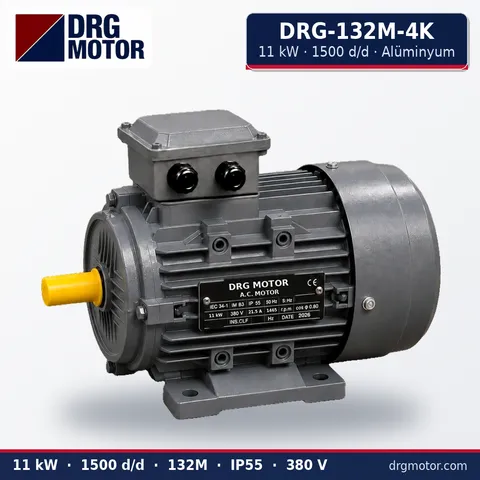
11 kW Compact Three-Phase Motor 1500 rpm – DRG-132M-4K Aluminium
- 11 kW · 1500 rpm (4 poles)
- Aluminium frame · IEC 132M
- Shaft: 38 × 80 mm