English
 Le français
 Türkçe




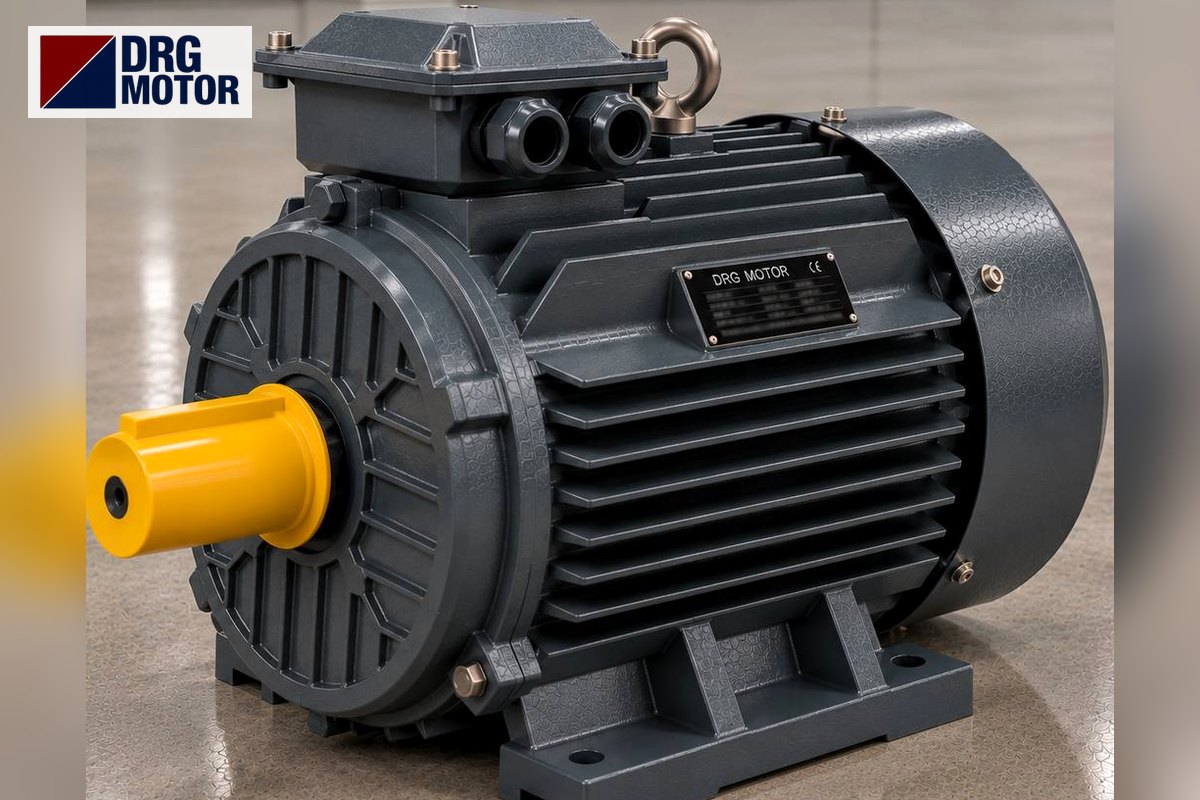

An electric motor's "normal operating temperature" is not a single figure; a healthy value is the sum of the ambient temperature and the temperature rise the motor adds on top of it. In a standard three-phase asynchronous motor with Class F insulation the safe upper limit of the insulation is about 155 °C, and under normal load the frame stays well below that. What matters is not how hot the surface feels to the touch, but whether the motor stays within its own class limit.
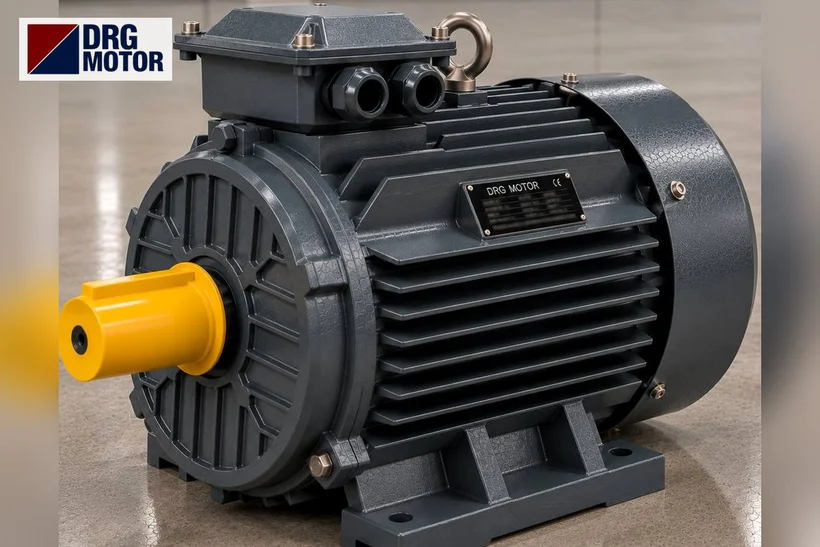
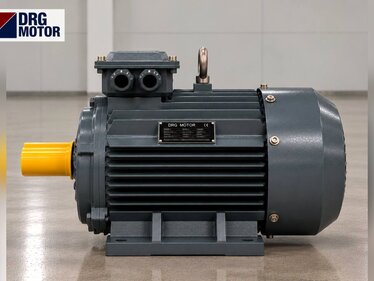
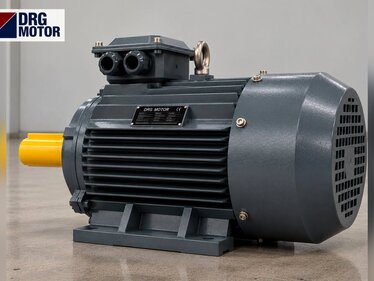
DRG Motor is a manufacturer, supplier and seller of electric motors. You can browse three-phase models of different powers and speeds in the online motor shop and see them together in the three-phase asynchronous electric motors category.
Why isn't "normal temperature" a fixed number?
As a motor converts electrical energy it releases heat, and that heat is shed to the air through the frame. The equilibrium temperature the frame reaches depends on two things: the temperature of its surroundings and the rise the motor adds on top of them. The same motor settling at 55–60 °C in a cool machine room will settle at a higher surface temperature in a hot 40 °C environment. That is why "how many degrees is normal?" is always answered together with the ambient.
Standards build this logic on a reference ambient temperature (usually 40 °C). The permitted heating of the motor is defined as the rise added on top of that reference.
Temperature rise and insulation class: what does Class F mean?
The temperature the winding insulation can withstand is set by its insulation class. Common classes and their hot-spot limits are shown below. Standard DRG three-phase motors are built with Class F insulation; at a 40 °C reference ambient this corresponds to a rise of about 105 K in the winding and a total hot-spot limit of around 155 °C.
| Insulation class | Reference ambient | Permitted rise | Hot-spot limit |
|---|---|---|---|
| B | 40 °C | 80 K | 130 °C |
| F | 40 °C | 105 K | 155 °C |
| H | 40 °C | 125 K | 180 °C |
These values are limits for the internal winding temperature; the outer frame surface you touch is always cooler than these figures. A class limit means "the insulation safely withstands up to this point", not "the motor should run at this temperature".
Click to see current electric motor prices and order nowSEE PRICES →
Touching the frame: 60–80 °C feels hot but can be normal
A very common misconception is "if I can't keep my hand on it, the motor is failing". In fact the human hand quickly reads any surface above 50 °C as "too hot". A healthy motor settled under load often has a frame in the 60–80 °C range; it is hard to hold your hand there for more than a few seconds, yet as long as the value stays within the insulation class this is not a sign of failure.
A rough practical test: if you have to pull your hand away immediately, the surface is above 60 °C — normal for most motors. If you cannot bring your hand near it at all, or you see a burnt smell or discolouration, the situation is different (see below).
How do load and speed affect temperature?
The current the motor draws rises with load, and the heat released rises with it. So the same frame can be lukewarm at light load and clearly hot at full load; both are normal. Below are a few 1500 rpm DRG aluminium models with their power and rated current at 400 V; as current rises you can see the heat load rise too.
| Model | Power | Speed | Current (400 V) |
|---|---|---|---|
| DRG-112M-4 | 4 kW | 1500 rpm | 7.95 A |
| DRG-132M-4 | 7.5 kW | 1500 rpm | 14.3 A |
| DRG-160M-4 | 11 kW | 1500 rpm | 20.4 A |
To compare the current your motor runs at, use the motor current chart tool. For how the frame material sheds heat, the aluminium vs cast iron housing article is a good guide.
Installation factors that affect heating
The same motor can settle at very different temperatures depending on the installation. Standard DRG motors have IP55 protection and are cooled by their own fan (IC411); for this cooling to work, the space in front of the fan cover must be clear. Typical factors that raise the temperature:
- A fan cover pushed against a wall or clogged with dust and dirt,
- The motor squeezed into a narrow, airless enclosure,
- Ambient temperature well above the 40 °C reference,
- Unbalanced supply voltage, or a motor sized smaller than the load actually needs.
Overheating complaints usually come not from the motor itself but from these installation conditions.
When is it abnormal? Signs of overheating
It is not the temperature itself but the symptoms accompanying it that indicate a fault. Stop and inspect the motor in these cases:
- A burnt insulation/varnish smell, or darkening or blistering of the paint,
- Temperature climbing day by day and never settling at a stable value,
- Higher than usual vibration, noise, or excessive heat at the bearing area,
- The protection relay tripping again and again.
These signs point to a problem on the load, cooling, supply or bearing side; the temperature is only the result.
Assessing the temperature safely
The frame temperature can be measured safely with a non-contact infrared thermometer. If any check is needed on the winding or terminal side, first switch off the power, verify the absence of voltage and leave the work to authorised electrical personnel. For exact thresholds such as thermal relay current or insulation resistance, refer to the motor nameplate and the device documentation; do not set these values by guesswork.
Send a photo of your current motor nameplate and we will find the suitable DRG model together.Send on WhatsApp
To choose the right DRG model by power and speed and see current pricesSEE PRICES
Frequently asked questions
Up to how many degrees does an electric motor run normally?
Giving a single number would be wrong. In a standard Class F motor the safe limit of the winding is about 155 °C; the outer frame you touch usually stays far below that, around 60–80 °C at normal load.
If I can't hold my hand on the motor, is it faulty?
Not necessarily. The human hand cannot bear a surface above 60 °C, yet this is normal for many motors. Without a burnt smell, discolouration, excessive vibration or a steadily climbing temperature, simply being "hot" does not mean a fault.
Is it normal for a motor to run hotter in summer?
Yes. Frame temperature rises with the ambient. When the surroundings go above the 40 °C reference, the surface temperature rises too; what matters is that the motor still stays within its insulation class limit.
What can I do to reduce heating?
Clear the space in front of the fan cover, remove dust, move the motor to a ventilated position and make sure the load is matched to the motor. For a motor whose power falls short, stepping up to the next power rating is usually the healthiest solution.
Electric Motors Related to This Topic — Models and Current Prices
Suitability is not decided by power alone: compare the speed, voltage, mounting, shaft and fixing dimensions of your machine with the product data; if unsure, send us the nameplate of your current motor.
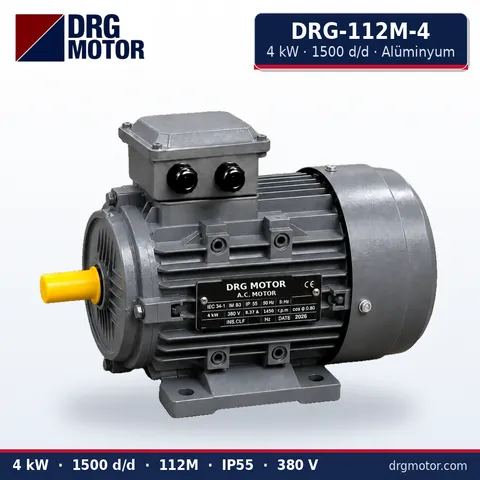
4 kW Three-Phase Motor 1500 rpm – DRG-112M-4 Aluminium
- 4 kW · 1500 rpm (4 poles)
- Aluminium frame · IEC 112M
- Shaft: 28 × 60 mm
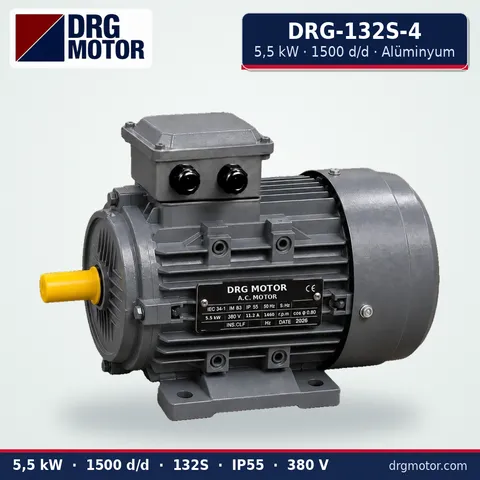
5.5 kW Three-Phase Motor 1500 rpm – DRG-132S-4 Aluminium
- 5.5 kW · 1500 rpm (4 poles)
- Aluminium frame · IEC 132S
- Shaft: 38 × 80 mm
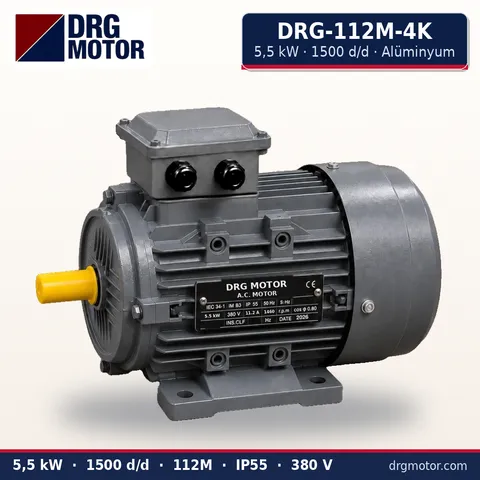
5.5 kW Compact Three-Phase Motor 1500 rpm – DRG-112M-4K Aluminium
- 5.5 kW · 1500 rpm (4 poles)
- Aluminium frame · IEC 112M
- Shaft: 28 × 60 mm
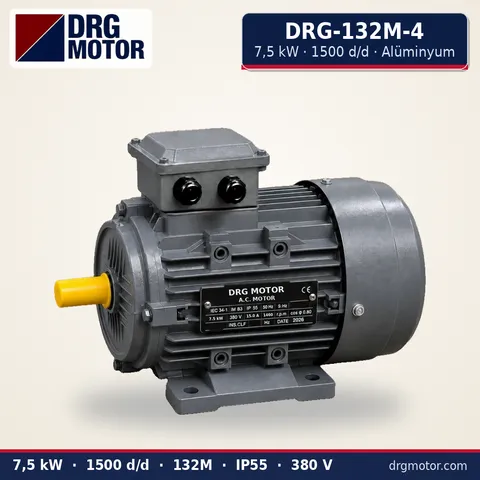
7.5 kW Three-Phase Motor 1500 rpm – DRG-132M-4 Aluminium
- 7.5 kW · 1500 rpm (4 poles)
- Aluminium frame · IEC 132M
- Shaft: 38 × 80 mm
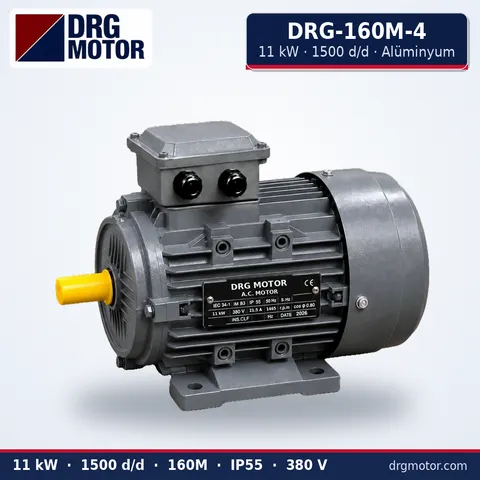
11 kW Three-Phase Motor 1500 rpm – DRG-160M-4 Aluminium
- 11 kW · 1500 rpm (4 poles)
- Aluminium frame · IEC 160M
- Shaft: 42 × 110 mm
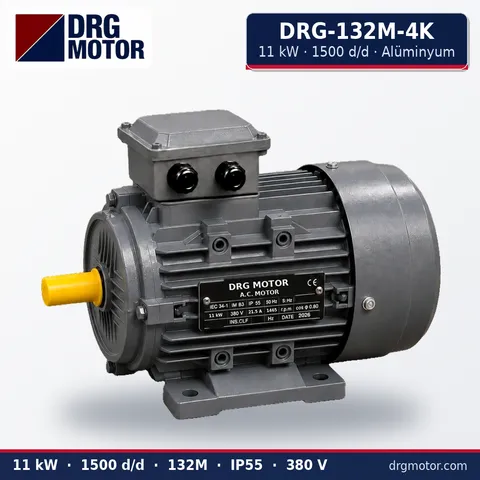
11 kW Compact Three-Phase Motor 1500 rpm – DRG-132M-4K Aluminium
- 11 kW · 1500 rpm (4 poles)
- Aluminium frame · IEC 132M
- Shaft: 38 × 80 mm