 English
 Le français
 Türkçe





kWh/ton is found by dividing the total energy (kWh) drawn in a period by the tonnes produced in that same period: kWh/ton = total kWh ÷ tonnes produced. It answers "how many kilowatt-hours did the motor spend to make one tonne of product" — not a single meter reading, but the energy accumulated over a period set against that period's output.
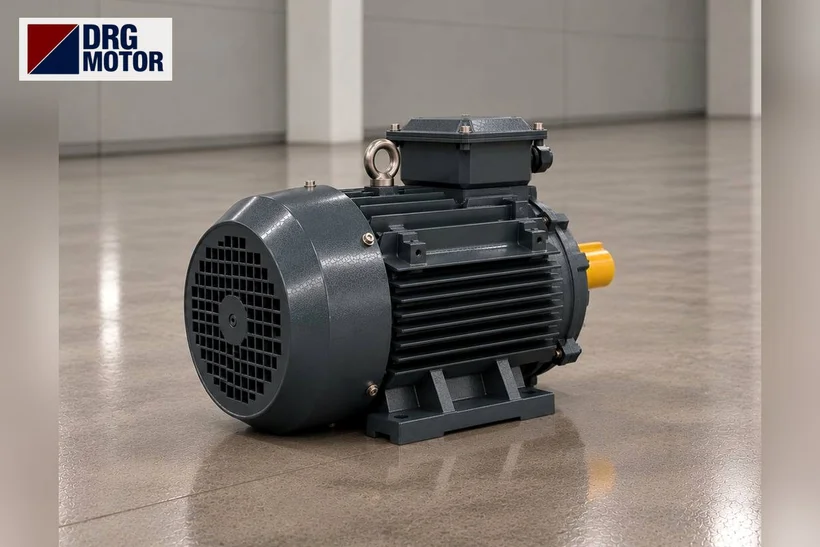
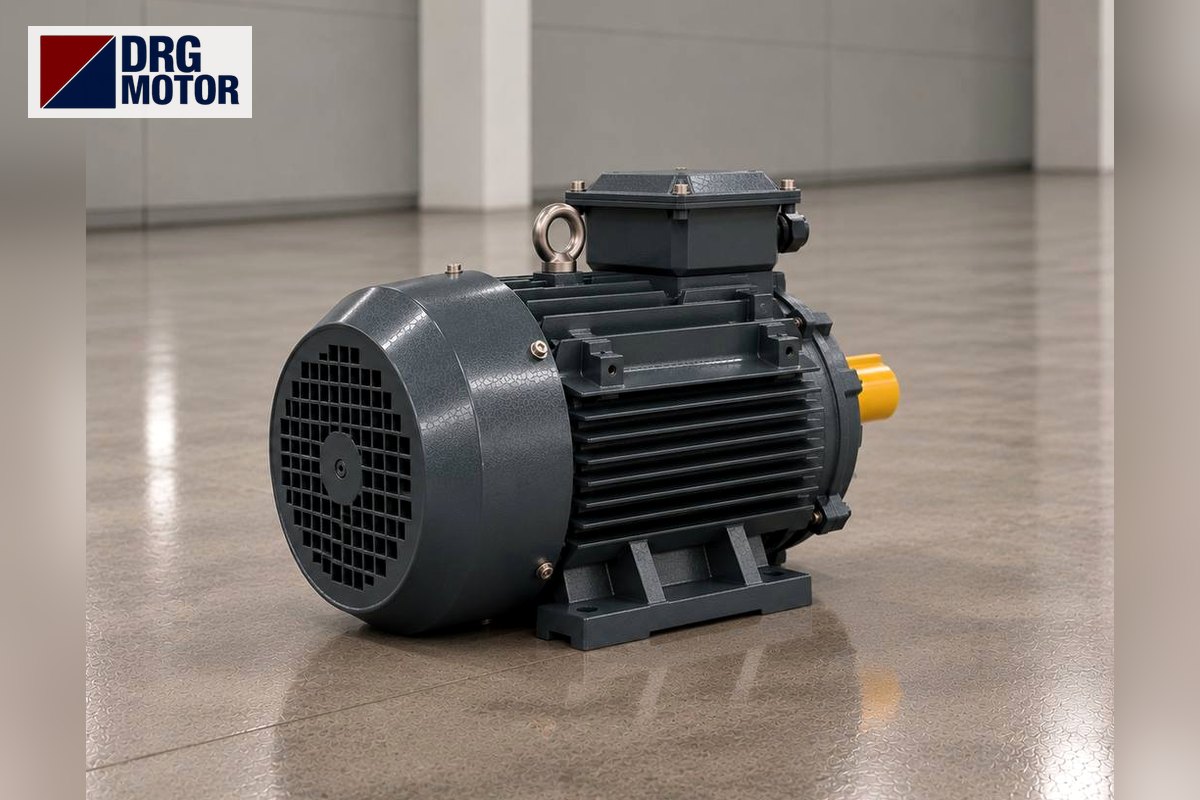
DRG Motor is a manufacturer, supplier and seller of electric motors. It is based in İzmir and ships quickly across all of Türkiye, that province included. Once you have your kWh/ton figure, compare the right power and speed in the online electric motor shop and see the same range together in the three-phase asynchronous electric motors category.
What is kWh/ton, and why this unit?
A motor burning 9,000 kWh a month tells you nothing on its own. What matters is how much work came out of that energy. Unit consumption — energy per unit of output — measures exactly that. If your output is in tonnes you use kWh/ton, in cubic metres kWh/m³, in pieces kWh/piece; the logic is identical. The strength of this unit is that it does not mislead when production changes. Total consumption may rise simply because you produced more, but if energy per tonne falls, the line ran more economically. Raw kWh cannot make that distinction.
The formula and the two numbers you need
The formula is short: unit consumption = total kWh ÷ output. It needs two inputs. First, the period's total kWh, taken from a meter or power analyser. Second, the output of the same period, taken from the production report. Both numbers must cover exactly the same time window. Mixing a per-shift meter reading with a month-end production total will never tally. The cleanest method is to note the meter value at the start and end of the period, take the difference, and divide it by the output between those two dates.
How do you read total kWh?
Reading energy as an accumulated value is more reliable than instantaneous power. If a kWh meter or power analyser is dedicated to the motor in the panel, take the start and end values and write down the difference. If not, you must separate the motor's share from a shared meter; the best fix is to add a measurement that counts only the motor's own supply. If you work from instantaneous power (kW), get energy by multiplying by time: kWh = kW × hours. When computing three-phase power, do not read current on one phase and generalise; voltage and power factor are needed together. For a rough first check the motor current table helps, but the meter value is what verifies.
Click to see current electric motor prices and order nowSEE PRICES →
How do you count output?
The tonnes in the denominator deserve as much care as the kWh. Fix which stage the tonnes belong to: raw material entering the line, or packed finished product? The two give different results, and if you do not keep the same definition from period to period the comparison breaks. Scrap, moisture weight and changes in work-in-progress stock also move the figure. In a small workshop with no production report, multiplying the number of batches run during the period by the batch weight is a practical route. What matters is writing the definition down and staying faithful to it at every measurement.
A step-by-step worked example
Take the motor on a mixing line. The meter read 120,400 kWh at the start of the period and 129,400 kWh at the end; the difference is 9,000 kWh. Over the same period the line produced 600 tonnes. Unit consumption: 9,000 ÷ 600 = 15 kWh/ton. If the next month, after a motor change and tidied-up operation, 600 tonnes were made on 8,100 kWh, the new figure is 13.5 kWh/ton. Because both periods produced 600 tonnes, you can compare that drop directly. Had the output differed, only kWh/ton — not raw kWh — would be meaningful.
| Step | Value | Unit | Note |
|---|---|---|---|
| End-of-period meter | 129,400 | kWh | Read at period end |
| Start-of-period meter | 120,400 | kWh | Read at period start |
| Total consumption | 9,000 | kWh | Difference of the two |
| Output | 600 | tonnes | Made in the same period |
| Unit consumption | 15 | kWh/ton | 9,000 ÷ 600 |
A reference with DRG three-phase asynchronous motors
When you set up the calculation, your reference point is the motor nameplate: power, speed, frame and voltage. The kW on the plate is the mechanical power delivered at the shaft; the real energy drawn from the grid is measured as above. DRG's aluminium-frame three-phase asynchronous range covers common ratings in the 1500 rpm class and gives the nominal reference values you compare your readings against:
| Model | Power (kW) | Speed (rpm) | Voltage |
|---|---|---|---|
| DRG-90L-4-AL | 1.5 | 1500 | 230/400 V |
| DRG-112M-4-AL | 4 | 1500 | 400/690 V |
| DRG-132S-4-AL | 5.5 | 1500 | 400/690 V |
| DRG-132M-4-AL | 7.5 | 1500 | 400/690 V |
| DRG-160M-4-AL | 11 | 1500 | 400/690 V |
At order time, the soundest path is to match the current motor's nameplate to these values. You can browse models by power and speed in the electric motor shop.
Common mistakes
The most common error is mixing different time windows: a table dividing one week's kWh by one month's output is wrong from the start. The second is deciding on a single day's figure; if the line ran at half capacity that day the result does not represent the plant, and at least a few weeks of logging is needed. The third is changing the definition of the tonnes in the denominator from one time to the next. The fourth is ignoring the time the motor idles; in most plants the biggest gain comes not from a new motor but from cutting needless idle running. Measuring inside the panel may require work under power; let a qualified electrician do it, cut the power wherever possible and confirm it is dead.
To pick a three-phase motor sized to your line's kWh/ton figure, browse the modelsSEE PRICES
Send a photo of your current motor nameplate and we will find the suitable DRG model together.Send on WhatsApp
Frequently asked questions
What is the difference between kWh/ton and total kWh?
Total kWh is all the energy burned in the period. kWh/ton divides that by output, giving a fair comparison even when the production volume changes. Base decisions on unit consumption.
What if my output is not in tonnes?
The logic is the same. If you make cubic metres use kWh/m³, if you make pieces use kWh/piece. Just divide the total energy by that period's output.
What period should I use?
At least a few weeks covering shift, raw-material and seasonal variation is sound. A single day misleads. For a before-and-after comparison the two periods' conditions should be as alike as possible.
Can I use the nameplate kW instead of kWh/ton?
No. The nameplate kW is the power the motor can deliver, not the energy it actually draws. For kWh/ton use the real consumption read from the meter.
Electric Motors Related to This Topic — Models and Current Prices
Suitability is not decided by power alone: compare the speed, voltage, mounting, shaft and fixing dimensions of your machine with the product data; if unsure, send us the nameplate of your current motor.

4 kW Three-Phase Motor 1500 rpm – DRG-112M-4 Aluminium
- 4 kW · 1500 rpm (4 poles)
- Aluminium frame · IEC 112M
- Shaft: 28 × 60 mm

5.5 kW Three-Phase Motor 1500 rpm – DRG-132S-4 Aluminium
- 5.5 kW · 1500 rpm (4 poles)
- Aluminium frame · IEC 132S
- Shaft: 38 × 80 mm

7.5 kW Three-Phase Motor 1500 rpm – DRG-132M-4 Aluminium
- 7.5 kW · 1500 rpm (4 poles)
- Aluminium frame · IEC 132M
- Shaft: 38 × 80 mm

11 kW Three-Phase Motor 1500 rpm – DRG-160M-4 Aluminium
- 11 kW · 1500 rpm (4 poles)
- Aluminium frame · IEC 160M
- Shaft: 42 × 110 mm

1.5 kW Three-Phase Motor 1500 rpm – DRG-90L-4 Aluminium
- 1.5 kW · 1500 rpm (4 poles)
- Aluminium frame · IEC 90L
- Shaft: 24 × 50 mm





