 English
 Le français
 Türkçe




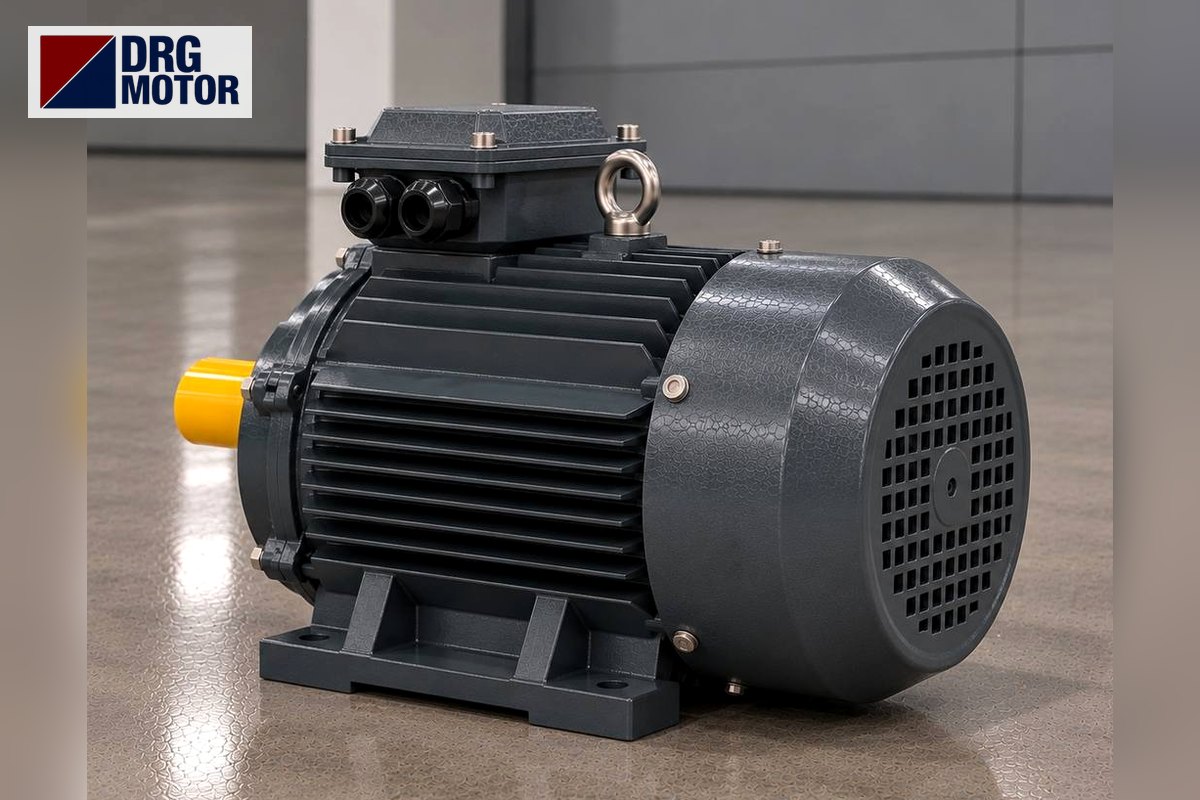

kWh/m³ is the electrical energy spent to move each cubic metre of liquid; it is the most honest way to compare pumping setups. The maths is one line: take the energy read from the meter (kWh) over a period and divide it by the volume pumped (m³) in the same period. The smaller the result, the less energy that setup uses to move the same water.
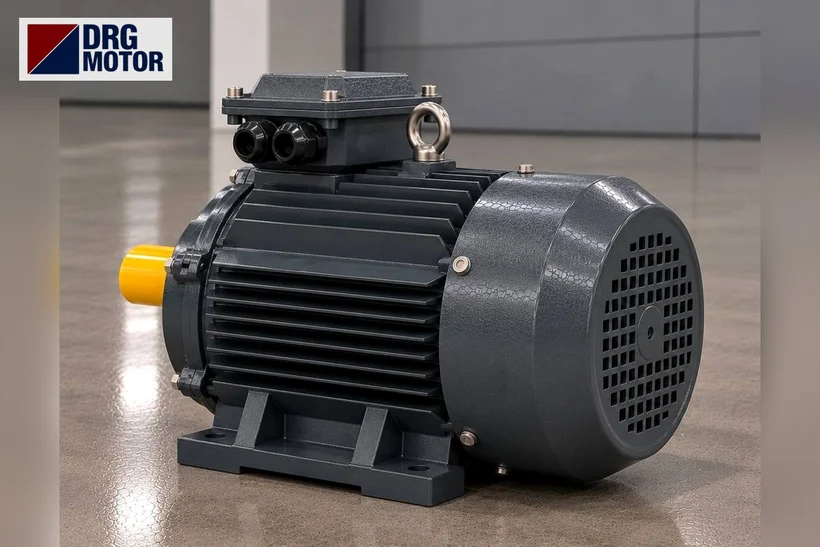
DRG Motor is a manufacturer, supplier and seller of electric motors. It is based in İzmir and ships quickly across all of Türkiye, that province included. Once you have fixed the power your pump setup needs, you can pick models by power and speed in the online electric motor shop and see the same products together in the three-phase asynchronous electric motors category.
What does the kWh/m³ unit tell you?
Picture a pump station. An electric motor turns inside it, the motor drives the pump, and the pump lifts water to a given height. The question is not "how many kW is the motor?" but "how many kilowatt-hours does each cubic metre I pump cost me?" That ratio is kWh/m³: energy spent divided by work done, i.e. the volume moved. It is also called specific energy. Two different setups can pump from the same well into the same tank, yet one may spend fewer kilowatt-hours per cubic metre. kWh/m³ makes exactly that difference visible.
Why isn't kW enough? Shaft power (kW) tells you how "strong" the setup is, not how economically it runs. A small electric motor can run long and move a lot of water; a large one can do the same job in less time. What drives the electricity bill is the total kilowatt-hours spent. kWh/m³ folds power and time into a single meaningful number.
How is kWh/m³ calculated?
You need two quantities: the electrical energy read from the meter at the panel (kWh) over a period, and the volume pumped in the same period (m³), read from a flow meter or from the tank level.
The formula is:
kWh/m³ = Energy spent (kWh) ÷ Volume pumped (m³)
For steady running you can write the same thing as average power drawn (kW) divided by flow (m³/hour). For instance, a setup drawing 4 kW on average and pumping 40 m³ in one hour has a specific energy of 4 ÷ 40 = 0.1 kWh/m³. The longer the measurement window (a full day, say), the more start-stop and varying-flow effects even out; a single instant reading misleads.
Click to see current electric motor prices and order nowSEE PRICES →
A worked comparison
The table below uses purely illustrative figures to show how specific energy is compared; take your real values from your own meter and flow meter.
| Scenario | Power drawn | Flow | kWh/m³ |
|---|---|---|---|
| Setup A | 4 kW | 40 m³/hour | 0.100 |
| Setup B | 5 kW | 40 m³/hour | 0.125 |
| Setup C | 4 kW | 32 m³/hour | 0.125 |
In all three the job looks the same, yet Setup A moves each cubic metre with less energy. B draws more power, while C puts the same power to less flow; both land on the same specific energy. When you compare pumping cost, the number to watch is this last column, not the shaft power.
What to watch when comparing cost
kWh/m³ is meaningful only when compared for the same job. The rules for putting two setups on equal footing:
- Same head (H). You cannot line up a pump lifting to 20 metres against one lifting to 40 metres on kWh/m³; as height rises, energy per cubic metre naturally rises too.
- Same flow range (Q). Running a pump far below or above its design flow distorts the specific energy.
- Same liquid. A dense or viscous liquid needs more energy per cubic metre than clean water.
- Same measurement window. Measure both setups over a window of equal length, ideally covering whole cycles.
Fix these four conditions and the kWh/m³ gap maps straight onto the gap in running cost. As a rough frame, annual cost = kWh/m³ × annual volume pumped × unit energy rate; you fill in the figures with your own tariff.
The electric motor's share in a pump setup
Specific energy is set by the pump curve, pipe losses and the whole setup; the electric motor is one link in that chain. On the motor side, the most practical choices that affect kWh/m³ are the right power and the right speed. If the pump wants a 1500 rpm class shaft, a 4-pole three-phase asynchronous motor is the typical pick. Here is a slice of DRG's 1500 rpm aluminium-frame range:
| Model | Power | Synchronous speed | Voltage |
|---|---|---|---|
| DRG-90L-4 | 1.5 kW | 1500 rpm | 230/400 V (Δ/Y) |
| DRG-112M-4 | 4 kW | 1500 rpm | 400/690 V (Δ/Y) |
| DRG-132S-4 | 5.5 kW | 1500 rpm | 400/690 V (Δ/Y) |
| DRG-132M-4 | 7.5 kW | 1500 rpm | 400/690 V (Δ/Y) |
| DRG-160M-4 | 11 kW | 1500 rpm | 400/690 V (Δ/Y) |
Match the motor to the power and speed on your pump's nameplate. Choosing an oversized motor does not improve energy per cubic metre, because it runs at low load; more often it makes things worse. Pick a model by power and speed in the online shop.
Common mistakes
- Taking shaft power (kW) for specific energy. kW is a capacity; kWh/m³ is the outcome.
- Deciding from a single instant reading. Flow varies through the day; you need an average.
- Comparing two setups at different heads in the same table.
- Running the pump far from its design point and then blaming the motor.
Choose a three-phase motor matched to your pump's power and speedSEE PRICES
Photograph the nameplate of your pump or your existing motor and send it to us; we will settle on the suitable DRG model together, by power, speed and frame size.
Send a photo of your current motor nameplate and we will find the suitable DRG model together.Send on WhatsApp
Frequently asked questions
Is a lower kWh/m³ always better?
For the same job (same head, same flow, same liquid), yes: a lower kWh/m³ means less energy per cubic metre. When jobs differ, the number alone is not enough; you must level the conditions first.
What do I need to measure kWh/m³?
An electricity meter at the panel (kWh reading) and a flow meter or tank-level difference that gives the volume pumped. Read both over the same period and divide.
If I fit a bigger motor, will specific energy drop?
Usually not. A motor larger than the pump needs runs at low load and does not improve energy per cubic metre. The right move is to match power and speed to the pump's design point.
Which motor speed should I choose?
The pump decides. If the pump wants a 1450–1500 rpm input, a 4-pole motor fits; if it wants a higher speed, a 2-pole three-phase motor. Aim for the speed closest to the design point on the pump curve.
Electric Motors Related to This Topic — Models and Current Prices
Suitability is not decided by power alone: compare the speed, voltage, mounting, shaft and fixing dimensions of your machine with the product data; if unsure, send us the nameplate of your current motor.

1.5 kW Three-Phase Motor 1500 rpm – DRG-90L-4 Aluminium
- 1.5 kW · 1500 rpm (4 poles)
- Aluminium frame · IEC 90L
- Shaft: 24 × 50 mm

4 kW Three-Phase Motor 1500 rpm – DRG-112M-4 Aluminium
- 4 kW · 1500 rpm (4 poles)
- Aluminium frame · IEC 112M
- Shaft: 28 × 60 mm

5.5 kW Three-Phase Motor 1500 rpm – DRG-132S-4 Aluminium
- 5.5 kW · 1500 rpm (4 poles)
- Aluminium frame · IEC 132S
- Shaft: 38 × 80 mm

7.5 kW Three-Phase Motor 1500 rpm – DRG-132M-4 Aluminium
- 7.5 kW · 1500 rpm (4 poles)
- Aluminium frame · IEC 132M
- Shaft: 38 × 80 mm

11 kW Three-Phase Motor 1500 rpm – DRG-160M-4 Aluminium
- 11 kW · 1500 rpm (4 poles)
- Aluminium frame · IEC 160M
- Shaft: 42 × 110 mm





