English
 Le français
 Türkçe




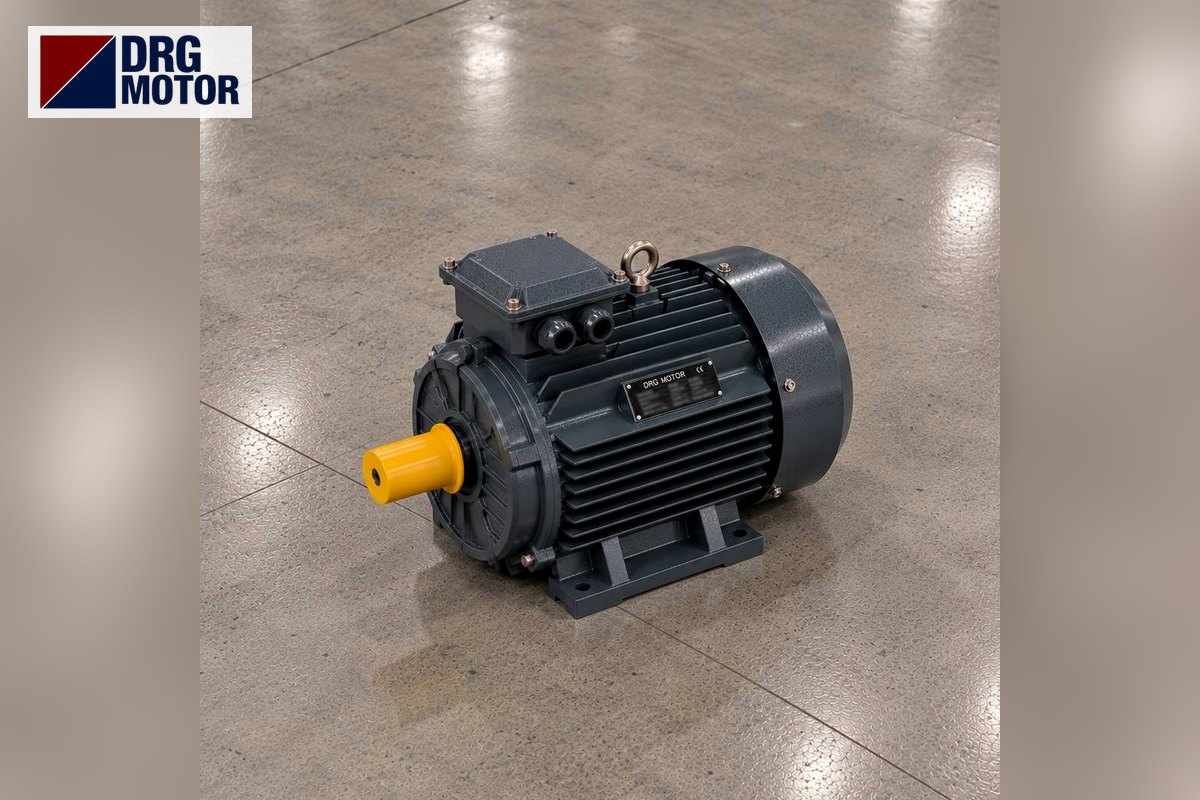

In most cases the existing panel is enough, but it is not a "plug and play" call. A more efficient electric motor of the same power and speed does the same job at the shaft, yet it can hit the panel with a different current surge at start-up; so before the swap, compare the thermal overload setting, the contactor and the cable size against the new motor's nameplate values.
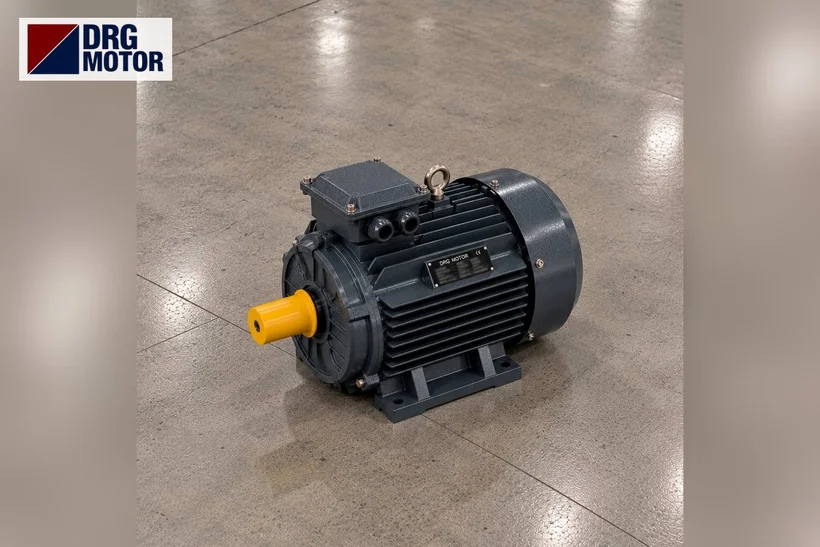
DRG Motor is a manufacturer, supplier and seller of electric motors. It is based in İzmir and ships quickly across all of Türkiye, that province included. You can pick the three-phase model with the right power and speed in the online electric motor shop and see the same products together in the three-phase asynchronous electric motors category.
The logic behind the short answer
A panel is built around the current its motor draws and how it starts. A more efficient electric motor usually pulls the same mechanical power at a slightly lower rated current — that is in the panel's favour. But there is a flip side: motors tightened up for higher efficiency can show a sharper start-up (inrush) current and hold it a touch longer than the old one. If the panel rides out that start pulse cleanly, the swap is easy; if not, protection trips and the contactor is stressed.
What makes a panel "enough"?
Four items decide it: rated current, start-up current, protection setting and cable. The current on the new motor's nameplate must sit inside the working range of the contactor and the thermal overload. The cable cross-section must carry that current over the run length. The short-circuit protection (fuse/breaker) must let the start pulse through without tripping. If these four line up, the panel is very likely enough.
Why start-up current is critical
An asynchronous electric motor draws several times its rated current at the first kick. That brief pulse is what wears the contactor tips and the thermal relay the most. Even when two motors deliver the same shaft power, the size and duration of the inrush can differ. On a fan or compressor that starts under heavy load you feel this difference; there, star-delta or soft starting comes into play instead of direct-on-line. Soft starters and drives are a general solution topic; on this side DRG supplies three-phase asynchronous motors and does not sell drives, but choosing the motor correctly eases the panel's load from the start.
Click to see current electric motor prices and order nowSEE PRICES →
Frame and connection across DRG three-phase models
The four-pole 1500 rpm models below cover the power steps you meet most often in a replacement. Frame size and voltage range feed straight into the contactor and cable choice in the panel:
| Model | Power | Frame | Voltage |
|---|---|---|---|
| DRG-90L-4 | 1.5 kW | 90L | 230/400 V (delta/star) |
| DRG-112M-4 | 4 kW | 112M | 400/690 V (delta/star) |
| DRG-132S-4 | 5.5 kW | 132S | 400/690 V (delta/star) |
| DRG-132M-4 | 7.5 kW | 132M | 400/690 V (delta/star) |
| DRG-160M-4 | 11 kW | 160M | 400/690 V (delta/star) |
On a 400 V line, models of 4 kW and above connect in delta/star; at smaller ratings you see 230/400 V. The voltage-connection line on the plate must match the wiring diagram in the panel. To size current and cable roughly, the motor current table and the cable cross-section tool do the job.
Step by step: check the panel before the swap
Safety first: cut the power, verify the dead state by measuring, and have the work done by qualified electrical staff. Do not set values from memory; set the thermal overload current to the new motor's nameplate.
- Read the rated current on the new motor's plate and compare it with the old one.
- Check that the contactor's rated current comfortably covers the new motor's current.
- Make sure the thermal relay's range covers the new current; set it to the plate.
- Confirm the cable cross-section against current and run length.
- If protection trips at start, the load is heavy; review the starting method.
Common mistakes
The mistake we see most is the assumption that "same power means same everything". Even at the same power, current, start behaviour and frame size can change. Second, swapping the motor without touching the thermal relay; a setting left for the old motor either trips needlessly or protects too late. Third, ordering without reading the plate. When you order, photograph the old motor's nameplate; power, speed, voltage and frame are already in that shot.
See current prices for a three-phase electric motor with the right power and speed for your swap.SEE PRICES
Send a photo of your current motor nameplate and we will find the suitable DRG model together.Send on WhatsApp
Frequently asked questions
Do I need a bigger cable when fitting a more efficient motor of the same power?
Usually not; if the rated current is similar or slightly lower, the existing cable carries it. On long runs, still check current and voltage drop, and confirm with the cable cross-section tool if unsure.
Should I reset the thermal relay?
Yes. When you change the motor, set the thermal relay current to the new plate. Decide the exact value from the nameplate and the device document, not from memory.
Can the contactor stay the same?
If its rated current covers the new motor's current and the start pulse, it can stay. If it is borderline, one size up runs more comfortably.
How do I know which DRG model to pick?
Match the old motor's power, speed and frame size. Send a photo of the plate and we will settle the right model together; you can also search by power and speed in the shop.
Electric Motors Related to This Topic — Models and Current Prices
Suitability is not decided by power alone: compare the speed, voltage, mounting, shaft and fixing dimensions of your machine with the product data; if unsure, send us the nameplate of your current motor.

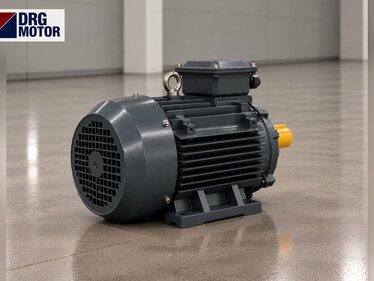
4 kW Three-Phase Motor 1500 rpm – DRG-112M-4 Aluminium
- 4 kW · 1500 rpm (4 poles)
- Aluminium frame · IEC 112M
- Shaft: 28 × 60 mm
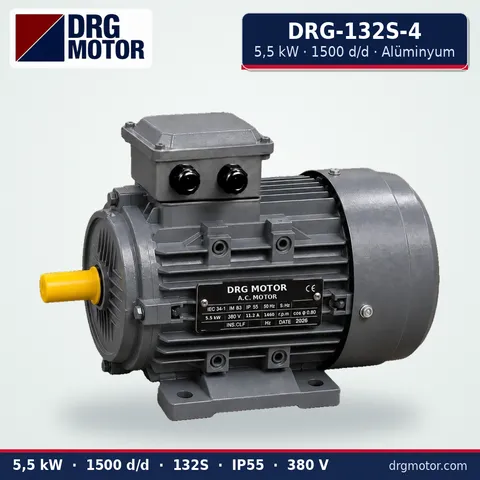
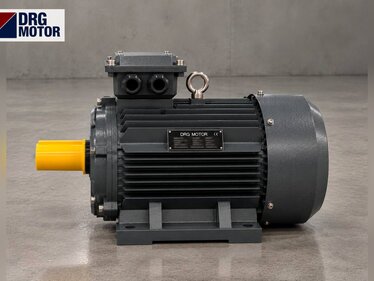
5.5 kW Three-Phase Motor 1500 rpm – DRG-132S-4 Aluminium
- 5.5 kW · 1500 rpm (4 poles)
- Aluminium frame · IEC 132S
- Shaft: 38 × 80 mm
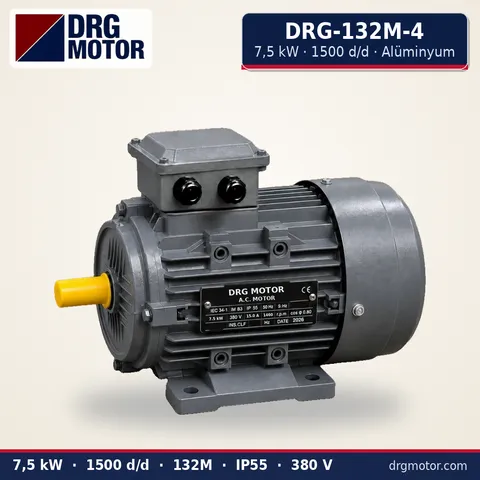
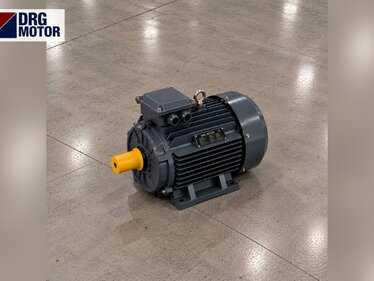
7.5 kW Three-Phase Motor 1500 rpm – DRG-132M-4 Aluminium
- 7.5 kW · 1500 rpm (4 poles)
- Aluminium frame · IEC 132M
- Shaft: 38 × 80 mm
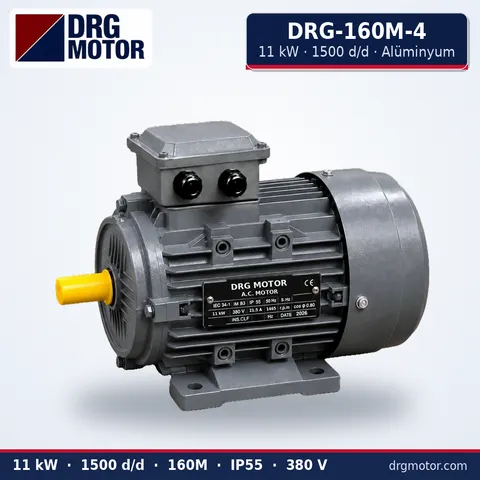
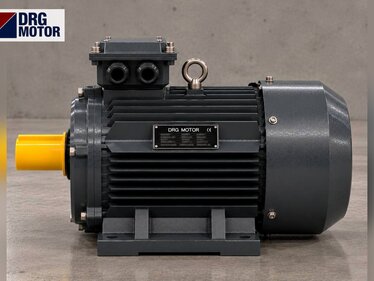
11 kW Three-Phase Motor 1500 rpm – DRG-160M-4 Aluminium
- 11 kW · 1500 rpm (4 poles)
- Aluminium frame · IEC 160M
- Shaft: 42 × 110 mm
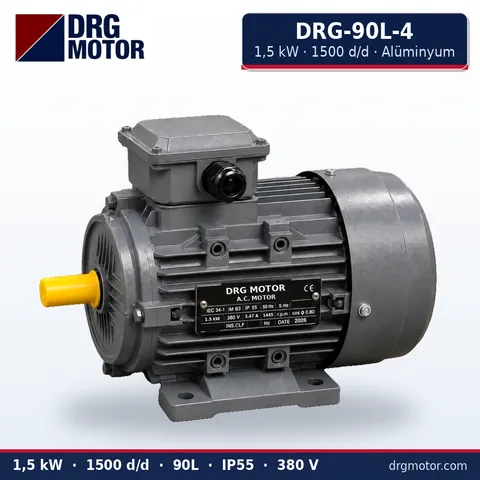
1.5 kW Three-Phase Motor 1500 rpm – DRG-90L-4 Aluminium
- 1.5 kW · 1500 rpm (4 poles)
- Aluminium frame · IEC 90L
- Shaft: 24 × 50 mm