 English
 Le français
 Türkçe


When you set the renewal order in a fleet, the first motor to look at is not the oldest one but the one that runs the most and works the hardest. The longer an electric motor turns each day and the heavier the load on its shaft, the faster a renewal pays back. So the ranking is built on three things: running hours, load profile, and age with maintenance history.
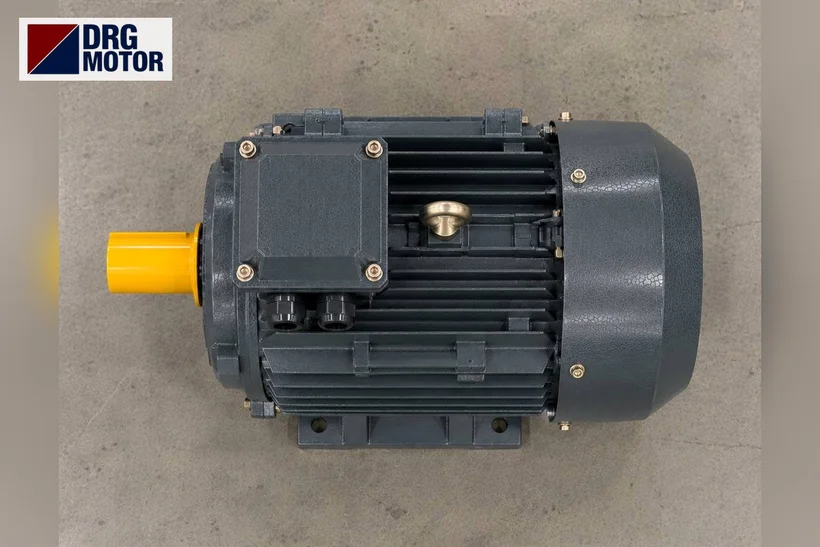
DRG Motor is a manufacturer, supplier and seller of electric motors. It is based in İzmir and ships quickly across all of Türkiye, that province included. Once you have listed the fleet and drawn up the order, compare the powers and speeds to renew in the online electric motor shop and see the same range together in the three-phase asynchronous electric motors category.
Start with a fleet inventory
Before you rank anything, you need to know what you have. Write each motor as one line: plate power (kW), speed (rpm), frame size, where it runs and what it drives. Photograph any unreadable plate on site; an inventory filled in by guesswork produces a wrong order from the start. This list takes the "which one first" argument out of feeling and ties it to numbers. If there are fifteen motors on paper, renewing them all at once is neither possible nor sensible; the job is to pick the right three.
Running hours are the strongest ranking criterion
If two motors of the same power run two hours and twenty hours a day respectively, everything you gain from renewal piles up on the second. Energy use scales directly with running time. Write down the number of shifts, the daily hours and how many days a week each turns. If you have no hour counter, estimate roughly from the line's production plan. A pump motor that runs briefly goes to the bottom of the list; a fan or conveyor motor that never stops goes to the top.
Read the load and duty profile
As important as running hours is how hard the motor works during them. A motor spinning near no load is not the same as one working at the edge of its plate rating. The closer the current read at the panel is to the plate current, the higher the load; judge L1, L2 and L3 together. Motors that run at full load continuously, start often or face shock loads move up the ranking. A heavily oversized motor that always cruises half loaded is actually a sign of wrong sizing; when you renew it you may need to step down a size.
Weigh age and maintenance history
Age alone does not decide, but it completes the picture. Note how many times a motor has been rewound, how often bearings are changed, and any heating or vibration complaints. A motor rewound two or three times with frequent bearing failures costs both energy and downtime; it moves up the order even if it is not very old. Replacing a near-new, trouble-free motor just because "the old one was swapped" wastes resources. If there is no maintenance log, the operators' memory and downtime records supply this information.
Click to see current electric motor prices and order nowSEE PRICES →
How to build the priority table
Combine the three criteria in one table and give each motor a rough score. The scheme below is enough for a quick decision on site; if you want a detailed analysis, deepen it with energy measurement.
| Criterion | Low priority | Medium priority | High priority |
|---|---|---|---|
| Running hours | Intermittent, short | Single shift | Multi-shift / nonstop |
| Load | Light / half | Variable | Full load / shock |
| Age and faults | New, trouble-free | Mid-age, few faults | Old, many rewinds |
Motors that fall to the right in all three columns go to the head of the list. If you want a concrete example on the power side, the common ratings of 1500 rpm four-pole aluminium three-phase motors serve as a reference:
| Model | Power (kW) | Speed (rpm) | Shaft torque (Nm) |
|---|---|---|---|
| DRG-90L-4 | 1.5 | 1500 | ~9.5 |
| DRG-112M-4 | 4 | 1500 | ~25 |
| DRG-132S-4 | 5.5 | 1500 | ~35 |
| DRG-132M-4 | 7.5 | 1500 | ~48 |
| DRG-160M-4 | 11 | 1500 | ~70 |
To check shaft torque yourself, use the electric motor calculation and motor current table pages.
Step-by-step renewal order
In practice this flow works: draw up the inventory, then split off the top half by running hours, and within that half bring the most heavily loaded and most fault-prone motors forward. Spend the budget on those few motors at the head; this is the group with the fastest payback. When you renew, set the new motor's power and speed from the real load, not from the old plate. Replacing a wrongly sized motor with an identical one just copies the mistake.
Common mistakes
The most common error is ranking by age alone; an old but lightly used motor in the corner is lower priority than a young but nonstop motor at the front. The second is trying to change them all at once and spreading the budget thin. The third is ordering the new motor as a copy of the old plate. Deciding without measurement leads to the same place; without current and running-hour data the ranking is just a hunch.
Click to see current models and prices for the motors you have put in the renewal queueSEE PRICES
Send a photo of your current motor nameplate and we will find the suitable DRG model together.Send on WhatsApp
Frequently asked questions
How do I rank without an hour counter?
Estimate the daily hours roughly from the production plan and shift pattern. It need not be exact; what matters is which motor turns more, not the absolute number, and that is enough to rank them against each other.
Should an old motor always be renewed first?
No. An old motor that runs little under a light load can stay at the bottom of the list. The heavily used, hard-working motors come first; age is only a tie-breaker when everything else is equal.
How should I set the new motor's power?
Do not blindly copy the old plate. Measure the real load; if the motor always cruises half loaded, step down a size, and if it is often strained, pick the right power. If unsure, share the plate and we will clarify it together.
How many motors should I renew at once?
Focus your budget on the few highest-priority motors. Changing them all at once spreads the cash thin and delays the fastest payback; moving in waves is healthier.
Electric Motors Related to This Topic — Models and Current Prices
Suitability is not decided by power alone: compare the speed, voltage, mounting, shaft and fixing dimensions of your machine with the product data; if unsure, send us the nameplate of your current motor.
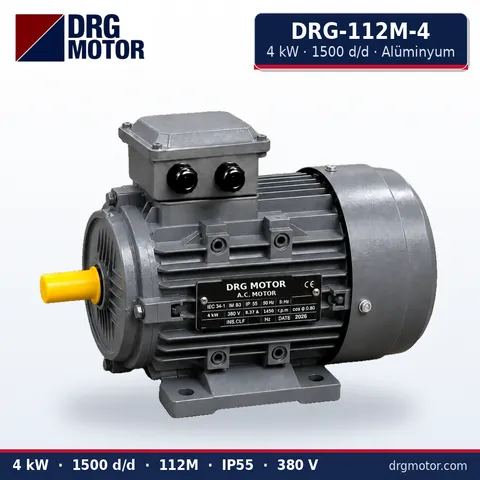
4 kW Three-Phase Motor 1500 rpm – DRG-112M-4 Aluminium
- 4 kW · 1500 rpm (4 poles)
- Aluminium frame · IEC 112M
- Shaft: 28 × 60 mm
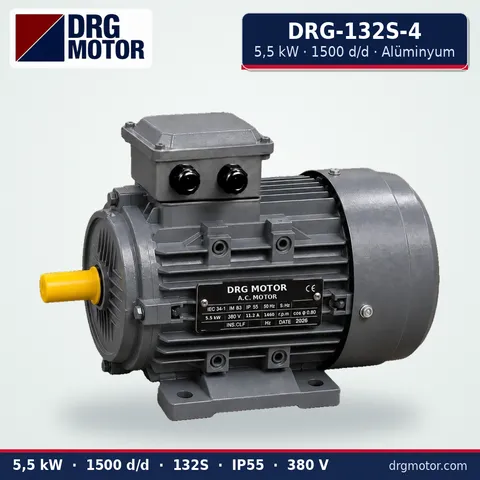
5.5 kW Three-Phase Motor 1500 rpm – DRG-132S-4 Aluminium
- 5.5 kW · 1500 rpm (4 poles)
- Aluminium frame · IEC 132S
- Shaft: 38 × 80 mm
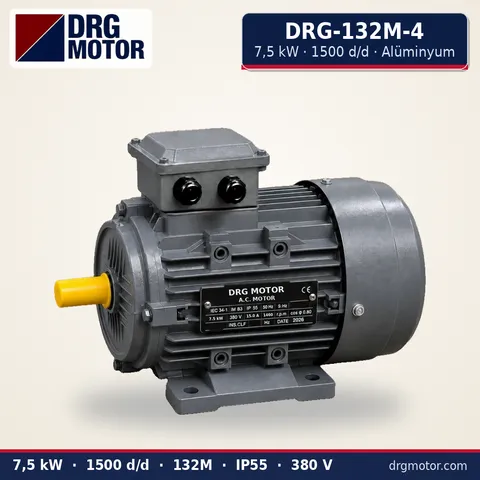
7.5 kW Three-Phase Motor 1500 rpm – DRG-132M-4 Aluminium
- 7.5 kW · 1500 rpm (4 poles)
- Aluminium frame · IEC 132M
- Shaft: 38 × 80 mm
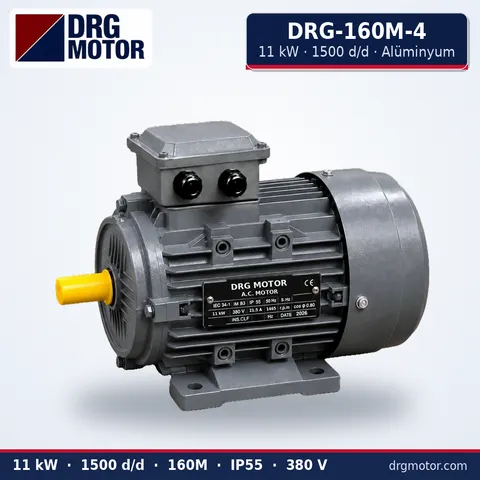
11 kW Three-Phase Motor 1500 rpm – DRG-160M-4 Aluminium
- 11 kW · 1500 rpm (4 poles)
- Aluminium frame · IEC 160M
- Shaft: 42 × 110 mm
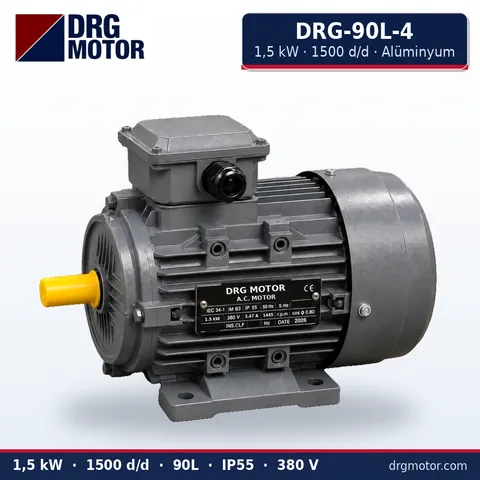
1.5 kW Three-Phase Motor 1500 rpm – DRG-90L-4 Aluminium
- 1.5 kW · 1500 rpm (4 poles)
- Aluminium frame · IEC 90L
- Shaft: 24 × 50 mm