English
 Le français
 Türkçe




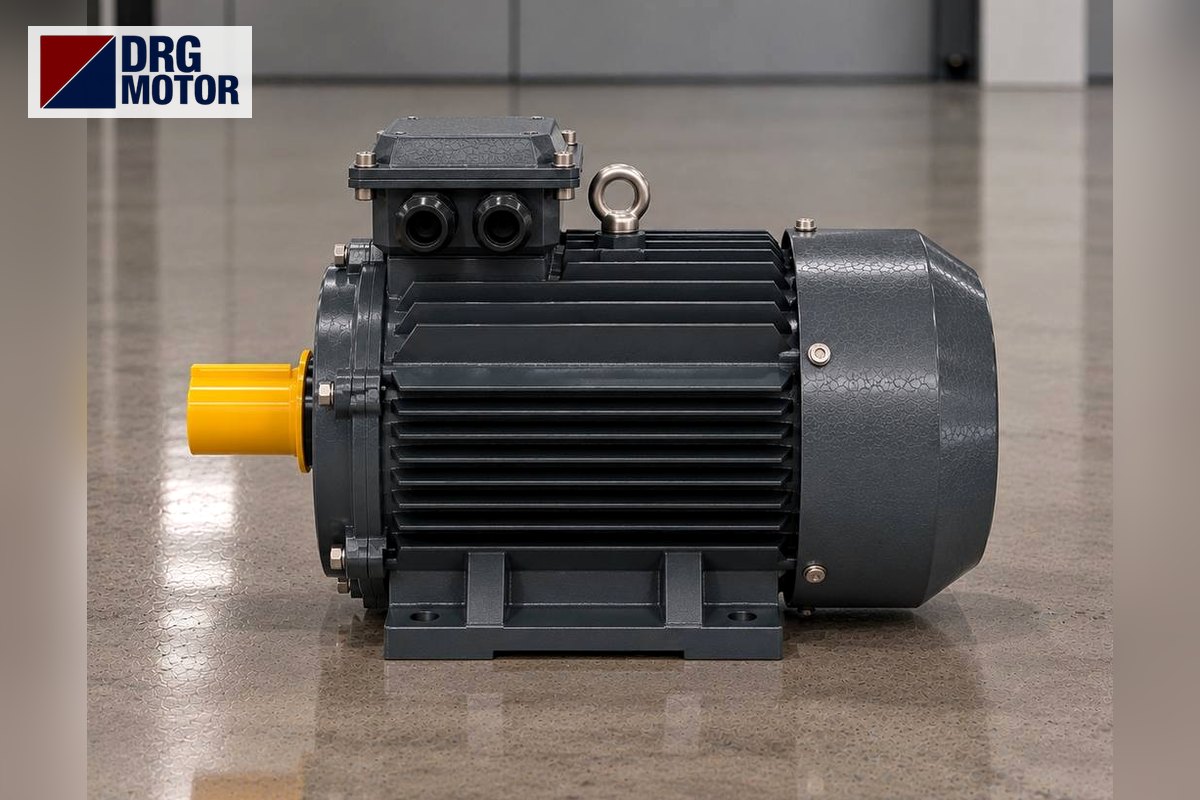

A motor's nameplate is its identity card: power, speed, voltage, current and protection — every rated value is printed on that small plate. Reading it correctly is the first step to both replacing an existing motor properly and choosing a new one correctly. Below we explain, field by field, what each entry on a three-phase asynchronous motor nameplate means.
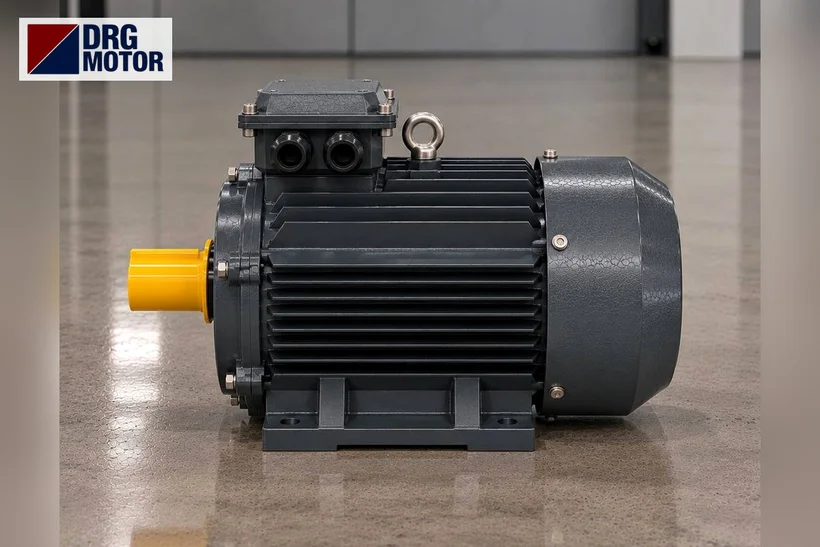
DRG Motor is a manufacturer, supplier and seller of electric motors. You can find the right model by its nameplate values in the online motor shop, and see all options together in the three-phase asynchronous electric motors category.
What is a motor nameplate and why does it matter?
The nameplate is a metal or adhesive plate fixed to the motor body, carrying the motor's rated (nominal) operating values. These describe the normal operating point the motor was designed for. Reading it is essential for setting the protection relay correctly, choosing the right cable cross-section, finding the correct spare part in a fault, and above all replacing an old motor with one of the same specification. If the plate becomes unreadable after a fault, the first thing the shop will ask for is exactly these nameplate values.
The main fields: what each one tells you
The fields you will most often meet on a three-phase asynchronous motor nameplate, and their meaning:
- kW / HP (power): The rated mechanical power available at the shaft. kW is kilowatts, HP is horsepower. Roughly 1 HP ≈ 0.746 kW; so 4 kW is about 5.5 HP. This field covers your application's power need.
- V (voltage) and Δ/Y: The supply voltage the windings connect to. An entry like "400/690 V (Δ/Y)" means 400 V in delta (Δ), 690 V in star (Y). The delta and star symbols tell you which connection goes with which voltage.
- A (current): The rated current drawn at rated power and voltage. The thermal protection relay is set from this value. The plate usually lists a separate current for each voltage.
- Hz (frequency): The supply frequency the motor is designed for; 50 Hz in Türkiye and Europe. Frequency is directly tied to speed.
- rpm (speed): The shaft speed at rated load. Synchronous speed follows 120·f/p (f frequency, p pole count); the real nameplate speed is slightly lower because of slip (e.g. ~1450–1465 rpm for 4 poles).
- cosφ (power factor): The ratio showing how much of the apparent power becomes real work. Used in current and cable calculations; usually between 0.7 and 0.9.
- IP (protection class): A two-digit code for protection against solids/dust and water (e.g. IP55). The first digit is solids/dust, the second is water.
- Insulation class (F, H...): The temperature class the winding insulation can withstand, explained in detail below.
- Frame / IEC size (e.g. 112M, 132S): The standard frame number setting the mechanical dimensions. Foot and flange sizes depend on it.
- Weight (kg): The mass of the motor; important for handling, mounting and support selection.
- Bearing numbers: The standard codes of the front and rear bearings (e.g. 6208 / 6206). You use these codes directly for maintenance and bearing replacement.
The plate also carries a field stating the motor's operating type/regime; this describes whether the motor is designed to run continuously or in an intermittent pattern. Standard applications use motors made for continuous drive.
Click to see current electric motor prices and order nowSEE PRICES →
Power (kW/HP), speed and torque are read together
Power alone is not enough; it gains meaning with speed. The same power is offered in different speed classes (2, 4, 6 poles), and torque rises as speed falls. The approximate relation is T = 9550 · P / n (P in kW, n in rpm, T in Nm). For example, a 7.5 kW motor gives lower torque at 1500 rpm and higher torque at 1000 rpm. So when replacing an old motor, look not only at kW but also at the nameplate speed. The table below shows typical values you would read on the plate of a few 4-pole (1500 rpm class) DRG models:
| Model (sample nameplate) | Power (kW / HP) | Nameplate speed (rpm) | Rated current (400 V) |
|---|---|---|---|
| DRG-112M-4-AL | 4 kW / 5.5 HP | 1450 | 7.95 A |
| DRG-132S-4-AL | 5.5 kW / 7.5 HP | 1460 | 10.7 A |
| DRG-132M-4-AL | 7.5 kW / 10 HP | 1460 | 14.3 A |
| DRG-160M-4-AL | 11 kW / 15 HP | 1465 | 20.4 A |
The speeds in the table are slightly below the synchronous 1500 rpm; the gap is slip, which is normal behaviour for an asynchronous motor. To see the required power and current in advance, use the electric motor calculator and the motor current chart.
Voltage (V, Δ/Y), current (A), frequency and cosφ
The electrical part of the plate is the key to wiring the motor to the supply correctly. A motor marked "400/690 V (Δ/Y)" is connected in delta (Δ) on a 400 V three-phase supply and in star (Y) at 690 V; this also shows the motor is suitable for star-delta starting. At low power, 230/400 V (Δ/Y) windings are common. The current field is the thermal relay setting: set the protection current from the rated current on the plate, not from memory. cosφ and frequency complete the cable and current calculations. To size the cable correctly, use the motor cable size calculator.
Before wiring, switch off the supply, confirm it is de-energised, and let only qualified electrical personnel do the work. Always confirm the connection diagram from the plate in the motor terminal box and the panel documentation.
IP protection class and insulation class (F, H)
The IP code has two digits: the first is protection against solids and dust (0–6), the second against water (0–8). In IP55, for example, the first 5 means strong protection against dust and the second 5 protection against water jets from any direction. The common protection level on industrial three-phase motors is IP55.
The insulation class states, with letters, the temperature level the winding insulation can withstand. The two most common classes:
- Class F: allowed winding temperature limit of 155 °C. The most common insulation class on industrial motors.
- Class H: allowed limit of 180 °C; it withstands higher temperature than F and is preferred for harsher environments.
These letters do not state how hot the motor will run, but the upper temperature limit the insulation can safely take. The insulation class matters when selecting a motor for a high-ambient-temperature location.
Frame (IEC size), weight and bearings
The frame number (e.g. 112M, 132S, 160M) sets the mechanical dimensions: shaft centre height, foot hole spacing and flange sizes all depend on it. When replacing an old motor, matching power and speed is not enough; the frame size, shaft diameter and mounting type (B3 foot, B5/B14 flange) must also match. The shaft diameter is especially critical, because couplings, pulleys and gearbox inputs are chosen by it; you can find typical shaft diameters by kW in the motor shaft diameter by kW table. For frame types and their differences, see the types of electric motor housings article.
The weight field helps handling and mounting planning, while the bearing numbers serve maintenance. In a bearing change, using the code on the plate (e.g. 6208) directly is the fastest way to get the right part.
Which nameplate fields are essential when buying a new motor?
When selecting a new motor or replacing an existing one, at least these fields must be clear:
- Power (kW/HP) and speed (rpm): together they define the application's need; neither alone is enough.
- Voltage (V) and connection (Δ/Y): must match your supply; the wrong connection means the motor will not run properly.
- Frame size, shaft diameter and mounting type: essential for a mechanical fit.
- IP and insulation class: decide suitability for the working environment (dust, humidity, temperature).
Current, cosφ, weight and bearing data are then needed for protection, wiring and maintenance after selection. If you want to bring these values together and find the model that best fits your need, you can compare the shop's models by power and speed.
Send a photo of your current motor nameplate and we will find the suitable DRG model together.Send on WhatsApp
Send a photo of your motor's nameplate or its dimensions; let's confirm the right model together by power, speed and connection.
Compare three-phase asynchronous motor models and current prices in the shop by nameplate power, speed and connectionSEE PRICES
Frequently asked questions
What should I do if the nameplate is worn or unreadable?
First try to find the frame number (e.g. 132S) and bearing codes on the body; these are often stamped on the end shield too. Then leave the disassembly/measurement to determine power, speed and connection to qualified electrical personnel. With the remaining data you can reach the closest standard model by consulting the shop.
Why isn't the nameplate speed exactly 1500?
In asynchronous motors the rotor turns slightly behind the rotating field; this difference is slip. So while a 4-pole motor's synchronous speed is 1500 rpm, the nameplate speed is typically 1450–1465 rpm. This is normal and not a sign of a fault.
What does 400/690 V (Δ/Y) mean?
It means the motor connects in delta (Δ) at 400 V and in star (Y) at 690 V. On a 400 V three-phase supply this motor is connected in delta; the same winding layout also suits star-delta starting. Always wire according to the terminal plate and the panel documentation.
Which value should be compared first on a new motor?
First power (kW) and speed (rpm), then voltage/connection, then frame size and shaft diameter. When these four match, the motor fits both electrically and mechanically; IP and insulation class are the final check for the environment.
Electric Motors Related to This Topic — Models and Current Prices
Suitability is not decided by power alone: compare the speed, voltage, mounting, shaft and fixing dimensions of your machine with the product data; if unsure, send us the nameplate of your current motor.
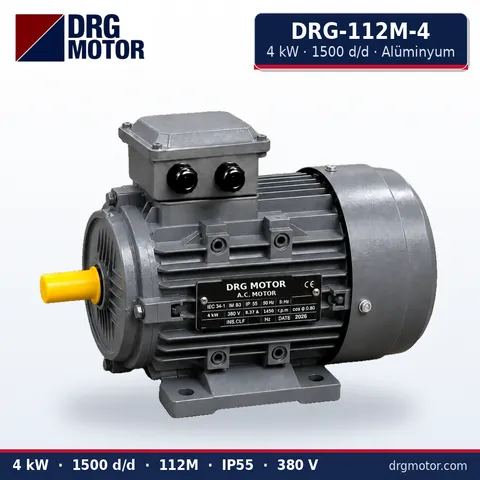
4 kW Three-Phase Motor 1500 rpm – DRG-112M-4 Aluminium
- 4 kW · 1500 rpm (4 poles)
- Aluminium frame · IEC 112M
- Shaft: 28 × 60 mm
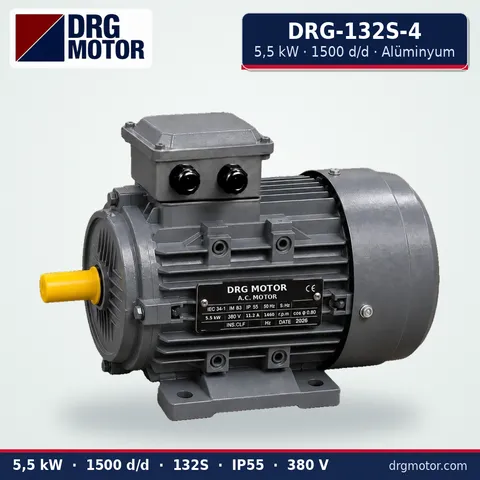
5.5 kW Three-Phase Motor 1500 rpm – DRG-132S-4 Aluminium
- 5.5 kW · 1500 rpm (4 poles)
- Aluminium frame · IEC 132S
- Shaft: 38 × 80 mm
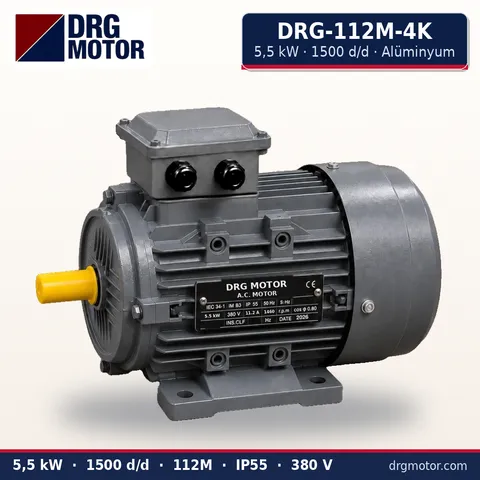
5.5 kW Compact Three-Phase Motor 1500 rpm – DRG-112M-4K Aluminium
- 5.5 kW · 1500 rpm (4 poles)
- Aluminium frame · IEC 112M
- Shaft: 28 × 60 mm
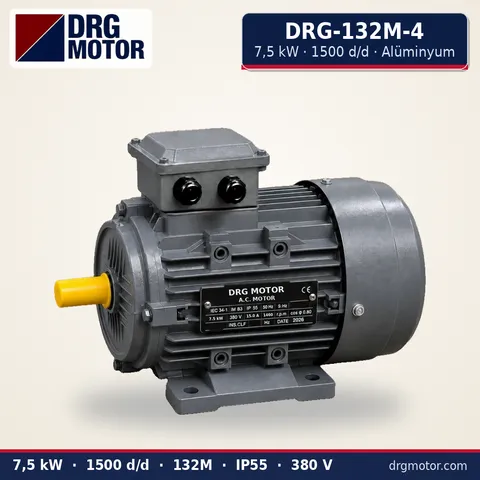
7.5 kW Three-Phase Motor 1500 rpm – DRG-132M-4 Aluminium
- 7.5 kW · 1500 rpm (4 poles)
- Aluminium frame · IEC 132M
- Shaft: 38 × 80 mm
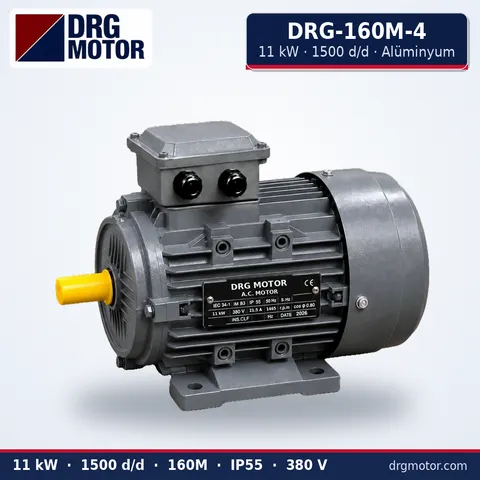
11 kW Three-Phase Motor 1500 rpm – DRG-160M-4 Aluminium
- 11 kW · 1500 rpm (4 poles)
- Aluminium frame · IEC 160M
- Shaft: 42 × 110 mm
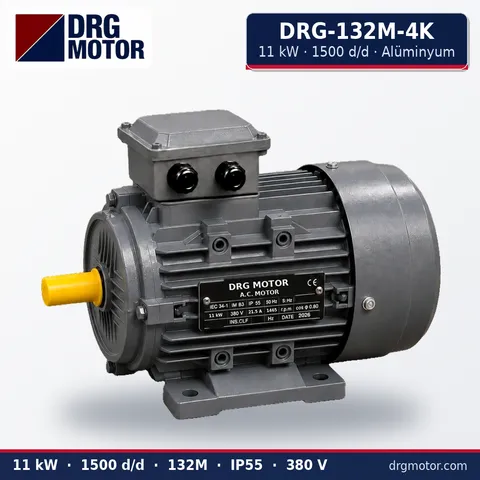
11 kW Compact Three-Phase Motor 1500 rpm – DRG-132M-4K Aluminium
- 11 kW · 1500 rpm (4 poles)
- Aluminium frame · IEC 132M
- Shaft: 38 × 80 mm