 English
 Le français
 Türkçe




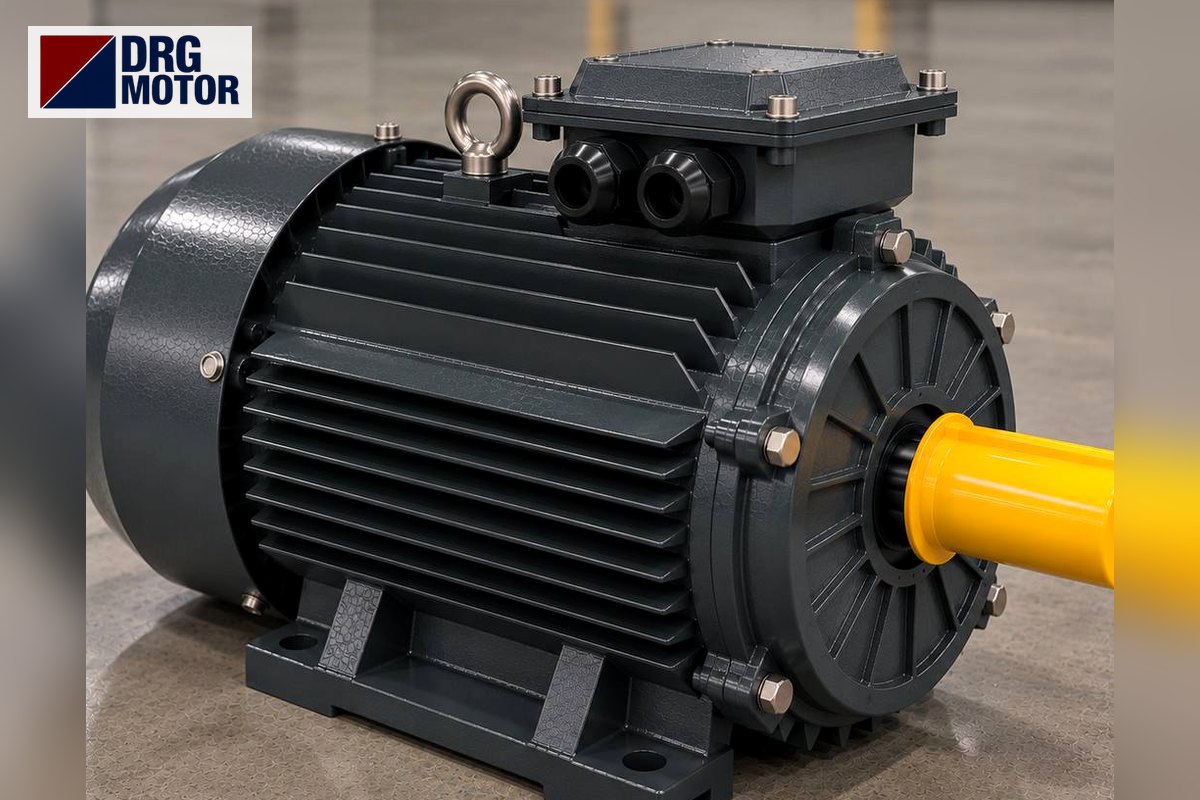

To build a one-week load profile, you log the current and power your existing electric motor draws at regular intervals across seven days that cover the full production rhythm. The goal is simple: see how the motor is really loaded during the day, between shifts and over the weekend. With that data in hand you size the new motor from field figures, not guesswork.
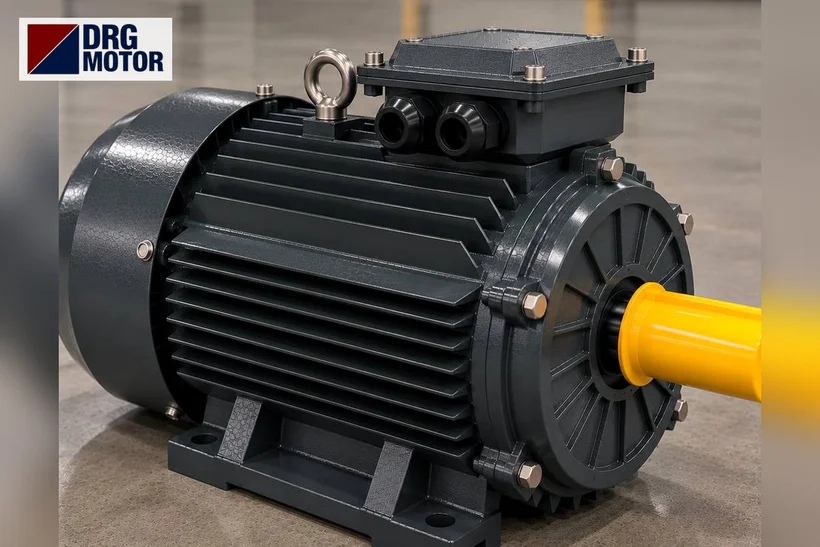
DRG Motor is a manufacturer, supplier and seller of electric motors. It is based in İzmir and ships quickly across all of Türkiye, that province included. Once the profile is ready, you can find the right three-phase asynchronous model by power and speed in the online electric motor shop and see the same products together in the three-phase asynchronous electric motors category.
Why one week is the right window
In most plants the load swings even within a single day: the first start in the morning, the lunch break, the evening shift. Look at one day and you miss that variation. Seven days capture weekday and weekend, the busy day and the quiet one in the same record. In a workshop with seasonal work, pick the busiest week — you must size the motor to its hardest moment.
Which quantities to record
A load profile is not a single number; you track several values together. At a minimum you need:
- Phase currents (A): The current in all three phases. Any imbalance shows up here.
- Line voltage (V): Tells you whether the supply voltage drifts during the day.
- Active power (kW): The real measure of the work asked at the shaft. Current alone can mislead.
- Power factor (cosφ): Reveals how much the motor runs lightly loaded.
- Running and idle hours: How many hours under load, how many idle.
These five values set the ground you need to decide the new motor's power and speed. Measuring power alongside current matters: at half load the current does not drop as much as you expect, yet the power drawn falls clearly.
What should the measurement interval be?
The interval depends on the nature of the job. For a steady, slowly varying load (fan, pump) a reading every 10–15 minutes is enough. For frequently starting, pulsed loads (compressor, crusher, press) you need to go down to one minute or even seconds, or you will miss the peak currents. A practical rule: frequent enough to catch starts and surges, sparse enough to span a week. If you use a data logger, set its memory and battery life to that interval.
How to take the measurement safely
Measuring inside a panel means working on live equipment, and that is risky. For any step that needs installation, removal or access inside the panel, switch off the power first, verify the absence of voltage with a proper device, and let only authorised electrical personnel do the work. Clamping a current probe onto cables or opening a panel are not tasks for an untrained person.
Once the measurement chain is set up, close the equipment safely and start the recording. Check that the current clamp is on the right phase and direction and that the voltage leads sit firmly. Enter the settings (interval, current ratio) according to the device's own documentation; giving a single fixed figure here would be wrong, as every device and panel differs.
Click to see current electric motor prices and order nowSEE PRICES →
Turning the data into a table
When the week ends, the raw log says little on its own; you have to summarise it. Splitting it into time bands and taking the average and peak current for each band does the job. A simple example:
| Time band | Average current (A) | Peak current (A) | Hours under load |
|---|---|---|---|
| Day shift | 7.8 | 11.5 | 8 |
| Evening shift | 5.2 | 9.0 | 6 |
| Night / idle | 1.1 | 2.4 | 2 |
This table shows two things at once: how heavily the motor is loaded through the day and how long the peaks last. You choose the new motor by looking at both the average and those peak values.
Sizing the new motor from the profile
Your profile gives a picture of the average power and the highest loading. When choosing the new motor, base it on the peak power and starting conditions the machine needs — not the average — but do not jump to a large power the old motor never reached either. For shaft torque the relation T = 9550·P/n does the job (T in Nm, P in kW, n in rpm). A few DRG models in the same speed class show the scale:
| Model | Power (kW) | Speed (rpm) | Voltage |
|---|---|---|---|
| DRG-90L-4-AL | 1.5 | 1500 | 230/400 V |
| DRG-112M-4-AL | 4 | 1500 | 400/690 V |
| DRG-132S-4-AL | 5.5 | 1500 | 400/690 V |
| DRG-132M-4-AL | 7.5 | 1500 | 400/690 V |
| DRG-160M-4-AL | 11 | 1500 | 400/690 V |
The models in the table are in the 1500 rpm class; if your profile calls for 1000 or 3000 rpm, look at the other speed options in the shop. Do not forget to compare frame size, shaft diameter and flange type against the old motor's nameplate.
Choose the three-phase asynchronous electric motor that fits your load profile by power and speedSEE PRICES
Common mistakes
- Measuring one day: Misses the weekly rhythm and leads to wrong sizing.
- Looking at current only: Without power and cosφ the true size of the load stays incomplete.
- Logging too sparsely: Makes you skip short but sharp peak currents.
- Skipping the nameplate: The old motor's power, speed and frame are the anchor of the comparison.
Send us a photo of your current motor's nameplate and your profile summary, and we will pin down the right DRG model together:
Send a photo of your current motor nameplate and we will find the suitable DRG model together.Send on WhatsApp
Frequently asked questions
Do I really need a dedicated instrument to measure?
A clamp meter that can record, or a simple data logger, is enough in most cases. What matters is that the device can store current — and ideally power — at set intervals; taking notes by hand is not realistic for a week-long profile.
If the motor runs very rarely, should I still measure a week?
Yes. A rare but heavy run is the moment that stresses the motor most and must appear in the profile. If operation is infrequent, plan the measurement to coincide with the day that work is done.
Can't I just replace the motor with an identical one without a profile?
If the old motor was correctly sized, a like-for-like swap makes sense. But if the motor runs constantly at low load or is overworked, the profile gives you the chance to pick a better-fitting power. At the very least, read the old nameplate.
Do I have to stop production during measurement?
The recording is taken while the motor does its normal job; the whole point is to see the real load. Only when connecting and removing the instrument, for access inside the panel, do you need to switch off the power and work with authorised personnel.
Electric Motors Related to This Topic — Models and Current Prices
Suitability is not decided by power alone: compare the speed, voltage, mounting, shaft and fixing dimensions of your machine with the product data; if unsure, send us the nameplate of your current motor.

4 kW Three-Phase Motor 1500 rpm – DRG-112M-4 Aluminium
- 4 kW · 1500 rpm (4 poles)
- Aluminium frame · IEC 112M
- Shaft: 28 × 60 mm

5.5 kW Three-Phase Motor 1500 rpm – DRG-132S-4 Aluminium
- 5.5 kW · 1500 rpm (4 poles)
- Aluminium frame · IEC 132S
- Shaft: 38 × 80 mm

7.5 kW Three-Phase Motor 1500 rpm – DRG-132M-4 Aluminium
- 7.5 kW · 1500 rpm (4 poles)
- Aluminium frame · IEC 132M
- Shaft: 38 × 80 mm

11 kW Three-Phase Motor 1500 rpm – DRG-160M-4 Aluminium
- 11 kW · 1500 rpm (4 poles)
- Aluminium frame · IEC 160M
- Shaft: 42 × 110 mm

1.5 kW Three-Phase Motor 1500 rpm – DRG-90L-4 Aluminium
- 1.5 kW · 1500 rpm (4 poles)
- Aluminium frame · IEC 90L
- Shaft: 24 × 50 mm





