 English
 Le français
 Türkçe




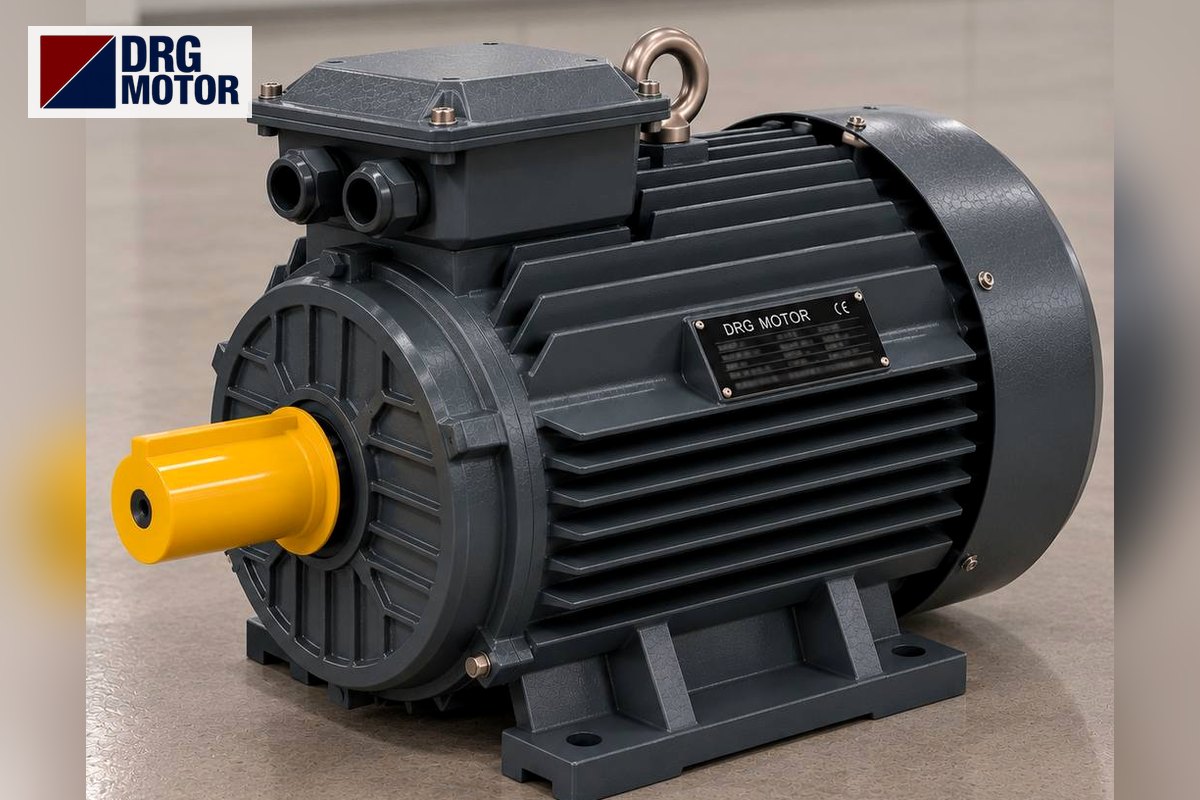

Comparing two electric motors at part load takes more than a single rated efficiency figure; you have to look at the load the motor actually carries through the day. A motor that looks good at full load may gain or lose ground once it runs at half load. A proper comparison starts by mapping your application's load profile and judging both candidates at the same operating point.
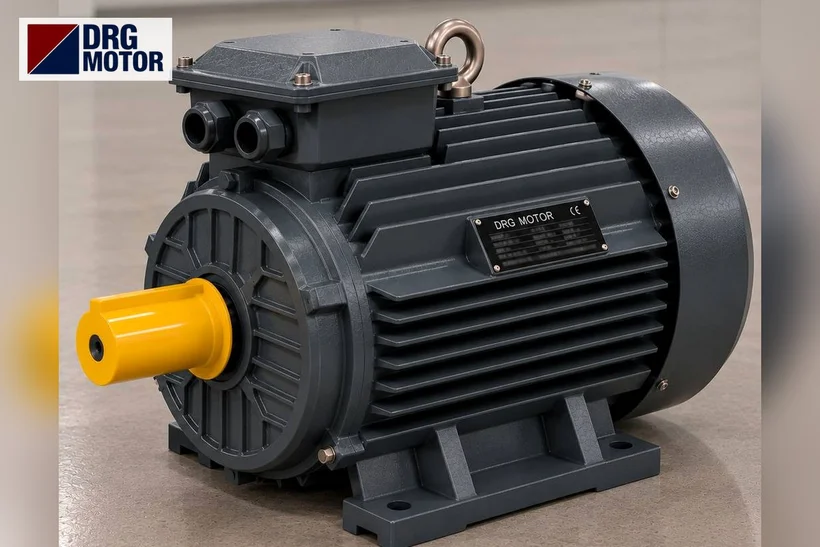
DRG Motor is a manufacturer, supplier and seller of electric motors. It is based in İzmir and ships quickly across all of Türkiye, that province included. Once you have fixed the power that suits your load profile, you can compare models by power and speed in the online electric motor shop and see the same products together in the three-phase asynchronous electric motors category.
What does part load mean?
Full load is when the motor delivers its nameplate power at the shaft continuously. Part load is when it runs below that, say at half the work. In the field most motors rarely run at full load: a fan damper is throttled, a pump valve closes a little, a conveyor turns empty. So the real question is not how it behaves the instant you switch it on, but how it behaves while it runs for days at that load.
Why do two motors behave differently at part load?
Losses in an asynchronous motor fall into two groups. Iron losses plus friction and windage are almost constant regardless of load; they are there as long as the motor turns. Copper losses change with current, and therefore with load. As load drops, the load-dependent losses shrink while the constant losses stay put. The difference between two motors at part load comes from the size of those constant losses and from the motor's power factor at that point.
So "the motor that looks better at full load is better at every load" is wrong. One design may lead at full load yet close the gap at half load because its constant losses dominate there; another may stay tidier at low load. Make the comparison not from one point, but from the point where you actually work.
What changes as load falls?
The table below sums up, at the concept level and without figures, what changes in a motor as load drops. The ratios here are the motor's load ratio, not an efficiency value.
| Load state | Current trend | Power factor trend | Practical result |
|---|---|---|---|
| Full load (load ratio ~100%) | Highest | At its best | Motor runs where it was designed |
| High part load (~75%) | Drops a little | Still good | Small gap versus full load |
| Mid part load (~50%) | Clearly lower | Starts to fall | Constant losses grow in proportion |
| Low load (~25%) | Low | Weak | Motor is too large for its load |
Click to see current electric motor prices and order nowSEE PRICES →
How do you compare two motors at part load?
To make the comparison sound, do the following in order:
- Map the real load profile: write down how many hours a day the motor runs and at what load ratio.
- Take both candidates at the same power and the same speed; comparing motors of different speed (pole count) is misleading.
- Read the maker's load-behaviour data at the same load ratio; do not line up values from different operating points.
- Include power factor and drawn current; the panel, cable and protection are sized from these.
- Pick the motor for its load; oversizing "to be safe" keeps it permanently at low load, a weak point.
When you plan the cable and protection side, the tools on the electric motor calculation page can help.
Choosing the motor at the right power
The practical summary of the part-load question is this: pick the motor as close to its real load as you can. DRG's three-phase asynchronous aluminium range offers close power steps at the same 1500 rpm, so you need not jump a size above your load. Hitting the right step keeps the motor in the mid and high-load band of the table, which already settles half of the part-load question. A few common 4-pole models:
| Model | Power | Speed | Product page |
|---|---|---|---|
| DRG-90L-4 | 1.5 kW (2 HP) | 1500 rpm | 1.5 kW model |
| DRG-112M-4 | 4 kW (5.5 HP) | 1500 rpm | 4 kW model |
| DRG-132S-4 | 5.5 kW (7.5 HP) | 1500 rpm | 5.5 kW model |
| DRG-132M-4 | 7.5 kW (10 HP) | 1500 rpm | 7.5 kW model |
| DRG-160M-4 | 11 kW (15 HP) | 1500 rpm | 11 kW model |
You can see all power and speed options in the online shop and pick the step closest to your load profile.
Common mistakes
- Looking at one rated value and skipping behaviour at other load ratios.
- Picking a motor far larger than its load and running it permanently at low load.
- Lining up motors of different speed as if they were the same.
- Ignoring power factor and looking only at power.
- Ordering "the same one" without reading the nameplate.
Send a photo of your current motor nameplate and we will find the suitable DRG model together.Send on WhatsApp
Frequently asked questions
Is part load always bad?
No. Most machines already run with variable load; what matters is choosing the motor for the point where it spends most of that range. The real problem is a motor that runs almost always at very low load.
Which of two motors uses less energy?
You can only say by comparing them at the same load ratio and the same speed. A motor ahead at full load may fall behind at your half-load point; make the comparison on your own load profile.
If I pick a smaller motor, does the part-load problem go away?
Picking too small strains the motor constantly and brings heating and life problems. The aim is not to shrink it but to match the power as close as possible to the real load.
Does a variable-speed drive change this table?
A drive can shift the motor's operating point with the load and improve part-load behaviour. DRG does not sell drives; we only explain the concept here. On the motor side, the right power and speed are still the first step.
Once you have the load profile, choosing the power is what remains; where you are unsure, sharing your current motor's nameplate is the safest move.
To choose a three-phase asynchronous electric motor by power and speed for your load profileSEE PRICES
Electric Motors Related to This Topic — Models and Current Prices
Suitability is not decided by power alone: compare the speed, voltage, mounting, shaft and fixing dimensions of your machine with the product data; if unsure, send us the nameplate of your current motor.

4 kW Three-Phase Motor 1500 rpm – DRG-112M-4 Aluminium
- 4 kW · 1500 rpm (4 poles)
- Aluminium frame · IEC 112M
- Shaft: 28 × 60 mm

5.5 kW Three-Phase Motor 1500 rpm – DRG-132S-4 Aluminium
- 5.5 kW · 1500 rpm (4 poles)
- Aluminium frame · IEC 132S
- Shaft: 38 × 80 mm

7.5 kW Three-Phase Motor 1500 rpm – DRG-132M-4 Aluminium
- 7.5 kW · 1500 rpm (4 poles)
- Aluminium frame · IEC 132M
- Shaft: 38 × 80 mm

11 kW Three-Phase Motor 1500 rpm – DRG-160M-4 Aluminium
- 11 kW · 1500 rpm (4 poles)
- Aluminium frame · IEC 160M
- Shaft: 42 × 110 mm

1.5 kW Three-Phase Motor 1500 rpm – DRG-90L-4 Aluminium
- 1.5 kW · 1500 rpm (4 poles)
- Aluminium frame · IEC 90L
- Shaft: 24 × 50 mm





