 English
 Le français
 Türkçe

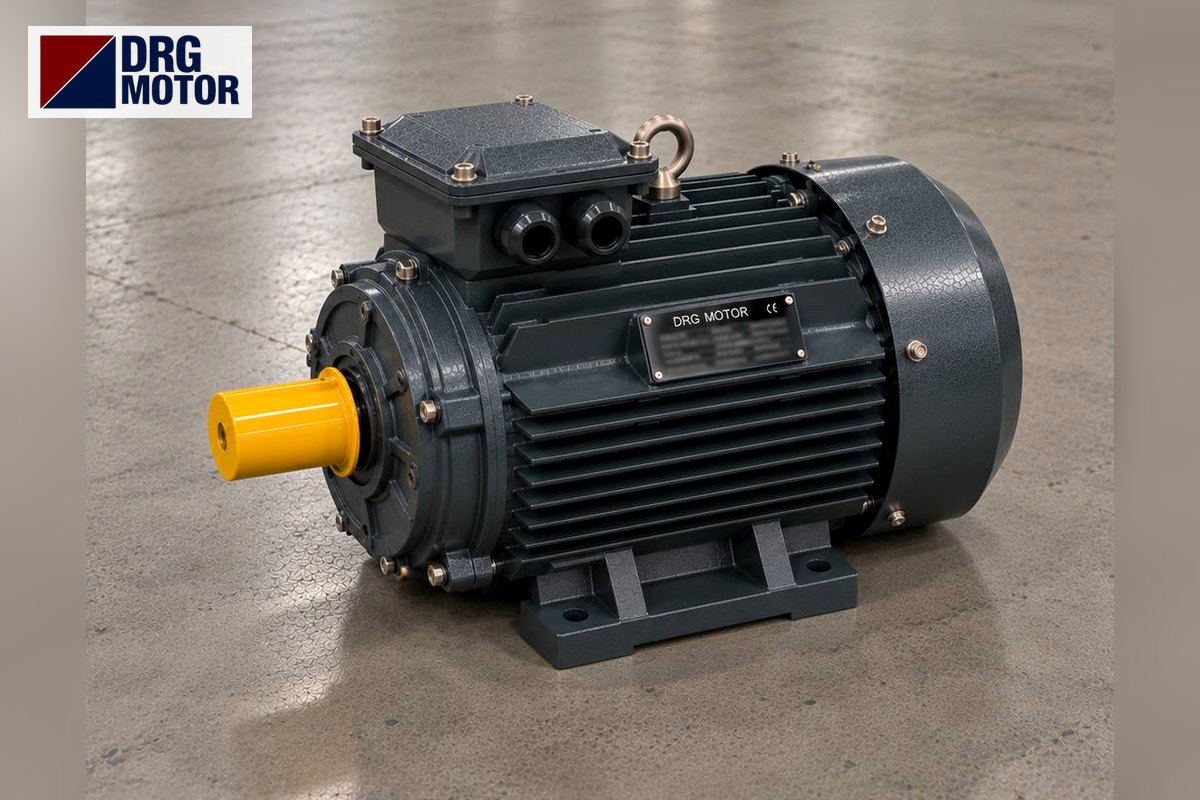

Yes. A motor renewal can be fitted into a maintenance shutdown you have already scheduled, and in most plants that is the lowest-loss way to do it. The trick starts weeks ahead, not on the day: pick the right-sized replacement, have it on site ready, and turn the swap into a task with a known duration. That way the line does not stop a second time on a separate day.
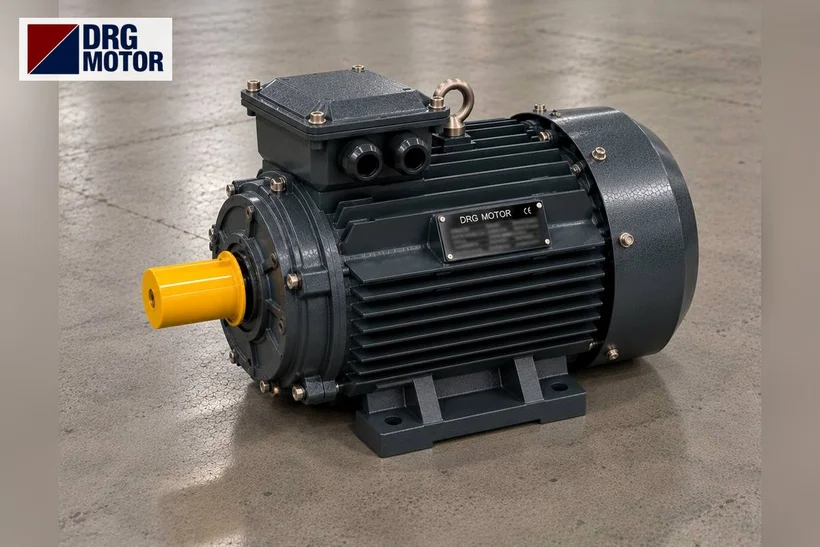
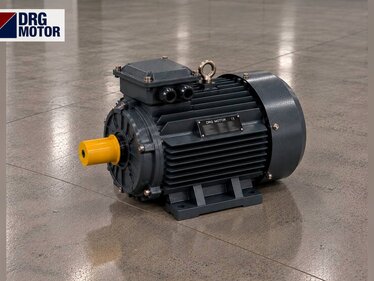
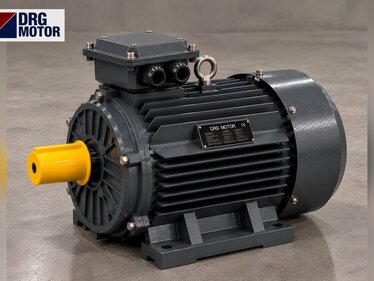
DRG Motor is a manufacturer, supplier and seller of electric motors. It is based in İzmir and ships quickly across all of Türkiye, that province included. Find the model for your renewal by power and speed in the online electric motor shop and see the same products together in the three-phase asynchronous electric motors category.
Why the shutdown, not a separate day?
Stopping a running line just to change a motor hits production. But if the line is already down for an oil change, a bearing check or a belt inspection, slotting the motor renewal into that window adds no extra stoppage cost. The scene we meet most: a motor has been straining for months, someone says "we'll swap it sometime", then one morning it fails mid-shift. An unplanned breakdown always costs more than a planned stop. Tying the renewal to the maintenance calendar turns that risk into a predictable job.
Before the stop: read the nameplate and measure
Preparation centres on the existing motor's nameplate. Before the day, note the power (kW), speed (rpm), voltage (V), frame size and connection type. Then measure three things the plate does not show: shaft diameter (mm), flange type (B3 foot, B5/B14 flange) and the coupling or pulley seating length. Whether the new motor drops onto the same mechanical interface as the old one is what really sets the downtime. If the plate is hard to read, clean it and photograph it; that photo is the most reliable reference when ordering.
Click to see current electric motor prices and order nowSEE PRICES →
Decide the model in advance
The aim of a renewal is to fit a motor that delivers the mechanical power the job needs at the same speed. The table below shows a few DRG aluminium-body three-phase models in the 1500 rpm class, with power and frame size. Pick the row closest to your machine's required kW and confirm the detail on the product page.
| Model | Power | Speed | Frame |
|---|---|---|---|
| DRG-90L-4 | 1.5 kW | 1500 rpm | 90L |
| DRG-112M-4 | 4 kW | 1500 rpm | 112M |
| DRG-132S-4 | 5.5 kW | 1500 rpm | 132S |
| DRG-132M-4 | 7.5 kW | 1500 rpm | 132M |
| DRG-160M-4 | 11 kW | 1500 rpm | 160M |
To check the link between power and speed quickly, torque follows T = 9550 · P / n, with P in kW and n in rpm. If you need the horsepower equivalent, 1 HP is about 0.746 kW. When sizing, the electric motor calculation tool helps.
On the day: step by step
Work starts with the new motor on site, its nameplate confirmed by measurement. Safety comes first: isolate the supply, verify the dead state with a suitable device, and let only authorised electrical staff make the connection. The rough sequence: label and disconnect the old motor's cable ends, remove the coupling or pulley, loosen the foot or flange bolts and lift the motor out. Set the new one on the same base, roughly align the body and shaft axis, then make the connection and fine adjustment. Photographing where every removed part belongs takes the guesswork out of reassembly.
Coupling, belt and pulley alignment
Alignment governs the new motor's life more than anything else. In a coupled drive the shaft axes must be concentric and parallel; misalignment tires the bearing and coupling early. In a belt-and-pulley drive the belt tension should be neither slack nor over-tight, and both pulleys must run in the same plane. If you need to recompute pulley diameter and belt length, a pulley-and-belt calculator does the job. Alignment shows not that the job is done, but how well it is done; do not rush it.
Common mistakes
The most common error is trying to order the new motor on the morning of the stop; shipping time holds the line. Second, getting the power right but skipping frame size or shaft diameter: the base holes miss and the coupling will not seat. Third, removing the old cables without labelling them, scrambling the phase order on reassembly. Fourth, fitting the motor and putting off alignment for "later". And skipping a short no-load test run before loading it up. Put these five on the pre-shutdown checklist and the swap usually fits the time you planned.
First start after the shutdown
Once connection and alignment are done, the job does not go straight under load. Run a short no-load test first: watch the direction of rotation, the sound and the vibration. If it turns the wrong way, correcting it is again a job for authorised staff. Then bring it up to load gradually and, in the first minutes, keep an eye on body temperature, current and mechanical noise. Unusual heating or vibration usually points to alignment or base strain; these checks save time before you take the line to full capacity. Labelling and storing the old motor and the small removed parts gives you a reference at the next maintenance.
Click to pick the right power at the same speed for your shutdown and see current pricesSEE PRICES
Send a photo of your current motor nameplate and we will find the suitable DRG model together.Send on WhatsApp
Frequently asked questions
What information should I have ready for the renewal?
From the nameplate: power (kW), speed (rpm), voltage (V), frame size and connection type. By measurement: shaft diameter (mm) and flange type. These five let you pick the right model first time.
Does a newer motor of the same power speed up production?
No. The power at the shaft is the figure on the nameplate; a renewal that stays at the same kW does not change the machine's speed. Line speed is set by the mechanical power and speed the job needs.
What if the old and new motor dimensions differ?
If the frame size or shaft diameter does not match, you need adaptation at the base, coupling or pulley. Do not leave this to the day of the stop; share the measurements beforehand and settle the model together.
Who should carry out the change?
The maintenance team can handle the mechanical removal and refit, but isolation, verification and the electrical connection must be done by authorised electrical staff. No connection is touched until the dead state is confirmed.
Electric Motors Related to This Topic — Models and Current Prices
Suitability is not decided by power alone: compare the speed, voltage, mounting, shaft and fixing dimensions of your machine with the product data; if unsure, send us the nameplate of your current motor.
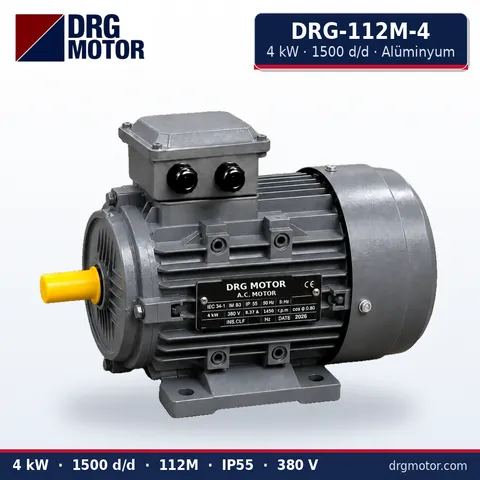
4 kW Three-Phase Motor 1500 rpm – DRG-112M-4 Aluminium
- 4 kW · 1500 rpm (4 poles)
- Aluminium frame · IEC 112M
- Shaft: 28 × 60 mm
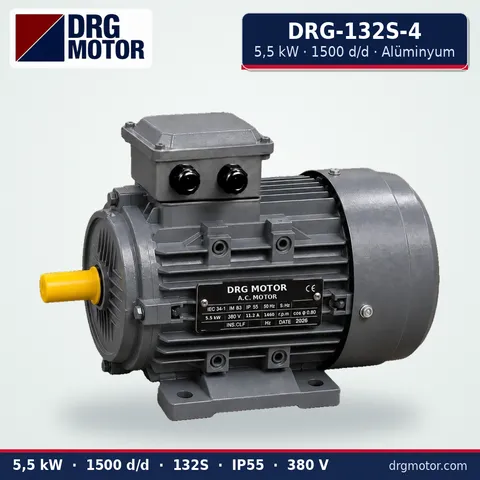
5.5 kW Three-Phase Motor 1500 rpm – DRG-132S-4 Aluminium
- 5.5 kW · 1500 rpm (4 poles)
- Aluminium frame · IEC 132S
- Shaft: 38 × 80 mm
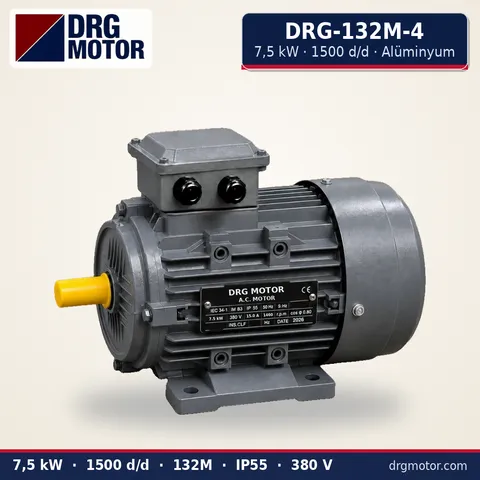
7.5 kW Three-Phase Motor 1500 rpm – DRG-132M-4 Aluminium
- 7.5 kW · 1500 rpm (4 poles)
- Aluminium frame · IEC 132M
- Shaft: 38 × 80 mm
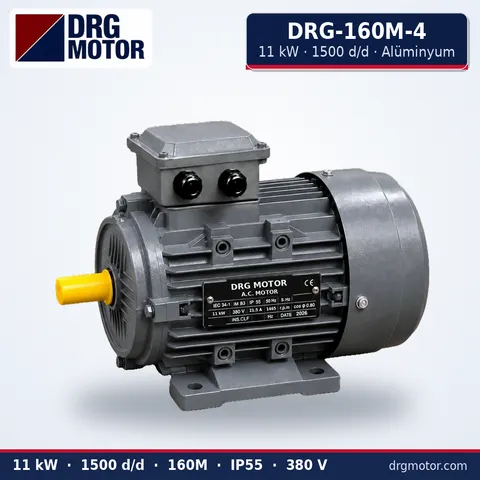
11 kW Three-Phase Motor 1500 rpm – DRG-160M-4 Aluminium
- 11 kW · 1500 rpm (4 poles)
- Aluminium frame · IEC 160M
- Shaft: 42 × 110 mm
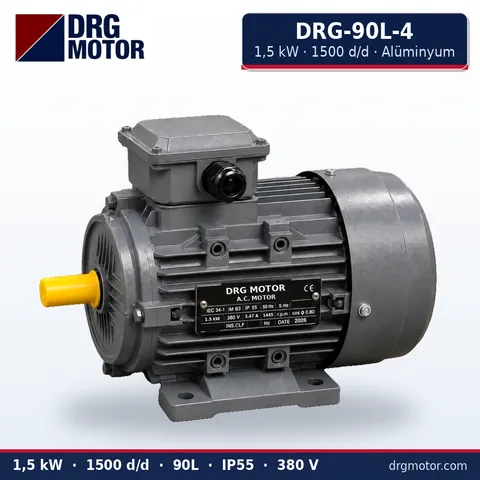
1.5 kW Three-Phase Motor 1500 rpm – DRG-90L-4 Aluminium
- 1.5 kW · 1500 rpm (4 poles)
- Aluminium frame · IEC 90L
- Shaft: 24 × 50 mm