English
 Le français
 Türkçe




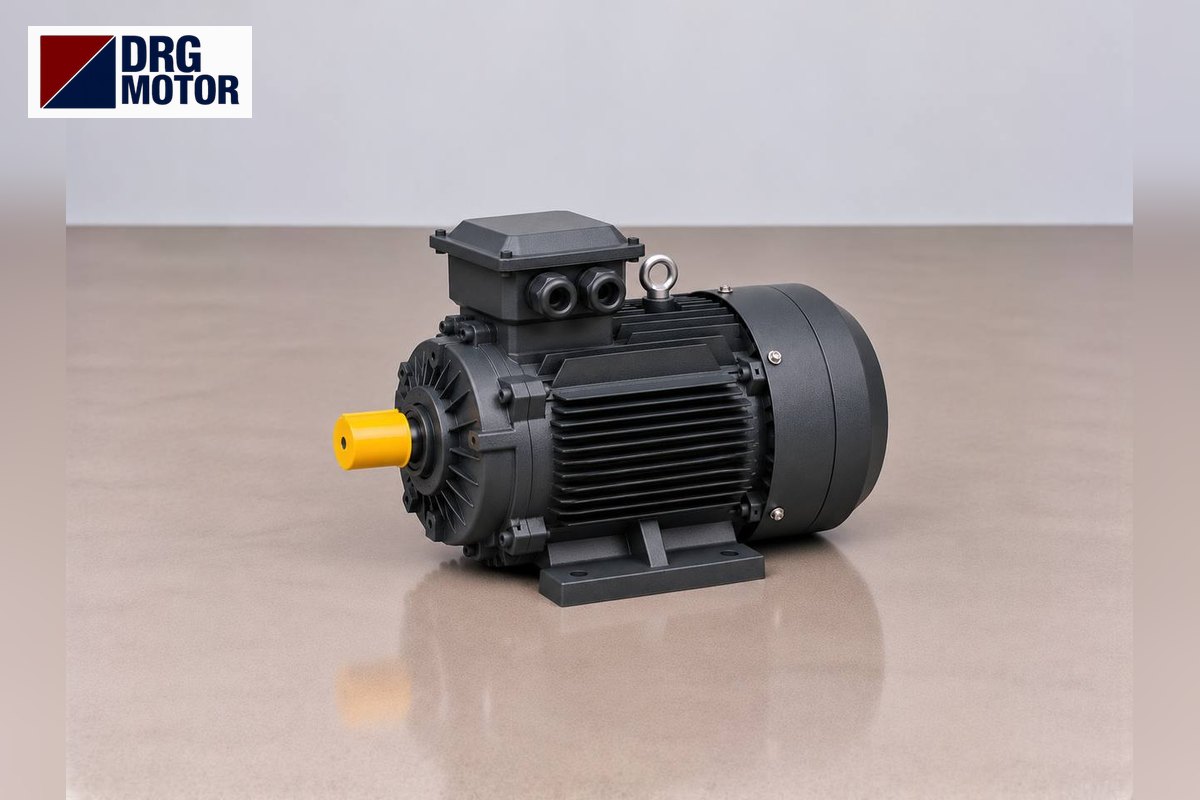

If the nameplate of your GAMAK three-phase electric motor reads 380 V or 400 V and you are looking for a new motor to replace it, the choice should not rest on a single value; several pieces of information need to be read together. This article explains what the voltage marking means, which values to take from the nameplate and which information to send DRG MOTOR so that the options can be assessed on technical grounds.
380 V or 400 V: what does the nameplate voltage tell you?
On site, the three-phase network is still often called "380". The GAMAK technical catalogue gives 400 V 50 Hz as the standard value for its three-phase series, states that other voltages in the 110–660 V range and 60 Hz are available on request, and notes that variations of ±5% in rated voltage and ±2% in frequency cause practically no change in motor output. So what matters is not the catalogue standard but your own nameplate: if it shows two voltage values with Δ/Y symbols, write them down exactly as printed.
On a new motor, the voltage pair may change with power. In the DRG MOTOR online store, models up to 3 kW are listed as 230/400 V and models of 4 kW and above as 400/690 V; any special voltage or different frequency requirement should be stated separately. The terminal connection differs between these two voltage pairs; whether the existing starting arrangement in the panel suits the new motor must be decided by qualified technical personnel. You can compare approximate currents by power and voltage on the motor current chart.
Values to take from the nameplate
Besides voltage, rated power (kW), nominal speed on the nameplate (rpm), frequency, rated current, IE class if shown and the full type code form the basis of the selection. The GAMAK catalogue defines rated power as the power stated on the motor plate; if the plate is unreadable, also check cast markings on the frame and the machine manual.
There is a subtle distinction in speed: a "1500 rpm motor" usually refers to the speed class (4 poles), while the nameplate shows the nominal speed under load. In the DRG range, the 3 kW DRG-100L2-4 and the 4 kW DRG-112M-4 both have a nominal speed of 1450 rpm and belong to the 1500 class, yet their frames (100L and 112M) and voltage pairs differ. The same nameplate voltage, the same kW or the same speed class does not by itself show that a new motor will fit the machine.
Mechanical side: frame, mounting and shaft
The dimension tables in the GAMAK catalogue are based on IEC 60072-1, with foot-mounted (B3) and flange-mounted (B5, B14) forms given within that framework. The catalogue defines the frame material as aluminium for frames 63–112, aluminium or cast iron for 132–250, and cast iron for 280 and above. Find the frame code on the nameplate or housing of your GAMAK electric motor (such as 100L, 112M, 132S); foot hole spacing, shaft height, shaft diameter × length and flange dimensions should be checked by comparing them with the new motor. DRG motors are available in B3, B5 and B35 mounting; B14 is also available, with B14 flange dimensions confirmed at order.
Operating conditions and why the old motor stopped
A replacement is also a chance to understand why the old motor went out of service. Burnt windings, bearing noise or overheating may be caused by overload, phase imbalance, frequent start-stop, a blocked fan cover, moisture or dust. Fitting a motor of the same power without finding the cause may repeat the problem. DRG motors have IP55 protection, class F insulation and IC411 cooling, and are rated for −15…+40 °C ambient and altitudes up to 1000 m. If the environment falls outside these limits or the motor is inverter-fed, say so from the start. If your motor has a brake, a separately driven fan or a drive integrated into the motor, say so as well; these features change the assessment.
Once you have the nameplate photo and a note on what the machine does, you can send them to DRG MOTOR via WhatsApp; the options are reviewed with this data.
DRG options that can be assessed
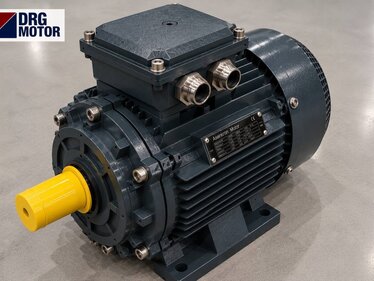
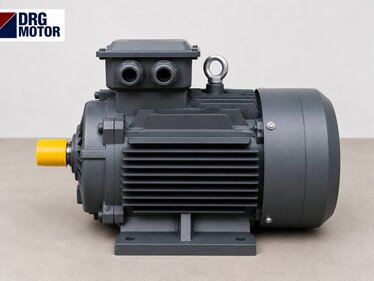
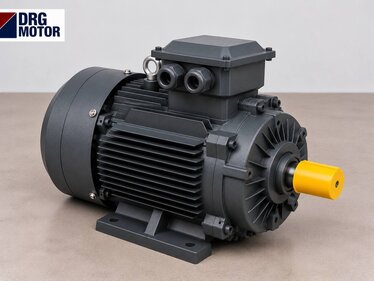
DRG Motor is a manufacturer, supplier and seller of electric motors. The store range consists of three-phase asynchronous IEC motors: 0.25–11 kW in aluminium frames and 0.55–355 kW in cast iron. The models below are examples only; suitability becomes clear after the nameplate and dimensions are compared:
- DRG-90L-2: 2.2 kW, 2895 rpm, 230/400 V, frame 90L, 4.35 A at 400 V
- DRG-100L2-4: 3 kW, 1450 rpm, 230/400 V, frame 100L, 6.02 A at 400 V
- DRG-112M-4: 4 kW, 1450 rpm, 400/690 V, frame 112M, 7.95 A at 400 V
All three-phase options are listed on the Three-Phase Asynchronous Electric Motors page and in the DRG online store.
Frequently asked questions
My nameplate says 380 V; can a new motor be used on a 400 V network?
A 380 V marking does not settle the question on its own. Whether a motor suits the existing supply must be determined by checking the nameplate voltage, frequency, manufacturer tolerances and connection arrangement together. The voltage pair of the new motor and the connection arrangement in the panel are part of this check; the decision should be made by qualified technical personnel once nameplate and panel information are reviewed together.
What changes if the nameplate shows 60 Hz?
The GAMAK catalogue mentions 60 Hz motors on request. If your nameplate shows 60 Hz, the speed and power values differ from their 50 Hz equivalents; be sure to state this, as the assessment depends on it.
Do I need to give the IE class of my old motor?
If your nameplate shows a marking such as IE2 or IE3, include it; it helps describe the existing motor completely. If not, the selection is made with the other data.
What if the nameplate is completely worn off?
An assessment can still be made by measuring the frame code, shaft diameter and length, foot hole spacing, flange dimensions and the speed the machine requires. Without a nameplate, uncertainty increases, so take measurements at as many points as possible.
Information to send DRG MOTOR
- A clear, readable photo of the nameplate and the full type code
- The voltage pair, Δ/Y symbol and frequency on the nameplate
- Power (kW), nominal speed (rpm) and rated current
- Mounting form (foot, flange, foot-and-flange) and frame code
- Shaft diameter × length; for flange motors, flange outer diameter, spigot diameter and pitch circle
- Machine type, load, daily operating time and start-stop frequency
- Environment: temperature, humidity, dust, indoor or outdoor
Fill in this list and send it; the suitable option is then assessed by reviewing the technical data and operating conditions together.
Contact: WhatsApp · quote list · +90 (542) 666 11 11 · info@drgmotor.com · contact page
See current prices of DRG MOTOR electric motors and order online in our storeSEE PRICES →
Technical Sources
- GAMAK — Teknik Katalog (TR), Turkish-language technical catalogue — Standards and recommendations (Standartlar ve Tavsiyeler) — printed page 18 (PDF page 18).
- GAMAK — Teknik Katalog (TR), Turkish-language technical catalogue — Mechanical design: frame, end shields and flanges — printed page 19 (PDF page 19).
- GAMAK — Teknik Katalog (TR), Turkish-language technical catalogue — Electrical design: voltage and frequency — printed page 35 (PDF page 35).
- GAMAK — Teknik Katalog (TR), Turkish-language technical catalogue — Electrical design: rated power — printed page 36 (PDF page 36).