English
 Le français
 Türkçe




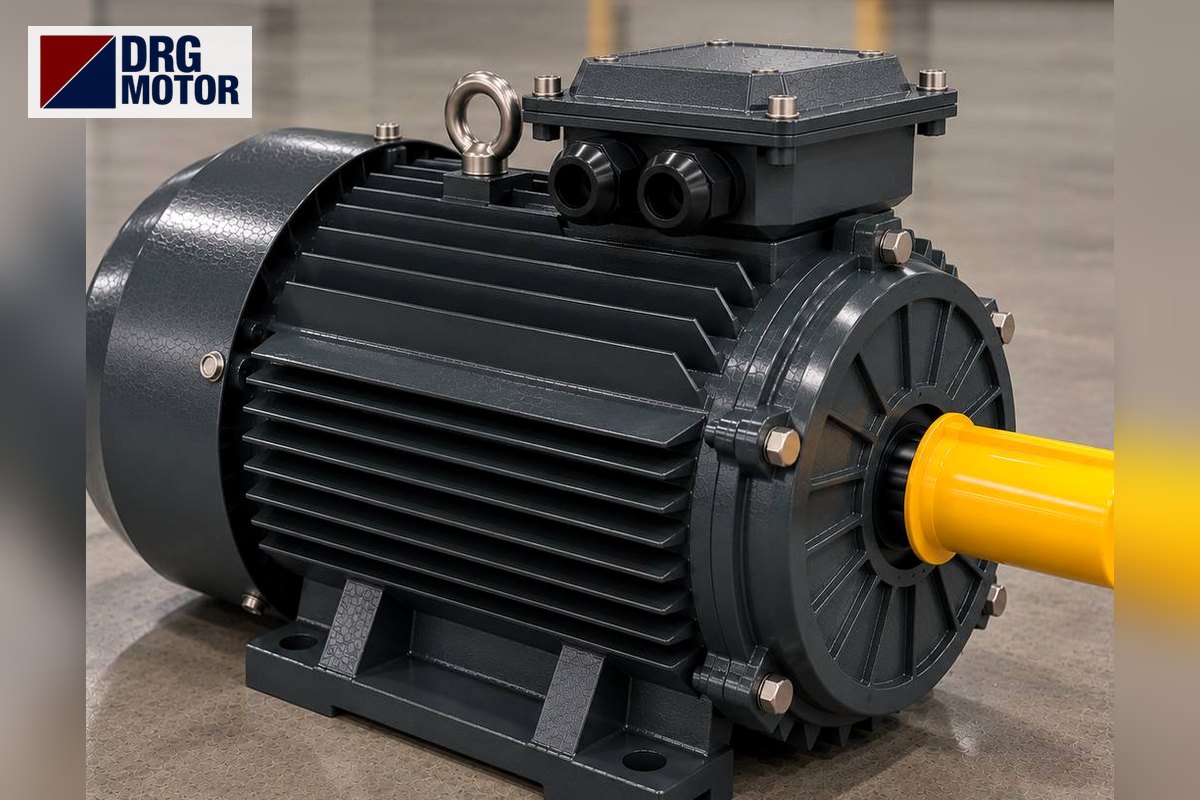

A burnt terminal box on an electric motor almost always comes down to a single mechanism: high contact resistance at a connection point. A loose bolt, an oxidised surface, under-tightening or a wrongly fitted star/delta bridge generates heat there; over time the heat chars the connection and melts the insulation and the terminal carrier. Spotting the symptoms early and having an authorised person inspect the connection protects both the motor and the panel.
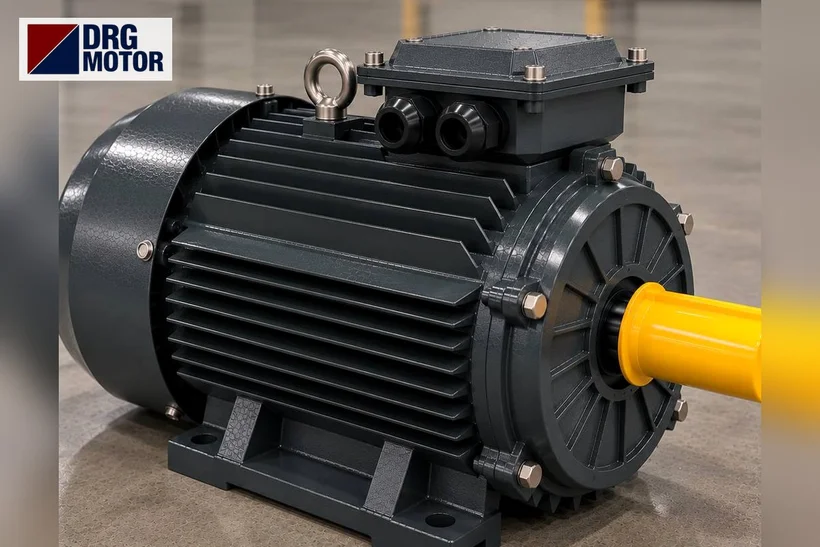
DRG Motor is a manufacturer, supplier and seller of electric motors. When replacing a motor that has suffered a terminal burn, you can find models of the right power and speed in the online motor shop, and review every option together in the three-phase asynchronous electric motors category.
Why does a terminal box burn? The real cause: contact resistance
Every connection point in the terminal box is a contact surface that carries current. The cleaner, wider and tighter that surface is, the lower the resistance and the less it heats. When the contact deteriorates, a small resistance forms there and, with the current flowing through it, heat is released. Heat degrades the metal and the insulation, which raises the resistance further, so a self-feeding cycle begins. At the root of a burn there is usually a single faulty contact point.
So although a terminal burn looks like a "motor fault", its source is usually not inside the motor but in the quality of the assembly in the terminal box. The causes below are the main factors that raise this contact resistance.
Loose connections and insufficient tightening torque
The most common cause is a loose connection. When a cable lug or conductor does not seat fully on the nut, or works loose over time from vibration, the contact area shrinks. The same current keeps flowing through a smaller area, so the point heats up. Insufficient tightening torque has the same effect: the joint never makes full contact from day one. Over-tightening is also harmful, because it damages the bolt thread or the terminal stud.
The correct value depends on the terminal stud size and the manufacturer's documentation; rather than quoting an exact torque from memory, follow the value stated on the motor nameplate and in the terminal box documentation. Checking the connections at regular intervals, with the power off, catches loosening early.
Oxidation, moisture and contamination
Copper or brass contact surfaces oxidise in damp, dusty environments or where chemical vapours are present. The oxide layer behaves like an insulator and raises contact resistance. When the terminal box gasket ages or the cover does not close fully, the moisture that gets in accelerates the process. Even on a motor with IP55 protection, the housing loses its protective function if the box cover and the gland are not closed correctly.
Darkened, greenish or white-powdered contact points are signs of oxidation, and these connections need cleaning and re-tightening to the correct torque.
Click to see current electric motor prices and order nowSEE PRICES →
Overcurrent and continuous overloading
Running above the rated current on the motor nameplate heats the whole connection chain. A mechanical overload, a seized bearing, a blocked pump or an undersized motor raises the current, and the terminal box is the first place to react to that heat. If a connection is already loose or oxidised, overcurrent triggers the burn. That is why the motor power should match the application and the thermal protection should be set to the current on the nameplate.
The table below lists the rated currents at 400 V of some 4-pole (1500 rpm) DRG models; these values help you see what current the thermal relay and the terminal connection should be sized for.
| Model | Power / Speed | Rated current (400 V) | Connection |
|---|---|---|---|
| DRG-112M-4 | 4 kW / 1500 rpm | 7.95 A | 400/690 V (Δ/Y) |
| DRG-132S-4 | 5.5 kW / 1500 rpm | 10.7 A | 400/690 V (Δ/Y) |
| DRG-132M-4 | 7.5 kW / 1500 rpm | 14.3 A | 400/690 V (Δ/Y) |
| DRG-160M-4 | 11 kW / 1500 rpm | 20.4 A | 400/690 V (Δ/Y) |
To assess the current properly, the motor current chart and the motor cable size calculator are useful; an undersized cable also increases heating on the terminal side.
Fitting the star/delta bridge correctly
In the terminal box of three-phase motors there are six leads (U1-V1-W1 and U2-V2-W2) and bridge link plates. These bridges decide whether the motor is connected in star (Y) or delta (Δ). Their position is chosen according to the supply voltage and the value on the motor nameplate: for example, a motor marked 400/690 V is connected in delta (Δ) on a 400 V three-phase supply.
If a bridge plate is missing, loose or in the wrong position, two problems arise at once. First, a wrong connection can apply the wrong voltage to the motor and cause overcurrent. Second, a loose bridge plate leaves a small contact area and heats up at exactly that point, burning the terminal box. That is why the bridges seating fully, the plates being clean and the nuts tightened to the correct torque are critical. Always build the bridge layout according to the diagram on the motor nameplate.
Symptoms of a burning terminal box: what to watch for
A burn usually does not happen suddenly; it warns in advance. Common symptoms are:
- A burnt, ozone-like or plastic smell from the terminal box.
- Darkening, soot and colour change on the terminal screws or cable lugs.
- Higher than normal heating; a box cover that is noticeably hot to the touch.
- The motor pulling intermittently, running with vibration, or one phase coming in weak.
- The thermal relay tripping for no clear reason, or the fuse opening frequently.
If even one of these signs appears, the motor should not be run, and the connection should be checked after the power is switched off.
Safe inspection: switch off the power first
Checking the terminal box and working on connections carries an electrical hazard. Always switch off the power first, verify the absence of voltage with a suitable instrument, and let only authorised electrical personnel do the work. A burnt terminal carrier, darkened cable ends and damaged bridge plates must be replaced with new ones; simply re-tightening a darkened connection is not a lasting fix.
If insulation resistance or winding integrity is to be measured, judge the thresholds not from memory but according to the motor nameplate and the instrument's documentation. If the burn has reached the winding, replacing the motor may be on the table; in that case, replacing it with a model of the same power, speed and connection class is the safest route.
Send a photo of your current motor nameplate and we will find the suitable DRG model together.Send on WhatsApp
If you need to replace your motor after a terminal burn, you can compare three-phase models of the right power and speed and the current options through the shop.
See the models and current prices of three-phase asynchronous motors to replace after a terminal burn in the shopSEE PRICES
Frequently asked questions
Can a motor with a burnt terminal box be repaired?
If the burn is limited to the terminal carrier and the cable ends, those parts can be replaced and the connection rebuilt to the correct torque, and the motor can keep running. If the burn has reached the winding, the motor may need replacing; authorised personnel decide after an inspection with the power off.
What happens if the bridge plate is fitted wrongly?
A wrong bridge layout applies the wrong voltage to the motor and leads to overcurrent and heating; a loose bridge also creates contact resistance and burns the terminal box. Always build the bridge layout according to the diagram on the motor nameplate.
How tight should I make the connection bolt?
The exact torque depends on the terminal size and is stated on the motor nameplate and in the terminal box documentation. Under-tightening leaves a loose contact, over-tightening damages the thread; so do not guess the value, follow the documented one.
How do I prevent a terminal burn?
Tighten connections to the correct torque, keep contact surfaces clean and dry, close the box cover and gland fully, do not load the motor above the nameplate current, and inspect the connections at regular intervals with the power off.
Electric Motors Related to This Topic — Models and Current Prices
Suitability is not decided by power alone: compare the speed, voltage, mounting, shaft and fixing dimensions of your machine with the product data; if unsure, send us the nameplate of your current motor.
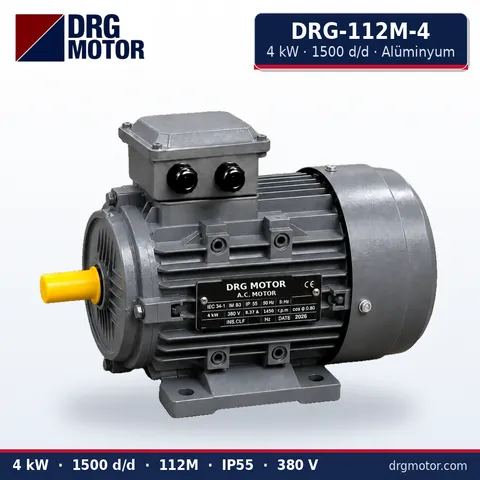
4 kW Three-Phase Motor 1500 rpm – DRG-112M-4 Aluminium
- 4 kW · 1500 rpm (4 poles)
- Aluminium frame · IEC 112M
- Shaft: 28 × 60 mm
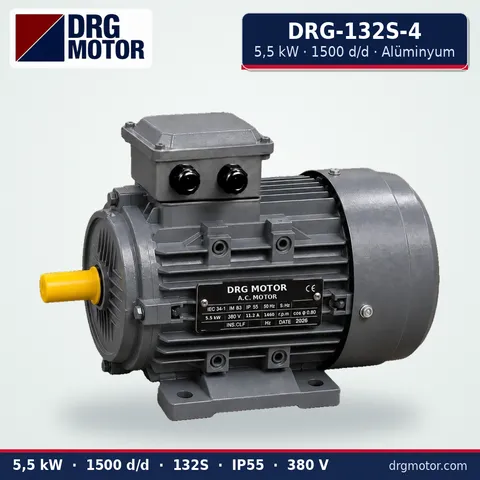
5.5 kW Three-Phase Motor 1500 rpm – DRG-132S-4 Aluminium
- 5.5 kW · 1500 rpm (4 poles)
- Aluminium frame · IEC 132S
- Shaft: 38 × 80 mm
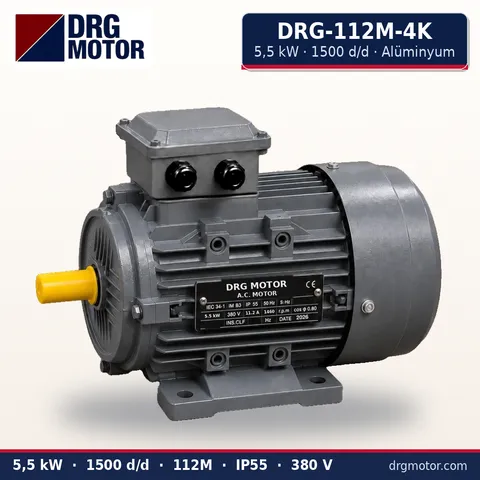
5.5 kW Compact Three-Phase Motor 1500 rpm – DRG-112M-4K Aluminium
- 5.5 kW · 1500 rpm (4 poles)
- Aluminium frame · IEC 112M
- Shaft: 28 × 60 mm
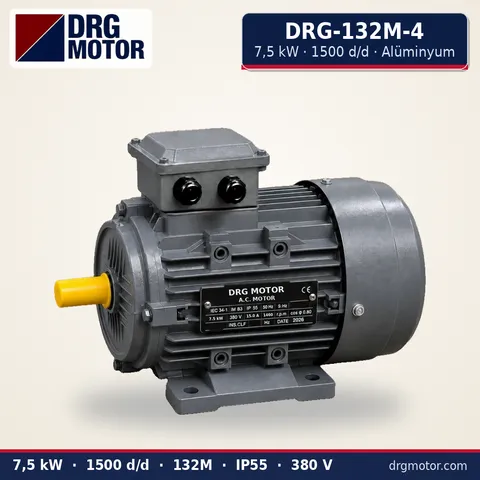
7.5 kW Three-Phase Motor 1500 rpm – DRG-132M-4 Aluminium
- 7.5 kW · 1500 rpm (4 poles)
- Aluminium frame · IEC 132M
- Shaft: 38 × 80 mm
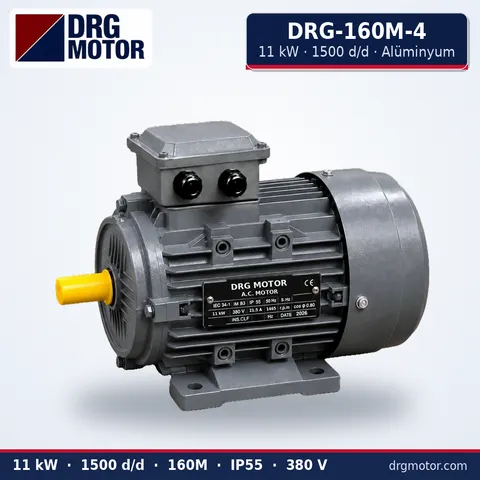
11 kW Three-Phase Motor 1500 rpm – DRG-160M-4 Aluminium
- 11 kW · 1500 rpm (4 poles)
- Aluminium frame · IEC 160M
- Shaft: 42 × 110 mm
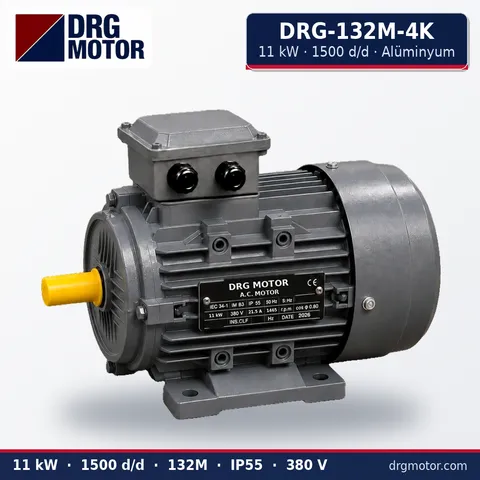
11 kW Compact Three-Phase Motor 1500 rpm – DRG-132M-4K Aluminium
- 11 kW · 1500 rpm (4 poles)
- Aluminium frame · IEC 132M
- Shaft: 38 × 80 mm