English
 Le français
 Türkçe

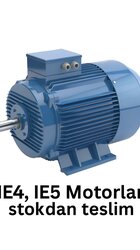
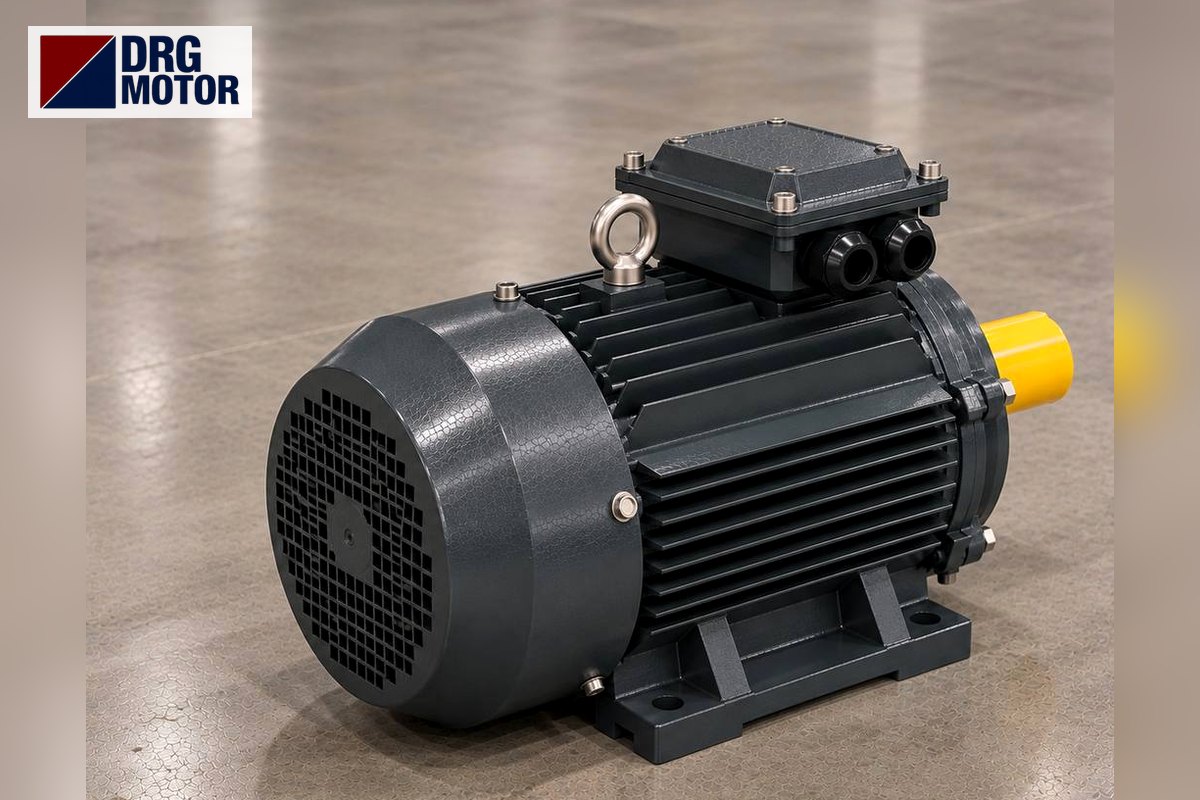

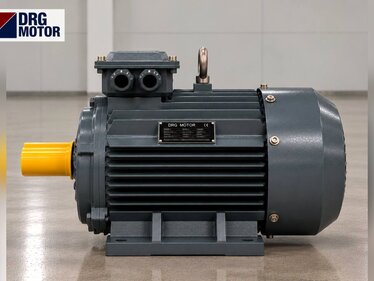
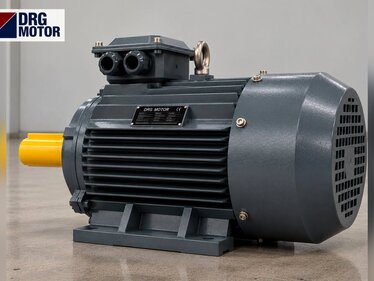
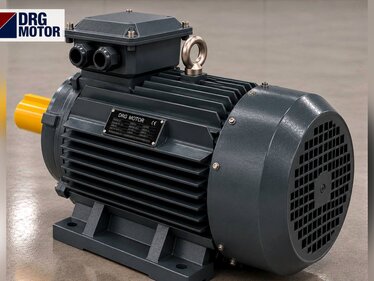
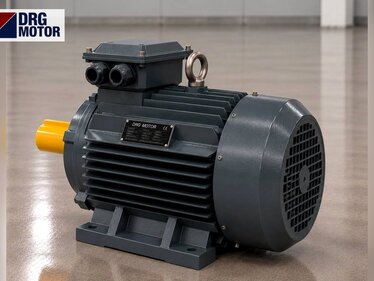
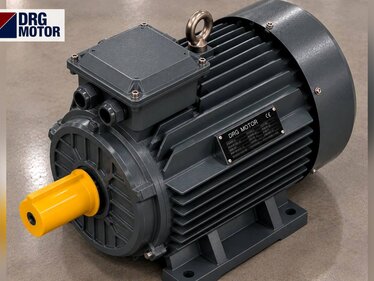
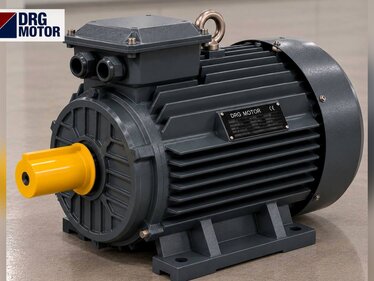
A three-phase asynchronous electric motor is built from a few core parts: on the outside the frame, front/rear end shields, fan and terminal box, and on the inside the stator (winding) and the rotor (squirrel cage). The shaft and bearings carry the rotation to the outside. This article explains, in plain terms, what each part does and how the asynchronous motor actually works.
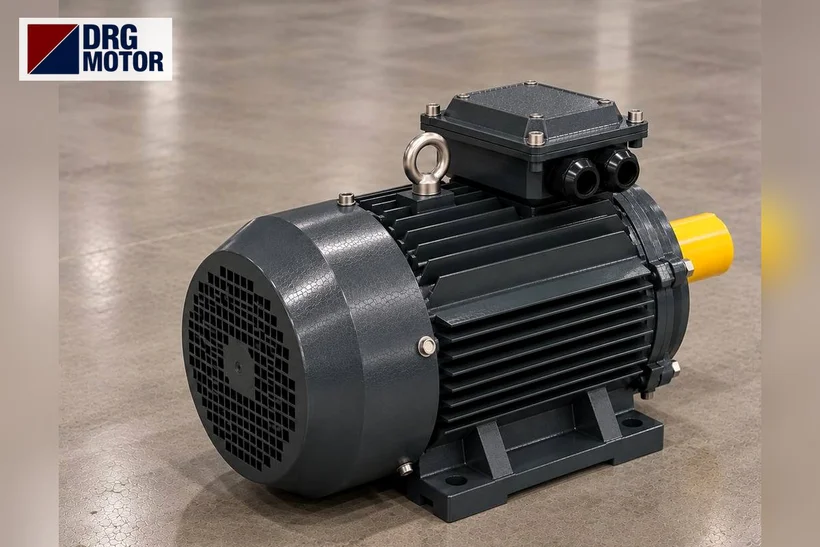
DRG Motor is a manufacturer, supplier and seller of electric motors. You can review three-phase models with the structure described below, by power and speed, in the online motor shop, and see the same motors together in the three-phase asynchronous electric motors category.
What parts make up an electric motor?
The easiest way to picture a motor is in two groups: a stationary part and a rotating part. The heart of the stationary part is the stator; the heart of the rotating part is the rotor. Everything else — frame, end shields, bearings, shaft, fan and terminal box — holds these two together, cools and protects them, and carries the rotation outward. The table below sums up each part's job at a glance.
| Part | Function |
|---|---|
| Frame (housing) | Carries all parts, dissipates heat and protects against external effects. |
| Stator and winding | The stationary part; current in the winding creates the rotating magnetic field. |
| Rotor (squirrel cage) | The rotating part; follows the magnetic field and turns the shaft. |
| Shaft | Transfers rotation to the load (coupling, pulley, gearbox). |
| Bearings | Support the shaft at both ends, reduce friction and vibration. |
| Front and rear end shields | Locate the bearings and keep the air gap between rotor and stator. |
| Fan and fan cover | A fan on the shaft cools the motor; the cover guides air over the frame. |
| Terminal box | The connection point where supply cables are wired in star/delta. |
The stationary part: stator and winding
The stator is the motor's non-moving magnetic core. It is made of thin silicon-steel laminations pressed together; copper windings sit in the slots of these laminations. In a three-phase motor the winding is split into three phases. When currents shifted by 120 degrees reach the three phases, a rotating magnetic field appears inside the stator. The synchronous speed that sets the motor's rpm depends on the winding's pole count and the mains frequency: ns = 120 · f / p. For example, at 50 Hz a 4-pole winding gives a synchronous speed of 1500 rpm.
The winding is the most sensitive part of the motor. Its insulation is class F, and keeping it protected from heat directly affects service life. That is why the frame and fan are designed to keep the winding cool.
Click to see current electric motor prices and order nowSEE PRICES →
The rotating part: rotor (squirrel cage)
The rotor is the rotating core mounted on the shaft. Common three-phase motors use the squirrel-cage type: aluminium or copper bars set in the slots of the lamination stack are joined at both ends by short-circuit rings. The shape resembles a squirrel's cage, hence the name. The rotor has no external electrical connection; current is induced in the bars by the stator's field. This induced current creates its own magnetic field, and the rotor turns as it tries to catch the stator's rotating field.
The asynchronous principle in brief
The word "asynchronous" in the name captures exactly this point. The rotor cannot turn at the same speed as the stator's rotating field; if it did, no current would be induced in the bars and no torque would be produced. So the rotor runs a little below synchronous speed. The difference is called slip. A nameplate speed below the synchronous value (for example 1450–1465 rpm instead of 1500 rpm) is the natural result of this slip. As load rises, slip grows, the rotor slows slightly and the motor produces more torque. To try the synchronous-speed, slip and torque relationship numerically, use the electric motor calculator.
Frame, end shields and cooling
The frame (housing) is the outer body that encloses the stator and carries every part. The DRG range offers two frame materials: light, easy-to-handle aluminium and heavier but robust cast iron. The fins on the frame enlarge the heat-radiating surface. The front and rear end shields locate the bearings and maintain the thin air gap between rotor and stator; an even gap all around is the condition for vibration-free running.
Cooling comes from a fan on the shaft. The fan sits behind the rear end shield and is covered by a fan cover that guides air over the frame fins (IC411 self-cooling). For more on frame and mounting options, see the types of electric motor housings article.
Shaft, bearings and terminal box
The shaft is the output element that carries the rotor's rotation to a coupling, pulley or gearbox. Shaft diameter and length determine the mating element, so they are a critical dimension in motor selection. Bearings support the shaft at both ends, reduce friction and keep the axis true. The terminal box is where the supply cables connect and the star (Y) or delta (Δ) bridging is made. Below are the frame and shaft dimensions of DRG models in the same 4-pole (1500 rpm) class; you can see how the frame size and shaft diameter grow with power.
| Model | Power | IEC frame | Shaft (D×E) |
|---|---|---|---|
| DRG-112M-4 | 4 kW | 112M | 28x60 mm |
| DRG-132S-4 | 5.5 kW | 132S | 38x80 mm |
| DRG-112M-4K | 5.5 kW | 112M | 28x60 mm |
| DRG-132M-4 | 7.5 kW | 132M | 38x80 mm |
| DRG-160M-4 | 11 kW | 160M | 42x110 mm |
| DRG-132M-4K | 11 kW | 132M | 38x80 mm |
To see how shaft diameter changes with power over a wider range, the motor shaft diameter by kW table is a good guide. For correct current and cable checks, the motor current chart is also handy.
Send a photo of your current motor nameplate and we will find the suitable DRG model together.Send on WhatsApp
Once you know the parts, you can compare the three-phase model at the right power and speed for your application in the shop.
Browse the three-phase asynchronous motor models that fit your needs and see current prices in the shopSEE PRICES
Frequently asked questions
What is the basic difference between stator and rotor?
The stator is stationary and its winding creates the rotating magnetic field; the rotor rotates and follows that field to turn the shaft. The stator is fed electrically, while the rotor (squirrel cage) has no external connection — current is induced in it.
Why is the squirrel-cage rotor preferred?
Because it is a simple, durable and maintenance-free structure. It has no brushes or slip rings, which reduces the number of parts that can fail and makes the motor reliable for industrial use.
Why doesn't the motor run at exactly synchronous speed?
Because the rotor needs a speed difference (slip) relative to the stator's field to produce torque. If slip were zero, no current would be induced in the rotor bars and no torque would form. That is why the nameplate speed is a little below synchronous speed.
What do the bridges in the terminal box do?
The bridges connect the winding ends in star (Y) or delta (Δ); the nameplate states which connection matches which voltage. Before wiring, cut the power, verify it is de-energised and leave the work to qualified electrical personnel.
Electric Motors Related to This Topic — Models and Current Prices
Suitability is not decided by power alone: compare the speed, voltage, mounting, shaft and fixing dimensions of your machine with the product data; if unsure, send us the nameplate of your current motor.
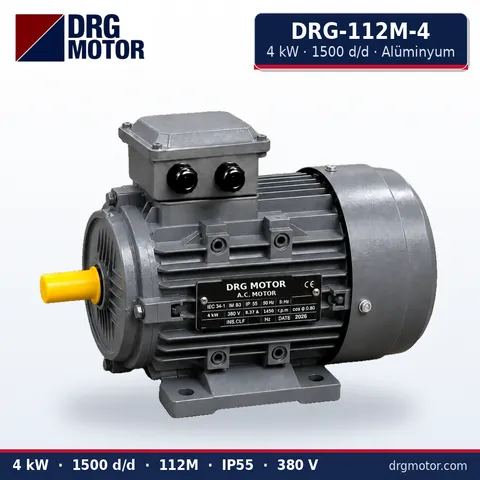
4 kW Three-Phase Motor 1500 rpm – DRG-112M-4 Aluminium
- 4 kW · 1500 rpm (4 poles)
- Aluminium frame · IEC 112M
- Shaft: 28 × 60 mm
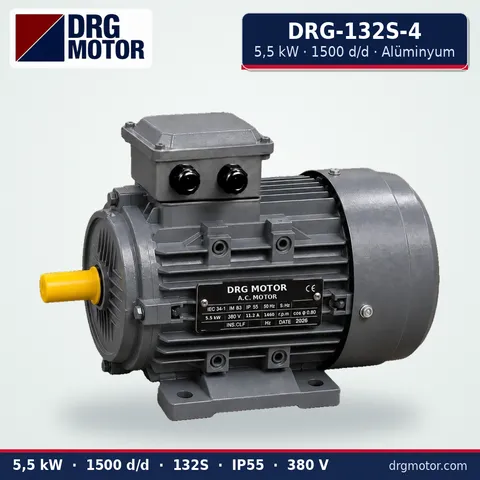
5.5 kW Three-Phase Motor 1500 rpm – DRG-132S-4 Aluminium
- 5.5 kW · 1500 rpm (4 poles)
- Aluminium frame · IEC 132S
- Shaft: 38 × 80 mm
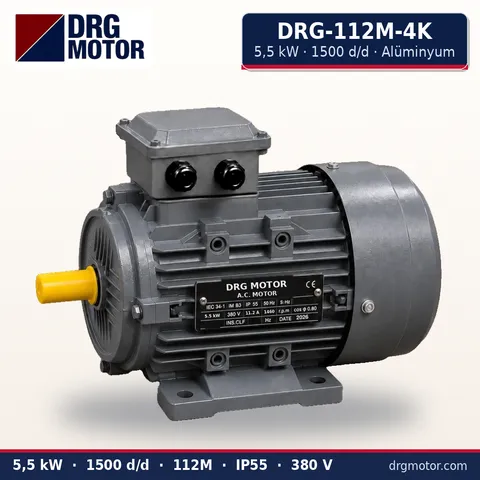
5.5 kW Compact Three-Phase Motor 1500 rpm – DRG-112M-4K Aluminium
- 5.5 kW · 1500 rpm (4 poles)
- Aluminium frame · IEC 112M
- Shaft: 28 × 60 mm
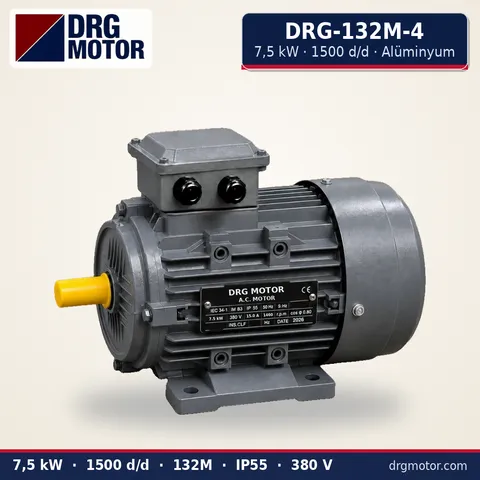
7.5 kW Three-Phase Motor 1500 rpm – DRG-132M-4 Aluminium
- 7.5 kW · 1500 rpm (4 poles)
- Aluminium frame · IEC 132M
- Shaft: 38 × 80 mm
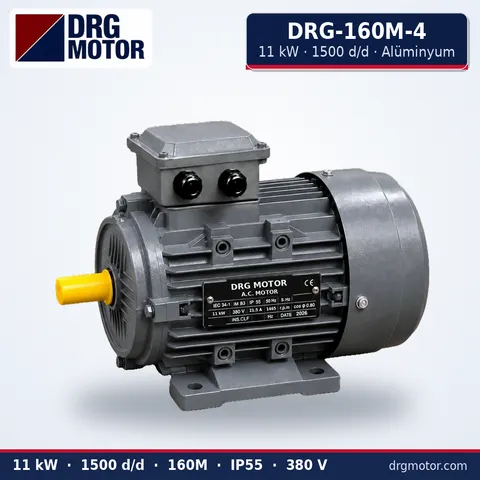
11 kW Three-Phase Motor 1500 rpm – DRG-160M-4 Aluminium
- 11 kW · 1500 rpm (4 poles)
- Aluminium frame · IEC 160M
- Shaft: 42 × 110 mm
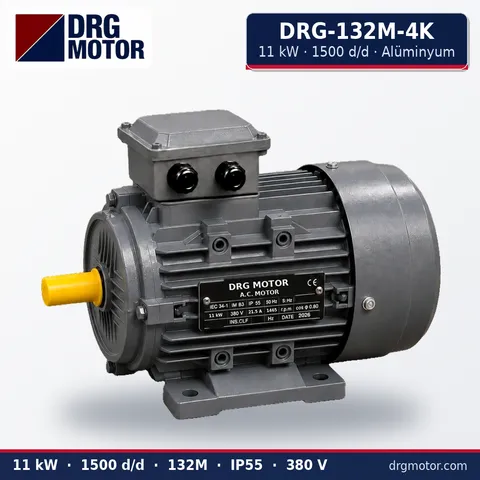
11 kW Compact Three-Phase Motor 1500 rpm – DRG-132M-4K Aluminium
- 11 kW · 1500 rpm (4 poles)
- Aluminium frame · IEC 132M
- Shaft: 38 × 80 mm