English
 Le français
 Türkçe




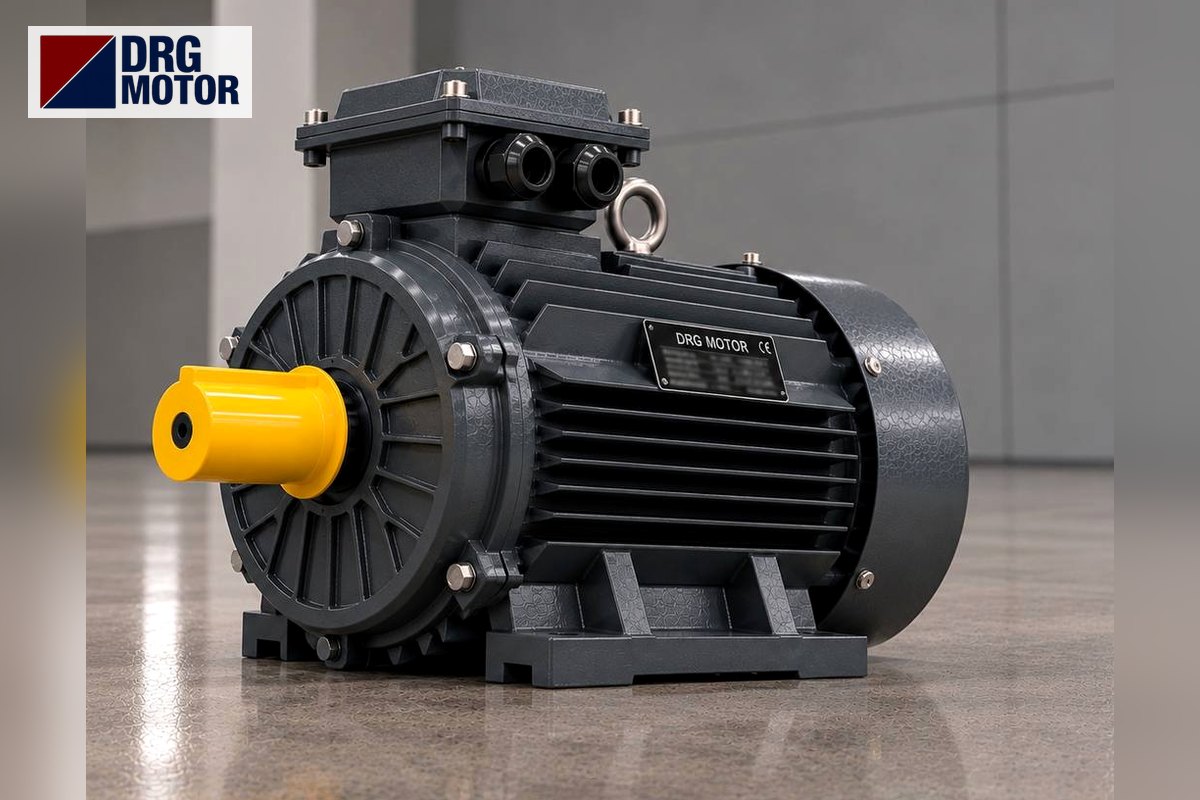

Never run an electric motor that has taken in moisture or water before you have dried it and measured its insulation. Water weakens the winding insulation; when the motor is energised, this creates a risk of earth leakage, short circuit and burnt windings. The correct order is: cut the power, remove water and dirt, dry the windings, and only put the motor back into service once the insulation resistance has returned to an acceptable level.
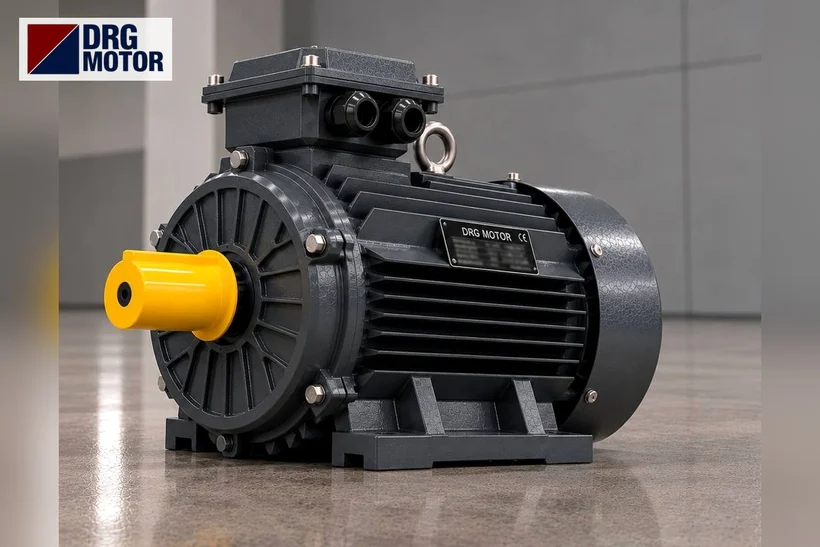
DRG Motor is a manufacturer, supplier and seller of electric motors. For a motor that has taken in water and does not recover despite drying, you can compare a suitable replacement by power and speed in the online motor shop. All three-phase options are listed in the three-phase asynchronous electric motors category.
What does moisture and water actually do to a motor?
At the heart of a three-phase asynchronous motor are copper windings separated from the frame by a thin layer of insulation. While this insulation is dry, almost no current passes between winding and frame. When water or heavy moisture penetrates the winding insulation, two things happen: the electrical resistance of the insulation drops and conductive paths appear. The moment power is applied, a leakage current flows from these weak points to the frame; heating, arcing and local burning of the winding start right there.
Water also affects the terminal box, the bearing seats and internal surfaces. Terminal connections can show oxidation and tracking, while bearings can suffer rust and a breakdown of the oil film. So when we say "the motor took in water", the problem is not only in the winding; the whole internal balance of the motor must be examined.
First step: safety and cutting the power
Before approaching a wet motor, always cut the power and verify the absence of voltage with a suitable device. Water can make a live frame dangerous, so no work should be done until the mains connection is safely isolated. Touching the wet frame, working inside its panel, or saying "let's just start it and see" can lead to serious injury and permanent damage.
This article is informative and is not a set of field instructions. Operations such as dismantling, drying, measurement and reconnection must be carried out only by authorised electrical personnel. The sections below explain what is done and why; every step in the field must follow the documentation of the equipment concerned and the motor nameplate.
Insulation (megger) test before starting
You cannot judge by eye whether a motor that has taken in water is dry; a motor that looks dry on the outside may still have damp windings. The critical check is therefore the insulation resistance (megger) test, which stresses the insulation between winding and frame. A low value shows that moisture has worked into the insulation and signals that the motor must not be energised.
The lowest acceptable value depends on the motor's rated voltage, temperature and the applied test voltage, so no fixed MΩ threshold is given here. The limit is set according to the motor nameplate, the relevant standard and the measuring instrument's documentation. What matters is whether the value rises as drying progresses and whether it stays clearly below the reference limit.
Click to see current electric motor prices and order nowSEE PRICES →
The concept of drying: why and how to think about it
The purpose of drying is to remove moisture that has seeped into the pores of the winding insulation and the terminal area, and to bring the insulation resistance back to a safe level. Drying is a controlled, gradual process using heat that does not overstress the winding; the aim is to evaporate the water and carry it out. Throughout the process the insulation resistance is measured regularly to see whether the value settles.
The table below summarises typical situations encountered with a motor that has taken in water, and their conceptual meaning:
| Situation | Possible meaning | Key note |
|---|---|---|
| Resistance rises and settles with drying | Only moisture was present, insulation sound | Can be returned to service after a confirming measurement |
| Resistance stays low despite drying | Insulation may be permanently damaged | Should be assessed by authorised personnel |
| Rust and tracking on terminals/bearings | Water affected mechanics, not just the winding | Component-level inspection needed |
If the value recovers with drying, the motor itself is usually sound. If it does not recover, that is, if the insulation resistance stays persistently low, the insulation may be permanently damaged, and replacement comes onto the agenda rather than forcing the motor.
How much protection does IP55 give, and where is its limit?
The protection class of standard three-phase motors is usually IP55. The first digit describes protection against dust and the second against water. The second digit "5" of IP55 means protection against low-pressure water jets from any direction; so rain, washing splashes and a dusty-damp environment are expected conditions for an IP55 motor.
However, IP55 does not mean "can be submerged". Immersion in water, prolonged flooding, direct targeting with a pressure washer, or heavy condensation collecting in the terminal box are outside the cover of this class. If a motor has been under water, it is wrong to trust the IP55 label and think "it is protected anyway"; such a motor must also go through the drying and insulation-measurement process. In places with constant water contact, assessing the need for a higher protection class from the start prevents later faults.
Replacing a water-damaged motor: DRG three-phase models
A motor whose insulation does not recover despite drying and measurement, that leaks to the frame, or whose winding has burnt, is in most applications replaced with a new motor. Below are DRG models from the 1500 rpm (4-pole) class that make it easy to pick the most suitable option. The model codes link straight to the product page; the voltage on all of them is 400/690 V (Δ/Y).
| Model | Power | Speed class | Rated current (400 V) |
|---|---|---|---|
| DRG-112M-4 (aluminium) | 4 kW (5.5 HP) | 4-pole / 1500 rpm | 7.95 A |
| DRG-132S-4 (aluminium) | 5.5 kW (7.5 HP) | 4-pole / 1500 rpm | 10.7 A |
| DRG-112M-4K (aluminium, compact) | 5.5 kW (7.5 HP) | 4-pole / 1500 rpm | 10.7 A |
| DRG-132M-4 (aluminium) | 7.5 kW (10 HP) | 4-pole / 1500 rpm | 14.3 A |
| DRG-160M-4 (aluminium) | 11 kW (15 HP) | 4-pole / 1500 rpm | 20.4 A |
| DRG-132M-4K (aluminium, compact) | 11 kW (15 HP) | 4-pole / 1500 rpm | 20.4 A |
When replacing, compare not only the power but also the speed (pole count) on the old nameplate, the frame size, the shaft diameter and the mounting type. To see the rated currents you can use the motor current chart tool.
Send a photo of your current motor nameplate and we will find the suitable DRG model together.Send on WhatsApp
Once you have identified the right model, you can see all power and speed options in the shop.
See suitable three-phase asynchronous motor models to replace your water-damaged motorSEE PRICES
Frequently asked questions
Is it a problem to run a water-affected motor briefly without drying?
Yes. Even if it looks dry, moisture inside the winding can create leakage to the frame and heating the moment power is applied, which can end in a burnt winding. First the power is cut, drying is done and the insulation resistance is measured; the motor is run only once this measurement is acceptable.
How can I tell the motor got wet when it looks dry on the outside?
You cannot decide by eye. The only reliable way is the insulation resistance (megger) test of the winding-to-frame insulation. A low value shows there is moisture inside even when the outside looks dry.
My IP55 motor was left out in the rain, is that a problem?
IP55 is protected against low-pressure water jets from any direction, so brief rain contact is usually an expected condition. However, immersion, flooding or pressure washing are outside this class. If in doubt, an insulation measurement before starting is the safest approach.
What should I do if the insulation resistance stays low despite drying?
This can indicate permanent damage to the insulation. Instead of forcing the motor, have it assessed by authorised personnel; in most applications it is replaced with a new three-phase model.
Electric Motors Related to This Topic — Models and Current Prices
Suitability is not decided by power alone: compare the speed, voltage, mounting, shaft and fixing dimensions of your machine with the product data; if unsure, send us the nameplate of your current motor.

4 kW Three-Phase Motor 1500 rpm – DRG-112M-4 Aluminium
- 4 kW · 1500 rpm (4 poles)
- Aluminium frame · IEC 112M
- Shaft: 28 × 60 mm
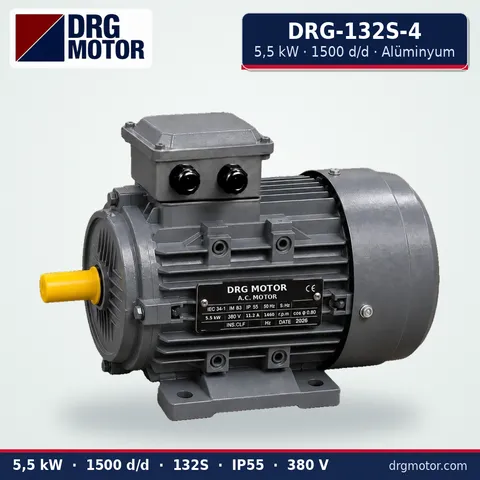
5.5 kW Three-Phase Motor 1500 rpm – DRG-132S-4 Aluminium
- 5.5 kW · 1500 rpm (4 poles)
- Aluminium frame · IEC 132S
- Shaft: 38 × 80 mm
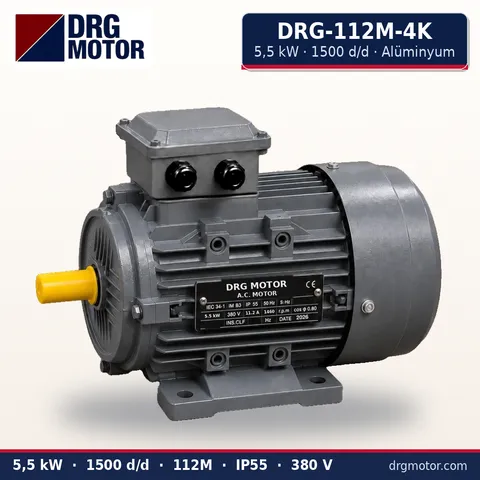
5.5 kW Compact Three-Phase Motor 1500 rpm – DRG-112M-4K Aluminium
- 5.5 kW · 1500 rpm (4 poles)
- Aluminium frame · IEC 112M
- Shaft: 28 × 60 mm
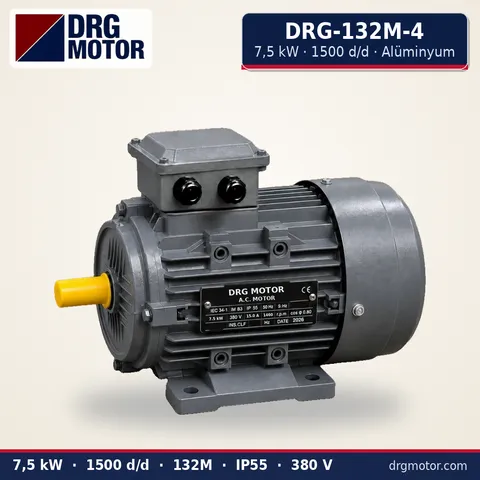
7.5 kW Three-Phase Motor 1500 rpm – DRG-132M-4 Aluminium
- 7.5 kW · 1500 rpm (4 poles)
- Aluminium frame · IEC 132M
- Shaft: 38 × 80 mm
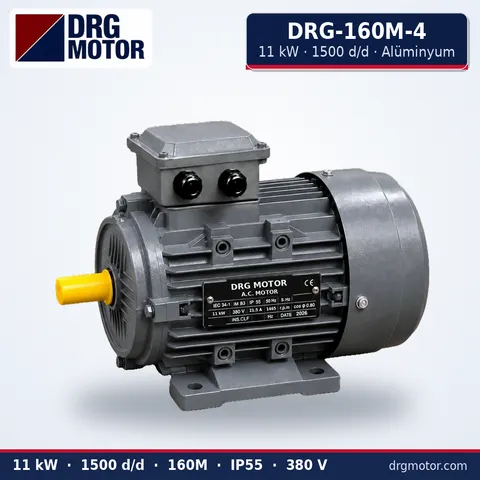
11 kW Three-Phase Motor 1500 rpm – DRG-160M-4 Aluminium
- 11 kW · 1500 rpm (4 poles)
- Aluminium frame · IEC 160M
- Shaft: 42 × 110 mm
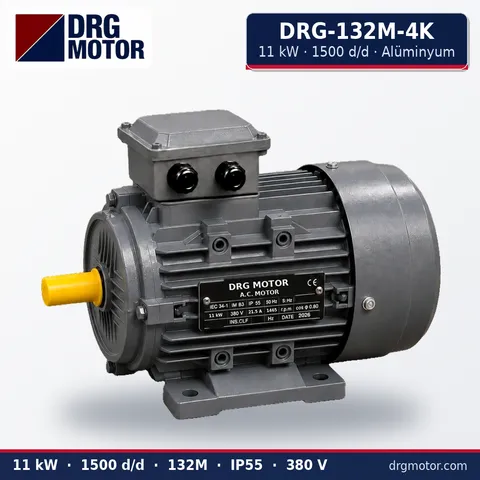
11 kW Compact Three-Phase Motor 1500 rpm – DRG-132M-4K Aluminium
- 11 kW · 1500 rpm (4 poles)
- Aluminium frame · IEC 132M
- Shaft: 38 × 80 mm